- The Myth of Camouflage: Why Chameleons Change Color Isn't Usually About Hiding
- Where the Myth Comes From
- The Real Reason: Color Is a Language
- How the Skin Actually Works
- Why Chameleons Change Color: The Four Main Functions
- 1. Social Signaling: Threats, Surrender, and Courtship
- 2. Thermoregulation: Dark Skin Soaks Up Sun
- 3. Stress and Health: The Involuntary Signals
- 4. Camouflage: A Real but Limited Role
- How Fast Can a Chameleon Change Color?
- Common Misconceptions About Chameleon Color
- What Chameleons Actually Are
- Why This Matters for Chameleon Conservation
- The Takeaway: Color as Communication
- ❓ Frequently Asked Questions
Ask most people why chameleons change color and you'll get the same confident answer: camouflage. The idea is everywhere — in cartoons, in toy packaging, in the first sentence of countless school reports. It's also, for the most part, wrong. While a handful of chameleon species do shift shades to blend into their surroundings, the overwhelming majority of color changes these reptiles make have nothing to do with hiding. They're messages. Chameleons change color to communicate — to threaten rivals, to signal surrender, to advertise readiness to mate, to broadcast stress or illness, and even to regulate their body temperature. The truth is far stranger and more interesting than the myth.
The Myth of Camouflage: Why Chameleons Change Color Isn't Usually About Hiding
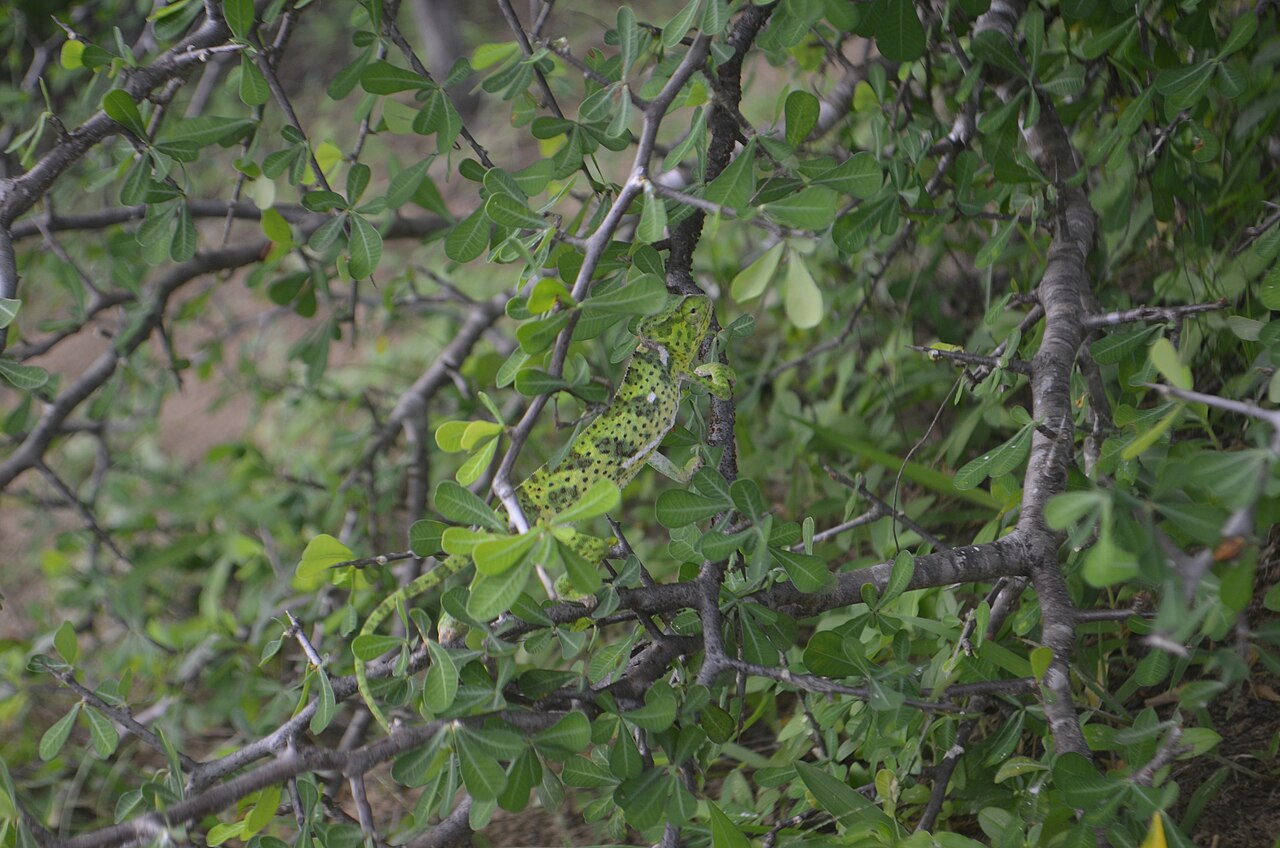
Chameleons are genuine masters of disguise, but they achieve it mostly through their resting coloration rather than through active color change. A common chameleon (Chamaeleo chamaeleon) sitting on a leafy branch is already green, mottled, and flattened — it looks like a leaf because that is its baseline appearance, not because it's reacting to the branch beneath it.
When researchers have tested chameleons against a range of backgrounds, the results have been striking. A 2014 study on dwarf chameleons in South Africa found that the animals did adjust their colors somewhat in response to background and temperature, but the shifts were modest — nowhere near the dramatic transformations people imagine. More importantly, the study found that the biggest color changes were tied to social situations, not scenery.
Think about what camouflage would actually require. To match a background, an animal needs to detect the colors and patterns around it and reproduce them on its own skin in real time. That's an extraordinarily complex task. Chameleons don't have the visual or neural equipment for that kind of mimicry, and they don't need it. Their default colors already do the hiding job.
Where the Myth Comes From
The camouflage story likely took hold because it's intuitive and because chameleons are undeniably well-camouflaged. Early naturalists observed the animals sitting motionless on branches, apparently invisible, and assumed the color change they'd heard about must serve the same purpose. The myth was reinforced by anthropomorphism — we like the idea of an animal that can vanish at will. By the time scientific studies caught up, the misconception was already baked into popular culture.
The Real Reason: Color Is a Language
If you want to understand why chameleons change color, you have to think of their skin as a signaling system rather than a cloak. Chameleons are famously territorial and largely solitary. They live in dense vegetation where visual contact with another chameleon is brief and often obstructed. In that environment, being able to flash a clear, unambiguous message across a few meters of foliage is enormously valuable.
Color signals solve a specific problem: they work at a distance, in daylight, without sound. A chameleon that can turn bright yellow, deep black, or vivid orange in seconds can say "this territory is mine," "I'm ready to breed," or "back off" without ever touching a rival. That's the core function of chameleon color change, and it explains almost everything these animals do with their skin.
How the Skin Actually Works
Chameleon skin contains layers of specialized cells called chromatophores, each packed with pigment. The outermost layer holds yellow pigments (xanthophores); beneath it are red pigments (erythrophores); deeper still are cells containing melanin (melanophores), which produce black and brown. Below all of these sits a layer of iridophores — cells containing tiny crystals of guanine that reflect light.
For decades, scientists thought chameleons changed color by squeezing pigment around inside these cells. That's part of the story, but it isn't the main event. In 2015, a team led by Michel Milinkovitch at the University of Geneva showed that chameleons can actively tune the spacing between the guanine crystals in their iridophores. When the crystals are packed tightly, they reflect short wavelengths — blues and greens. When they're spaced further apart, they reflect longer wavelengths — yellows, oranges, and reds.
This is a structural color mechanism, similar in principle to how a peacock's feathers or a butterfly's wings produce iridescence. It means a chameleon can shift its hue dramatically by adjusting the geometry of microscopic crystals, not just by moving pigment. The discovery explained how chameleons achieve colors that pigment alone couldn't produce, and it's one of the most elegant examples of biological optics known.
Why Chameleons Change Color: The Four Main Functions
Broadly speaking, chameleon color changes serve four purposes. They overlap, and a single display can do more than one job at once, but the categories are useful.
- Social signaling — the dominant function in most species
- Thermoregulation — controlling body temperature through light absorption
- Stress and health signaling — involuntary indicators of condition
- Camouflage — a real but limited role, mostly in a few ground-dwelling species
1. Social Signaling: Threats, Surrender, and Courtship
This is where chameleons really shine. When two males meet, the encounter follows a fairly predictable script. Both animals may puff up their bodies, gape their mouths, and shift to bright, high-contrast colors — often vivid greens, yellows, or even reds. The chameleon that's larger, healthier, or more motivated tends to display more intensely. The other typically darkens, shrinks its posture, and retreats.
In many species, the loser turns dark brown or nearly black — a clear submission signal. This is the opposite of camouflage: a dark chameleon on a green branch is conspicuous. That's the point. It's saying "I'm not a threat, I'm leaving."
Courtship is equally color-driven. A receptive female may adopt a distinctive pattern — often a pale or brightly marked version of her normal coloration — that tells a male she's available. An unreceptive female does the opposite, darkening and often rocking or gaping to reject him. In some species, like the panther chameleon (Furcifer pardalis) of Madagascar, males display spectacular combinations of red, blue, green, and orange during courtship and territorial disputes, while females remain comparatively muted.
Jackson's chameleon (Trioceros jacksonii), native to East Africa and introduced to Hawaii, is a good example of a species where males use color alongside their three horns in ritualized pushing contests. The color display often settles the dispute before any physical contact occurs.
2. Thermoregulation: Dark Skin Soaks Up Sun
Chameleons are ectotherms — they rely on external heat sources to regulate their body temperature. Many species live in environments where mornings are cool and the sun takes hours to warm the air. A chameleon that turns dark absorbs more solar radiation, warming up faster. Later, when it's too hot, it may turn pale and reflective to avoid overheating.
This is one of the most straightforward and well-documented reasons for color change, and it's easy to observe in captivity. Keepers often notice their chameleons darkening in the morning and lightening as the day warms. It's a practical, physiological response rather than a message to anyone.
Temperature also interacts with mood and social state. A cold chameleon is often darker and less active; a warm one is brighter and more responsive. That's why a chameleon's color is never a single, simple signal — it's the sum of several inputs at once.
3. Stress and Health: The Involuntary Signals
Not all color change is deliberate. A stressed chameleon — one that's been handled roughly, moved to a new enclosure, or exposed to a predator — often turns dark and mottled. This reflects elevated stress hormones and is largely involuntary. It's one reason experienced keepers pay close attention to color: a persistently dark chameleon is usually an unhappy or unwell one.
Illness can also produce color changes. A chameleon fighting an infection may show dull, muddy coloration or unusual dark patches. Because chameleons are notoriously good at hiding illness, color is one of the few early warning signs available to an owner.
4. Camouflage: A Real but Limited Role
Camouflage does matter for some chameleons — just not in the way most people think. Ground-dwelling species such as the Namaqua chameleon (Chamaeleo namaquensis) of the Namib Desert do shift color to match sand and rock, and this helps them avoid predators and ambush prey. Some dwarf chameleons (Bradypodion species) adjust their colors to blend with the specific plants they sit on.
But even in these cases, the change is usually a slow, subtle adjustment rather than an instant transformation. The dramatic, seconds-long color shifts that chameleons are famous for are almost always social or thermal, not deceptive.
How Fast Can a Chameleon Change Color?
Chameleons can shift color in a matter of seconds when motivated. A male that spots a rival can go from muted green to blazing yellow and orange in under ten seconds. Full transformations involving courtship displays may take a minute or two to develop and can persist for hours.
The speed depends on the species, the animal's state, and the trigger. Social signals are the fastest. Thermal adjustments are slower and more gradual. And a chameleon's color at any given moment is a composite — a blend of its baseline coloration, its current mood, its temperature, and its health. That's why two chameleons of the same species can look completely different on the same day.
Common Misconceptions About Chameleon Color
Because the camouflage myth is so widespread, several related misunderstandings have taken root. Clearing them up makes the real biology much easier to appreciate.
- "Chameleons match any background instantly." They don't. Their resting colors are adapted to their typical habitat, and active color change rarely mimics a specific surface.
- "Bright colors mean the chameleon is happy." Bright colors more often indicate arousal, aggression, or courtship — not contentment. A calm, relaxed chameleon is usually a moderate, muted green.
- "Dark colors mean the chameleon is trying to hide." Dark colors frequently mean stress, submission, or a cold morning. A black chameleon is often the most visible animal in the tree.
- "Color change is always voluntary." Much of it is involuntary, driven by hormones, temperature, and health.
What Chameleons Actually Are
To put all of this in context, it helps to know the animal itself. Chameleons make up the family Chamaeleonidae, with roughly 200 recognized species, the vast majority native to sub-Saharan Africa and Madagascar. A handful occur in southern Europe, the Middle East, and South Asia, and several species have been introduced elsewhere — most notably Jackson's chameleon in Hawaii and the common chameleon in parts of Spain and Portugal.
They range in size from the tiny Nano chameleon (Brookesia nana) of Madagascar, which measures under 30 millimeters in body length and is among the smallest reptiles on Earth, to the Parson's chameleon (Calumma parsonii), which can reach 60 centimeters or more including the tail. Lifespans vary widely too: small species like the pygmy chameleons may live only two to three years, while larger ones such as the veiled chameleon (Chamaeleo calyptratus) can live five to eight years in captivity, and Parson's chameleons may exceed a decade.
Almost all chameleons are insectivorous, feeding on crickets, grasshoppers, mantises, flies, and other invertebrates. Larger species occasionally take small vertebrates. They hunt with a ballistic tongue that can extend well beyond the length of their body — in some species, more than twice their body length — and strike in a fraction of a second. Their eyes move independently, giving them nearly 360-degree vision, and their zygodactyl feet and prehensile tails make them superbly adapted to life in the branches.
Most chameleons are oviparous (egg-laying), though some, like Jackson's chameleon, give birth to live young. Clutch sizes range from a few eggs in small species to 50 or more in large ones. Many species are highly territorial, and males in particular will defend a home range aggressively during the breeding season.
Why This Matters for Chameleon Conservation
Understanding why chameleons change color isn't just an academic exercise. It has real consequences for how these animals are kept and protected. When owners misinterpret a dark, mottled chameleon as "trying to camouflage," they may miss signs of stress, illness, or poor husbandry. When conservation messaging leans on the camouflage myth, it undersells what makes chameleons genuinely remarkable — and what makes them vulnerable.
Habitat loss is the primary threat facing chameleon populations worldwide. Madagascar, home to roughly half of all chameleon species, has lost a substantial portion of its original forest cover, and many species have extremely small ranges. Several are listed as endangered or critically endangered by the IUCN. The pet trade adds pressure to some populations, particularly the more colorful species prized for their displays.
Ironically, the very trait that makes chameleons famous — their color — is often misunderstood. The bright reds, blues, and yellows that make a panther chameleon so striking aren't a party trick. They're a language, and it's one we're still learning to read.
The Takeaway: Color as Communication
Chameleons change color for many reasons, but camouflage is rarely one of them. Their skin is a signaling device, a thermostat, and a health monitor all at once. The vivid displays that make them icons of the reptile world are mostly social — threats, submissions, and courtship — produced by microscopic crystals shifting inside their skin. The next time you see a chameleon turn from green to blazing orange, you're not watching it disappear. You're watching it talk. And once you know what to look for, you'll never see that color change the same way again.
❓ Frequently Asked Questions
💬 Do chameleons change color to camouflage?
Not primarily. Research shows chameleons change color mainly for social signaling and temperature regulation, not to blend into their surroundings.
💬 Why do chameleons change color then?
They shift color to communicate mood, status, and mating readiness to other chameleons, and to regulate body temperature by going darker to absorb heat or lighter to reflect it.
💬 How do chameleons actually change color?
Specialized skin cells called iridophores contain tiny guanine crystals arranged in a lattice. By stretching or relaxing these crystals, chameleons alter how light reflects off them, producing different colors.
💬 Can chameleons change to any color they want?
No. Each species has a limited palette, and the colors they display depend on their baseline coloration, mood, temperature needs, and the crystals in their skin.