- The Deep-Sea Environment: Why an Anglerfish Bioluminescent Lure is Essential
- The Challenge of Finding Food in the Abyss
- Predator-Prey Dynamics in the Dark
- The Biology of the Anglerfish Bioluminescent Lure
- The Illicium and Esca: The Rod and the Bait
- How the Light is Produced: Bacterial Symbiosis
- Control and Regulation of the Glow
- Hunting Strategies: How the Anglerfish Bioluminescent Lure Works in Practice
- The Ambush Posture
- Attraction and Capture
- Diet and Feeding Frequency
- Beyond Hunting: Other Functions of the Lure
- Mate Attraction and Recognition
- Sexual Dimorphism and Parasitic Mating
- Real-World Examples: Diversity in Anglerfish Bioluminescent Lures
- Lifespan, Behavior, and Conservation
- Conclusion: The Enduring Mystery of the Glowing Lure
- ❓ Frequently Asked Questions
The anglerfish bioluminescent lure is one of the most extraordinary adaptations in the natural world, a glowing beacon that transforms the abyssal darkness of the deep sea into a deadly hunting ground. This remarkable feature, found primarily in female anglerfish of the suborder Ceratioidei, is not merely a decorative light but a sophisticated biological tool honed by millions of years of evolution. To understand why anglerfish possess these luminous lures, we must delve into the harsh realities of their environment, the intricate biology of bioluminescence, and the life-or-death strategies that define their existence.
The Deep-Sea Environment: Why an Anglerfish Bioluminescent Lure is Essential
The deep ocean, below 300 meters (approximately 1,000 feet), is a realm of perpetual midnight. Sunlight cannot penetrate these depths, leaving an environment characterized by absolute darkness, crushing pressure, and scarce food resources. In this extreme habitat, vision is nearly useless for most creatures unless they produce their own light. The anglerfish bioluminescent lure is a direct response to these challenging conditions, providing a unique solution to the problems of finding prey, attracting mates, and navigating a world without sun.
The Challenge of Finding Food in the Abyss
In the bathypelagic zone (1,000 to 4,000 meters deep), the density of life plummets. Food is not evenly distributed but falls as "marine snow"—a slow drift of organic detritus, dead organisms, and fecal matter. Active predators face a monumental challenge: they must locate and capture prey in a vast, three-dimensional darkness where potential meals are rare and often small. The anglerfish bioluminescent lure acts as a highly efficient energy-saving device. Instead of actively swimming vast distances to find prey, the anglerfish remains nearly motionless, conserving precious energy, and uses its lure to bring prey to it.
Predator-Prey Dynamics in the Dark
Many deep-sea organisms are bioluminescent themselves, using light for counter-illumination (matching the faint downwelling light to hide from predators) or for startling flashes to escape. The anglerfish exploits this pre-existing sensitivity to light. Its lure mimics the bioluminescent patterns of small, planktonic animals or even other fish, tricking potential prey into approaching what they perceive as a food source or a potential mate. This is a classic example of aggressive mimicry, where the predator uses a deceptive signal to lure its victims.
The Biology of the Anglerfish Bioluminescent Lure
The anglerfish bioluminescent lure is not a single organ but a complex structure composed of several specialized parts. Understanding its anatomy is key to appreciating how it functions and why it is so effective.
The Illicium and Esca: The Rod and the Bait
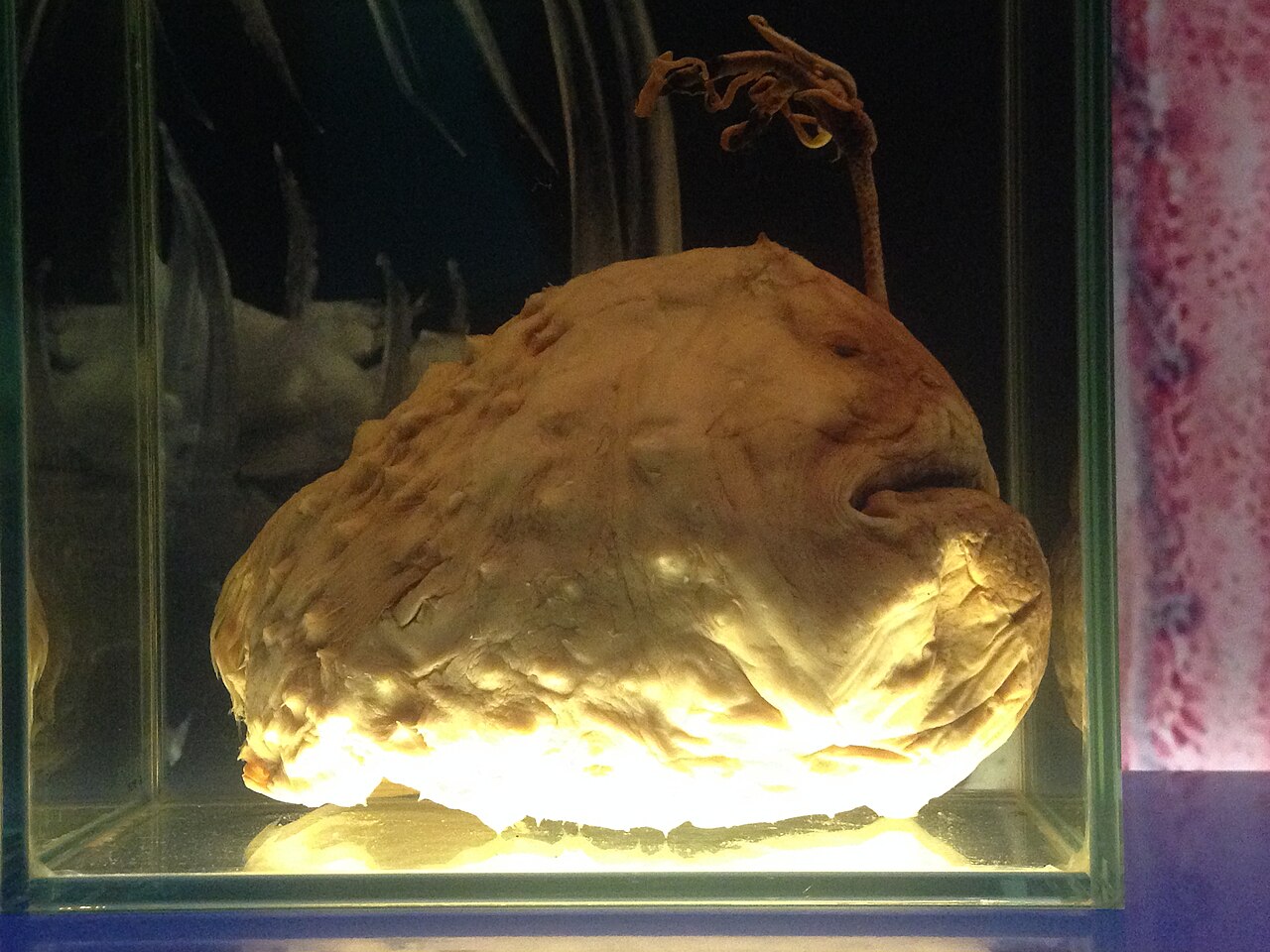
The lure itself consists of two main components: the illicium and the esca. The illicium is the long, flexible, and often fleshy stalk that extends from the top of the fish's head, just above the mouth. It is a modified dorsal fin ray, and in some species, it can be several times the length of the fish's body. The esca is the bioluminescent bulb at the tip of the illicium. This is the actual light-producing organ, and its shape, size, and color vary dramatically between the over 200 species of anglerfish. Some escas are simple, glowing spheres, while others are complex structures with filaments, hooks, or even multiple lobes that mimic tiny crustaceans or worms.
How the Light is Produced: Bacterial Symbiosis
Remarkably, the anglerfish does not produce light on its own. Instead, it relies on a symbiotic relationship with bioluminescent bacteria, primarily from the genus Photobacterium (such as Photobacterium phosphoreum). The esca contains specialized chambers or crypts that house these bacteria in a nutrient-rich environment. The bacteria receive a steady supply of oxygen and nutrients from the fish's blood, and in return, they produce light through a chemical reaction. This reaction involves an enzyme called luciferase, which oxidizes a molecule called luciferin in the presence of oxygen, releasing energy as visible light.
Control and Regulation of the Glow
The anglerfish has remarkable control over its lure. It is not a constant, steady glow. Through muscular contractions and adjustments of blood flow to the esca, the fish can control the intensity, duration, and even the frequency of the light pulses. This allows the lure to be flashed intermittently, creating a more realistic and enticing signal for prey. Some species can even produce a steady, dim glow or a bright, sudden flash. The ability to turn the lure on and off also helps the anglerfish conserve energy and avoid attracting unwanted attention from larger predators.
Hunting Strategies: How the Anglerfish Bioluminescent Lure Works in Practice
The anglerfish is a classic ambush predator. Its hunting strategy is a patient, energy-efficient affair that relies entirely on the effectiveness of its lure.
The Ambush Posture
The typical anglerfish, like the well-known humpback anglerfish (Melanocetus johnsonii), has a large, gaping mouth filled with long, needle-like teeth that are angled inward. When hunting, the fish remains nearly motionless, often floating or resting on the seafloor. It may even bury itself in the sediment, leaving only its illicium exposed. The lure is dangled just above its open mouth, creating a tempting target for any curious creature that passes by.
Attraction and Capture
When a potential prey item—such as a small fish, crustacean, or squid—is attracted to the glowing lure, it swims closer to investigate. The anglerfish remains perfectly still until the prey is within striking distance. Then, with incredible speed, it opens its mouth and creates a powerful suction force, drawing the prey and a large volume of water into its cavernous mouth. The inward-pointing teeth ensure that once the prey is inside, it cannot escape. The entire process, from attraction to capture, can happen in a fraction of a second. The largest recorded anglerfish, the giant black seadevil (Melanocetus johnsonii), can reach lengths of up to 1.2 meters (4 feet), but most species are much smaller, typically 5 to 20 centimeters (2 to 8 inches) long.
Diet and Feeding Frequency
Given the scarcity of food in the deep sea, anglerfish are opportunistic feeders. Their diet consists of whatever they can attract and swallow, including lanternfish, bristlemouths, small squid, and crustaceans. Because their metabolism is slow, they can survive for long periods between meals—sometimes weeks or even months. The energy cost of producing the bioluminescent lure is relatively low, making it a highly sustainable hunting strategy in an energy-poor environment.
Beyond Hunting: Other Functions of the Lure
While attracting prey is the primary function, the anglerfish bioluminescent lure may serve other important roles, especially in the context of reproduction and communication.
Mate Attraction and Recognition
In the vast darkness of the deep sea, finding a mate is as challenging as finding food. In many anglerfish species, the lure may also function as a species-specific signal to attract potential mates. The color, pattern, and flashing rhythm of the bioluminescence could be unique to each species, allowing males to identify females of their own kind. This is particularly critical because male anglerfish are often much smaller than females and have a very different lifestyle.
Sexual Dimorphism and Parasitic Mating
The differences between male and female anglerfish are extreme. Females are large, possess the lure, and are active predators. Males, in contrast, are tiny, often less than a centimeter long, and lack a functional lure. They have large eyes and highly developed olfactory organs, which they use to detect chemical signals (pheromones) released by females, possibly in conjunction with the bioluminescent lure. Once a male finds a female, he bites into her skin and fuses with her body, eventually sharing her bloodstream and becoming a permanent, parasitic mate. The male then degenerates, retaining only his reproductive organs. In this bizarre mating system, the female's lure may play a dual role: attracting prey and signaling to a potential male that she is receptive.
Real-World Examples: Diversity in Anglerfish Bioluminescent Lures
Not all anglerfish lures are created equal. The diversity in form and function across different species highlights the adaptive power of this trait.
- The Humpback Anglerfish (Melanocetus johnsonii): This is perhaps the most famous species, with a relatively simple, bulbous esca that emits a blue-green light. Its illicium is short and thick, and the lure is often described as a glowing "fishing rod."
- The Triplewart Seadevil (Cryptopsaras couesii): This species has a highly complex esca with three distinct lobes and multiple filaments, which likely mimics a small, wriggling crustacean. It also has a unique, bioluminescent "barbel" on its chin.
- The Fanfin Anglerfish (Caulophryne jordani): This species has an incredibly elaborate lure. The esca is not just a single bulb but a complex structure with numerous, glowing, branching filaments that resemble a tiny, glowing sea anemone or a medusa. This may attract prey that feed on such organisms.
- The Whipnose Anglerfish (Gigantactis species): These fish have exceptionally long illicia, sometimes exceeding their body length. The esca is often small and simple, but the extended stalk allows them to dangle the lure far from their body, potentially reducing the risk of being detected by the prey's own predators.
Lifespan, Behavior, and Conservation
The life of an anglerfish is a testament to adaptation. Their lifespan is estimated to be between 10 and 30 years, depending on the species, with females generally living longer due to their larger size and more active role. They are solitary creatures, rarely encountering one another except for mating purposes. Their behavior is largely passive, characterized by long periods of stillness punctuated by brief, explosive feeding events.
Despite their fearsome appearance, anglerfish are not a threat to humans. They live at depths that are inaccessible to most divers, and encounters are extremely rare. However, they are vulnerable to deep-sea trawling and other human activities that disturb the seafloor. Climate change and ocean acidification may also impact the bacteria that produce their light, potentially affecting their ability to hunt. As deep-sea exploration continues, we may discover even more bizarre and beautiful examples of anglerfish bioluminescent lures, reminding us of the endless creativity of evolution.
Conclusion: The Enduring Mystery of the Glowing Lure
The anglerfish bioluminescent lure is far more than a simple light; it is a masterpiece of biological engineering, a testament to the power of natural selection in one of Earth's most extreme environments. From its bacterial symbionts to the intricate control systems of the fish, every aspect of this adaptation is perfectly tuned for survival. The lure solves the fundamental problem of finding food and mates in a world of perpetual darkness, transforming the anglerfish from a mere fish into an icon of deep-sea wonder. As we continue to explore the abyss, the anglerfish and its glowing beacon will undoubtedly remain one of the most captivating and enigmatic creatures of the ocean's depths.
❓ Frequently Asked Questions
💬 How does an anglerfish's bioluminescent lure work?
The lure contains light-producing bacteria that emit a glow through a chemical reaction, which the anglerfish controls by moving or flashing the appendage to attract prey.
💬 Why do anglerfish need a bioluminescent lure to hunt?
Anglerfish live in the deep ocean where sunlight never reaches, so the lure creates a visible light source that attracts curious fish and invertebrates directly toward their mouth.
💬 Do all anglerfish species have bioluminescent lures?
No, only female anglerfish have the iconic bioluminescent lure; males are much smaller and lack the lure, as they rely on finding a female to attach to for reproduction.
💬 Can anglerfish turn their bioluminescent lure on and off?
Yes, anglerfish can control the light by adjusting blood flow to the lure or using a shutter-like membrane, helping them conserve energy and avoid attracting predators.