- What Exactly Are Axolotl Gills?
- Anatomy of a Feathery Crown
- Size and Location
- The Magic of Neoteny: Why They Never Grow Up
- Thyroid Signals and Stunted Development
- The Evolutionary Advantage of Staying Young
- How Axolotl Gills Work: Breathing, Eating, and Sensing
- Respiration and Buccal Pumping
- Cephalic Lateral Line and Sensing Vibrations
- Feeding and Hydrodynamics
- The Tiger Salamander Connection: A Tale of Two Forms
- The Forced Metamorphosis Experiment
- Why They Rarely Morph Naturally
- ❓ Frequently Asked Questions
The feathery, external axolotl gills are the defining feature of the world's most famously juvenile amphibian—a creature that has captured human imagination for centuries. Unlike a frog that sheds its tail or a salamander that loses its aquatic fins, the axolotl simply hits the brakes on the aging process. It reaches sexual maturity while retaining the fluffy, vibrant crown of gills it was born with, staring out from its tank with a permanent, placid smile. This phenomenon, known as neoteny, is what makes the axolotl a biological paradox: a fully grown adult that never truly grows up.
What Exactly Are Axolotl Gills?
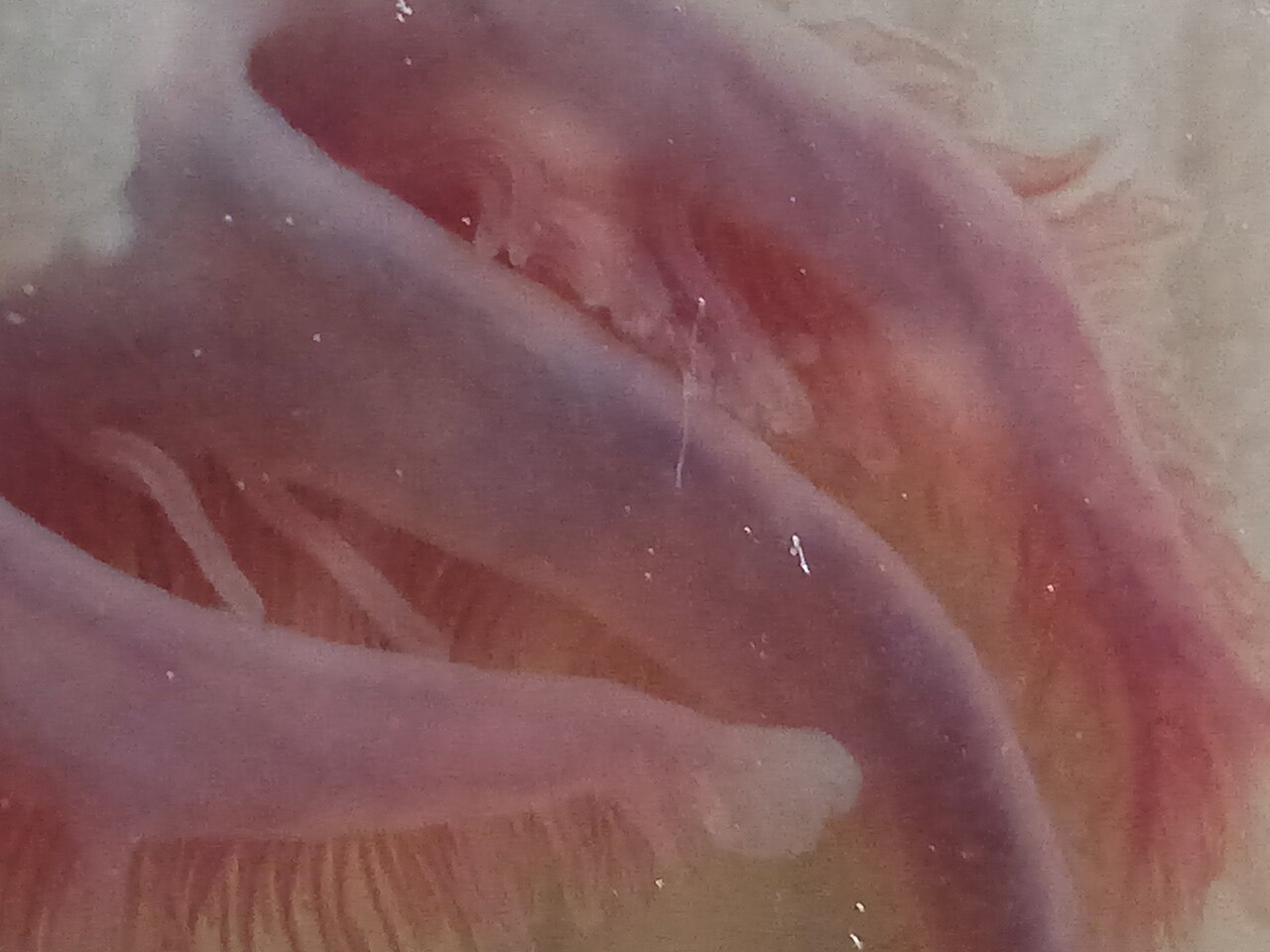
Most people instinctively recognize the axolotl by the three feathery branches protruding from each side of its head. These are not decorative appendages; they are highly specialized respiratory organs. To understand why they persist into adulthood, it helps to appreciate just how complex and vital these structures truly are.
Anatomy of a Feathery Crown
Each side of the axolotl's head bears three distinct gill stalks, known scientifically as rami. These stalks branch out into delicate, finger-like projections called ramifications, which are further covered in microscopic filaments. This fractal-like design dramatically increases the surface area exposed to the surrounding water. Underneath the translucent skin, a web of capillaries sits incredibly close to the surface, allowing for rapid oxygen absorption and carbon dioxide release. This dense network of blood vessels is why healthy axolotl gills glow with a vibrant, saturated color. In leucistic and albino specimens, the gills appear a striking coral pink or bright red, directly reflecting the blood rushing through them.
Size and Location
Axolotls have six gills in total, arranged symmetrically on the left and right sides of the head. In a healthy adult, these gill stalks can be quite long, often extending several inches behind the head. The size of the gills is directly correlated with water quality and oxygen levels; in well-oxygenated environments, the gills are long and lush, while in low-oxygen conditions, the body may reabsorb some of the filaments to reduce surface area. Check the length of the axolotl gills in a captive tank—if they are short and stubby, the water is likely warm or poorly oxygenated. If they are majestic and flowing, the aquatic environment is thriving.
The Magic of Neoteny: Why They Never Grow Up
The simple answer to why axolotls keep their gills is that they have evolved to bypass metamorphosis. In virtually every other salamander species, a larval stage transforms into a terrestrial or semi-aquatic adult. The axolotl, however, experiences a powerful genetic lock that prevents this biological remodeling from ever taking place.
Thyroid Signals and Stunted Development
In a typical salamander, metamorphosis is triggered by the release of a hormone called thyroxine (T4) from the thyroid gland. This hormone acts as a chemical signal that tells the body to absorb its fins, reabsorb its gills, develop eyelids, and thicken its skin for life on land. In the axolotl, the pituitary gland fails to send the adequate signal to the thyroid to release this surge of thyroxine. In scientific experiments, introducing exogenous thyroid hormones into an axolotl's tank forces them through a metamorphosis, permanently destroying their feathery gills. In the wild, a lack of essential iodine (a critical building block for thyroxine) further reinforces this "never grow up" strategy.
The Evolutionary Advantage of Staying Young
From a Darwinian perspective, metamorphosis is biologically expensive. It requires a massive expenditure of energy, a high risk of predation, and a complete restructuring of the body. The ancestors of the axolotl colonized the cool, deep, and remarkably stable lakes of high-altitude central Mexico. In this safe, resource-rich aquatic environment, there was simply no advantage to developing lungs and crawling onto land. The axolotl found a loophole: if you can successfully reproduce while remaining in the larval form, why evolve to leave? This phenomenon, known as paedomorphosis, allowed the axolotl to retain its youthful, aquatic morphology while becoming a apex predator in its underwater ecosystem.
How Axolotl Gills Work: Breathing, Eating, and Sensing
The axolotl's gills are not just for looks; they serve a multi-functional purpose. They are the animal's primary interface with its environment, responsible for respiration, but also playing critical roles in feeding and sensory perception.
Respiration and Buccal Pumping
Axolotls rely on their gills for roughly 60% of their oxygen intake. The remaining oxygen is absorbed through their skin and, to a lesser extent, through primitive lungs. To maximize oxygen uptake, axolotls constantly flutter their gills. This rhythmic waving (known as buccal pumping) pushes fresh water across the filament-rich surfaces. If you watch an axolotl gill closely, you can see the blood pulsing through the veinlets. In water that is too warm (above 70°F), the water holds less dissolved oxygen, which is why an axolotl will rapidly flare and wave its gills, desperately trying to draw enough oxygen from its environment.
Cephalic Lateral Line and Sensing Vibrations
Scattered across the skin and running along the ridges of the axolotl gills is the lateral line system. This is a network of sensory cells that can detect minute pressure changes, vibrations, and electrical fields in the water. Because axolotls are not reliant on eyesight alone to find food, these gills act as an exquisite radar system. In the murky, silt-bottomed lakes they call home, the gills allow the axolotl to sense the precise location of a darting aquatic insect or a wriggling worm long before it sees it.
Feeding and Hydrodynamics
When an axolotl strikes at prey, it creates a powerful suction force by rapidly opening its mouth and expanding its throat. The gills, being flexible, are forced backward to streamline the head, reducing drag and maximizing the speed of the strike. Once the prey is secured, the gills snap forward again. In tight spaces, the gills also function as tactile sensors, helping the axolotl navigate dense vegetation without injuring its delicate skin.
The Tiger Salamander Connection: A Tale of Two Forms
The axolotl is often mistaken for a unique creature with no relatives, but it is deeply rooted in the complex family tree of the tiger salamander (Ambystoma tigrinum). In fact, the axolotl (Ambystoma mexicanum) shares a vast majority of its genome with tiger salamanders, and they are closely related enough that they can produce hybrid offspring in laboratory settings.
The Forced Metamorphosis Experiment
Scientists have successfully forced axolotls to undergo metamorphosis by injecting or bathing them in thyroxine (T4). When this happens, the axolotl undergoes a dramatic transformation over several weeks. Its skin thickens, turning darker and losing its mottled pattern. Its tail fin is reabsorbed, its body becomes slimmer and more muscular, and its tongue becomes heavier. Critically, the feathery, external axolotl gills are completely reabsorbed into the body. The resulting animal looks almost exactly like a standard terrestrial tiger salamander. This proves that the genetic coding for metamorphosis is still present within the axolotl's DNA; it is simply suppressed by an epigenetic switch.
Why They Rarely Morph Naturally
Occasionally, an ax
❓ Frequently Asked Questions
💬 Why do axolotls keep their feathery gills as adults?
Axolotls are neotenic, meaning they reach sexual maturity without undergoing metamorphosis, so they keep larval features like external gills for their whole life. These feathery gills are functional for breathing underwater and also indicate the animal's health.
💬 Can axolotls breathe without their gills?
Yes, axolotls also have lungs and can absorb oxygen through their skin, but their external gills are a primary way to take in oxygen from water. If a gill is lost or damaged, the axolotl can still survive, though it may rely more on other breathing methods.
💬 Do axolotl gills grow back if damaged?
Yes, axolotls are famous for regeneration and can regrow lost gill branches, limbs, and even parts of organs. The regrown tissue usually works well, but it might look a bit different in size or shape.
💬 Why do axolotl gills shrink or disappear?
Axolotl gills can shrink or be reabsorbed if the animal undergoes metamorphosis, often triggered by hormone treatment or rare genetics, or if water conditions, temperature, or diet are poor. Healthy gills are fluffy and red, so pale or shriveled gills are a warning sign of stress.