- What Makes Axolotl Regeneration So Unique?
- The Cellular Foundation: The Blastema
- Immune System Role: No Scarring, Just Rebuilding
- The Real Reason Behind Axolotl Regeneration: An Evolutionary Trade-Off
- Neoteny: The Key to Lifelong Regeneration
- Genetic Memory: The "Regeneration Gene" Network
- How Axolotl Regeneration Works: A Step-by-Step Process
- Stage 1: Wound Closure and Epidermal Migration
- Stage 2: Dedifferentiation and Blastema Formation
- Stage 3: Patterning and Differentiation
- Stage 4: Growth and Maturation
- Why Can't Humans Regenerate Like Axolotls?
- Can We Harness Axolotl Regeneration for Human Medicine?
- Axolotl Regeneration in the Wild: A Survival Superpower Under Threat
- Lifespan and Behavior: How Regeneration Affects Daily Life
- The Future of Axolotl Regeneration Research
- Conclusion: The Real Reason Axolotls Regenerate Limbs
- ❓ Frequently Asked Questions
Axolotl regeneration is one of the most astonishing biological phenomena on Earth, allowing these aquatic salamanders to regrow entire limbs, parts of their brain, heart tissue, and even segments of their spinal cord without scarring. Unlike humans, who form scar tissue to quickly close wounds, axolotls activate a complex cascade of cellular events that rebuild lost structures perfectly. This article explores the real reason behind this superpower—a blend of evolutionary history, cellular biology, and unique genetic programming that sets the axolotl apart from nearly every other vertebrate.
What Makes Axolotl Regeneration So Unique?
To understand why axolotls regenerate, we must first appreciate what they can regenerate. A single axolotl (Ambystoma mexicanum) can regrow a complete limb—including bones, muscles, nerves, and skin—in just a few months. They can also regenerate up to 30% of their brain's telencephalon, parts of their heart muscle, and their entire tail, which includes the spinal cord. This ability persists throughout their entire lifespan, which in captivity can reach 10–15 years. Most other salamanders lose regenerative capacity as they age, but axolotls retain it into adulthood—a condition called neoteny, where they remain aquatic and gilled for life.
The Cellular Foundation: The Blastema
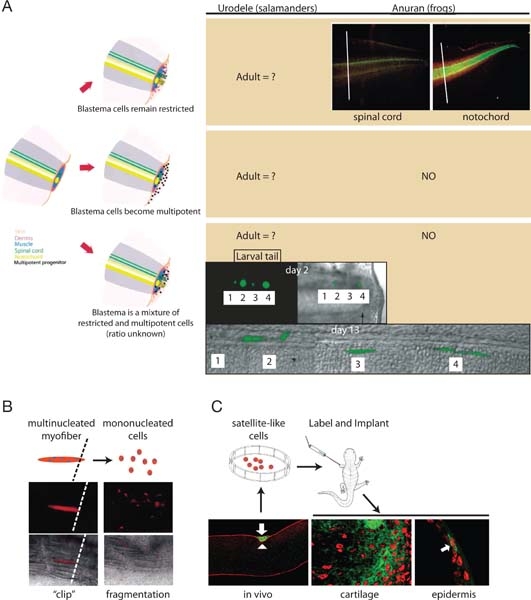
When an axolotl loses a limb, cells at the amputation site dedifferentiate—they revert to a more embryonic state—and form a mass called a blastema. This blastema is a cluster of proliferating cells that will eventually differentiate into all the tissues of the new limb. The process is remarkably similar to how a developing embryo builds a limb, but it happens in an adult animal. Scientists have identified that the blastema contains cells from multiple lineages, including muscle, cartilage, and nerve cells, all working together in a coordinated manner.
Immune System Role: No Scarring, Just Rebuilding
One key difference between axolotl regeneration and mammalian wound healing is the immune response. In humans, inflammation leads to scarring, which blocks regeneration. Axolotls have a unique immune system that suppresses excessive inflammation. Instead of forming a thick scar, they create a temporary wound epidermis that signals the underlying cells to start building. This immune modulation is a hot topic in regenerative medicine research, as scientists try to mimic it in humans.
The Real Reason Behind Axolotl Regeneration: An Evolutionary Trade-Off
The real reason axolotls regenerate limbs so effectively is rooted in evolutionary biology. Axolotls evolved in the high-altitude lakes of Xochimilco near Mexico City, a habitat with low predation pressure but unpredictable food availability. In such an environment, losing a limb to a predator or accident would be fatal if not repaired quickly. Regeneration allowed them to recover fully and continue breeding. However, this ability came at a cost: axolotls have a relatively slow metabolic rate and a long larval stage compared to other salamanders. They also have a low tolerance for environmental change, which is why they are now critically endangered in the wild.
Neoteny: The Key to Lifelong Regeneration
Axolotls are neotenic, meaning they retain juvenile features (like external gills) into adulthood. This neoteny is linked to their regenerative capacity. In many salamanders, metamorphosis triggers a decline in regeneration. Axolotls never undergo full metamorphosis, so they keep the regenerative machinery active. Research shows that the thyroid hormone pathway, which drives metamorphosis, is suppressed in axolotls. This suppression allows them to retain embryonic-like plasticity in their cells, enabling lifelong regeneration.
Genetic Memory: The "Regeneration Gene" Network
Scientists have identified a network of genes that are specifically upregulated during axolotl regeneration. These include genes involved in cell cycle control, signaling pathways (such as Wnt, FGF, and BMP), and epigenetic regulators. A 2018 study published in Nature found that axolotls have a massive genome—about 32 billion base pairs, ten times larger than the human genome—and that many of these repetitive sequences are active during regeneration. This genetic redundancy may provide the raw material for regenerating complex structures. The real reason axolotls can do this while humans cannot is that they have retained and refined these ancient pathways, while mammals evolved faster healing (scarring) at the expense of regeneration.
How Axolotl Regeneration Works: A Step-by-Step Process
The process of limb regeneration in axolotls can be broken down into four distinct stages, each involving specific cellular and molecular events.
Stage 1: Wound Closure and Epidermal Migration
Within minutes of amputation, the wound is covered by a thin layer of epithelial cells that migrate from the surrounding skin. This wound epidermis is essential for signaling the underlying tissue. Unlike in mammals, this epidermis does not form a scab; instead, it remains moist and permeable, allowing communication between the environment and the regenerating tissue.
Stage 2: Dedifferentiation and Blastema Formation
Over the next few days, cells in the stump—including muscle fibers, cartilage cells, and connective tissue—lose their specialized characteristics. Muscle cells break down into mononucleated cells, and cartilage cells become more plastic. These dedifferentiated cells accumulate under the wound epidermis, forming the blastema. The blastema grows rapidly as cells divide, and it is the source of all new tissues.
Stage 3: Patterning and Differentiation
Once the blastema reaches a critical size, it begins to pattern the new limb. Signals from the wound epidermis and the stump guide the formation of proximal-distal (shoulder to finger) and anterior-posterior (thumb to pinky) axes. The blastema cells then differentiate into bone, muscle, nerves, and skin, exactly matching the original limb. For example, if an axolotl loses a leg at the knee, it will regrow the lower leg, foot, and toes—not a whole new leg from the hip.
Stage 4: Growth and Maturation
The new limb grows slowly over 4–8 weeks, depending on temperature and nutrition. At a water temperature of 18°C (64°F), a complete limb can regenerate in about 60 days. The new limb is fully functional, with correct bone length and joint structure. Interestingly, the regenerated limb is often slightly smaller than the original, but it continues to grow as the axolotl ages.
Why Can't Humans Regenerate Like Axolotls?
The short answer is that human evolution prioritized speed of healing over perfection. When a human wounds a limb, the body immediately forms a clot and then scar tissue to prevent infection and blood loss. This rapid sealing is vital for survival in a world with pathogens, but it blocks the cellular reorganization needed for regeneration. Axolotls, living in cool, clean water, face lower infection risk, so they can afford the slower, more complex process of regeneration.
Furthermore, human cells have lost the ability to dedifferentiate easily. Our muscle cells, for example, are terminally differentiated and rarely revert to a stem-cell-like state. Axolotl cells retain this plasticity, partly due to the presence of a special type of immune cell called macrophages that promote regeneration. When scientists remove macrophages from axolotls, regeneration fails and scarring occurs—proving that the immune system is a key player.
Can We Harness Axolotl Regeneration for Human Medicine?
Researchers are actively studying axolotl regeneration to develop therapies for human injuries. For instance, understanding how axolotls suppress scarring could lead to treatments for burn victims or spinal cord injuries. A 2020 study showed that applying axolotl wound epidermis extract to mouse wounds reduced scarring and improved healing. However, translating this to humans is challenging because our immune system is fundamentally different. Still, the axolotl remains the best model for studying regeneration, and ongoing research may one day unlock partial regenerative abilities in humans.
Axolotl Regeneration in the Wild: A Survival Superpower Under Threat
In their natural habitat—the canals and lakes of Xochimilco, Mexico—axolotls use regeneration to survive attacks from birds, fish, and other predators. A lost limb is not a death sentence; they can regrow it while continuing to hunt for food. Axolotls are carnivorous, feeding on small fish, worms, insects, and crustaceans. Their slow movement and soft bodies make them vulnerable, so regeneration is a critical adaptation.
However, wild axolotls are now critically endangered due to habitat loss, pollution, and introduction of invasive species like tilapia and perch. The same lakes that once supported millions of axolotls now host fewer than 1,000 individuals. Conservation efforts include captive breeding programs and habitat restoration, but the axolotl's unique biology also makes it a flagship species for research. In captivity, they are popular pets and lab animals, bred for their color morphs (such as leucistic, golden, and melanoid) and, of course, their regenerative abilities.
Lifespan and Behavior: How Regeneration Affects Daily Life
Axolotls are solitary, nocturnal animals that spend most of their time on the bottom of lakes or canals. They breathe through external gills and also absorb oxygen through their skin. Their lifespan in the wild is unknown but thought to be 5–10 years; in captivity, they can live up to 15 years with proper care. Regeneration does not seem to cause any pain or stress; in fact, axolotls often eat their own shed limbs (if they lose one during feeding) to recycle nutrients. This behavior is rare but documented.
One fascinating aspect is that axolotls can regenerate the same limb multiple times. Each regeneration is slightly different, but the quality remains high. This makes them ideal for repeated experiments in the lab. However, it also means that captive axolotls must be handled carefully to avoid unnecessary limb loss—though they will regrow it, the process takes energy and resources.
The Future of Axolotl Regeneration Research
Current research focuses on three main areas: the molecular signals that initiate regeneration, the role of the nervous system, and the potential for inducing regeneration in mammals. Scientists at the University of Kentucky and the Salk Institute have identified that nerve signals are essential for blastema formation. If a limb is denervated (nerves cut), regeneration fails. This suggests that nerves release growth factors that stimulate cell division—a clue that could help develop nerve-based therapies for human healing.
Another exciting area is the study of "regeneration-incompetent" axolotl tissues. For example, axolotls cannot regenerate their heart as completely as their limbs, but they can still repair heart muscle after injury. Understanding why some tissues regenerate better than others could reveal how to improve human heart repair after heart attacks.
Finally, advances in gene editing (like CRISPR) allow scientists to manipulate axolotl genes to identify which ones are essential for regeneration. A 2023 study knocked out a gene called sall4 and found that axolotls lost their ability to regenerate limbs—confirming that this gene is a master regulator. Such discoveries bring us closer to understanding the real reason axolotls are so remarkable.
Conclusion: The Real Reason Axolotls Regenerate Limbs
Axolotl regeneration is not a magic trick but the result of millions of years of evolution in a specific ecological niche. By retaining juvenile features, suppressing scarring, and maintaining a flexible genome, axolotls have perfected the art of rebuilding lost body parts. The real reason they can do this lies in their unique combination of neoteny, immune modulation, and genetic plasticity—traits that humans lost long ago. While we may never regenerate a whole limb, studying axolotls offers hope for improving wound healing, treating spinal cord injuries, and even repairing damaged organs. In the end, the axolotl teaches us that evolution sometimes chooses perfection over speed—and that the slow, steady process of regeneration is a powerful survival strategy.
❓ Frequently Asked Questions
💬 Can axolotls regenerate any body part?
Yes, axolotls can regenerate limbs, tail, spinal cord, parts of their brain, heart, and other organs without scarring, making them exceptional among vertebrates.
💬 How quickly do axolotls regrow a lost limb?
Axolotls typically regrow a limb within 40 to 50 days, though the exact speed depends on factors like temperature, age, and limb size.
💬 Why can axolotls regenerate but humans cannot?
Axolotls retain the ability to form a specialized structure called a blastema, where cells dedifferentiate and proliferate, while humans lack this robust regenerative response in most tissues.
💬 Do axolotls feel pain when losing a limb?
Axolotls likely experience some stress or discomfort, but they lack the complex pain response of mammals, and their regeneration process is non-inflammatory and efficient.