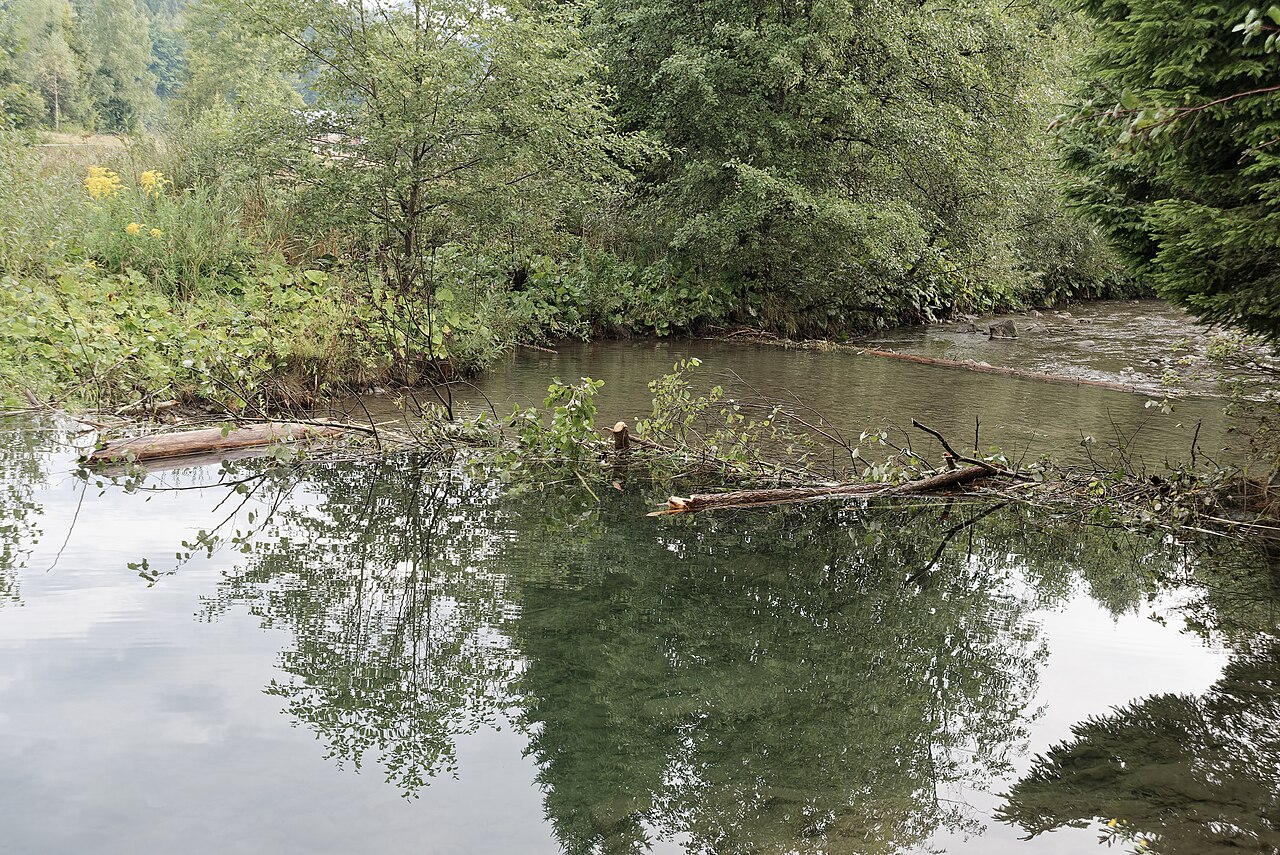
- The Real Reason Beavers Build Dams Is Not About Shelter
- The Underwater Pantry: How Dams Enable Winter Survival
- Why Beavers Build Dams: The Predator Deterrent Theory
- Water Depth: The Non-Negotiable Requirement
- The "Refrigerator" Hypothesis: A Deeper Dive into Diet
- The Engineering Genius Behind the Dam Structure
- The Lodge: A Home Built by the Dam
- Environmental Impact: The "Ecosystem Engineer"
- The Lifespan and Legacy of a Dam
- Conclusion: The Dam as a Symbol of Survival
- ❓ Frequently Asked Questions
When you picture a river transformed into a still, glassy pond with a dome of sticks rising from the water, the first question that leaps to mind is often why do beavers build dams with such relentless, almost obsessive, determination. The simple answer—"to create a pond"—barely scratches the surface of a complex biological imperative that has shaped North American and Eurasian landscapes for millions of years. The real reason is far more profound: a beaver dam is not a home, but a survival engine, a food storage system, a predator shield, and a climate-regulating fortress all rolled into one. To truly understand this behavior, we must abandon the idea of the dam as a mere structure and instead see it as the beaver's most sophisticated tool for turning an unforgiving wilderness into a safe, pantry-stocked sanctuary.
The Real Reason Beavers Build Dams Is Not About Shelter
It is a common misconception that beavers live inside their dams, like giant aquatic igloos. In reality, the dam is a water-retention device, not a dwelling. The lodge—a separate, dome-shaped structure built of mud and sticks—is where the family sleeps, raises kits, and rides out harsh winters. The dam's true purpose is to flood the surrounding land, creating a deep-water zone that provides the beaver with its two most critical needs: safety from predators and access to food during winter. Without the deep water created by the dam, beavers would be fatally vulnerable on land and would starve when ice covers the surface.
Think of the dam as a hydraulic engineering project. By slowing the flow of a stream or river, the beaver raises the water table, turning a narrow, shallow creek into a broad pond. This transformation is not accidental; it is a deliberate act of environmental modification that triggers a cascade of benefits. The water depth is crucial—it must be deep enough to remain liquid at the bottom even when the surface freezes solid. This unfrozen layer provides a submerged highway for beavers to travel safely from their lodge to their food cache without ever exposing themselves to land-based predators like wolves, coyotes, or bears.
The Underwater Pantry: How Dams Enable Winter Survival
Beavers are strict herbivores, and their diet consists primarily of bark, cambium, and twigs from deciduous trees like aspen, willow, and cottonwood. They do not hibernate. In northern climates, winter can last six months, and the ground is covered in deep snow, making overland foraging impossible. The dam solves this problem by creating a deep enough pond to store a winter food cache. In the fall, beavers gather hundreds of branches and logs, anchoring them into the muddy bottom of the pond near the lodge's underwater entrance. This underwater "fridge" stays fresh and accessible throughout the winter, allowing the family to swim out, grab a branch, and return to the lodge to eat in warmth and safety. Without the dam to create sufficient depth, this cache would freeze into the ice, and the beavers would starve.
The size of this food cache is staggering. A single family of beavers can store over a ton of woody material each autumn. The dam ensures the water is deep enough to keep this cache submerged and unfrozen, even when air temperatures plunge to -30°F. This is the most direct, life-or-death reason why beavers build dams: they are building a refrigerator that stays accessible all winter long.
Why Beavers Build Dams: The Predator Deterrent Theory
Beyond food storage, the creation of deep water is a primary anti-predator adaptation. Beavers are slow, clumsy, and vulnerable on land. Their bodies are perfectly adapted for aquatic life—webbed feet, a flattened paddle tail, and the ability to close their ears and nose underwater—but these adaptations make them easy targets on terra firma. A beaver's only real defense is to be in the water. The deeper and wider the pond, the safer the beaver.
By damming a stream, beavers transform a narrow ribbon of water (where a predator could easily wait on either bank) into a vast, open body of water. This forces terrestrial predators to either swim openly or circle the entire pond to find a crossing point, giving the beaver ample warning to dive and escape. Furthermore, the lodge itself is only accessible via underwater entrances, which are typically two to three feet below the surface. The deep water created by the dam ensures these entrances remain submerged and inaccessible to predators that cannot hold their breath and dig through the mud and sticks from underneath.
This predator-deterrent effect is so powerful that it influences the beaver's choice of dam location. They will often choose to dam a stream at a narrow point to maximize the flooded area upstream, creating the largest possible "moat" around their lodge with the least amount of building effort. The result is a defensive perimeter that is almost impenetrable to land-based threats.
Water Depth: The Non-Negotiable Requirement
The engineering of a dam is a response to the environment, but the goal is always the same: a minimum water depth of about two to three feet. If the water is shallower than this, the beaver's lodge entrance will freeze solid in winter, and the family will be trapped. Beavers are meticulous about this. They constantly inspect their dam, adding mud and sticks to any section that leaks or where the water level drops. They can even sense the sound of running water and will immediately patch any leak that creates a trickle. This is not learned behavior; it is an innate, instinctive response to a specific auditory stimulus. The sound of water escaping triggers a frantic repair response, a testament to how critical water depth is to their survival.
The "Refrigerator" Hypothesis: A Deeper Dive into Diet
While the predator and food cache theories are the most commonly cited, there is a more nuanced reason why beavers build dams that relates to the nutritional quality of their food. Beavers do not just eat any wood; they prefer the inner bark (cambium) of fast-growing, deciduous trees, which is rich in carbohydrates and digestible energy. However, these preferred trees do not grow right next to the water's edge in dense, endless forests. They grow in a specific zone called the "riparian zone"—the area along the banks of rivers and streams.
By building a dam and flooding the land, the beaver kills the existing trees in the floodplain. This creates a "beaver meadow" effect. When the beavers eventually exhaust the food supply and move on, the dam breaks down, and the drained, nutrient-rich sediment left behind becomes a perfect nursery for new, fast-growing trees like willow and aspen. In the short term, however, the flooded area kills off slow-growing, less palatable trees (like mature oaks or pines) and encourages the growth of the beaver's preferred food. The dam, therefore, is also a tool for managing their own food forest, creating a monoculture of their favorite snacks right at the water's edge where they are easiest and safest to harvest.
This dietary focus explains why beavers are so industrious. A single beaver can cut down hundreds of trees a year, but they rarely eat the entire tree. They strip the bark and use the remaining wood for dam and lodge construction, maximizing the utility of every felled tree. The dam is thus an extension of their foraging strategy, a way to bring the "salad bar" closer to their safe aquatic home.
The Engineering Genius Behind the Dam Structure
To appreciate why beavers build dams, one must appreciate the sheer complexity of the structures themselves. These are not chaotic piles of sticks. They are carefully engineered hydro-dynamic barriers. The longest beaver dam ever discovered, in Wood Buffalo National Park in Alberta, Canada, stretches for over 2,790 feet (850 meters)—visible from space. This is not a single family's work but a multi-generational project spanning decades, showcasing the beaver's ability to cooperate on a massive scale.
The construction technique is remarkably adaptive. In slow-moving streams, beavers build a straight dam. In faster currents, they build a curved dam, bowing upstream to withstand the water pressure, a principle of architecture used in modern concrete dams. The base of the dam is typically wider than the top, providing structural stability. They use heavier logs and mud for the foundation, and lighter branches and leaves for the upper layers. The mud acts as a sealant, but it is not perfect. Beavers intentionally leave small gaps in the dam to allow some water to flow through, preventing the entire structure from being blown out by a flood. This is a sophisticated level of hydrological management that requires constant observation and adjustment.
Beavers are also incredibly fast. A family of beavers can build a dam that holds back a significant portion of a stream in just one or two nights. They work primarily at dusk and dawn, using their powerful jaws and incisors to fell trees, and their dexterous front paws to carry mud and stones. The entire process is a testament to their cooperative social structure, where every member of the colony—from the dominant adult pair to the yearlings—participates in the maintenance and expansion of the dam.
The Lodge: A Home Built by the Dam
The dam and the lodge are an integrated system. The lodge is built in the middle of the pond created by the dam, either as a free-standing island mound or built into the bank. It has a large central chamber above the waterline, which is dry and insulated with shredded wood and grass. Two or more underwater tunnels lead from the chamber to the pond floor. These tunnels are the only entrances, and they are deliberately kept underwater to prevent entry by predators. The walls of the lodge are thick—sometimes up to three feet—and are plastered with mud in the fall to freeze hard, providing a formidable shield against both predators and the winter cold. The dam is what makes this entire design possible; without the deep water, the lodge's underwater entrances would be exposed and useless.
Environmental Impact: The "Ecosystem Engineer"
The answer to why beavers build dams extends far beyond the beaver itself. Their behavior makes them a keystone species, an organism that has a disproportionately large effect on its environment. The ponds they create are biodiversity hotspots. They provide habitat for fish like trout and salmon, which use the deep pools for spawning. They attract waterfowl, amphibians, and insects. The flooded, dying trees become standing snags that house woodpeckers and owls. The beaver meadow that forms after the dam is abandoned becomes a fertile grassland that supports deer and elk.
Furthermore, beaver dams are natural water purifiers. The ponds slow down sediment-laden water, allowing silt and pollutants to settle to the bottom. This improves water quality downstream. They also help regulate stream flow, releasing water slowly during dry periods and absorbing the shock of heavy rains, which reduces downstream flooding. This natural water management is so effective that many conservation groups are now reintroducing beavers to restore degraded river ecosystems, a far cheaper and more effective solution than building concrete water treatment plants and flood barriers. In this context, the dam is not just a beaver's home; it is a vital organ in the landscape's circulatory system.
Consider the numbers: a single beaver pond can store millions of gallons of water. This water recharges the local groundwater table, which in turn keeps surrounding vegetation green during droughts. The presence of beavers can increase the amount of water stored in a landscape by up to 30%. This is a monumental impact for an animal that weighs only 40 to 60 pounds and lives, on average, just 10 to 12 years in the wild.
The Lifespan and Legacy of a Dam
A beaver dam is not a permanent structure. It requires constant upkeep. If beavers abandon a site, the dam will quickly fall into disrepair. Without the constant patching and reinforcing, spring floods will breach the structure, and the water will drain away. The lifespan of an active dam can be decades, even centuries, as successive generations of beavers inherit the territory and continue the maintenance work. However, when the food supply in the immediate area is exhausted—which can take 5 to 10 years—the family will move on to find a new stream. The old dam breaks, the pond drains, and the cycle of ecological succession begins anew.
This transience is crucial to understanding the beaver's role. They are not static inhabitants; they are nomadic engineers who move across the landscape, leaving a patchwork of fertile meadows and aging ponds in their wake. This "shifting mosaic" of habitats is one of the most dynamic and productive ecosystems in the temperate world. The abandoned beaver meadow is often richer in nitrogen and phosphorus than the original forest floor, promoting explosive plant growth that attracts new herbivores, which in turn attract predators. The dam's legacy, therefore, lives on long after the beavers have gone.
Conclusion: The Dam as a Symbol of Survival
So, why do beavers build dams? The real reason is a masterclass in evolutionary adaptation. It is a multi-faceted strategy that addresses the fundamental challenges of being a large, slow-moving rodent in a world full of swift predators and harsh winters. The dam provides the deep-water refuge that protects them from attack, it creates the frozen-free pantry that sustains them through months of ice, and it manipulates the local flora to ensure a steady supply of their preferred food. It is a tool for survival, a home-building prerequisite, and an engineering marvel all in one. The next time you see a beaver dam, remember that you are looking at a life-support system, a testament to how a single species can reshape the world to fit its needs, and in doing so, create a richer, more diverse environment for all of us.
❓ Frequently Asked Questions
💬 Why do beavers build dams?
Beavers build dams primarily to create deep, still water that provides safety from predators and allows them to access food and lodge entrances underwater, especially during winter when ice forms.
💬 Do beavers actually live in the dam?
No, beavers do not live inside the dam itself. They build a separate lodge—a dome-shaped structure of mud and sticks—in the pond created by the dam, with underwater entrances for protection.
💬 How do beavers build dams without tools?
Beavers use their strong front teeth to fell trees and branches, then drag or float them into place, packing mud, stones, and vegetation to seal gaps. They work as a family group, often at night, and can build a dam in just a few days.
💬 What happens to the ecosystem when beavers build dams?
Beaver dams create wetlands that support a rich diversity of plants, fish, amphibians, birds, and insects. They also slow water flow, reduce erosion, and improve water quality by trapping sediment, making them a keystone species in many habitats.