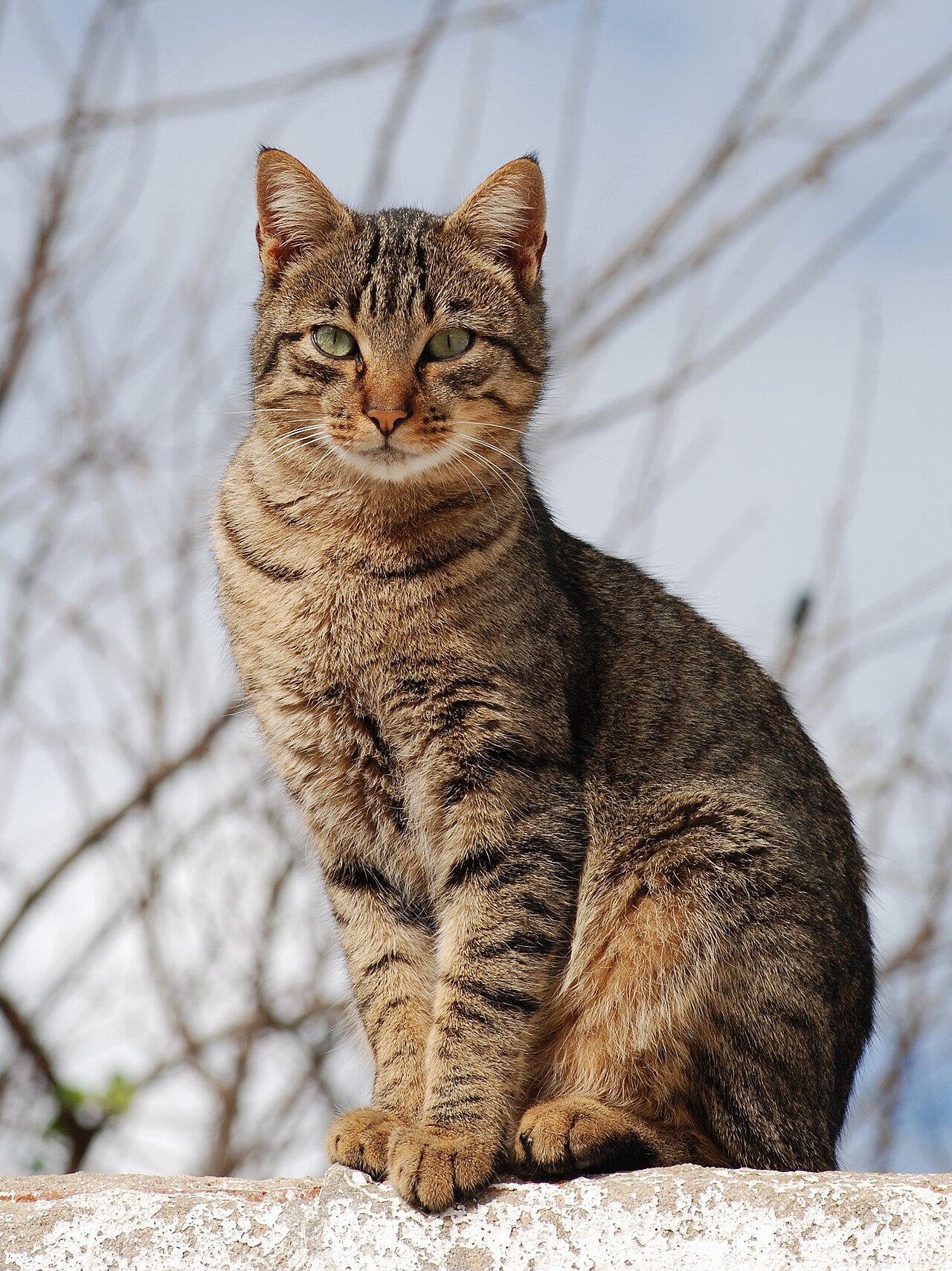
- The Science Behind the Purr: How Cats Make That Sound
- The Role of the Larynx and Diaphragm
- Why Purring Starts So Early
- Why Do Cats Purr? More Than Just Happiness
- Purring as Communication
- Purring Under Stress or Pain
- The Healing Frequency: What the Rumble Does to the Body
- Bone Density and Tissue Repair
- Pain Relief and Stress Reduction
- Purring Across the Cat Family: From Housecats to Big Cats
- The Domestic Cat's Unique Range
- Wild Relatives That Purr
- The "Solicitation Purr": When a Purr Means "Feed Me"
- Does Purring Really Heal? Separating Fact From Hype
- What the Research Actually Shows
- Why the Myth Persists
- How to Interpret Your Cat's Purr
- The Enduring Mystery of the Rumble
- ❓ Frequently Asked Questions
Few sounds in the animal kingdom are as instantly recognizable—or as strangely comforting—as the low, rhythmic rumble of a contented cat. But if you've ever wondered why do cats purr, the answer is far more surprising than simple happiness. Purring is one of the most studied and least understood vocalizations in the feline world, produced not by the vocal cords but by a complex interplay of muscles, bones, and blood flow. It appears in kittens just days old, continues into old age, and shows up in situations ranging from blissful relaxation to serious injury. Over the past two decades, researchers have uncovered evidence that this humble vibration may serve as a built-in healing mechanism, a communication tool, and even a survival strategy. In this article, we'll explore the science behind the purr, the frequencies involved, the many reasons cats use it, and what it might mean for the humans lucky enough to share their homes.
The Science Behind the Purr: How Cats Make That Sound
For decades, scientists debated how cats produce a purr. Unlike a meow, which is generated by air passing over the vocal folds in the larynx, a purr is a continuous, low-frequency sound that doesn't seem to require the same airflow. The prevailing explanation for much of the twentieth century was that the larynx muscles contract and relax rapidly, causing the vocal folds to separate and reconnect about 25 to 30 times per second. This "flutter" creates the purr's characteristic buzz.
More recent research has added a fascinating twist. A 2023 study published in Current Biology found that cats have pads of connective tissue embedded within their vocal folds that may allow them to produce low-frequency purrs passively—without the constant muscle contraction previously assumed. In other words, the purr may be a kind of aerodynamic trick, produced simply by airflow passing through specially adapted tissue. This would explain how cats can purr continuously for long periods without tiring.
The Role of the Larynx and Diaphragm
The larynx, or voice box, sits at the top of the windpipe and houses the vocal folds. During purring, the muscles of the larynx work in coordination with the diaphragm, the large muscle that controls breathing. As air moves in and out, the rapidly vibrating laryngeal muscles modulate the airflow, producing the steady hum. Because the sound is generated during both inhalation and exhalation, a purring cat can keep the rumble going without pausing for breath—a key feature that distinguishes purring from most other vocalizations.
Why Purring Starts So Early
Kittens begin purring within the first few days of life, often before their eyes are even fully open. At this stage, the purr serves an obvious purpose: it signals to the mother that the kitten is alive, warm, and nearby, and it may help strengthen the bond between littermates. Blind and deaf at birth, newborn kittens rely heavily on touch and vibration, and the purr is one of their first tools for communicating safety and contentment.
Why Do Cats Purr? More Than Just Happiness
The most common assumption is that cats purr when they're happy—and often they do. A cat curled up on a sunny windowsill or kneading a soft blanket will frequently purr in long, relaxed waves. But contentment is only one item on a much longer list. Ethologists and veterinarians have documented purring in a wide range of emotional and physical states, some of which are anything but happy.
Purring as Communication
Cats are solitary hunters by nature, but they are also highly social animals capable of complex communication. Purring appears to function as a multipurpose signal—a kind of vocal Swiss Army knife. A mother cat purrs to guide her kittens, and kittens purr to reassure themselves and their siblings. Adult cats may purr to signal peaceful intentions to other cats, reducing tension in shared spaces.
Some cats even develop a specific "solicitation purr"—a higher-pitched, more urgent version embedded with a cry-like frequency—that they use to prompt humans to feed them or open doors. Studies have shown that people find this particular purr harder to ignore than a normal purr, suggesting cats have fine-tuned their vocalizations to exploit human attention.
Purring Under Stress or Pain
Perhaps the most counterintuitive context is distress. Cats have been observed purring during veterinary visits, after injuries, during labor, and even near the end of life. This has led researchers to propose that purring is not merely an expression of emotion but a self-soothing mechanism—a way of calming the nervous system during stressful or painful situations. A cat in a strange environment or recovering from surgery may purr as a form of self-comfort, much as a human might hum or rock to ease anxiety.
The Healing Frequency: What the Rumble Does to the Body
Here is where the story gets genuinely remarkable. Cat purrs typically fall within a frequency range of about 20 to 150 hertz, with the most common range sitting between 25 and 50 hertz. Intriguingly, this overlaps with frequencies that have been studied for their potential therapeutic effects in humans and other animals. Research in fields like vibrational therapy and bone healing has suggested that low-frequency vibrations in the 20–50 Hz range may promote tissue regeneration and reduce pain.
Bone Density and Tissue Repair
Some researchers have hypothesized that purring may help cats maintain bone density and recover from injury. Cats are famously resilient—they can recover from falls and fractures that would severely injure other animals of similar size. While this resilience is largely due to their flexible skeletons and "righting reflex," the vibrational component of purring may offer a supplementary benefit by stimulating bone and muscle tissue. Studies on vibration therapy in humans have shown modest positive effects on bone density and wound healing, lending cautious support to the idea.
Pain Relief and Stress Reduction
Purring may also trigger the release of endorphins—the body's natural painkillers—in the cat itself. This could explain why injured or ailing cats often purr: the vibration may help them cope with discomfort. For humans, the benefits may extend beyond the psychological. Simply listening to a cat purr has been shown to lower heart rate and blood pressure in some studies, and many pet owners report that the sensation of a purring cat on their lap is deeply calming. In this sense, the cat's healing rumble may be a gift that works both ways.
Purring Across the Cat Family: From Housecats to Big Cats
Not all cats purr. The ability is closely tied to the anatomy of the hyoid bone, a small U-shaped structure in the throat. Domestic cats, along with species such as cheetahs, cougars, and lynxes, possess a flexible hyoid that allows them to purr continuously. In contrast, "roaring cats"—lions, tigers, leopards, and jaguars—have a different hyoid structure that allows them to roar but generally not to purr. This divide has long fascinated biologists, though the boundary is not absolute; some big cats produce purr-like sounds, and the mechanics are still debated.
The Domestic Cat's Unique Range
The domestic cat (Felis catus) is a small, agile predator with an average body length of about 18 inches (46 cm) plus a tail of roughly 12 inches (30 cm), and a weight typically between 8 and 12 pounds (3.6–5.4 kg). Its lifespan averages 12 to 18 years indoors, with some cats reaching their late twenties. Domestic cats are crepuscular, most active at dawn and dusk, and obligate carnivores—meaning their diet must consist primarily of animal protein. Their purring, like their hunting, is a highly refined adaptation.
Wild Relatives That Purr
Among wild cats, cheetahs are perhaps the most famous purrers. Unlike lions, cheetahs cannot roar; instead, they chirp, hiss, and purr. Cougars and lynxes also purr, and even some small wildcats produce rumbling vocalizations. Studying these species helps researchers understand the evolutionary origins of purring—likely a primitive feline trait that predates the split between purring and roaring lineages.
The "Solicitation Purr": When a Purr Means "Feed Me"
Cat owners often notice that their pet's purr changes when it wants something. This isn't imagination. A landmark 2009 study by researchers at the University of Sussex analyzed recordings of cat purrs and found that "solicitation purrs"—used when cats wanted food—contained a high-frequency component embedded within the low rumble, similar to a cry. Human listeners, even those with no cat experience, rated these purrs as more urgent and unpleasant than ordinary purrs, and were more likely to respond.
This finding suggests that cats have, over thousands of years of domestication, learned to manipulate human psychology. By mixing a distress-like frequency into an otherwise pleasant sound, they exploit our natural sensitivity to infant cries. It's a striking example of how a simple rumble can be adapted into a sophisticated communication tool.
Does Purring Really Heal? Separating Fact From Hype
The idea that purring has healing properties is appealing, and there is some legitimate science behind it—but it's important not to overstate the case. The strongest evidence comes from studies of vibration therapy in humans and animals, which suggest that low-frequency vibrations can have modest benefits for bone density, circulation, and pain perception. However, no large-scale study has directly proven that a cat's purr heals human disease, and claims that purring "cures" conditions should be treated with skepticism.
What the Research Actually Shows
What the research does support is that purring is associated with relaxation and stress reduction in both cats and humans. Petting a purring cat has been linked to lower blood pressure and reduced anxiety in owners, likely due to a combination of the vibration, the tactile comfort, and the emotional bond. For cats themselves, purring appears to be a coping mechanism—a way of self-regulating in stressful situations.
Why the Myth Persists
The healing-purr story persists because it contains a kernel of truth wrapped in a compelling narrative. Cats do seem to recover from injuries with remarkable speed, and their purring does occur in healing contexts. But correlation is not causation. The purr is likely one small part of a complex web of factors—genetics, physiology, and behavior—that contribute to feline resilience.
How to Interpret Your Cat's Purr
Understanding why your cat purrs can deepen your bond and help you respond to its needs. Here are some practical cues to watch for:
- Relaxed purr: Slow, steady, and accompanied by half-closed eyes, kneading, or a loose posture—your cat is content.
- Urgent solicitation purr: Higher-pitched, more insistent, often near the food bowl or a closed door—your cat wants something.
- Stress purr: Purring in a tense situation, such as a vet visit or after a fright, may be self-soothing. Watch for flattened ears, dilated pupils, or a tucked tail.
- Pain purr: Purring while hiding, refusing food, or moving stiffly can signal discomfort. Consult a veterinarian.
Pay attention to context. A purr is only one part of a cat's communication, and body language tells the rest of the story.
The Enduring Mystery of the Rumble
Despite decades of study, the purr retains an air of mystery. It is at once a simple sound and a deeply complex behavior—an expression of contentment, a plea for food, a self-soothing balm, and possibly a subtle healing vibration. Researchers continue to probe the mechanics of the larynx, the role of the hyoid bone, and the evolutionary pressures that shaped this unique vocalization. What is clear is that the purr is far more than background noise. It is one of the most intimate ways cats communicate with the world, and one of the reasons humans and cats have shared homes for thousands of years.
So the next time a cat settles onto your lap and begins that familiar rumble, listen closely. You're hearing a sound shaped by evolution, refined by domestication, and wrapped in a mystery that science is still working to unravel. Whether it's healing, communicating, or simply enjoying the moment, the purr is a reminder of just how remarkable our feline companions truly are.
❓ Frequently Asked Questions
💬 Do cats purr only when they're happy?
No—cats purr in many emotional states, including contentment, stress, and even pain or illness. Because purring can signal both comfort and distress, always read it alongside body language and context.
💬 Why do cats purr when they're sick or injured?
Purring produces low-frequency vibrations (roughly 25–150 Hz) that may promote healing and reduce pain, and it can also be a self-soothing response. So a sick cat may purr to comfort itself rather than to show happiness.
💬 At what age do kittens start purring, and why?
Kittens can purr within the first few days of life, often while nursing. The vibration and sound help them communicate with their mother and may strengthen the mother-kitten bond.
💬 Can purring really help humans?
Some research suggests a cat's purr vibrations may help lower stress and blood pressure in people, though the evidence is limited. Many owners simply find the sound calming, which can support relaxation.