- The Herding Heritage: Why Do Corgis Herd at All?
- The Heeler's Method: Nips, Not Bites
- Why Do Corgis Herd People, Cars, and Other Pets?
- Common Herding Targets in a Modern Home
- The Body Language of a Working Corgi
- What to Look For
- The Bossy Truth: Why Corgis Are So Opinionated
- Barking, Alertness, and the Watchdog Gene
- Is Herding Harmful? Managing the Instinct Safely
- Practical Strategies That Work
- When Herding Tips Into Trouble
- Corgis in the Real World: Herding Beyond the Farm
- The Bottom Line on Bossy Little Herders
- ❓ Frequently Asked Questions
If you have ever watched a Corgi shoulder-check a toddler away from the stairs, nip at a jogger's heels, or attempt to round up the family cat into the kitchen, you have witnessed one of dogdom's most endearing quirks — and you may have wondered: why do corgis herd everything? The short answer is that these small, long-backed dogs were engineered for centuries to move stubborn cattle across Welsh terrain, and the instincts that made them brilliant at that job do not switch off when the livestock disappears. Understanding that history explains the bossy behavior, the ankle-nipping, and the surprisingly sophisticated herding logic behind those short legs.
The Herding Heritage: Why Do Corgis Herd at All?
The two Corgi breeds — the Pembroke Welsh Corgi and the Cardigan Welsh Corgi — both descend from spitz-type dogs brought to Wales by Flemish weavers and Norse settlers roughly a thousand years ago. They were never lapdogs first; they were working farm dogs on small Welsh holdings, where a dog had to earn its keep. Their job description was specific: drive cattle to market, move sheep between pastures, and keep livestock out of crops, all while staying out of the way of kicking hooves.
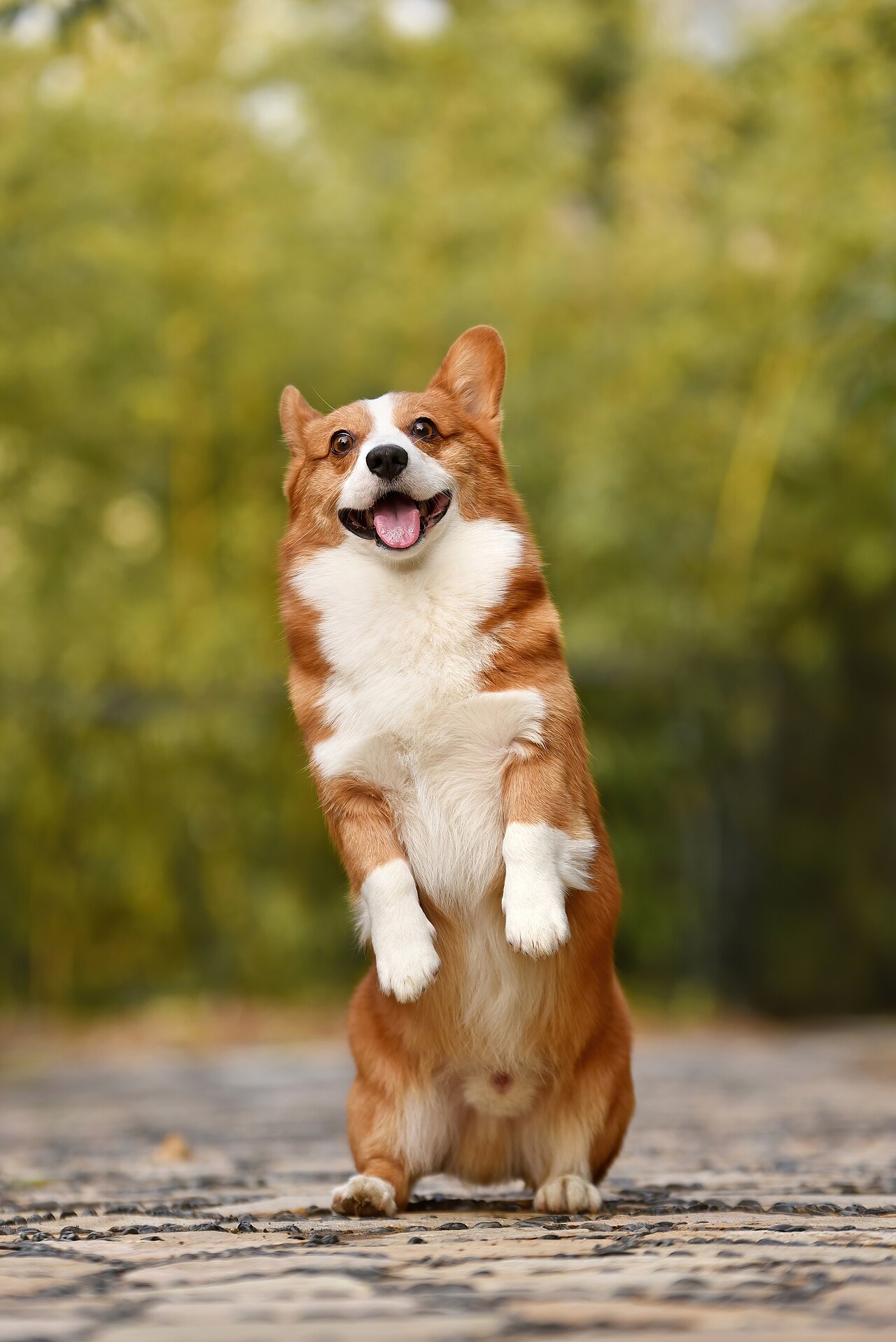
That last part shaped the Corgi's famous body. A dog working cattle needs to duck a swinging hoof, so breeders favored a low-slung frame — a Pembroke stands just 10 to 12 inches at the shoulder and weighs around 25 to 30 pounds, while the slightly larger Cardigan runs 10.5 to 12.5 inches and 25 to 38 pounds. The dwarfism gene that produces those short legs also produces the long back that makes a Corgi so recognizable. In other words, the Corgi's silhouette is a herding tool, not an accident of cuteness.
The Heeler's Method: Nips, Not Bites
Unlike Border Collies, which control stock with an intense "eye" and sweeping outruns, Corgis are heelers. Their traditional technique is to dart in behind a cow or sheep and deliver a quick, controlled nip to the heels or hocks to push the animal forward. Welsh drovers valued this because cattle being walked to market needed steady forward pressure, not circling. A good Corgi could move a small herd of Welsh Black cattle for miles, then trot home and sleep by the fire.
Modern Corgis still perform this behavior — and it is worth noting that the Pembroke Welsh Corgi is recognized by the American Kennel Club in the Herding Group, while the Cardigan sits in the same group. Herding trials exist for both breeds, and Corgis can earn Herding Instinct Certificates and full herding titles, proving the drive is not merely decorative.
Why Do Corgis Herd People, Cars, and Other Pets?
Here is the uncomfortable truth for owners: a Corgi does not distinguish between a Holstein and a human toddler. Herding instinct is triggered by movement — things that flee or drift away from the group. Children running in a yard, a vacuum cleaner rolling across the floor, bicycles on a sidewalk, or a second dog trotting toward the door all read to a Corgi as "stock that needs organizing." The dog is not being naughty; it is applying a thousand-year-old job description to whatever is available.
This is why the bossy stereotype exists. Corgis tend to be confident, vocal, and opinionated — traits a cattle dog needed to stand up to animals twenty times its size. A Corgi that barks at you to hurry up on a walk, blocks the doorway until everyone is assembled, or nudges the cat toward its bed is running the same mental program that once kept Welsh herds together.
Common Herding Targets in a Modern Home
- Children: Running, shrieking kids are irresistible herding targets; ankle-nipping is the classic complaint.
- Other pets: Cats, rabbits, and even larger dogs get rounded up, blocked, or stared at until they move where the Corgi wants.
- Visitors: Some Corgis herd guests toward the living room or bark to "report" arrivals.
- Vehicles and bicycles: Motion triggers the chase-and-contain reflex, which is why leash manners matter enormously.
- Family members: Herding the household into one room at bedtime is a surprisingly common Corgi habit.
The Body Language of a Working Corgi
Herding behavior is not random chaos; it has a recognizable grammar. Watch a Corgi in "work mode" and you will see a distinct set of signals, most of which owners learn to read within weeks.
What to Look For
A herding Corgi typically drops its head and neck low, fixes a hard stare on the target, and moves in a crouched, stalking glide. The ears may flatten slightly, and the tail — naturally bobbed in most Pembrokes, long and fox-like in Cardigans — stiffens with concentration. Then comes the burst: a fast flanking run to get behind the target, followed by the signature nip or a sharp, high-pitched bark delivered right at heel level.
Owners often describe a "Jekyll and Hyde" switch. One moment the dog is a cuddly companion; the next, a child sprints across the lawn and the dog is suddenly a low, intense predator with a job to do. This is normal. The behavior is genetically hardwired, not learned, which is why even Corgis raised in apartments with no livestock exposure will attempt to herd.
The Bossy Truth: Why Corgis Are So Opinionated
The word "bossy" gets used about Corgis constantly, and it is not unfair. Cattle dogs had to be bold, quick-thinking, and willing to make decisions without a human directing every step. A dog that hesitated in front of a half-ton cow was useless. That legacy produces a companion that wants to be involved in everything, has strong ideas about household routine, and will absolutely tell you when you are late with dinner.
This is also why Corgis are famously trainable but not blindly obedient. They are intelligent problem-solvers — Pembroke Welsh Corgis consistently rank among the brighter herding breeds in obedience and rally competitions — and intelligence plus confidence equals a dog that negotiates. A Corgi that has learned "sit" may still offer a bark, a paw, and a pointed look before complying, as if submitting a counterproposal.
Barking, Alertness, and the Watchdog Gene
Welsh farm dogs also served as alarm systems. A Corgi that barked at a stranger approaching the herd was doing valuable work, so the breed retains a strong alert bark and a tendency to announce every delivery driver, squirrel, and leaf that moves. Combined with herding drive, this can produce a dog that barks at the neighbor's cat while physically blocking the family inside the house. Management, not punishment, is the answer.
Is Herding Harmful? Managing the Instinct Safely
Herding itself is not a problem — it is a need. The problem arises when the instinct is expressed on children, guests, or traffic. Suppressing it entirely is both futile and unfair; the goal is redirection. Vets and behaviorists generally recommend giving the dog a legitimate outlet and teaching clear boundaries around the ones that are off-limits.
Practical Strategies That Work
- Provide a job: Herding lessons, treibball (a sport where dogs push large balls into a goal), rally, obedience, or trick training all satisfy the working drive.
- Exercise the body and brain: Corgis are energetic despite their size and need daily walks plus mental challenges; a tired Corgi herds less.
- Teach "leave it" and a rock-solid recall: These two cues prevent most ankle-nipping and chasing incidents.
- Manage children's play: Teach kids to walk rather than sprint past the dog, and separate dog and children during high-energy games until training is solid.
- Redirect the nip: Interrupt with a cheerful cue and offer a toy or a scatter-feeding game instead.
- Use barriers and leashes: Baby gates, tethers during visitor arrivals, and leashed walks in busy areas are simple, humane tools.
It is also worth knowing the breed's health context, because a Corgi in pain behaves differently. Both breeds carry a high risk of intervertebral disc disease due to their long backs — studies suggest a meaningful proportion of Pembrokes will show disc-related problems in their lifetime — so keep them lean and avoid repetitive jumping. Average lifespan is 12 to 15 years, and obesity is a genuine concern; a Corgi should have a visible waist and ribs you can feel under a light cover of fat. Feeding a measured diet of quality dog food, typically around ¾ to 1½ cups per day split into two meals depending on size and activity, keeps the spine and joints healthier.
When Herding Tips Into Trouble
Watch for escalation: hard stares at family members, blocking doorways, guarding one person, or nips that break skin. These can shade into resource guarding or reactivity and deserve a conversation with a certified behavior consultant. Early intervention is highly effective, and most Corgis respond well to force-free training that channels drive rather than punishing it.
Corgis in the Real World: Herding Beyond the Farm
The instinct shows up in surprising places. Corgis compete in AKC herding tests on ducks and sheep, and the breed's herding ability is still evaluated in some countries as part of working-dog certification. Search-and-rescue and therapy work also suit the breed's drive and sociability. On a smaller scale, thousands of owners report their Corgis "herd" the Roomba, corral chickens in backyard flocks, and organize multi-dog households with evident satisfaction.
There is even a practical upside for families with livestock. A well-trained Corgi can move a small flock of poultry or a few sheep with remarkable efficiency, using the same low crouch and quick flank that Welsh drovers relied on centuries ago. The dog is not confused about its identity; it simply never got the memo that the cattle are gone.
The Bottom Line on Bossy Little Herders
So why do corgis herd everything? Because they were bred for a thousand years to do exactly that — move animals bigger than themselves with courage, speed, and a well-timed nip — and the instinct does not care whether the target is a heifer or a five-year-old. The bossy truth is that a Corgi is not trying to dominate your household; it is trying to do its job in a world that no longer has a job for it. Give that drive a legitimate outlet, set clear boundaries around ankles and toddlers, and the same intensity that once drove Welsh cattle to market becomes one of the most charming, engaged, and entertaining companions a family can own.
❓ Frequently Asked Questions
💬 Why do Corgis herd people and other pets?
Corgis are herding dogs bred to move livestock, so they instinctively chase, nip at heels, and circle to control movement. This behavior often transfers to family members, children, and other pets because they see them as part of their 'flock.'
💬 Do Corgis herd because they are trying to be dominant?
Not exactly—herding is mostly an instinctive working behavior rather than a bid for dominance. However, unchecked herding can become bossy and pushy, so training and redirection are important to keep it under control.
💬 How can I stop my Corgi from nipping at heels?
Redirect the herding drive into structured activities like fetch, puzzle games, or dog sports such as agility and rally, and reward calm behavior around feet and children. Consistently interrupt nipping with a firm 'leave it' and give an alternative outlet instead of punishment.
💬 Is herding behavior normal in all Corgis?
Yes, herding instinct is natural in both Pembroke and Cardigan Welsh Corgis since both are cattle-herding breeds. The intensity varies by individual, but most Corgis will show some herding behaviors like circling, staring, or heel-nipping.