- Cow Stomachs: Not Four, But One Amazing Organ
- A Quick Tour of the Four Chambers
- The Rumen: A Fermentation Vat the Size of a Bathtub
- The Rumen in Action
- The Reticulum: The Honeycomb That Filters Danger
- The Omasum: Nature's Water Press
- The Abomasum: The "True Stomach" at Last
- A Note on the Young Calf's Digestive System
- From Grass to Milk: A Step-by-Step Journey Through Cow Stomachs
- Step 1: Grazing and Swallowing
- Step 2: Fermentation in the Rumen
- Step 3: Rumination—Chewing the Cud
- Step 4: Passage Through the Omasum and Abomasum
- Step 5: Absorption in the Small Intestine
- Why Did Cows Evolve Such Complex Stomachs? The Ruminant Advantage
- Real-World Examples of Ruminant Diversity
- Conclusion: The Truth About Cow Stomachs
- ❓ Frequently Asked Questions
Few things are more misunderstood than cow stomachs, so let's settle the matter right now: cows don't actually have four separate stomachs. Instead, they possess a single, remarkably complex stomach divided into four distinct compartments, each with its own specialized job. This extraordinary digestive system—known scientifically as a ruminant digestive tract—has allowed cattle to thrive on a diet of grass that would be indigestible to most other mammals, and it is the biological engine behind the milk, meat, and leather that humans have depended on for thousands of years.
Cow Stomachs: Not Four, But One Amazing Organ
When people talk about a cow's "four stomachs," they are really referring to the four chambers of a single stomach: the rumen, the reticulum, the omasum, and the abomasum. Together these chambers form a food-processing system unlike almost anything else in the animal kingdom. In a mature dairy cow, this entire organ weighs about 50 kilograms (110 pounds) and can hold anywhere from 100 to 150 gallons (380 to 570 liters) of material at full capacity—roughly the same volume as a large household bathtub.
The four chambers are arranged in sequence, and food moves through them in a specific order. But the fascinating part is that digestion is not a simple one-way journey. Much of the food takes a detour back to the mouth for a second round of chewing, a process called rumination or "chewing the cud." This back-and-forth system allows the cow to extract every possible bit of nutrition from tough plant material.
A Quick Tour of the Four Chambers
- Rumen (the fermentation vat): The largest chamber, holding up to 60 gallons (227 liters) in a mature cow.
- Reticulum (the honeycomb): A smaller chamber lined with a honeycomb-like pattern that collects heavy objects and works with the rumen.
- Omasum (the water press): A chamber with many muscular folds that squeezes water out of digested food.
- Abomasum (the true stomach): The only chamber that works like our own stomach, producing acid and digestive enzymes.
The rumen and reticulum are often grouped together as the reticulorumen because they function as one continuous fermentation unit. Together, they account for roughly 85% of the stomach's total volume. The omasum and abomasum make up the remaining 15%, but as you'll see, every chamber punches far above its weight.
The Rumen: A Fermentation Vat the Size of a Bathtub
The rumen is the true workhorse of the cow's digestive system. It fills most of the left side of the abdominal cavity and behaves less like a stomach and more like a giant, warm, oxygen-free fermentation tank. Inside this chamber live an unfathomable number of microorganisms—bacteria, protozoa, fungi, and archaea—with a single drop of rumen fluid containing up to 10 billion bacteria and a million protozoa. That's more microorganisms in one cow's rumen than there are people on Earth.
These microbes are the real digesters. Grass is composed largely of cellulose, a tough plant fiber that cows cannot break down using their own enzymes. The microbes can, though. They ferment the cellulose into volatile fatty acids (VFAs), which the cow then absorbs through the rumen wall and uses as its primary energy source. In fact, VFAs supply about 70% of a cow's daily energy requirements. The other nutrients—amino acids from microbial protein, B vitamins, and vitamin K—are produced by the microbes as they grow, divide, and eventually die, providing the cow with a constant supply of high-protein "meals" in the form of microbial bodies.
The Rumen in Action
The rumen is not a passive storage bag. Its muscular walls contract in rhythmic waves, one to three times per minute, churning the contents and mixing food with microbes and saliva. These contractions push fine particles toward the next chamber while floating coarser material up toward the top for regurgitation and re-chewing. The cow also releases enormous amounts of gas during this process—largely carbon dioxide and methane—which it eliminates by belching. A single dairy cow can produce up to 264 pounds (120 kilograms) of methane gas per year, a fact that makes cattle a major topic of discussion in climate research. The rumen itself operates at a warm 100 to 104°F (38 to 40°C), keeping the microbial stew at a perfect temperature for fermentation.
The Reticulum: The Honeycomb That Filters Danger
Sitting directly in front of the rumen, just behind the cow's heart, is the reticulum. This chamber is much smaller than the rumen, holding only about 5 gallons (19 liters), and its internal lining bears a striking honeycomb pattern of ridges and pockets. The honeycomb surfaces trap and concentrate heavy objects that the cow accidentally swallows while grazing, such as nails, wire, or stones. Because of this, the reticulum has earned the nickname "the hardware stomach."
This filtering function is crucial for wild and pasture-raised cattle, but it can also create problems. A cow that swallows a sharp piece of metal may develop hardware disease, also called traumatic reticuloperitonitis, where the object punctures the reticulum wall and can even travel toward the heart, causing a serious, often fatal infection. Many farmers feed magnets to their cattle as a preventive measure—a single magnet placed inside the reticulum catches stray metal before it can do damage, and it remains there for the rest of the cow's life.
The reticulum also plays a starring role in rumination. When a cow is ready to chew its cud, it uses the muscles of this chamber to form a small ball of softened plant material. That ball is then regurgitated to the mouth, up a muscular tube (the esophagus) driven by reverse peristalsis, where the cow chews it thoroughly. A cow typically spends 6 to 8 hours per day chewing cud, often in a relaxed, half-reclined posture, completing up to 40,000 jaw movements in the process.
The Omasum: Nature's Water Press
From the reticulorumen, the partially digested food moves into the omasum, the third chamber. This is a rounded, thick-walled organ holding roughly 15 gallons (57 liters), and its most distinctive feature is its internal lining of numerous long folds, sometimes called "leaves" or "plates." These folds are covered with tough, spiny bumps that grind and crush food particles against one another as the chamber squeezes and relaxes.
The omasum's main job is water absorption and particle size reduction. By the time food reaches this chamber, fermentation in the rumen has extracted most of the soluble nutrients, leaving a liquid-rich slurry. The omasum's folds press against this material, squeezing out excess water and absorbing it directly into the cow's bloodstream. This is an efficient adaptation for animals that may live in dry grasslands where water is scarce. The omasum also continues the mechanical breakdown of food, further reducing particle size so that the digestive enzymes of the next chamber can act effectively. In a sense, the omasum acts as a gatekeeper, ensuring that only finely ground material moves onward, much like a high-quality plumbing filter.
The Abomasum: The "True Stomach" at Last
The fourth and final chamber is the abomasum, which is often called the "true stomach" because it functions in the same way as the stomach of a human, dog, or pig. It is a relatively small, J-shaped chamber holding about 4 to 5 gallons (15 to 19 liters). The abomasum secretes hydrochloric acid and digestive enzymes, including pepsin and rennet, which break down microbial protein and any remaining plant proteins into amino acids.
One of the most famous products of the abomasum is rennet, an enzyme complex that has been used for centuries in cheese making to coagulate milk. Traditional rennet is harvested from the abomasum of young calves, though modern cheese production increasingly uses microbial or plant-based alternatives. The acidic environment of the abomasum also serves a protective role, killing many of the harmful bacteria that might have survived the earlier fermentation chambers before the food passes into the small intestine, where the cow's own digestion truly begins.
A Note on the Young Calf's Digestive System
Calves are born with an underdeveloped rumen, and their abomasum is actually the largest chamber at birth. This makes perfect sense, because a baby calf's diet consists almost entirely of milk, which requires acid and enzyme digestion rather than fermentation. As the calf begins to nibble on grass and hay, the rumen gradually expands and develops its population of microbes. By the time the calf is a year old, the rumen has become the dominant chamber, and the animal is fully weaned and grazing like an adult. This developmental journey is a living demonstration of how diet shapes anatomy over an individual's lifetime.
From Grass to Milk: A Step-by-Step Journey Through Cow Stomachs
Now that we have toured the four chambers individually, it is helpful to see how they work together in a complete digestive cycle. The journey of a single mouthful of grass shows just how brilliantly coordinated this system really is.
Step 1: Grazing and Swallowing
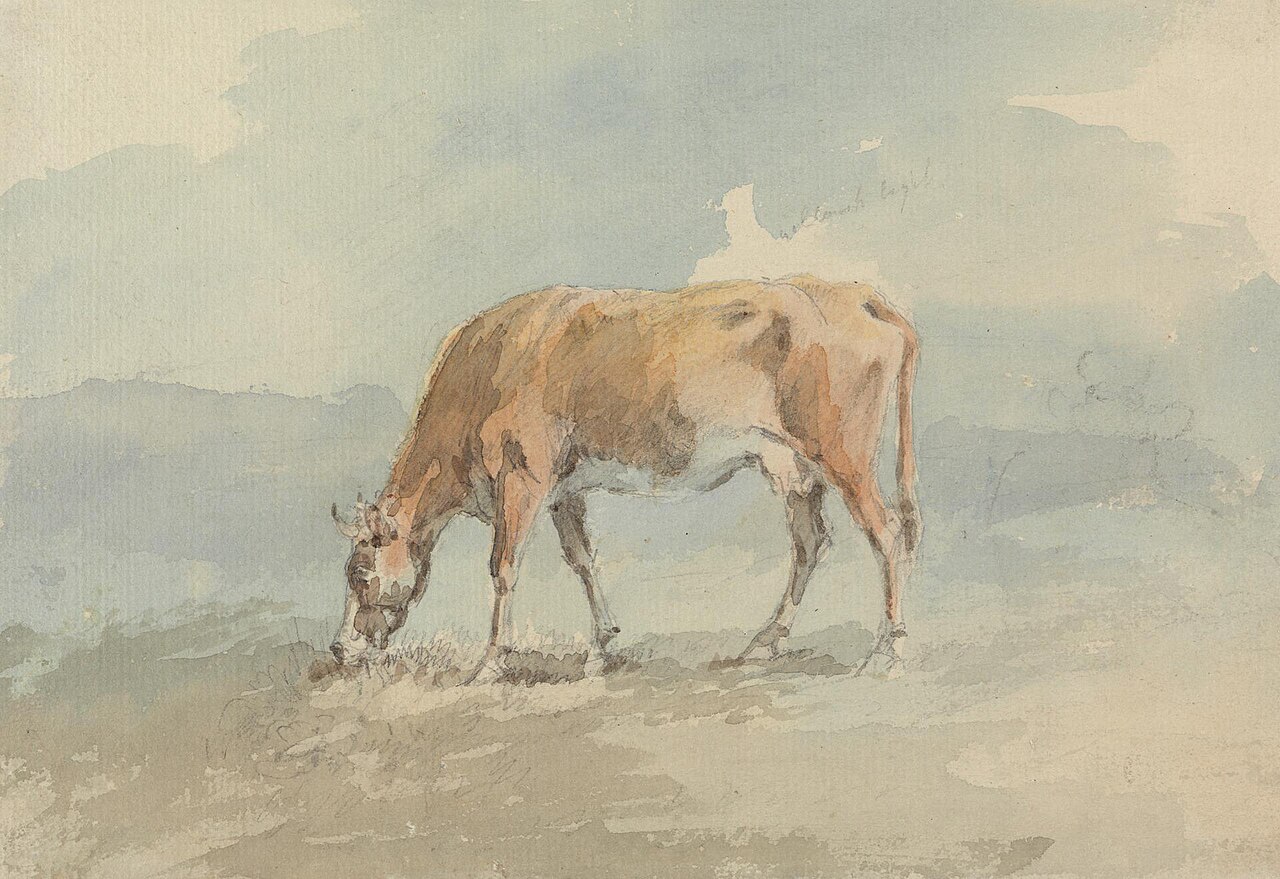
A dairy cow grazes for 6 to 11 hours per day, biting off grass with a sweeping motion of her tongue. She chews the grass only briefly—just enough to moisten it into a rough bolus—and then swallows it down the esophagus into the rumen and reticulum. This initial chew is not about breaking down the food; it is simply about getting it into the fermentation tank as quickly as possible.
Step 2: Fermentation in the Rumen
Inside the reticulorumen, the grass is soaked in saliva. A cow can produce more than 50 gallons (190 liters) of saliva every single day, and that saliva acts as a powerful natural buffer, containing sodium bicarbonate and phosphate to keep the rumen pH stable between 6 and 7. The microbial population immediately begins attacking the grass, fermenting cellulose and starch into VFAs while also producing gases. The cow will burp these gases away many times per hour.
Step 3: Rumination—Chewing the Cud
During quiet moments, the cow regurgitates a fish-shaped bolus of partly fermented grass from the reticulum back to her mouth. She chews it thoroughly, grinding it with her broad molar teeth—an adaptation for crushing tough plant material that humans and other omnivores lack. A cow spends about 30 to 50 seconds chewing each bolus before swallowing it again. This process is repeated for 6 to 8 hours daily, ultimately increasing the surface area of the plant material so that microbes can digest it even more efficiently.
Step 4: Passage Through the Omasum and Abomasum
Once the food particles are small enough, they flow out of the reticulorumen into the omasum, where water is squeezed out and further grinding occurs. The concentrated slurry then enters the abomasum, where acid and enzymes strip away the last usable nutrients and kill off remaining microbes heading toward the intestine.
Step 5: Absorption in the Small Intestine
Finally, the liquid digesta passes into the small intestine, a long tube measuring up to 150 feet (46 meters) in a mature cow. Here, the cow's own enzymes and those from the pancreas complete the breakdown of fats, starches, and proteins. Nutrient molecules are absorbed through the intestinal wall into the bloodstream and delivered to tissues throughout the body. The liver processes these nutrients, and in a lactating dairy cow, the mammary glands draw upon them to produce up to 7 gallons (26 liters) of milk per day. It takes roughly two to three days for a single mouthful of grass to make the full journey from pasture to production.
Why Did Cows Evolve Such Complex Stomachs? The Ruminant Advantage
The evolution of the four-chambered stomach is one of the great success stories in biology. Cattle, along with their relatives—sheep, goats, deer, moose, elk, bison, antelope, and giraffes—belong to a group called ruminants, all of which share this specialized digestive system. Ruminants evolved about 40 to 50 million years ago, during a period when Earth's climate was cooling and dense forests were giving way to open grasslands. Eating these new, abundant grasses required a way to break down cellulose, and the fermentation strategy won out.
The key advantage of the ruminant stomach is that it allows animals to eat vast quantities of low-quality forage rapidly, without spending hours chewing. A cow can graze quickly, swallow half-chewed grass into the rumen, and then retreat to a safe, quiet location to chew the cud at leisure. This is a massive survival benefit in open habitats where predators like wolves or lions are a constant threat. A grazing gazelle or wildebeest can bolt mouthful after mouthful into the safety of the herd before ever pausing to chew, and only later, when the danger has passed, does it ruminate in peace.
Real-World Examples of Ruminant Diversity
- Holstein cow: The black-and-white dairy breed that can produce over 22,000 pounds (10,000 kilograms) of milk per year on a diet of grass, hay, and silage.
- Giraffe: A browsing ruminant with the same four-chambered stomach, living in African savannas, feeding on acacia leaves, and reaching a lifespan of 25 to 30 years in the wild.
- White-tailed deer: A wild ruminant found in North American forests and grasslands, living 6 to 14 years, with a stomach that allows it to switch between grass, leaves, twigs, and even acorns seasonally.
- Scottish Highland cattle: A hardy beef breed from the Scottish Highlands, famous for its long horns and shaggy coat, which thrives on poor-quality grazing where many other livestock would starve.
Ruminants are not the only animals to use fermentation, however. Camels, llamas, and alpacas are pseudoruminants with a three-chambered stomach, while horses and rabbits ferment plant matter in an enlarged hindgut (the cecum and colon). But neither system is as efficient as the ruminant's four-part design. Because fermentation occurs before the stomach's acid digestion in ruminants, the microbes themselves are digested afterward, providing a double payoff: the plant material is broken down, and the cow harvests the microbial bodies as a rich source of protein. Hindgut fermenters cannot recover the nutrients locked inside their microbes, which is why horses need higher-quality forage than cows to maintain the same body condition.
Research into cattle behavior further illustrates the brilliance of this system. In pasture settings, cows show a predictable daily rhythm: grazing in the early morning and late afternoon, ruminating heavily during midday and overnight, and spending the evenings socializing and resting. A herd of cattle can convert neglected grassland into high-quality animal protein and nutrient-dense milk, supplying human communities with food in environments where crop farming is impossible. This is why cattle have accompanied humans for over 10,000 years, from the humped zebu cattle of tropical India to the cold-adapted Icelandics of the far North.
Conclusion: The Truth About Cow Stomachs
So the answer to why cows have "four stomachs" is both simpler and more fascinating than the myth suggests. Cows have a single stomach, but it is a masterwork of evolutionary engineering—a fermentation vat, a safety filter, a water press, and an acid-digestion chamber all in one. This system lets cattle and their ruminant relatives turn sunbaked grass, straw, and other tough plant matter into muscle, milk, and energy, feeding billions of humans in the process. The next time you see a cow calmly chewing her cud in a meadow, remember that she is not simply eating; she is running a living bioreactor millions of years in the making, and every one of those slow, rhythmic jaw movements is the heartbeat of a remarkable biological machine.
❓ Frequently Asked Questions
💬 How many stomachs does a cow actually have?
Cows have one stomach with four compartments: the rumen, reticulum, omasum, and abomasum. Although often described as having 'four stomachs,' it's actually a single, complex digestive organ. The abomasum is the only true stomach, similar to a human's.
💬 What is the function of each cow stomach compartment?
The rumen and reticulum ferment plant material with microbes, the omasum absorbs water and nutrients, and the abomasum works like a human stomach with digestive enzymes. This four-part system lets cows break down tough grass and other fibrous plants.
💬 Why do cows chew cud?
Chewing cud (rumination) is how cows further break down partially digested food that was returned from the rumen. This re-chewing helps grind tough plant matter into smaller pieces, making it easier for microbes to digest and absorb nutrients. It's essential for extracting energy from grass.
💬 Can cows survive without all four stomach compartments?
No, all four compartments work together to digest tough plant cellulose, which other animals can't do efficiently. If one compartment fails, the cow would suffer severe digestive problems and likely die. Their whole survival depends on this unique system.