- The Anatomy of Cuttlefish W-Shaped Pupils
- How the W-Shape Works
- A Unique Optical Pathway
- Why Cuttlefish W-Shaped Pupils Enhance Camouflage
- Color Vision Without Color Receptors
- Detecting Polarized Light
- Matching Background Texture
- Depth Perception and Predatory Accuracy
- Binocular Overlap and the W-Pupil
- Motion Detection in Murky Water
- The W-Shaped Pupil and Light Management
- Controlling Glare from Above
- Adapting to Depth
- Comparative Eye Shapes in the Animal Kingdom
- Other Cephalopod Pupils
- Vertebrate Pupil Shapes
- Behavioral Evidence: How Cuttlefish Use Their Eyes
- Hunting Behavior
- Camouflage in Action
- Social and Mating Displays
- Evolutionary Origins of the W-Shaped Pupil
- From Round to Slit to W
- Selection for Camouflage
- Conclusion: The Genius of the W-Shaped Pupil
- ❓ Frequently Asked Questions
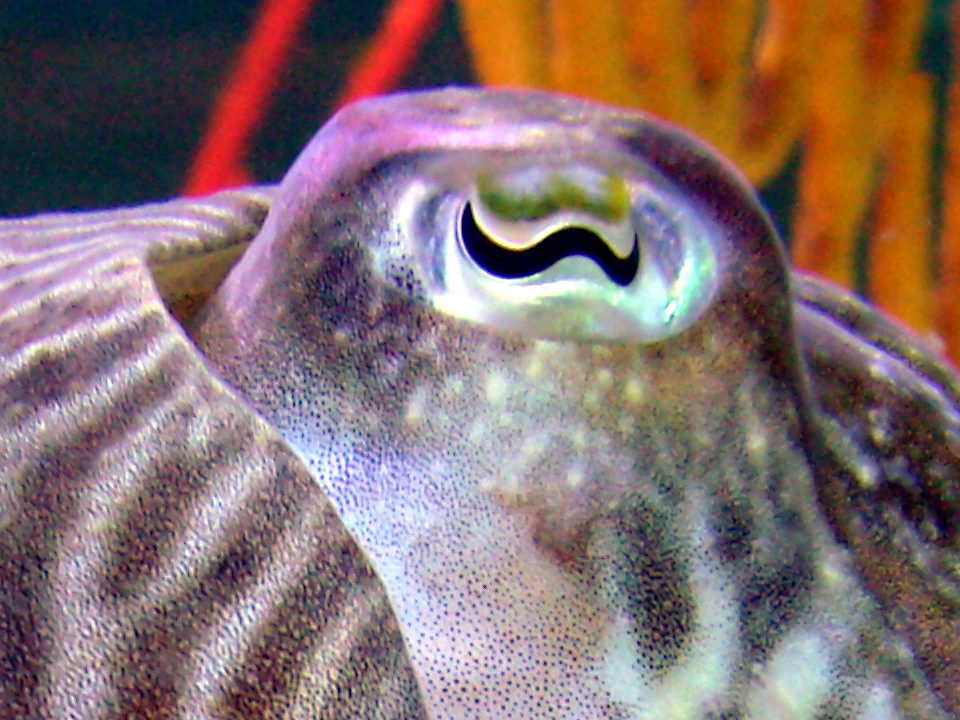
The first thing most people notice when they look at a cuttlefish isn't its rippling skin or its eight writhing arms—it's the eye. And inside that eye, the pupil is a stark, unmistakable letter “W.” This bizarre feature, known as cuttlefish W-shaped pupils, is one of the most distinctive adaptations in the animal kingdom. But why would an intelligent, soft-bodied mollusk evolve such a strange visual system? The answer lies in a combination of physics, ecology, and the unique challenges of life as a master of camouflage.
The Anatomy of Cuttlefish W-Shaped Pupils
To understand why the pupil is shaped like a W, we first need to look at how a cuttlefish eye is built. Unlike human eyes, which have a single lens that focuses light onto a retina, cuttlefish eyes are remarkably similar to vertebrate eyes in structure—a classic case of convergent evolution. However, the pupil shape is radically different.
How the W-Shape Works
The pupil is not a static hole. In bright light, the cuttlefish can constrict the W into a tight, almost slit-like shape. In dim light, it expands into a wide, nearly circular opening. The W shape itself is actually created by a fold of the iris that projects into the pupil opening. This creates multiple distinct points of entry for light, which has profound effects on image formation.
A Unique Optical Pathway
Because of the W-shaped aperture, light enters the eye from several different angles simultaneously. This creates a phenomenon similar to a pinhole camera effect across multiple points. The cuttlefish retina has a high density of photoreceptor cells, and the W-pupil helps direct light onto a specific region of the retina called the “optic stalk” area, which is believed to be responsible for high-acuity vision in the forward direction.
Why Cuttlefish W-Shaped Pupils Enhance Camouflage
One of the most compelling reasons for the W-shaped pupil is its role in the cuttlefish's legendary camouflage abilities. Cuttlefish can change color, texture, and even shape in milliseconds to blend into virtually any background. But to do this, they must first accurately perceive that background.
Color Vision Without Color Receptors
Cuttlefish are colorblind in the traditional sense—their eyes contain only one type of photoreceptor cell, meaning they cannot distinguish wavelengths (colors) directly. Yet they produce incredibly accurate color matches. The leading hypothesis is that the cuttlefish W-shaped pupils act as a chromatic aberration device. By focusing different wavelengths of light at slightly different points on the retina, the pupil creates a “spectral fingerprint” of the surrounding environment. The cuttlefish's brain then interprets these subtle differences in focal length to “see” color, even though its eyes lack color-sensitive cones.
Detecting Polarized Light
Cuttlefish are also sensitive to polarized light—light waves that vibrate in a single plane. Many fish and invertebrates use polarization for detecting prey, predators, or mates. The W-shaped pupil, combined with the arrangement of photoreceptors, may enhance the cuttlefish's ability to detect polarization patterns. This is crucial for identifying transparent prey, such as jellyfish larvae or shrimp, which are nearly invisible to unpolarized light.
Matching Background Texture
To camouflage effectively, a cuttlefish must not only match color but also the visual texture of its surroundings—such as the pattern of sand, coral, or seaweed. The W-pupil's ability to collect light from multiple angles helps the cuttlefish build a more detailed, high-contrast image of the substrate. This allows it to activate the appropriate chromatophores (pigment cells) and papillae (skin bumps) to mimic the exact pattern.
Depth Perception and Predatory Accuracy
Cuttlefish are active predators. They feed primarily on small fish, crabs, shrimp, and other mollusks. A typical adult cuttlefish, such as the common cuttlefish (Sepia officinalis), can grow up to 49 cm (19 inches) in mantle length and weigh over 4 kg (9 lbs). They live for only one to two years, so every meal counts. Accurate depth perception is essential for striking at fast-moving prey.
Binocular Overlap and the W-Pupil
The W-shaped pupil creates a wide field of binocular overlap—the area where both eyes see the same object. In humans, binocular vision gives us excellent depth perception. In cuttlefish, the W-pupil enhances this overlap, allowing the brain to triangulate the exact distance to a target. When a cuttlefish shoots out its two long tentacles to capture a shrimp, the strike is precise to within a few millimeters. The W-pupil helps ensure that miss is rare.
Motion Detection in Murky Water
Cuttlefish live in coastal waters, often in seagrass beds, rocky reefs, or sandy bottoms where visibility can be poor. Their W-shaped pupils are particularly good at detecting motion against a complex background. The multiple light-entry points create a kind of “motion parallax” effect, where the relative movement of objects across the retina is exaggerated. This helps the cuttlefish spot a crab scuttling sideways or a fish darting away, even when the water is cloudy with sediment.
The W-Shaped Pupil and Light Management
Like all cephalopods, cuttlefish are sensitive to light levels. They are most active during the day but can hunt at dawn, dusk, and even at night. The pupil shape is a sophisticated tool for managing light intake across a wide range of conditions.
Controlling Glare from Above
In shallow water, the sun creates intense glare from the surface. The W-shaped pupil, when constricted, creates multiple small apertures that act like a natural glare shield. This reduces the amount of scattered light entering the eye from above, improving contrast when looking downward or forward. It is similar in principle to the “sunglasses” effect of a slit pupil in a cat or a goat, but optimized for an aquatic environment.
Adapting to Depth
Cuttlefish can be found from the intertidal zone down to depths of 200 meters (656 feet). At different depths, the spectrum of available light changes dramatically. Red light is absorbed first, leaving only blue-green light at depth. The W-pupil's ability to vary its aperture size allows the cuttlefish to adjust to these changing light conditions without losing image quality. In deep water, the pupil opens wide to capture every available photon, while in shallow, bright water, it constricts to a thin W to prevent overexposure.
Comparative Eye Shapes in the Animal Kingdom
The cuttlefish is not alone in having an unusual pupil shape. Many animals have evolved specialized pupils for specific ecological niches, but the W shape is unique to cuttlefish and some related cephalopods.
Other Cephalopod Pupils
Close relatives of the cuttlefish include squid and octopuses. Squid often have round or slightly oval pupils, while octopuses typically have horizontal slit pupils. The cuttlefish W-shaped pupils are distinct even among cephalopods. This suggests that the W shape is specifically adapted to the cuttlefish's lifestyle, which involves a high degree of bottom-dwelling (benthic) activity and complex camouflage.
Vertebrate Pupil Shapes
Goats and sheep have horizontal rectangular pupils, which give them a wide panoramic view and help them see predators on the horizon. Cats and snakes have vertical slit pupils, which enhance depth perception for ambush hunting. The W shape of the cuttlefish is a more complex geometry that combines elements of both—providing a wide field of view, excellent depth perception, and specialized light management for color-blind color matching. No vertebrate has evolved a W-shaped pupil, making the cuttlefish a true outlier in visual evolution.
Behavioral Evidence: How Cuttlefish Use Their Eyes
Observing cuttlefish behavior in the wild and in aquariums provides direct evidence of how the W-shaped pupil is used.
Hunting Behavior
When a cuttlefish spots prey, it often positions itself so that the prey is directly in front of its eyes. It then slowly approaches, using its arms to “walk” along the substrate. The W-pupil allows it to keep the prey in sharp focus while simultaneously monitoring the surrounding area for predators. The strike is incredibly fast—less than a second—and the accuracy is almost 100% when the cuttlefish is in good visual condition.
Camouflage in Action
Aquarium studies show that cuttlefish can match the color and pattern of a checkerboard, a piece of coral, or even a photograph of a seabed. They do this by scanning the background with their eyes, then adjusting their skin in real time. The W-pupil is critical for this process because it provides the high-contrast, multi-angle visual input needed to analyze the background texture. If the pupil is damaged or covered, the cuttlefish's camouflage ability is severely impaired.
Social and Mating Displays
Cuttlefish also use their eyes for communication. Males perform elaborate courtship displays, flashing bright colors and patterns to attract females and intimidate rivals. The W-pupil helps them see these displays clearly, even in dim or complex lighting conditions. Females choose mates based on the quality of the display, so good vision is directly linked to reproductive success.
Evolutionary Origins of the W-Shaped Pupil
How did the cuttlefish get its W-shaped pupil? The fossil record of cephalopods dates back over 500 million years, but soft tissues like eyes rarely fossilize. However, we can infer the evolutionary path by looking at living relatives.
From Round to Slit to W
The earliest cephalopods likely had simple round pupils, similar to modern nautiluses. As some lineages moved into shallow, complex environments, selective pressure favored pupils that could manage glare, enhance contrast, and improve depth perception. A slit pupil was the first step, as seen in octopuses. The cuttlefish lineage took this a step further by adding the characteristic W-shaped fold. This fold likely evolved as a way to create multiple focal points without sacrificing the benefits of a slit pupil.
Selection for Camouflage
The most powerful driver was probably the need for advanced camouflage. Cuttlefish are soft-bodied and slow-moving compared to many of their predators, such as dolphins, seals, and large fish. Their best defense is to disappear. Any genetic mutation that improved their ability to see and match their environment would have been strongly favored. The W-shaped pupil provided a unique optical solution that allowed color-blind animals to become masters of visual deception.
Conclusion: The Genius of the W-Shaped Pupil
The cuttlefish W-shaped pupils are far more than a quirky anatomical feature. They are a masterful evolutionary adaptation that solves multiple visual challenges simultaneously: enabling color vision without color receptors, enhancing depth perception for precise strikes, managing light in a variable underwater world, and providing the high-resolution visual input needed for split-second camouflage. This bizarre pupil is a key reason why cuttlefish are among the most intelligent and successful invertebrates in the ocean. Understanding it gives us a deeper appreciation for the incredible diversity of life—and the many ways that evolution has solved the problem of seeing the world. Next time you see a cuttlefish, look into its eyes. You are looking at one of the most sophisticated visual systems on Earth, hiding in plain sight behind a simple letter of the alphabet.
❓ Frequently Asked Questions
💬 What is the purpose of W-shaped pupils in cuttlefish?
The W-shaped pupils help cuttlefish perceive depth and color in their underwater environment by controlling light entry in a unique way, allowing them to see in both bright and dim conditions while also enhancing contrast for spotting prey.
💬 How do W-shaped pupils improve cuttlefish vision?
The W shape creates a narrow horizontal slit that reduces light scatter from above and below, giving cuttlefish a wide field of view with sharp focus on the front and sides, which is crucial for detecting predators and prey.
💬 Do cuttlefish have better eyesight than other cephalopods?
Yes, cuttlefish have excellent eyesight compared to many cephalopods, and their W-shaped pupils are a key adaptation that allows them to see polarized light and judge distances accurately, aiding their camouflage and hunting skills.
💬 Can cuttlefish change the shape of their pupils?
No, cuttlefish cannot change the shape of their pupils; the W shape is fixed, but they can adjust the amount of light entering by dilating or constricting the pupil, similar to how other animals control light intake.