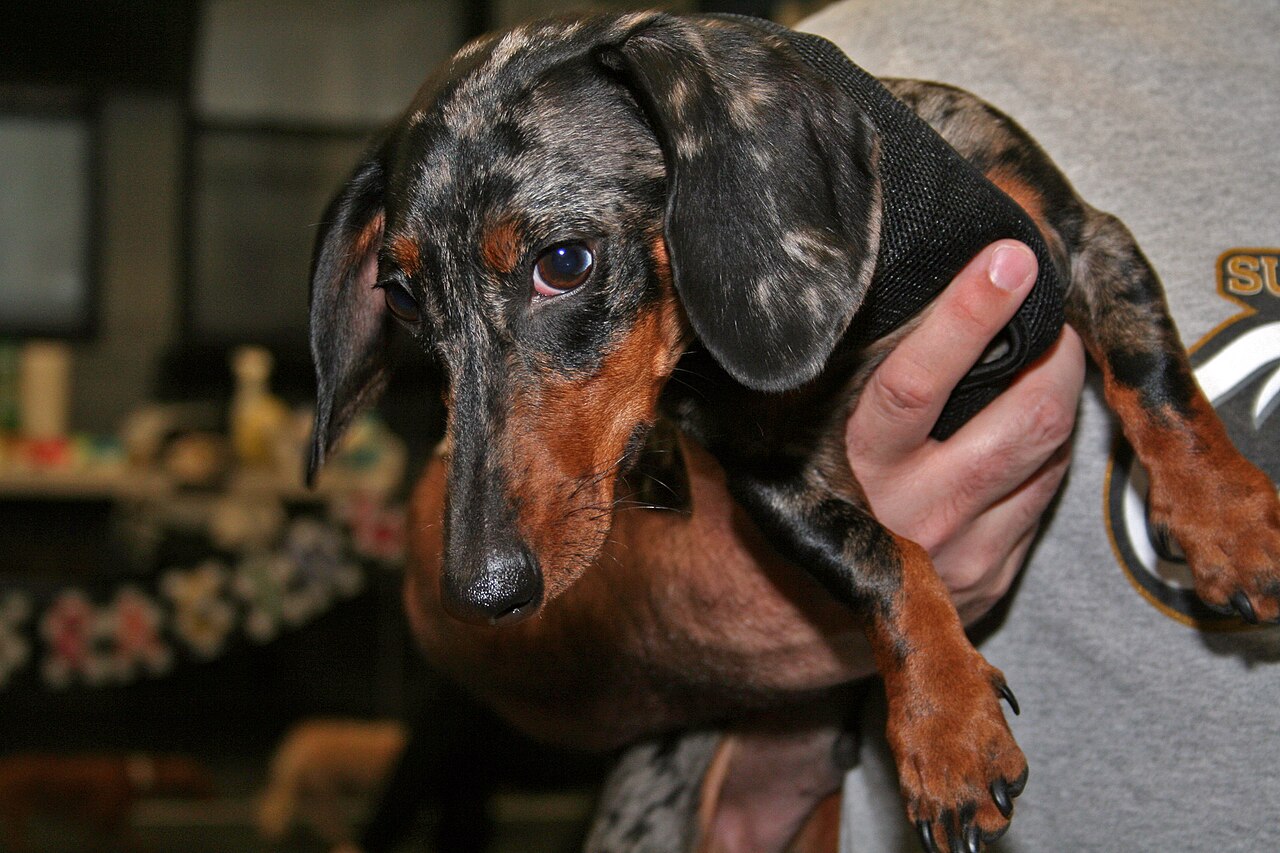
- The Genetic Truth Behind Dachshund Long Bodies
- How the Mutation Works at the Cellular Level
- What the Dachshund's Long Body Was Built For
- Breeding for Extremer Long Bodies
- The Skeletal Anatomy of the Dachshund's Long Body
- Standard, Miniature, and the Range of Sizes
- Health Risks of the Dachshund's Long Body
- Other Health Concerns Linked to the Long Back
- Protecting the Dachshund's Long Back Through Diet and Exercise
- Training and Socialization for a Happy Dachshund
- Dachshund Long Bodies in History and Pop Culture
- Conclusion: The Long Body Is a Double-Edged Inheritance
- ❓ Frequently Asked Questions
The dachshund long bodies are not a random quirk of nature or an exaggerated cartoon trait — they are the direct, measurable result of a specific genetic mutation that early German breeders deliberately selected for over centuries. This unusual silhouette, often compared to a loaf of bread with legs, was engineered for one brutal purpose: to follow badgers into their underground dens and fight them in the dark. Yet the same gene that gives the dachshund its iconic stretched frame also carries serious health consequences, from spinal disc disease to lifelong mobility challenges. Understanding the genetic truth behind this beloved shape is essential for anyone who lives with, or simply admires, one of the world's most recognizable dog breeds.
The Genetic Truth Behind Dachshund Long Bodies
The long body of the dachshund is caused by a condition known as chondrodysplasia, a form of skeletal dwarfism that affects cartilage development. In technical terms, the breed carries an FGF4 retrogene — a copy of a normal gene that has been inserted back into the dog's DNA in a new location, causing it to be over-expressed. This extra copy disrupts the normal growth of long bones, particularly in the limbs, while leaving the spine, skull, and trunk relatively unaffected. The result is a dog with a normal-length body and dramatically shortened legs, creating the saxophone-like profile that defines the breed.
This mutation is not exclusive to dachshunds. The same FGF4 retrogene on chromosome 12 is found in basset hounds, corgis, and Pekingese — all short-legged, long-backed breeds. However, the dachshund was refined around this trait with such intensity that the body-to-leg ratio became more extreme than in most other dogs. The selective breeding that produced the dachshund long bodies was so successful that the mutation is now fixed in the breed, meaning every purebred dachshund carries it. A second FGF4 retrogene on chromosome 18 has also been identified in dachshunds and other chondrodystrophic breeds, and it is strongly linked to premature disc degeneration — a topic we will explore shortly.
How the Mutation Works at the Cellular Level
To understand the genetic truth, it helps to know what a retrogene actually does. Normal FGF4 (fibroblast growth factor 4) is a signaling protein that helps cells grow and differentiate. During fetal development, this protein regulates the pace at which cartilage turns into bone — a process called endochondral ossification. In dachshunds, the duplicated retrogene fires too strongly, causing the long bones of the legs to stop lengthening prematurely. The cartilage in the growth plates becomes disorganized, so the leg bones remain short and often bowed, while the body continues to grow along its normal genetic plan.
Intriguingly, this same mutation affects the intervertebral discs. The nucleus pulposus, the jelly-like center of each spinal disc, undergoes premature hardening and calcification in dachshunds. By the age of two years, many dachshunds already show visible disc calcification on X-rays. This is not a coincidence — it is a byproduct of the exact same cartilage disorder that created the short legs. The genes that gave the breed its working shape also planted the seed for its most common and dangerous medical problem.
What the Dachshund's Long Body Was Built For
The original purpose of the dachshund long bodies was strictly functional. The breed's German name reveals the job — "Dachs" means badger, and "Hund" means dog. Dachshunds were bred in Germany as early as the 15th century, with the modern standard developed in the 17th and 18th centuries specifically to hunt badgers, foxes, and rabbits underground. A badger is a powerful, thick-skinned animal that digs into the ground and fights with astonishing ferocity. To pursue one into its burrow, a dog needed a long, narrow torso to fit through tight tunnels, short legs to keep its body low and close to the earth, a deep chest to hold a large lung capacity, and a huge, domed skull with strong jaws designed for a crushing bite.
The long body was not an aesthetic choice; it was a piece of working equipment. When a dachshund entered a badger set, its owner would often listen from the surface and dig down to the dog's barking position. A skilled dachshund would track the badger, corner it, and hold it at bay by barking and snapping at its face, relying on its long muzzle and loose skin to avoid serious injury. The longer the dog's body, the more reach it had in tight confines, and the easier it was for the dog to maneuver and turn around in a narrow tunnel.
Breeding for Extremer Long Bodies
Although the genetic foot-printing for short legs was already present, early German breeders selectively paired dogs with the longest backs and the shortest, most robust legs. These dogs could enter lower, narrower burrows and were harder for a badger to grab by the belly or throat. Over generations, the dachshund's spine lengthened relative to its height, and its forelimbs became notably shorter and thicker than its hindlimbs — a design that gives the dog a distinctive, rolling gait and extraordinary digging power. By the time the breed was shown at the first modern dog show in Augsburg in 1870, the dachshund long bodies had already been perfected as a fixed breed standard.
This extreme build is also tied to behavior. Dachshunds are famously bold, stubborn, and tenacious — traits that are not accidental but were selected to give the dog the courage to face a badger underground. Breeders deliberately rejected soft or timid dogs. Modern dachshunds may live on couches rather than in forests, but their behavior remains that of a fierce, raccoon-hearted hunter. They will readily dig through carpets, chase squirrels, and attempt to "hunt" small pets, and many dachshunds become deeply bonded to one owner while remaining wary or even grumpy with strangers.
The Skeletal Anatomy of the Dachshund's Long Body
To truly appreciate the dachshund's shape, a short anatomy lesson is useful. The breed typically has 23 to 24 thoracic and lumbar vertebrae, which is not dramatically more than other dogs — most breeds have 20 or 21. The difference is the shape and spacing of those vertebrae, which are individually longer and more loosely articulated, giving the back a visible arch when the dog stands or stretches. The ribcage is deep and elliptical, extending further toward the hindquarters than in most breeds, which protects the internal organs and provides additional lung space for stamina during a long dig.
The front legs are the signature feature. They are extremely short, thick, and slightly bowed, with large, broad paws designed for scooping dirt backward. The hind legs are stronger and more angulated, providing pushing power, while the neck is long and muscular — built to crane into a hole. The combination means that more than 60 percent of a dachshund's body appears to be spine, and the dog's center of gravity sits unusually low to the ground. While this is excellent for digging and tunnel work, it puts enormous stress on the spine during everyday activities like stair climbing, jumping off furniture, or even rising quickly from a nap.
Standard, Miniature, and the Range of Sizes
The dachshund's long body appears in three official size varieties in Europe and two in the United States. The Standard Dachshund weighs between 16 and 32 pounds (7 to 14 kg) and stands roughly 8 to 9 inches tall at the shoulder. The Miniature Dachshund weighs 11 pounds (5 kg) or less and stands 5 to 6 inches tall. In Germany and many European countries, a third size — the Kaninchen, or "rabbit" dachshund — is recognized, weighing between 8 and 11 pounds (3.5 to 5 kg). All three share the same exaggerated body-to-leg ratio, the same domed skull, and the same high risk of spinal problems. Whatever the size, no dachshund should look excessively long or low to the point of impairment; responsible breeders aim for a balanced ratio of body length to height of about 1.8 to 1.
There are also three coat varieties — smooth-haired, long-haired, and wire-haired — each of which arose through crosses with other breeds. The smooth coat is the original and most closely resembles the hunting dog of old. The long-haired variety is thought to have come from crosses with spaniels and setters, while the wire-haired variety originated from crosses with terriers to give the dog extra facial protection in thick brush. Regardless of coat, the skeleton is the same: a long spine, short limbs, and the unmistakable profile that has made the dachshund a cultural icon.
Health Risks of the Dachshund's Long Body
The most serious medical challenge faced by dachshunds is Intervertebral Disc Disease (IVDD). Because of the FGF4 retrogene and the resulting chondrodystrophy, the discs between the vertebrae degenerate and calcify prematurely. In a normal dog, the discs act like soft gel cushions. In a dachshund, the discs become brittle and can suddenly rupture or herniate, pressing against the spinal cord. Studies vary, but it is commonly cited that up to 25 percent of all dachshunds will experience IVDD during their lifetime, making it the most common spinal disorder in the breed. The condition can strike suddenly — a dog may jump off a sofa and immediately yelp, drag its back legs, or lose bladder control.
There is also a second, genetic risk factor at play. Recent research has shown that dachshunds carrying the FGF4 retrogene on chromosome 18 are at an even higher risk of disc calcification than those carrying only the chromosome 12 version. This has led some breeders to use genetic testing to avoid pairing two carriers of the chromosome 18 mutation. However, since the chromosome 12 mutation is fixed in the breed, no dachshund will ever be completely free of chondrodysplasia, and all are predisposed to some degree of disc degeneration.
Other Health Concerns Linked to the Long Back
Beyond IVDD, the long body brings several related issues. Obesity is particularly dangerous for a dachshund because every extra pound places measurable compression on the intervertebral discs. A miniature dachshund that weighs just two pounds more than ideal has, proportionally, the equivalent of a human adult carrying a 40-pound backpack. Overweight dachshunds are also more prone to arthritis, joint pain, and patellar luxation, and they lose the ability to groom themselves properly because they cannot comfortably reach their hind ends. The breed's natural lifespan is a healthy 12 to 16 years, but obesity can shave several years off that figure and dramatically reduce quality of life in old age.
Digestive and respiratory issues are less common but worth noting. The deep chest can predispose some dachshunds to gastric dilatation-volvulus (bloat), although the risk is lower than in deep-chested breeds like Great Danes. Additionally, the breed's short legs mean that a dachshund's belly hangs close to the ground, picking up dirt, mud, and contact with harsh terrain. Owners should regularly check the paws and belly for cuts, burrs, or skin irritation, especially after walks in wooded areas.
Protecting the Dachshund's Long Back Through Diet and Exercise
Owning a dachshund is a long-term commitment to protecting a spine that is, by genetic design, vulnerable. The single most important factor is weight control. A standard dachshund typically needs about 600 to 1,100 calories per day, depending on age and activity level, while a miniature needs only 300 to 500 calories. Owners should feed a high-quality, protein-rich diet and measure every meal rather than free-feeding, as this breed will happily overeat. Treats should be limited to training rewards and should account for no more than 10 percent of daily calories. Regular weighing — once a month at minimum — is essential, because weight gain in dachshunds is subtle until it is dangerous.
Exercise is also critical, but it must be spine-safe. Dachshunds should never be allowed to jump on and off furniture, climb steep stairs, or "bunny-hop" while playing. The standard advice from veterinarians is to provide dogs with ramps for sofas and beds, and to block off staircases or carry the dog when stairs are unavoidable. Daily walks on flat terrain are ideal; these build the muscle mass in the back and legs that helps stabilize the spine. Swimming is also an excellent low-impact exercise, provided the water is warm and calm. However, intense games of fetch involving twisting, high jumps, or hard stops should be avoided, as the rotational forces on the long spine are precisely what triggers disc herniation.
Training and Socialization for a Happy Dachshund
Despite their physical vulnerabilities, dachshunds are robust in temperament. They are intelligent, curious, and remarkably determined — the same stubbornness that made them effective badger hunters can make them challenging to train. Positive reinforcement training works best, as punishment tends to make them defensive or shut down. Early socialization is essential; unsocialized dachshunds can become excessively territorial, and their tendency to bark on command makes them excellent watchdogs but a potential nuisance in apartment buildings. Because they were bred to work independently underground, they do not always come when called — a secure, fenced yard or a well-fitted harness and leash are non-negotiable for outdoor time.
Diet and exercise must also respect the breed's digging instincts. Dachshunds have a natural drive to tunnel; in the wild, they will excavate large burrows in pursuit of small mammals. Providing a sandbox or a designated digging area in the yard can satisfy this instinct without endangering the dog's back. Without an outlet, a bored dachshund may dig into couch cushions, flower beds, or even attempt to tunnel under fences. Mental stimulation, puzzle toys, and nose-work games are all excellent ways to occupy this active, clever breed.
Dachshund Long Bodies in History and Pop Culture
The dachshund's distinctive profile has made it one of history's most beloved and recognizable breeds. Perhaps the most famous dachshund of all is Waldi, the first-ever official Olympic mascot, who debuted at the 1972 Munich Games. Waldi was modeled on a real dachshund and appeared on banners, toys, and memorabilia as a colorful, striped representation of the breed's athletic spirit. Beyond the Olympics, dachshunds were the constant companions of many artists and thinkers. Painter Pablo Picasso owned a dachshund named Lump, who appears in Picasso's reworking of Velázquez's "Las Meninas" and was said to be the artist's musemate. Andy Warhol also had two dachshunds, Archie and Amos, whom he called his "beloved animals."
German Kaiser Wilhelm II was famously photographed with his dachshund Wadl, helping cement the breed's reputation as a symbol of German culture. In more recent years, dachshunds have appeared in countless films, television shows, advertisements, and, of course, as internet celebrities on social media. The breed's long body is a constant subject of visual humor — the "wiener dog" is a fixture of American pop culture, even served a cameo as a hot dog costume in the movie The Ugly Dachshund (1966), which featured a Great Dane raised among dachshunds. That film, though lighthearted, inadvertently demonstrated how deeply the dachshund's shape is tied to its identity: put a giant dog in the same household, and the dachshunds still steal every scene with their swaying, low-to-the-ground walk.
Real-world working dachshunds remain today, too. In parts of Europe, hunters still use dachshunds and dachshund crosses to trail wild boar, deer, and rabbits, and the breed is far more physically capable than its comical appearance suggests. They are also widely used in scent work and search-and-rescue training, and a dachshund's nose is comparable in sensitivity to a bloodhound's, thanks to their large, upright nasal cavity. The long back is not a disability on the field; it is a deliberate tool, and the modern dachshund is just as intense and driven as its ancestors.
Conclusion: The Long Body Is a Double-Edged Inheritance
Why do dachshunds have long bodies? The answer lies in a single genetic mutation, deliberately preserved for its practical value in the hunt. The dachshund long bodies we admire today are a monument to the breed's original role as an underground warrior — a design of function, not fashion. But this genetic inheritance demands respect and responsibility from every owner. The same gene that gave the dachshund its iconic silhouette also handed down a vulnerability to disc disease, a sensitivity to obesity, and a lifelong need for spine-conscious care. With proper diet, careful handling, and an understanding of the breed's spirited, stubborn nature, the dachshund not only survives but thrives, offering 12 to 16 years of loyalty, courage, and unmistakable character. The long body may be a genetic accident, but turning it into a celebrated, beloved companion was anything but.
❓ Frequently Asked Questions
💬 Why do dachshunds have long bodies?
Dachshunds have long bodies and short legs because of a genetic mutation called chondrodysplasia (a form of dwarfism) that stunts limb bone growth while allowing the spine to develop normally. Breeders selected for this trait to help the dogs fit into burrows while hunting.
💬 Are long bodies bad for dachshunds?
The long spine increases the risk of intervertebral disc disease (IVDD), a serious back condition. Owners can reduce risk by preventing jumping, keeping the dog slim, and using ramps.
💬 What gene causes dachshunds to have long bodies?
A mutation in the FGFR3 gene, which controls bone development, causes chondrodysplasia. This affects the growth plates in leg bones, leading to short legs and a comparatively long body.
💬 Can dachshunds be bred without long bodies?
No, the long body and short legs are defining characteristics of the breed. All purebred dachshunds carry the chondrodysplasia mutation, and breeding away from it would no longer produce a dachshund.