- Why Do Dung Beetles Roll Poop? The Short Answer
- Telecoprids, Paracoprids, and Endocoprids
- How Dung Beetles Roll Poop: Anatomy, Technique, and Navigation
- Built for Pushing
- Rolling in a Straight Line
- The Dancing Beetle
- Why Dung Beetles Roll Poop: Food, Family, and Fierce Competition
- Brood Balls: A Nursery on Wheels
- Why Roll Instead of Dig?
- Just How Strong Are Dung Beetles?
- What Do Dung Beetles Eat, and Where Do They Live?
- Why Dung Beetles Roll Poop Matters for the Whole Planet
- Threats and the Future of the World's Rollers
- The Strongest Bug Truth: Small Rollers, Big Impact
- ❓ Frequently Asked Questions
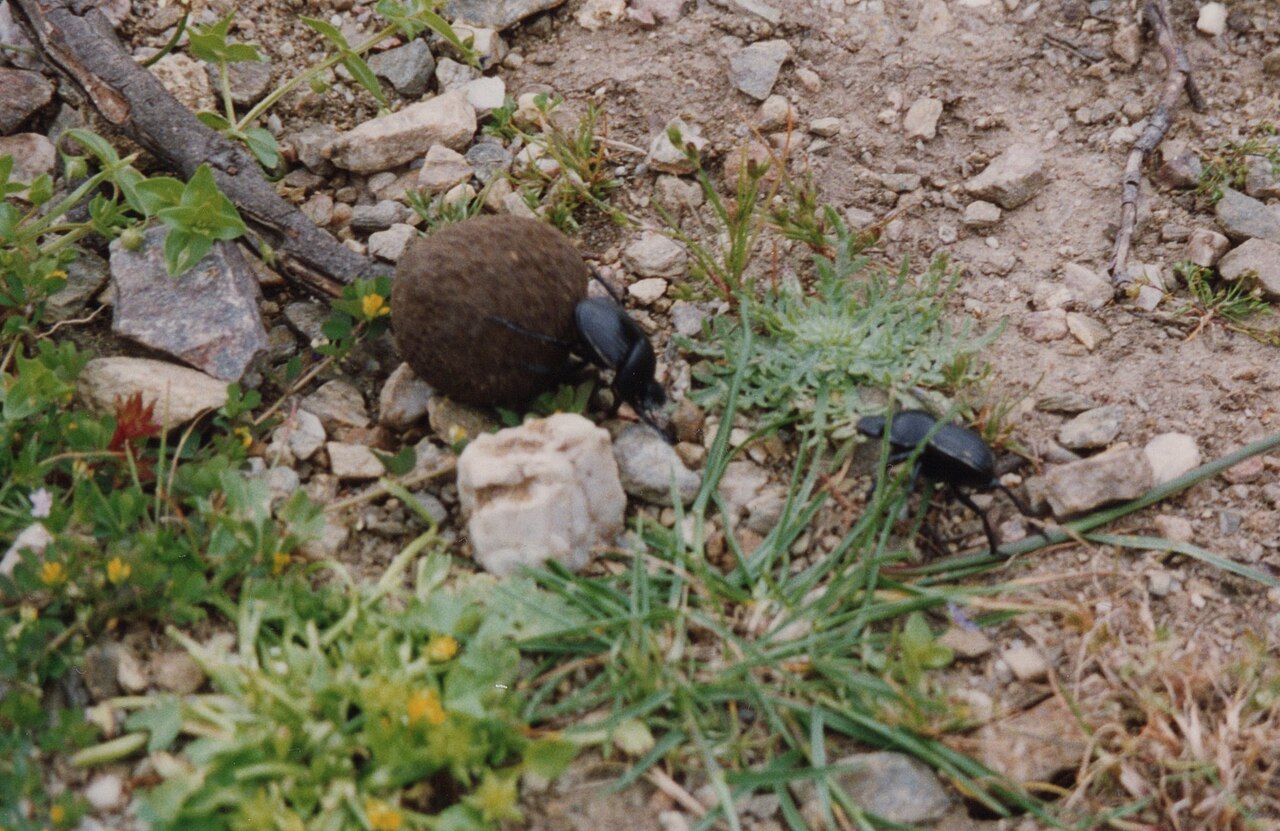
Every year, on every continent except Antarctica, a small army of insects performs one of nature's strangest and most important jobs: dung beetles roll poop into perfect spheres and push them across the ground with their hind legs. It looks comical, almost absurd—a beetle standing on its front legs, shoving a ball of elephant or cattle manure bigger than itself across the savanna. But that behavior, which scientists call telecoprid rolling, is one of the most impressive feats in the animal kingdom. In this article, we'll dig into exactly why dung beetles roll poop, how they do it, how strong they really are, and why their messy work keeps entire ecosystems running.
Why Do Dung Beetles Roll Poop? The Short Answer
Dung beetles roll poop for two practical reasons: to eat it and to raise a family on it. Fresh dung is a rich, moist, nutrient-dense food source, but it is also a crowded and competitive one. A single cow pat can attract hundreds of beetles within minutes, along with flies, worms, and rival species. Rolling a portion of that dung away from the pile lets a beetle claim a private food supply and avoid the feeding frenzy.
For many species, the ball also serves as a portable nursery. A female lays a single egg inside a brood ball, and the larva that hatches has an entire meal waiting for it. In this sense, the rolled ball is both a packed lunch and a cradle—an elegant solution to the twin problems of competition and reproduction.
Telecoprids, Paracoprids, and Endocoprids
Not all dung beetles roll. Scientists divide them into three main groups based on how they handle dung:
- Telecoprids (the rollers): They shape dung into a ball and roll it away before burying it. This group includes the famous Scarabaeus sacer and the rainbow-colored Phanaeus species.
- Paracoprids (the tunnelers): They dig tunnels directly beneath the dung pile and drag dung down into them, stocking underground chambers.
- Endocoprids (the dwellers): They simply live inside the dung pat itself, feeding and breeding without moving anything far.
So when we ask why dung beetles roll poop, we are really asking about the telecoprid strategy—a strategy that evolved independently in several beetle lineages because it works so well.
How Dung Beetles Roll Poop: Anatomy, Technique, and Navigation
Rolling is a full-body operation. A beetle first uses its broad, toothed front legs and shovel-like head to scrape and compact a portion of dung into a rough ball. It then rotates the mass between its legs, adding layers until the sphere is nearly perfectly round. Finally, it climbs on top, plants its front legs on the ground, and pushes backward with its powerful hind legs, rolling the ball ahead of it.
Built for Pushing
Dung beetles are built like tiny bulldozers. Their hind legs are long, curved, and lined with spines that grip the ball, while their front legs are flattened and serrated for digging and shaping. Their exoskeleton is thick and rigid, providing a sturdy frame for pushing loads many times their own body weight. Some species, like the African Scarabaeus rollers, can move balls weighing up to 50 times their own mass—roughly equivalent to a person pushing a fully loaded semi-truck.
Rolling in a Straight Line
One of the most remarkable discoveries in dung beetle research is how they navigate. A beetle rolling a ball cannot see where it is going because it faces backward. Instead, it relies on celestial cues. Experiments have shown that nocturnal species use the polarization pattern of the moonlit sky, while diurnal species use the sun. In 2013, researchers demonstrated that South African dung beetles can even orient themselves using the Milky Way—the first known animal confirmed to navigate by our galaxy. This ability lets a beetle roll its prize in a straight line, away from the crowded dung pile and back to a safe burial spot.
The Dancing Beetle
If you watch a rolling beetle closely, you may see it climb onto its ball and rotate in place. Scientists call this "dung beetle dancing." The beetle is taking a reading of the sky—a quick celestial snapshot—before resuming its journey. When researchers moved beetles to a new location or placed mirrors around them to alter the sky, the beetles danced again and corrected their course.
Why Dung Beetles Roll Poop: Food, Family, and Fierce Competition
The competition at a dung pile is intense. A single elephant dropping can draw thousands of beetles from dozens of species within minutes, and the freshest dung is the most valuable. Rolling a ball away is a way to escape that scramble and secure a meal or a mate before rivals arrive.
Brood Balls: A Nursery on Wheels
For breeding species, the rolled ball becomes a brood ball. After a male and female pair up, they roll a ball together—often the male pushes while the female rides on top—and bury it in a soft patch of soil. The female then excavates a small chamber inside the ball, lays a single egg, and seals it. The larva hatches, feeds on the dung from the inside out, and pupates before emerging as an adult. Some species produce several brood balls in a season, each carefully provisioned.
Why Roll Instead of Dig?
Rolling offers several advantages over tunneling. It lets a beetle move its food to softer, safer soil, away from predators and parasites concentrated at the dung pile. It also reduces competition with the beetle's own relatives, since each individual claims its own ball. And for males, a large, well-rolled ball is a visible signal of fitness—females often choose mates based on ball size and rolling skill.
Just How Strong Are Dung Beetles?
Dung beetles are among the strongest animals on Earth relative to their size. The horned dung beetle Onthophagus taurus holds the record for the strongest insect: it can pull a load 1,141 times its own body weight. To put that in perspective, that's like a 70-kilogram (154-pound) person pulling about 80,000 kilograms—roughly the weight of six double-decker buses.
Rolling beetles are equally impressive. A typical roller weighing around 2 grams can push a ball weighing 40 to 50 grams, and some individuals manage balls over 10 centimeters (4 inches) in diameter—several times the length of the beetle itself. Their strength comes from a combination of large hind-leg muscles, a rigid exoskeleton, and a low body weight that keeps the load-to-mass ratio extraordinary.
What Do Dung Beetles Eat, and Where Do They Live?
Most dung beetles feed on the liquid portion of fresh manure, which is rich in water, bacteria, and partially digested plant matter. Some species also eat decaying fruit, fungi, or carrion, and a few—like the South American Deltochilum valgum—have switched to eating millipedes. Adults can live for several months to a few years depending on the species, while larvae develop inside their dung provisions over weeks to months.
Dung beetles are found on every continent except Antarctica, from tropical rainforests to deserts and temperate grasslands. They are especially abundant in savannas and pasturelands where large herbivores live. Australia famously lacked native dung beetles adapted to cattle dung, so in the 1960s and 1970s the CSIRO introduced dozens of species from Africa and Europe to help break down the manure produced by millions of introduced cattle—a program that remains one of the largest biological control efforts in history.
Why Dung Beetles Roll Poop Matters for the Whole Planet
The question of why dung beetles roll poop has an answer that extends far beyond the beetle. By burying dung, these insects recycle nutrients back into the soil, improve water infiltration, reduce parasite populations, and even cut greenhouse gas emissions. In pastures, dung beetle activity can bury a significant share of the manure produced by livestock, returning nitrogen and phosphorus to the soil and reducing the breeding grounds for flies and parasitic worms.
Some studies suggest that dung beetles can reduce methane emissions from dung by aerating it as they bury it, changing the microbial conditions that produce the gas. They also disperse seeds found in herbivore dung, helping plants spread. In short, these tiny rollers are ecosystem engineers—animals that create and modify habitats for countless other species.
Threats and the Future of the World's Rollers
Dung beetle populations face growing pressures. The widespread use of veterinary antiparasitic drugs, especially ivermectin-type compounds given to livestock, can kill beetle larvae that feed on treated dung. Habitat loss, intensive agriculture, and climate change add further stress. Scientists now use dung beetles as bioindicators—species whose health reflects the health of an ecosystem—making them valuable tools for monitoring environmental change.
Conservation efforts focus on reducing unnecessary use of livestock medications, maintaining pasture diversity, and protecting native beetle communities. In some regions, farmers deliberately manage grazing to support dung beetle populations because healthier beetle numbers mean faster manure breakdown and healthier soil.
The Strongest Bug Truth: Small Rollers, Big Impact
Dung beetles roll poop to survive and to reproduce—to escape competition, secure a meal, and give their offspring a safe start. But in doing so, they perform one of the most valuable ecological services on the planet. They are strong enough to pull over a thousand times their own weight, clever enough to navigate by the Milky Way, and industrious enough to recycle billions of tons of animal waste every year. The next time you see a beetle pushing a perfect sphere across a field, remember: that little ball is a meal, a nursery, and a small act of planetary housekeeping all rolled into one.
❓ Frequently Asked Questions
💬 Why do dung beetles roll poop into balls?
Dung beetles roll dung into balls to create a portable food supply and, for many species, a brood ball where a female lays an egg. The ball is buried underground, keeping the food moist and safe from competitors and the sun.
💬 How much weight can a dung beetle roll?
Some dung beetles can roll balls weighing up to 50 times their own body weight, and a few species have been recorded pushing over 1,000 times their weight on flat ground. This makes them among the strongest animals relative to their size.
💬 Why do dung beetles roll their ball in a straight line?
Dung beetles roll in a straight line to escape the dung pile quickly and avoid circling back into competitors. They navigate using the sun, polarized moonlight, and even the Milky Way, which helps them keep a steady course.
💬 Do dung beetles eat the poop they roll?
Yes, many dung beetles feed on the ball by drinking its nutrient-rich juices, and some eat the dung directly. Others use the ball mainly as a brood chamber, with the larvae feeding on it after hatching.