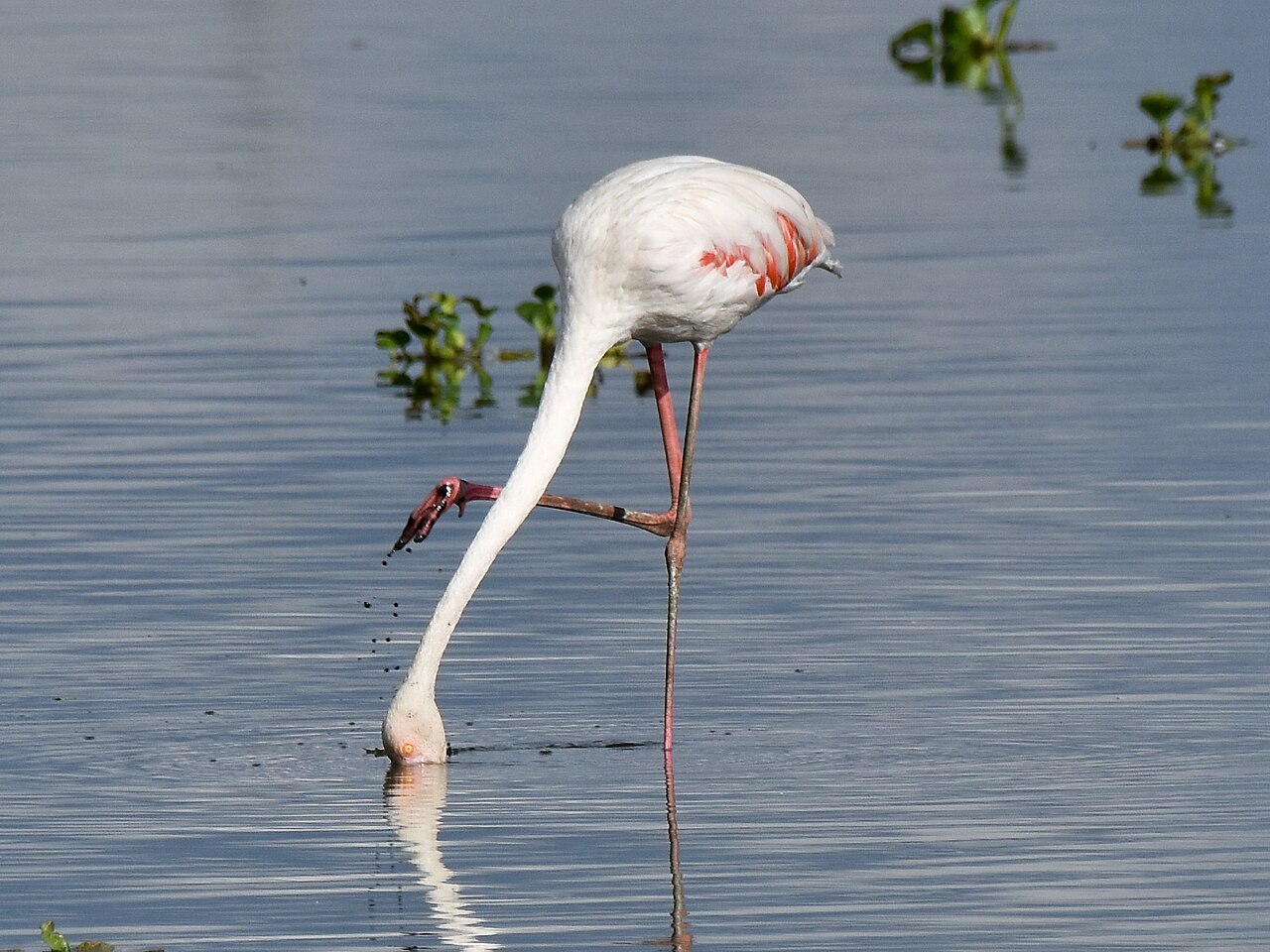
- The Flamingo Basics: A Bird Built for Shallow Water
- Why Do Flamingos Stand on One Leg? The Leading Scientific Theories
- The Energy-Saving Theory
- The Heat-Loss Theory
- The Balance and Rest Theory
- What the Research Actually Shows About Flamingos Standing on One Leg
- Do Flamingos Sleep on One Leg? Yes, and That Is the Point
- How Flamingos Balance So Effortlessly: The Anatomy Behind the Trick
- Common Myths and Misconceptions About the One-Legged Stance
- Other Birds That Stand on One Leg
- What This Behavior Tells Us About Flamingo Intelligence and Adaptation
- Conclusion: The Surprising Truth Behind the Pose
- ❓ Frequently Asked Questions
Few sights in the natural world are as instantly recognizable as a flock of pink flamingos, and few behaviors are as puzzling as the way flamingos stand on one leg for hours at a time, often while fast asleep. The pose looks awkward, even comical, yet it is one of the most studied and least understood habits in ornithology. For centuries, naturalists assumed the birds were simply resting a tired limb. Modern research, however, has revealed something far more interesting: the one-legged stance appears to be a sophisticated energy-saving trick, a heat-regulation strategy, and possibly a leftover instinct from wading ancestors. This article explores what science actually knows about why flamingos stand on one leg, and why the answer is stranger and smarter than most people expect.
The Flamingo Basics: A Bird Built for Shallow Water
Before digging into the one-legged mystery, it helps to understand the animal itself. There are six recognized flamingo species, including the greater flamingo (Phoenicopterus roseus), the American or Caribbean flamingo (Phoenicopterus ruber), the Chilean flamingo, the lesser flamingo, the Andean flamingo, and the James's flamingo. They belong to the family Phoenicopteridae, an ancient lineage whose fossils date back roughly 30 million years.
Flamingos are large birds. The greater flamingo, the biggest species, stands about 110 to 150 centimeters (roughly 3.5 to 5 feet) tall and weighs between 2 and 4 kilograms (4.4 to 8.8 pounds). The lesser flamingo is the smallest, at around 80 to 90 centimeters (about 31 to 35 inches) tall. Their wingspans range from about 95 centimeters in smaller species to 165 centimeters (around 5.5 feet) in the greater flamingo.
Their habitat is just as distinctive as their appearance. Flamingos live in shallow saline and alkaline lakes, lagoons, mudflats, and coastal estuaries across Africa, southern Europe, South Asia, the Caribbean, and South America. Some of the most famous populations gather in the East African Rift Valley, particularly at Lake Natron in Tanzania and Lake Bogoria in Kenya, where hundreds of thousands of lesser flamingos can congregate at once. In the Americas, the Caribbean flamingo is strongly associated with locations such as Celestún in Mexico and Inagua in the Bahamas.
Their diet is equally specialized. Flamingos are filter feeders. They wade through water with their heads upside down, sweeping their uniquely shaped bills through the mud to strain out brine shrimp, small mollusks, insect larvae, diatoms, and blue-green algae. That diet is directly responsible for their famous color: the carotenoid pigments in the shrimp and algae they eat are deposited in their feathers, turning them pink or orange. A flamingo that eats poorly may fade to a pale gray or white.
Why Do Flamingos Stand on One Leg? The Leading Scientific Theories
Researchers have proposed several explanations for the one-legged stance, and the evidence suggests that more than one factor is at work. The two strongest theories involve energy conservation and body temperature regulation, but there are a few supporting explanations as well.
The Energy-Saving Theory
The most widely accepted explanation is that standing on one leg costs the bird almost no muscular effort. In 2017, two researchers at the Georgia Institute of Technology, Young-Hui Chang and Lena Ting, published a study in the journal Biology Letters showing that flamingos can support their entire body weight on a single leg with very little active muscle contraction. The team studied both live flamingos and cadavers, and found that even dead birds could be balanced on one leg, which strongly suggested a passive mechanical locking mechanism rather than continuous muscular work.
In other words, the flamingo's leg joints can settle into a stable, locked position, much like a kickstand on a bicycle. Once the leg is locked, the bird can remain upright without burning much energy. This matters because flamingos spend a huge portion of their day standing in water, and standing on two legs would require more continuous muscle activity. For a bird that may live 20 to 30 years in the wild, and up to 50 years in captivity, saving energy every single day adds up.
The Heat-Loss Theory
The second major theory is thermoregulation. Flamingos often live in environments that swing between intense heat and surprisingly cold water. Their long, thin legs have a large surface area relative to their volume, which means they lose heat quickly. By tucking one leg up into the warm feathers of their belly, the bird reduces the amount of skin exposed to cold water or cool air by roughly half.
Support for this idea comes from observations of captive flamingos. In a study of flamingos at a zoo, researchers found that the birds were more likely to stand on one leg in cooler water and less likely to do so in warmer conditions. The behavior also seems to be more common in the water than on land, which fits the heat-loss explanation neatly.
The Balance and Rest Theory
A related idea is that the one-legged stance is simply a comfortable resting posture that also improves balance in soft mud. Flamingos often stand in slippery, shifting sediment, and locking one leg while keeping the other tucked may give them a more stable base than teetering on two feet. This theory is not mutually exclusive with the others; it may simply be an added benefit.
- Energy conservation: A passive locking mechanism means minimal muscle work.
- Heat retention: Tucking one leg into belly feathers reduces heat loss.
- Balance: A single locked leg may be more stable in soft mud.
- Comfort: Alternating legs may reduce fatigue over long standing periods.
What the Research Actually Shows About Flamingos Standing on One Leg
The Georgia Tech study is the most frequently cited piece of evidence, but it is not the only one. Earlier work by Matthew Anderson and colleagues at the Philadelphia Zoo found that the behavior varied with temperature and with whether the bird was in water or on land. Their observations suggested that the stance is not random; it responds to environmental conditions.
One of the most striking findings from the Georgia Tech research was that the balance mechanism appears to be passive. When the researchers positioned a recently deceased flamingo on one leg, the bird remained balanced without any muscular support. That result was a strong hint that the anatomy of the leg and hip joint, not conscious effort, does most of the work.
It is also worth noting what the research does not support. The popular idea that flamingos stand on one leg to keep the other leg warm so they can escape predators more quickly has little direct evidence behind it. Flamingos are not especially fast runners, and their main defense is flight, not sprinting. The "ready to run" explanation is appealing but not well supported.
Do Flamingos Sleep on One Leg? Yes, and That Is the Point
One of the most surprising details about this behavior is that flamingos often do it while asleep. If you watch a flock at rest, you will frequently see birds with their heads tucked back into their feathers, eyes closed, balanced on a single leg. If the stance required constant muscular effort, sleeping in that position would be difficult or impossible.
The fact that flamingos can sleep while standing on one leg is one of the strongest arguments for the passive locking mechanism. It also explains why the behavior is so persistent: it is not an occasional trick but a default resting posture, used for a large part of the day and night.
Flamingos also alternate legs. Over time, a bird will switch from one leg to the other, which may help distribute wear and reduce fatigue. In cold conditions, they may keep the same leg tucked for longer stretches to conserve heat.
How Flamingos Balance So Effortlessly: The Anatomy Behind the Trick
The secret lies in the structure of the flamingo's leg and hip. Flamingos have exceptionally long legs relative to their body size, with the visible "knee" actually being the ankle joint. The true knee is hidden close to the body. This unusual anatomy gives the leg a natural geometry that allows it to lock into place when the bird shifts its weight.
When a flamingo settles onto one leg, the joint aligns in a way that places the center of gravity directly over the supporting foot. Because the bird's body is essentially balanced on top of a stable column, very little muscle activity is needed to hold the position. The Georgia Tech researchers described this as a "passive balance" system, and it is remarkably efficient.
This is also why the stance looks so casual. The bird is not straining; it is resting in a mechanically stable configuration. The same principle explains why the pose can be held for hours without visible signs of discomfort.
Common Myths and Misconceptions About the One-Legged Stance
Because the behavior is so visible, it has attracted plenty of folklore. Here are some of the most common misconceptions, and what the evidence actually suggests.
- Myth: Flamingos stand on one leg because the other leg is tired. There is no evidence that fatigue drives the behavior. The stance is a resting posture, not a recovery from exhaustion.
- Myth: They do it only in cold weather. Temperature plays a role, but flamingos stand on one leg in warm conditions too, including on land and in shallow water.
- Myth: It is a mating display. Courtship in flamingos involves head-flagging, wing salutes, and synchronized marching, not the one-legged stance.
- Myth: The behavior is unique to flamingos. Several other long-legged birds, including storks, herons, and some cranes, also rest on one leg, though flamingos are the most famous example.
Other Birds That Stand on One Leg
Flamingos are not alone in this habit. Herons, egrets, storks, and cranes frequently rest on one leg, and the same energy-saving and heat-retention explanations likely apply. Some smaller birds, including certain gulls and shorebirds, also tuck one leg while resting.
What makes flamingos special is the combination of their extreme leg length, their aquatic habitat, and the sheer amount of time they spend in the pose. A flamingo may spend a large portion of its day on one leg, which makes the behavior far more conspicuous than it is in other species.
Comparisons with other birds also help researchers test their theories. If the behavior is mainly about heat loss, it should be more common in cold conditions across species. If it is mainly about balance, it should be more common in soft substrates. Studies across different bird groups continue to refine these ideas.
What This Behavior Tells Us About Flamingo Intelligence and Adaptation
The one-legged stance is a small behavior with big implications. It shows how finely tuned flamingos are to their environment. They live in some of the harshest wetlands on Earth, where water chemistry can be extreme, food is patchy, and temperatures fluctuate dramatically. Surviving in those conditions requires efficiency in every part of daily life, from feeding to resting.
The passive locking mechanism is a good example of evolution finding an elegant solution. Instead of building stronger muscles, flamingos evolved a skeletal and joint structure that lets gravity do the work. That is a recurring theme in nature: the cheapest solution is often the one that lasts.
It also reminds us that animal behavior is rarely simple. A pose that looks like a quirk often turns out to be a carefully tuned adaptation shaped by energy budgets, heat loss, and habitat structure. The next time you see a flamingo standing on one leg, you are watching millions of years of evolutionary engineering at work.
Conclusion: The Surprising Truth Behind the Pose
So why do flamingos stand on one leg? The best current answer is that the behavior serves multiple purposes at once. It saves energy through a passive locking mechanism in the leg joints, it reduces heat loss by tucking one limb into warm belly feathers, and it may provide a stable, comfortable resting posture in soft mud. Flamingos can even sleep in this position, which is only possible because the stance requires so little muscular effort.
The next time you visit a zoo, a lagoon, or a wildlife documentary and see a flock of pink birds balanced on a single leg, remember that the pose is not a mystery or a mistake. It is a quiet, efficient survival strategy perfected over millions of years, and one of the many reasons flamingos remain among the most fascinating birds on the planet.
❓ Frequently Asked Questions
💬 Why do flamingos stand on one leg?
The leading explanation is thermoregulation: by tucking one leg up into their body feathers, flamingos reduce heat loss through their long, unfeathered legs, which lose warmth quickly in water and wind. Studies also show the pose is nearly effortless and may help them balance while resting or sleeping.
💬 Is standing on one leg tiring for flamingos?
No—it actually appears to be their most relaxed stance. Research on captive flamingos found they sway less and are more stable on one leg than on two, and the posture requires almost no active muscle effort thanks to a locking mechanism in the leg joints.
💬 Do flamingos always stand on one leg, or only sometimes?
They do it often but not constantly, typically when resting, sleeping, or standing in cool water, and they alternate legs. When walking, feeding, or alarmed, they usually use both legs.
💬 Why do flamingos stand on one leg in water?
Water pulls heat from the body far faster than air, so lifting one leg out of the water and tucking it into warm feathers cuts heat loss substantially. It also lets them rest while wading without chilling both legs.