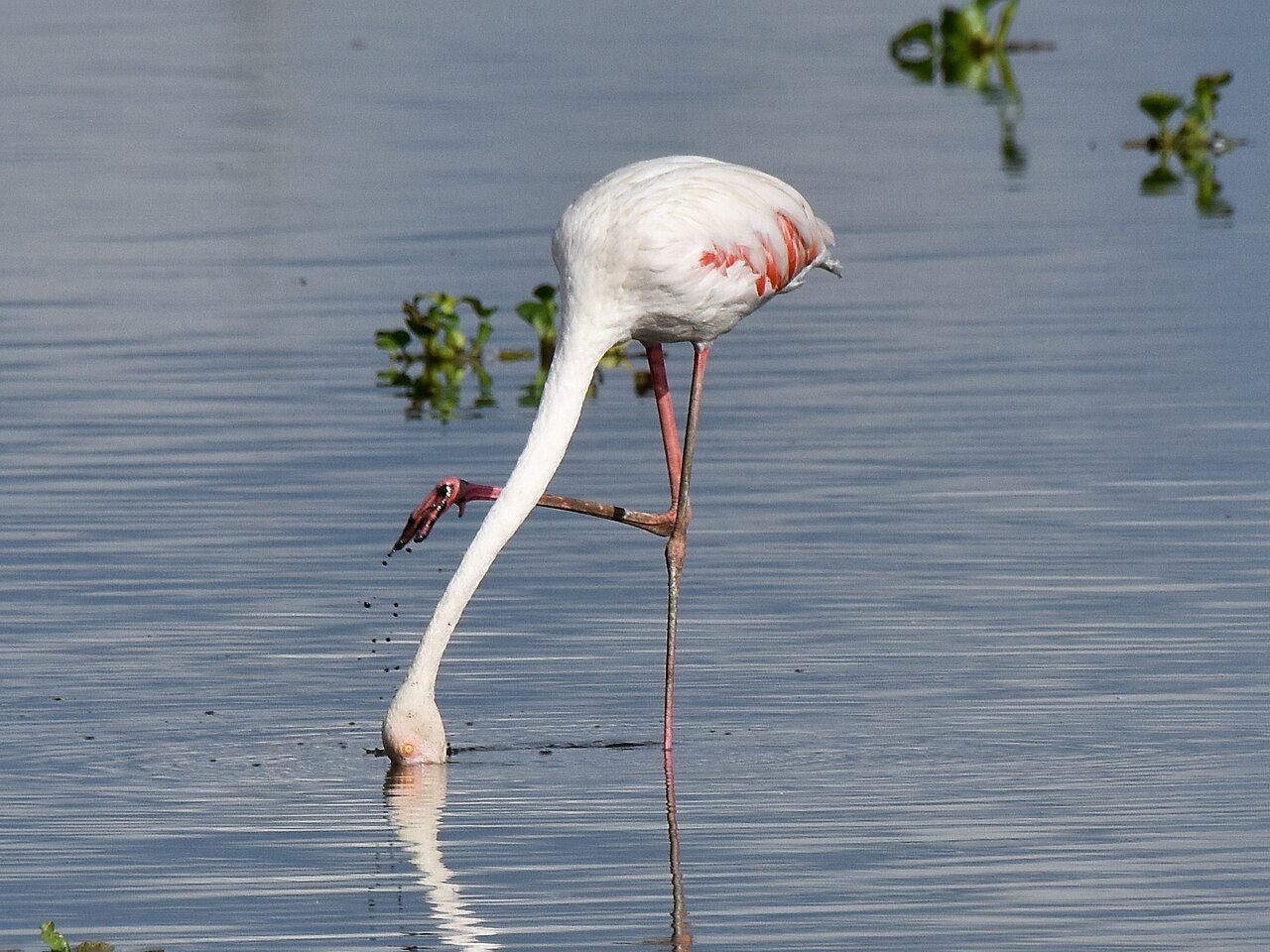
- Why Do Flamingos Stand on One Leg? The Short Answer
- What the Experiments Showed
- The Anatomy Behind Flamingos Standing on One Leg
- A Built-In Locking Mechanism
- Why the Foot Doesn't Slip
- Warmth, Water, and the Thermoregulation Debate
- Do Flamingos Always Favor the Same Leg?
- Resting, Sleeping, and Staying Alert
- Feeding and the One-Legged Stance
- The Flamingo's World: Habitat, Size, and Lifespan
- Myths and Misconceptions About Flamingos Standing on One Leg
- Myth: They Only Do It to Stay Warm
- Myth: The Pose Is Uncomfortable or a Sign of Illness
- Myth: They Sleep Standing Up Because They Can't Lie Down
- What Flamingos Can Teach Us About Balance and Design
- The Bottom Line: The Truth About Flamingos Standing on One Leg
- ❓ Frequently Asked Questions
Flamingos stand on one leg for hours at a time — preening, sleeping, even in freezing water — and for centuries the pose puzzled everyone from Roman naturalists to zoo visitors. It looks unstable, faintly ridiculous, and yet the birds hold it with the serenity of statues. Over the past two decades, careful experiments have finally replaced folklore with evidence, and the truth turns out to be stranger and more elegant than the old story about warming up. This article explains why flamingos stand on one leg, what the science actually shows, and why the behavior says a lot about how these remarkable birds survive.
Why Do Flamingos Stand on One Leg? The Short Answer
The most widely repeated explanation — that flamingos tuck one leg up to conserve body heat — is only part of the story, and probably not the main part. The leading scientific explanation is that standing on one leg is energetically cheaper than standing on two. Because of the way a flamingo's leg joints and tendons lock, the bird can balance on a single limb with almost no muscular effort, letting it rest while remaining upright and alert to danger.
A second major factor is thermoregulation. Flamingos wade in water that is often far colder than their core body temperature, and keeping one leg out of the water reduces heat loss. The two explanations are not rivals; they likely work together. What has changed is the balance of evidence: thermoregulation alone cannot explain why flamingos stand on one leg on hot days, on dry land, and even while asleep in warm climates — but energy saving can.
What the Experiments Showed
The key studies came from researchers at the Georgia Institute of Technology, working with Caribbean flamingos (also called American flamingos) and Chilean flamingos in captivity. In a 2017 study published in the journal Biology Letters, Young-Hui Chang and Lena Ting found that dead flamingo cadavers could be balanced on one leg with almost no support — a striking result showing that the pose is largely passive, governed by anatomy rather than active muscle control. The birds, in other words, are not "holding" the pose so much as locking into it.
A follow-up study in 2022 tested the energy question directly by observing flamingos standing on one leg or two while the researchers monitored how much the birds swayed. Flamingos swayed less and were more stable on one leg than on two, supporting the idea that the one-legged stance is a comfortable resting position rather than an awkward stunt. Notably, the birds in that study did not change their posture based on temperature, undercutting the idea that heat conservation drives the behavior.
The Anatomy Behind Flamingos Standing on One Leg
To understand the trick, you have to look at how a flamingo's leg is built. The visible "knee" that bends backward is actually the ankle joint. The true knee is hidden close to the body, inside the feathers. The long, thin section below the ankle is the tarsometatarsus, a bone that in flamingos is remarkably sturdy for its size.
A Built-In Locking Mechanism
When a flamingo lifts one leg, the shift in body weight causes the standing leg's joints to rotate slightly into a stable, aligned position. The bird's center of gravity settles almost directly over the foot, and the arrangement of tendons and ligaments holds the leg straight without continuous muscle contraction. This is why a flamingo can sleep in the pose without tipping over, and why the cadaver experiment worked: the stability is structural.
Why the Foot Doesn't Slip
Flamingos have webbed feet with a broad base, which spreads weight across soft mud and helps the bird stay planted in slippery conditions. Their long legs also let them wade into deeper water than many other wading birds, keeping their bodies dry while they feed.
Warmth, Water, and the Thermoregulation Debate
Even if energy saving is the primary driver, temperature clearly matters. Flamingos lose heat through their unfeathered legs, which act as radiators. In cold water, keeping one leg raised out of the water and tucked into belly feathers reduces the surface area exposed to the chill. Field observations have repeatedly found that flamingos are more likely to stand on one leg in water than on land, and more often in colder conditions.
But the picture is messy in an informative way. Flamingos also stand on one leg on hot days and on dry ground, and some studies have found no clear temperature effect at all. The most defensible conclusion is that the pose is primarily a low-cost resting stance that happens to offer a thermoregulatory bonus when conditions are cold. Evolution rarely builds behaviors for a single reason.
Do Flamingos Always Favor the Same Leg?
No. Flamingos switch legs regularly, and individuals do not appear strongly handed — or rather, "legged." Some birds show a mild preference, but most alternate, which makes sense: prolonged one-legged standing could otherwise stress a single joint or foot. When a flamingo shifts its weight, it often ruffles its feathers, preens, or adjusts its neck, then settles back into the locked pose.
Resting, Sleeping, and Staying Alert
Flamingos are social birds that live in large flocks, sometimes numbering in the thousands. In such gatherings, competition for space and the constant risk of predators mean that being able to rest while staying upright is valuable. The one-legged stance lets a flamingo sleep with its head tucked into its back feathers while remaining ready to move. Visitors to zoos often notice that whole groups of flamingos are balanced on one leg at once, heads buried, looking like a row of pink lawn ornaments.
This resting behavior is also why flamingos can afford to spend so much time standing around. Flamingos are filter feeders, not pursuit hunters, so they do not need to be constantly on the move. They feed by dipping their specially shaped beaks upside down into shallow water and pumping water through comb-like structures called lamellae, straining out tiny shrimp, algae, insects, and seeds. That diet — rich in carotenoid pigments from brine shrimp and algae — is what gives flamingos their famous pink color.
Feeding and the One-Legged Stance
Flamingos usually feed with both feet down, since they need stability while plunging their heads underwater and swinging their beaks side to side. The one-legged pose is mainly a resting and sleeping posture, which is why you will see it most often in birds that are not actively feeding.
The Flamingo's World: Habitat, Size, and Lifespan
There are six recognized species of flamingo, found across the Americas, Africa, southern Europe, and Asia. They include the greater flamingo (the largest, standing up to about 1.5 meters, or nearly 5 feet tall), the lesser flamingo (the smallest, around 80 centimeters), the American or Caribbean flamingo, the Chilean flamingo, the Andean flamingo, and the James's flamingo.
Most species live in shallow saline or alkaline lakes, lagoons, and mudflats, where few predators and competitors can tolerate the harsh chemistry. Some of the most famous colonies are at Lake Natron in Tanzania, where lesser flamingos gather in enormous numbers, and in the wetlands of the Yucatán Peninsula in Mexico, home to large American flamingo populations. Flamingos are long-lived birds: in the wild they can reach 20 to 30 years, and in captivity some individuals have lived well past 40.
- Height: roughly 80 cm to 1.5 m depending on species
- Weight: typically 2 to 4 kg
- Diet: brine shrimp, algae, small insects, seeds, and other tiny aquatic organisms
- Habitat: shallow saline and alkaline lakes, lagoons, and mudflats
- Lifespan: about 20–30 years in the wild; longer in captivity
Myths and Misconceptions About Flamingos Standing on One Leg
The internet has produced plenty of confident but unsupported claims about flamingos. Here are the most common myths and what the evidence says.
Myth: They Only Do It to Stay Warm
Heat conservation is real but incomplete. Flamingos stand on one leg in warm climates and on dry land, and controlled studies have found the pose is more about stable, low-effort resting than about temperature.
Myth: The Pose Is Uncomfortable or a Sign of Illness
A healthy flamingo standing on one leg is perfectly normal. However, a bird that stands on one leg and shows other signs of trouble — reluctance to move, a drooping wing, or a leg that looks injured — should be checked by a vet. In general, though, the pose is a sign of a relaxed bird, not a sick one.
Myth: They Sleep Standing Up Because They Can't Lie Down
Flamingos can and do lie down, often resting on their bellies with their legs folded beneath them. The one-legged stance is simply one of several resting options, and it offers the advantage of keeping the body elevated and ready to move.
What Flamingos Can Teach Us About Balance and Design
The flamingo's trick has attracted interest beyond ornithology. Engineers and roboticists study passive stability — systems that stay balanced without constant active control — and the flamingo leg is a natural example. The same principle shows up in the design of certain prosthetics and stable structures. For biologists, the flamingo is a reminder that "weird" animal behavior usually has a practical explanation once you measure it properly.
There is also a conservation angle. Flamingo populations depend on fragile wetland habitats that are vulnerable to drought, pollution, and water diversion. Understanding how these birds conserve energy and tolerate harsh conditions helps researchers judge how well they might cope as their environments change.
The Bottom Line: The Truth About Flamingos Standing on One Leg
Flamingos stand on one leg because their anatomy allows it to be nearly effortless. A locking arrangement of joints, tendons, and ligaments lets the bird rest in a stable, upright position with minimal muscle work, which saves energy over long periods of standing and sleeping. Warmth plays a supporting role, especially in cold water, but it is not the whole explanation. The pose is not a quirk or a stunt — it is an elegant solution to the everyday problem of resting safely in an exposed, watery world. Next time you see a flamingo balanced like a pink statue, you will know it is not showing off; it is simply taking a break, the way only a flamingo can.
❓ Frequently Asked Questions
💬 Why do flamingos stand on one leg?
The leading explanation is thermoregulation: tucking one leg against the warm body reduces heat loss through the bare, unfeathered limb, which matters in cool water and air. Research also shows the one-legged pose is a stable, low-effort resting stance rather than a tiring balancing act.
💬 Is standing on one leg tiring for flamingos?
No—studies found flamingos sway less and use little muscle effort in the one-legged pose, and they can hold it for long periods, even while asleep. Their leg anatomy and a locking mechanism help them stay stable with minimal energy.
💬 Do flamingos sleep standing on one leg?
Yes, flamingos commonly rest and sleep on one leg, often with the head tucked into their feathers. The pose appears to be a comfortable default resting position, not a sign of illness or imbalance.
💬 Do all birds stand on one leg, or is it special to flamingos?
Many birds, including ducks, herons, and gulls, rest on one leg, usually for the same heat-conservation and comfort reasons. Flamingos are just the most famous example because they do it so often and for so long.