- The Classic Theory: Reaching for the Tallest Leaves
- Competitive Advantage in the Savanna
- Is It Really Just About Food?
- Sexual Selection: The Neck as a Weapon and a Signal
- Necking Behavior and Dominance
- Mate Choice and Neck Length
- Thermoregulation: A Surprising Theory About Heat Loss
- The Role of the Neck in Cooling
- The Evolutionary History: From Short Necks to Tall Titans
- Why Seven Vertebrae?
- Diet, Habitat, and Lifespan: How the Neck Shapes Daily Life
- Feeding Adaptations
- Lifespan and Behavior
- Modern Research and New Discoveries
- Debates Among Scientists
- Conclusion: The Real Reason Is a Combination of Forces
- ❓ Frequently Asked Questions
The giraffe long neck is one of the most iconic and puzzling features in the animal kingdom, a towering marvel that has fascinated scientists and casual observers alike for centuries. Standing up to 18 feet tall, with a neck that alone can measure 6 to 8 feet and weigh over 500 pounds, the giraffe is an unmistakable silhouette on the African savanna. But why did evolution favor such an extreme adaptation? The answer is not as simple as "to reach high leaves." In fact, the real reason combines a fascinating mix of feeding competition, sexual selection, and even thermoregulation, all shaped by millions of years of natural history.
The Classic Theory: Reaching for the Tallest Leaves
The most straightforward explanation for the giraffe long neck is that it evolved to allow giraffes to browse on foliage that is out of reach for other herbivores. This theory, first proposed by Jean-Baptiste Lamarck and later refined by Charles Darwin, suggests that the long neck gives giraffes a unique feeding niche. By accessing the canopy of acacia trees—their primary food source—giraffes can eat up to 75 pounds of leaves, shoots, and fruits daily without competing with zebras, elephants, or antelopes.
Competitive Advantage in the Savanna
In the dry savanna ecosystems of sub-Saharan Africa, food can be scarce during the dry season. Giraffes live in countries like Kenya, Tanzania, South Africa, and Namibia, where acacia trees dominate the landscape. These trees have evolved their own defenses—sharp thorns and toxic compounds—but giraffes have adapted with prehensile tongues (up to 18 inches long) and tough lips to strip leaves from thorny branches. Their height allows them to reach leaves at 15 to 18 feet, well above the reach of most competitors. This niche reduces direct competition and ensures a steady food supply, even when lower vegetation is depleted.
Is It Really Just About Food?
While the feeding theory is intuitive, it has been challenged by researchers who note that giraffes often feed at mid-level heights (around 6 to 10 feet) rather than stretching to their maximum reach. Studies of wild giraffes in the Serengeti and Kruger National Park show that they spend a significant amount of time eating from lower branches, especially when food is abundant. This suggests that the giraffe long neck may not have evolved solely for high browsing—other forces were likely at play.
Sexual Selection: The Neck as a Weapon and a Signal
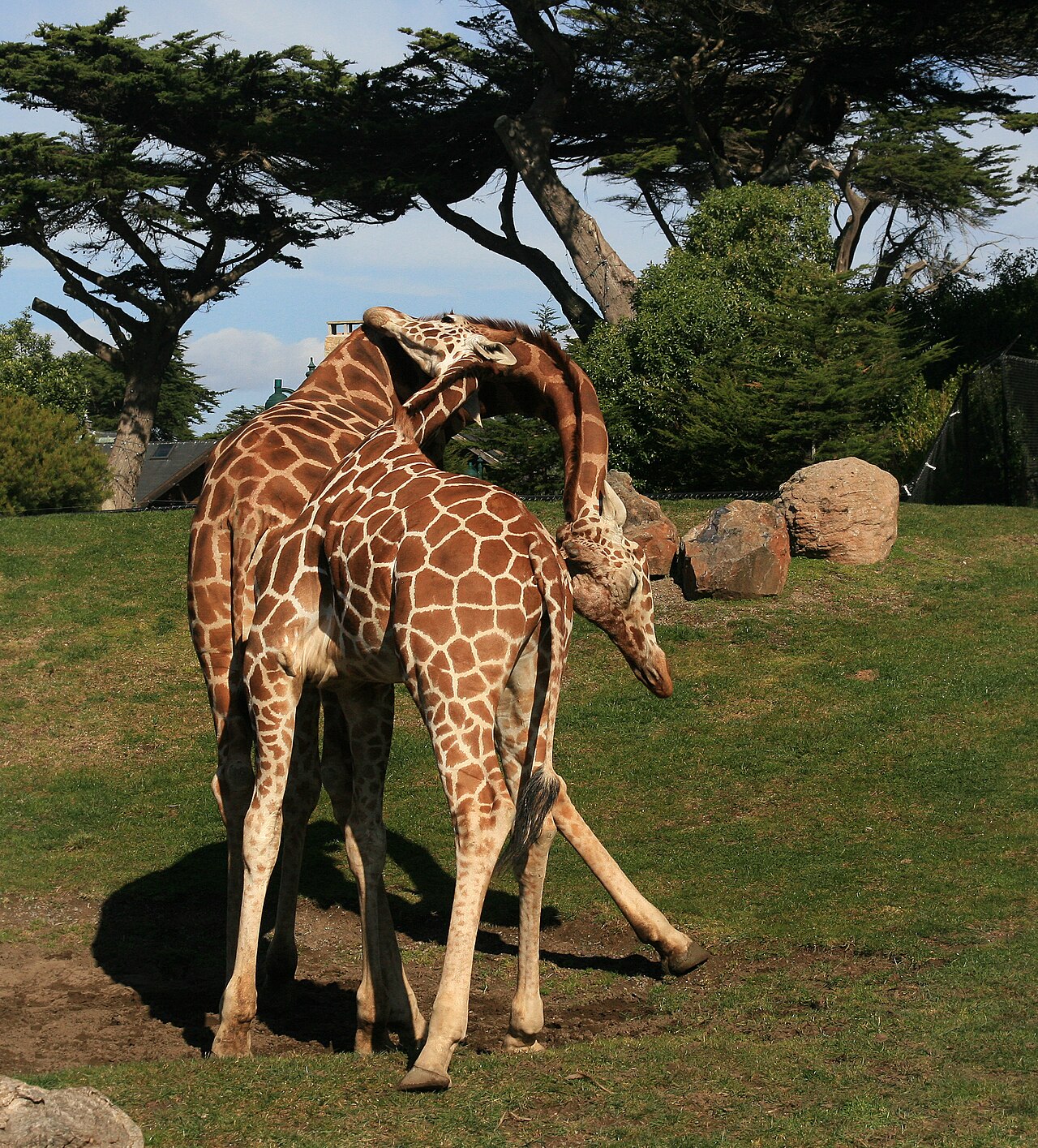
Another compelling reason for the giraffe long neck is its role in sexual selection. Male giraffes, known as bulls, engage in a behavior called "necking," where they swing their necks and heads like heavy clubs to strike opponents. These fights can last for minutes and are used to establish dominance and mating rights. A longer, stronger neck provides a clear advantage in these contests, allowing a bull to deliver more powerful blows and defend itself better.
Necking Behavior and Dominance
During necking, two males stand side by side and swing their heads into each other's bodies, necks, or legs. The force can be immense—a giraffe's head weighs about 25 pounds and can accelerate to speeds over 40 miles per hour. Bulls with longer necks tend to win more fights, secure higher social status, and gain access to females in estrus. This creates a selective pressure for longer necks over generations, as successful males pass on their genes. Interestingly, male giraffes have thicker, more muscular necks than females, which supports the idea that the neck is partly a weapon evolved for competition.
Mate Choice and Neck Length
Females may also prefer males with longer necks, as it signals health, strength, and genetic fitness. In some studies, female giraffes have been observed spending more time near males with larger necks, though this is still debated. The combination of direct combat and female choice likely accelerated the evolution of the giraffe long neck beyond what feeding alone would demand.
Thermoregulation: A Surprising Theory About Heat Loss
One less-known hypothesis for the giraffe long neck involves thermoregulation. Giraffes live in hot, arid environments where temperatures can exceed 100°F. Their large body size (males weigh up to 3,000 pounds) generates significant metabolic heat, and they need efficient ways to cool down. The long neck increases the surface area-to-volume ratio, allowing more heat to dissipate into the air. Additionally, the neck's blood vessels—especially the carotid arteries and jugular veins—help regulate temperature by controlling blood flow.
The Role of the Neck in Cooling
Giraffes have a unique circulatory system that includes a network of small blood vessels (rete mirabile) in the neck and head. This system helps cool blood before it reaches the brain, preventing overheating. During hot days, giraffes can also orient their necks to catch breezes, enhancing evaporative cooling from the skin. While this theory is not as widely accepted as feeding or sexual selection, it adds another layer to the complex story of why giraffes have such long necks.
The Evolutionary History: From Short Necks to Tall Titans
To understand the giraffe long neck, we must look at its fossil ancestors. The earliest giraffids, like Progiraffa and Canthumeryx, lived around 20 million years ago and had necks of normal length, similar to modern okapis (the giraffe's closest living relative). Over time, species like Samotherium (8 million years ago) showed elongated neck bones, and by 5 million years ago, Giraffa jumae had necks approaching modern proportions. The modern giraffe (Giraffa camelopardalis) emerged about 1 million years ago, with a neck that contains only seven vertebrae—the same number as humans—but each vertebra can be over 10 inches long.
Why Seven Vertebrae?
Mammals are remarkably consistent in having seven cervical vertebrae, from mice to whales. Giraffes are no exception. The elongation happened through changes in the growth of each vertebra, not by adding extra bones. This genetic constraint means that the giraffe long neck evolved by modifying existing structures rather than inventing new ones. Fossil evidence shows a gradual lengthening over millions of years, likely driven by multiple selective pressures working together.
Diet, Habitat, and Lifespan: How the Neck Shapes Daily Life
The giraffe long neck is not just a static feature—it profoundly influences every aspect of a giraffe's existence. Giraffes are herbivores that feed primarily on acacia, mimosa, and wild apricot trees. They use their height to scan for predators like lions, hyenas, and leopards over the vast savanna, giving them a 360-degree view from up to 18 feet above the ground. Their habitat ranges from open woodlands to scrublands, but they avoid dense forests where their height would be a disadvantage.
Feeding Adaptations
Giraffes have specialized adaptations to support their long necks. Their hearts are massive—weighing up to 25 pounds and measuring 2 feet long—to pump blood up 8 feet against gravity. Blood pressure is the highest of any mammal, about 280/180 mm Hg. Valves in the neck veins prevent blood from rushing to the head when they lower it to drink. Giraffes also have a unique gait, moving both legs on one side simultaneously (pacing), which helps balance their top-heavy bodies.
Lifespan and Behavior
In the wild, giraffes live 20 to 25 years, though some reach 30 in captivity. They are social animals that form loose herds of 10 to 20 individuals, with no strong hierarchy except among males. Giraffes sleep only about 4.5 hours per day, often standing up, and can go weeks without drinking water by getting moisture from leaves. Their long necks allow them to spot water sources from far away, but drinking is risky—they must spread their legs and lower their heads, leaving them vulnerable to predators.
Modern Research and New Discoveries
Recent studies have added nuance to the giraffe long neck story. In 2021, a team of geneticists sequenced the giraffe genome and identified key genes involved in bone growth, cardiovascular development, and metabolism. One gene, FGFRL1, is linked to skeletal elongation and may explain how giraffes achieve such extreme proportions without causing health problems. Other research focuses on the neck's role in feeding efficiency—a 2016 study found that giraffes can reach higher leaves with less energy than if they had shorter necks, supporting the classic theory.
Debates Among Scientists
Despite these advances, debates continue. Some biologists argue that the giraffe long neck is a "spandrel"—a byproduct of other adaptations, like larger body size or stronger legs. Others point to the "necks for sex" hypothesis, which has gained traction after observations of male dominance. A 2020 paper in Science suggested that both feeding and sexual selection played roles, with the relative importance varying by population and environment. For example, in areas with intense male competition, neck length may be more about fighting, while in resource-poor areas, feeding may be the primary driver.
Conclusion: The Real Reason Is a Combination of Forces
So, why do giraffes have such long necks? The real reason is not a single cause but a synergistic blend of feeding competition, sexual selection, and thermoregulation, each reinforcing the other over millions of years. The giraffe long neck allowed these gentle giants to access high leaves, win fights for mates, and manage heat in a harsh environment. It is a testament to evolution's ability to craft elegant solutions from multiple pressures. Today, giraffes face new challenges—habitat loss, poaching, and climate change—with their numbers declining by 40% in the last 30 years. Understanding their unique adaptations is crucial for conservation efforts, ensuring that these magnificent creatures continue to tower over the savanna for generations to come.
❓ Frequently Asked Questions
💬 Why do giraffes have long necks?
Giraffes evolved long necks primarily to reach high leaves on trees, especially acacias, giving them access to food that other herbivores can't reach.
💬 How long is a giraffe's neck?
A giraffe's neck can be up to 6 feet (1.8 meters) long, weighing around 600 pounds (270 kilograms), despite having only seven vertebrae—the same number as humans.
💬 Do giraffes fight with their necks?
Yes, male giraffes engage in a behavior called 'necking,' where they swing their necks and heads to strike rivals during dominance battles for mating rights.
💬 How do giraffes drink water with such long necks?
Giraffes must awkwardly spread their front legs or bend their knees to lower their heads to the ground, making them vulnerable to predators while drinking.