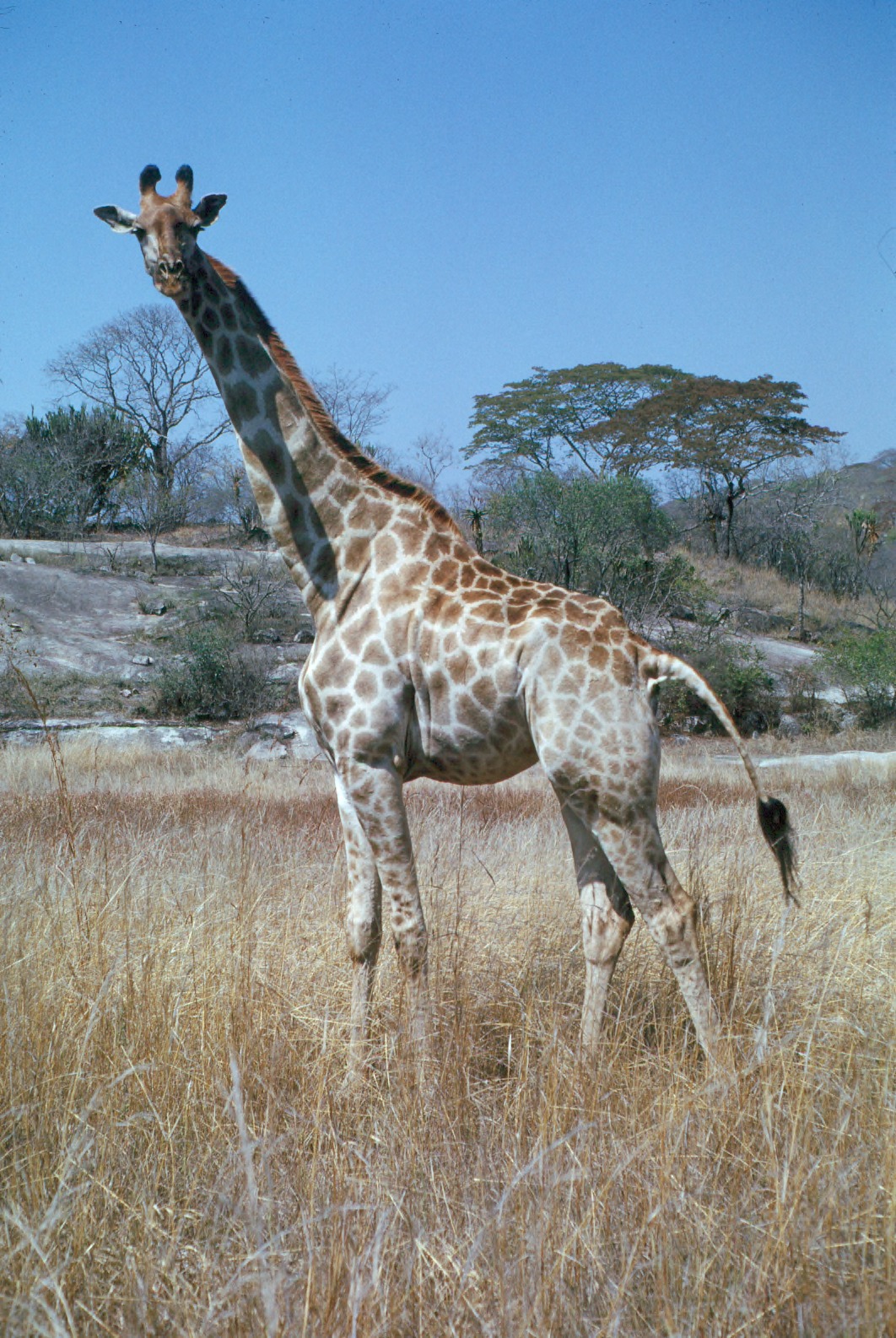
- The Short Answer: Why Giraffes Sleep Standing Up
- Standing rest is not the same as deep sleep
- How much do they actually sleep?
- Anatomy That Makes Lying Down a Project
- Getting up takes time and coordination
- Blood pressure is part of the story
- Predators, Vulnerability and the Cost of a Nap
- Who gets to lie down?
- The neck-on-the-back pose
- Digestion: The Other Reason Giraffes Sleep Standing Up
- What a giraffe eats, and how much
- What Giraffe Sleep Looks Like in Practice
- Night versus day
- Captive versus wild
- Common Myths About Giraffe Sleep
- How Giraffe Sleep Fits the Bigger Picture
- A vulnerable species, whatever its sleeping habits
- Conclusion: The Strange Truth About Giraffe Sleep
- ❓ Frequently Asked Questions
Ask anyone to picture a sleeping animal and they will probably imagine a dog curled on a rug or a cat stretched across a windowsill. Almost nobody pictures a four-metre-tall giraffe dozing on its feet. Yet that is exactly what happens: giraffes sleep standing up for the vast majority of their rest, and when they do finally lie down, they stay there for only a few minutes at a time. It is one of the strangest sleep arrangements in the animal kingdom, and the reasons behind it combine anatomy, evolution, digestion and sheer survival pressure in a way that is far more interesting than the simple answer "because they are tall."
The Short Answer: Why Giraffes Sleep Standing Up
The core explanation is that lying down is expensive and dangerous for a giraffe. Getting up from the ground takes several seconds of awkward, vulnerable effort, and a giraffe on the ground cannot run. Because a giraffe's only real defence is flight — reaching speeds of around 55 to 60 kilometres per hour (35 to 37 mph) in short bursts — any animal that cannot stand instantly is at a serious disadvantage on the African savanna.
So evolution arrived at a compromise. Giraffes rest and lightly doze while upright, keeping their legs under them and their senses partly online. Only when they feel genuinely secure do they fold those long legs and lie down, and even then they keep it brief.
Standing rest is not the same as deep sleep
It is important to separate two things that people often merge. Giraffes spend a large part of the day and night in a standing, resting state — eyes open or half-closed, chewing cud, swaying slightly, occasionally shifting weight. This is quiet wakefulness or very light sleep. True deep sleep, the kind that involves rapid eye movement (REM) and complete muscle relaxation, is a different matter entirely, and giraffes get remarkably little of it.
How much do they actually sleep?
Studies of captive giraffes, which are easier to observe around the clock than wild ones, suggest total sleep of roughly 4.6 hours per day, and often less. Of that, deep REM sleep may amount to only about 30 minutes to an hour, usually broken into short episodes. Wild giraffes, constantly alert to lions, hyenas and wild dogs, likely sleep even less. That is a striking figure next to a house cat's 12 to 16 hours or a human's recommended 7 to 9.
Anatomy That Makes Lying Down a Project
To understand the behaviour, you have to appreciate the body doing it. An adult male giraffe stands about 5.5 metres (18 feet) tall at the head, with females a little shorter at roughly 4.5 metres (15 feet). The neck alone can be over two metres long. The heart weighs around 11 kilograms (25 pounds) and pumps blood against gravity up a vertical pipe of a neck to reach a brain that sits several metres above the chest.
Getting up takes time and coordination
When a giraffe lies down, it typically folds its front legs first and then its hind legs, resting its body on a calloused, padded area on its chest and knees. Rising reverses the process: it pushes up onto its front knees, then swings its hindquarters forward, then straightens. The whole manoeuvre takes several seconds and leaves the animal briefly clumsy and unbalanced.
For a calf, the problem is even more acute. A newborn giraffe drops about 1.5 to 2 metres (5 to 6.5 feet) to the ground at birth and must stand within roughly an hour to nurse and to avoid predators. Learning to lie down and get up again is a skill it practises repeatedly in its first weeks.
Blood pressure is part of the story
Giraffes have evolved an extraordinary cardiovascular system: exceptionally thick-walled arteries, a rete mirabile (a dense network of blood vessels) at the base of the brain to buffer pressure spikes, and tight skin on the legs that acts like a compression stocking to stop blood pooling. Changing posture rapidly — as happens when lying down or standing up — would put that system under stress, so the fewer dramatic postural changes the better.
Predators, Vulnerability and the Cost of a Nap
The African savanna is not a safe place to be horizontal. Lions are the giraffe's main predator, and they preferentially target calves, weakened adults and any animal caught off guard. A standing giraffe can deliver a devastating kick — a single blow from a front hoof can break a lion's skull or spine — and can run. A lying giraffe can do neither effectively.
This asymmetry explains the pattern of giraffe sleep better than any single fact. The risk of lying down is high, and the reward is small, because giraffes appear to function perfectly well on very little deep sleep.
Who gets to lie down?
Observation suggests that lying down is more common in situations of relative safety: in zoos and reserves, among closely bonded herd members, and among younger animals. In the wild, giraffes often take turns — while some rest, others remain upright and vigilant. A herd is a distributed alarm system, and its members rarely all switch off at once.
The neck-on-the-back pose
When a giraffe does enter deep sleep, it adopts a posture that looks almost impossible: it folds its neck backwards and rests its head on its own hindquarters or the top of its rump, forming a kind of living loop. This is the only position in which giraffes are reliably observed in REM sleep, and it is typically held for only a minute or two before the animal rouses. Seeing it in the wild is a genuine stroke of luck.
Digestion: The Other Reason Giraffes Sleep Standing Up
Giraffes are ruminants, like cows, sheep and deer. They have a four-chambered stomach and chew their food twice — once on the way in and again as cud, after partially fermented plant matter is regurgitated for a second grinding. An adult giraffe eats an enormous quantity of leaves, mainly from acacia trees, browsing at heights other herbivores cannot reach.
Rumination takes hours, and it works best when the animal is upright and can swallow and re-chew comfortably. Lying flat can interfere with the process, and it also compresses the chest, which is not ideal for an animal with such an unusual respiratory and circulatory layout. Standing rest lets a giraffe keep digesting efficiently while staying ready to move.
What a giraffe eats, and how much
- Diet: mostly acacia and other tree leaves, plus shoots, flowers, seed pods and occasional fruit.
- Daily intake: roughly 30 to 35 kilograms (65 to 75 pounds) of foliage per day for an adult.
- Feeding time: often 16 to 20 hours a day, mostly in the cooler early morning and late afternoon.
- Water: giraffes can go weeks without drinking, extracting moisture from leaves — a useful trait, since splaying their legs to drink from a waterhole is another moment of extreme vulnerability.
Notice how little room that leaves in the schedule for long, deep sleep. A giraffe that spent eight hours unconscious on the ground would simply not have time to eat enough to fuel a five-metre body.
What Giraffe Sleep Looks Like in Practice
If you watch a giraffe group at dusk or during the quiet middle of the night, you will see a range of behaviours rather than uniform sleeping. Some animals stand motionless with their eyes closed or half-shut. Others chew cud, ears flicking at insects. Occasionally, one will fold down, tuck its neck back and slip into a brief deep sleep while the rest of the herd stays alert.
Night versus day
Giraffes are not strictly nocturnal or diurnal; they are active in a flexible pattern, feeding heavily at dawn and dusk and resting through the hottest hours. Most deep sleep, such as it is, tends to occur at night, when temperatures drop and visibility for predators is poorer. Even then, the total is measured in minutes, not hours.
Captive versus wild
Giraffes in zoos, where predators are absent and food is provided, sleep somewhat more and lie down more often than wild animals. This difference is itself evidence for the predation theory: remove the danger and the behaviour relaxes. Even so, captive giraffes still spend the bulk of their rest standing, which suggests the habit is deeply built in rather than purely a response to immediate threat.
Common Myths About Giraffe Sleep
Because the behaviour is unusual, it has attracted a fair amount of folklore. A few corrections are worth making.
- Myth: giraffes never lie down. They do, particularly young animals and those in safe environments — just rarely and briefly.
- Myth: giraffes sleep for only a few minutes a day in total. Their total sleep is closer to four to five hours; it is deep sleep that is astonishingly short.
- Myth: they sleep standing because their legs lock. There is no locking mechanism as in horses. Giraffes stay upright through constant low-level muscle activity and postural control.
- Myth: standing sleep means they are fully awake. They can enter light sleep upright, but genuine REM sleep requires lying down with the neck folded back.
How Giraffe Sleep Fits the Bigger Picture
The giraffe's sleeping habits make more sense when set beside its other extreme adaptations. This is an animal that evolved to exploit a food source nobody else could reach, at the cost of an awkward body, a punishing cardiovascular workload and a permanent inability to hide. Everything about it is a trade-off, and sleep is simply one more.
Giraffes live roughly 20 to 25 years in the wild and somewhat longer in captivity. They are social, living in loose, shifting herds that may number from a handful to more than twenty animals, with individuals coming and going freely. They communicate through snorts, bleats, hums and low-frequency sounds, and recent research has shown they produce a nocturnal humming that may serve as contact calling between herd members in the dark.
A vulnerable species, whatever its sleeping habits
Giraffes are listed as vulnerable on the IUCN Red List. Their numbers across Africa have fallen substantially over recent decades, from an estimated 150,000 or more to roughly 100,000, largely through habitat loss, poaching and human encroachment. The four distinct species recognised in recent taxonomic revisions — northern, southern, Masai and reticulated giraffes — face different pressures, with some populations in steep decline. Understanding how these animals rest, feed and move is part of understanding how to protect them.
Conclusion: The Strange Truth About Giraffe Sleep
The truth is stranger and more elegant than the myth. Giraffes do not avoid lying down out of stubbornness, and they are not sleepless machines. They are animals shaped by a brutal arithmetic: standing is safer, lying down is riskier, and deep sleep is a luxury they can afford only in tiny, carefully chosen doses. So they doze upright, chew their cud, keep one eye on the horizon, and steal a minute or two of proper rest with their neck folded back over their own hindquarters — an image most people will never see and few would believe without a photograph.
Next time you struggle to get eight hours, spare a thought for the tallest animal on Earth, which manages on a fraction of that and still stands five metres tall. For giraffes, sleep is not a nightly shutdown but a brief, calculated risk — and standing up is simply how you survive long enough to take it.
❓ Frequently Asked Questions
💬 How long do giraffes sleep per day?
Giraffes sleep only about 4 to 5 hours a day, usually in short bursts of a few minutes. They rarely sleep deeply for long because they must stay alert for predators.
💬 Do giraffes ever sleep lying down?
Yes, giraffes do sometimes lie down to sleep, especially when they enter deep REM sleep, which requires them to fold their long legs and rest their head on their hindquarters. However, they only do this for brief periods, typically a few minutes at a time.
💬 Why don't giraffes sleep lying down all the time?
Lying down makes a giraffe slow to stand up and vulnerable to predators like lions. Standing sleep lets them react quickly and also helps them keep their long necks stable without straining.
💬 Do all giraffes sleep standing up, or just adults?
Both adult and young giraffes commonly sleep standing, but calves lie down more often than adults. As they grow, they shift toward standing sleep to stay safer from predators.