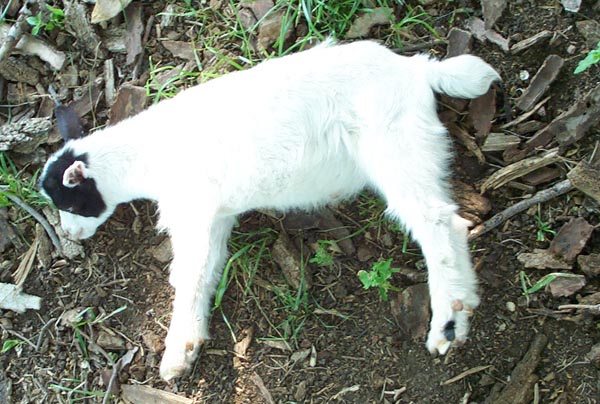
- What Are Fainting Goats? Meet the Myotonic Breed
- A Short History of the Breed
- Why Do Fainting Goats Faint? The Science of Myotonia Congenita
- What Actually Happens During an Episode
- Not Every Goat Is Affected
- The Fainting Goats Myth: Debunking Common Misconceptions
- Myth: The Goats Are Having Seizures
- Myth: They Faint From Fear
- Myth: Fainting Goats Are Sickly or Fragile
- Myth: They Faint Constantly
- Living With Fainting Goats: Behavior, Diet, and Care
- Temperament and Social Life
- Diet and Feeding
- Housing and Fencing
- Health and Lifespan
- Fainting Goats in Science and Popular Culture
- Where They Are Raised Today
- Quick Facts About Fainting Goats
- The Bottom Line on Fainting Goats
- ❓ Frequently Asked Questions
When people first encounter fainting goats, the reaction is almost always the same: a mixture of laughter, disbelief, and a slightly guilty hope that the animal isn't actually hurt. The sight of a goat stiffening up and toppling sideways like a tipped-over board is one of the internet's most enduring viral spectacles, but behind the comedy lies a genuine genetic condition with a fascinating history, real welfare implications, and a surprising role in modern science. This article separates the myths from the facts and explains exactly what happens when a goat "faints."
What Are Fainting Goats? Meet the Myotonic Breed
Fainting goats — formally known as Myotonic goats — are a distinct breed defined not by their appearance but by a hereditary condition called myotonia congenita. The breed is also called the Tennessee Fainting Goat, Tennessee Meat Goat, Stiff Leg, or Nervous Goat, reflecting both its American origins and the distinctive stiffness that gives it away.
These are medium-sized goats with a stocky, muscular build. Adult does typically weigh between 60 and 80 kilograms (130–175 pounds), while bucks can reach 90 kilograms (200 pounds) or more. They come in essentially every goat color pattern — black, white, brown, spotted, and multi-colored — and both horned and naturally polled (hornless) animals occur. Their ears are usually upright, and their coats are generally short to medium in length.
What sets them apart is a single defining trait: when startled or excited, their muscles lock up involuntarily for roughly 10 to 15 seconds. The goat remains fully conscious the entire time. It is not fainting, not seizing, and not in pain — it is simply experiencing a temporary failure of its muscles to relax.
A Short History of the Breed
The breed's modern story begins in the 1880s, when a Tennessee farmer named John Tinsley arrived from Nova Scotia with four goats — three does and a buck — that carried the myotonia trait. Most of the breed in the United States descends from this small founder group, which is why the Tennessee Fainting Goat name stuck.
For decades the animals were kept as curiosities and later as practical meat goats, prized by farmers for their hardiness and their unusually high reproductive rate. The breed was nearly lost in the mid-twentieth century before dedicated breeders revived it. Today the Myotonic Goat Registry and the International Fainting Goat Association track pedigrees, and the breed is recognized by the American Livestock Breeds Conservancy as a heritage breed worth preserving.
Why Do Fainting Goats Faint? The Science of Myotonia Congenita
The word "faint" is a misnomer, and understanding why requires a quick look at how muscles work. Normal muscle contraction happens when a nerve signal triggers calcium release inside muscle fibers; relaxation happens when calcium is pumped back out. In fainting goats, a mutation in the CLCN1 gene affects a chloride channel in the muscle membrane, and the result is that muscles contract normally but relax abnormally slowly.
When the goat is startled — by a sudden noise, a person approaching quickly, a dog barking, or even an exciting feed bucket — the nervous system fires a burst of signals. In a normal goat, the muscles contract and release in a smooth ripple. In a myotonic goat, the contraction holds, and the animal's legs, neck, and back stiffen. If the goat is moving, the stiffness can cause it to lose balance and fall over sideways, often with its legs sticking out stiffly. Within seconds, the muscles release and the goat scrambles up as if nothing happened.
What Actually Happens During an Episode
- Trigger: A startle response, sudden movement, excitement, or sometimes just a change in routine.
- Onset: Near-instant stiffening of the limbs, neck, and torso.
- Duration: Typically 10–15 seconds, though shorter and longer episodes occur.
- Consciousness: Fully maintained — the goat's eyes track movement and it is aware of its surroundings.
- Recovery: Complete, with no lingering weakness or disorientation.
Importantly, the goat does not "faint" in the medical sense. There is no loss of consciousness, no drop in blood pressure, and no brain involvement. The animal is alert and, if anything, mildly annoyed by the interruption.
Not Every Goat Is Affected
The condition is inherited in an autosomal recessive pattern, meaning a goat must inherit the mutated gene from both parents to show the stiffening behavior. Carriers — animals with only one copy — appear completely normal and never stiffen, yet they can pass the trait to offspring. This is why two "normal-looking" goats can produce fainting kids. Breeders who want to preserve the trait often use genetic testing or careful pedigree analysis to plan matings.
The Fainting Goats Myth: Debunking Common Misconceptions
Because the trait is so visually dramatic, misinformation spreads easily. Here are the most common myths, corrected.
Myth: The Goats Are Having Seizures
False. Seizures involve abnormal electrical activity in the brain and typically cause loss of consciousness, paddling limbs, and confusion afterward. Myotonia is a muscle-membrane issue. Affected goats are conscious, coordinated in their awareness, and show no post-episode disorientation.
Myth: They Faint From Fear
Startle is a trigger, but the response is not a fear reaction in the psychological sense. A goat can be startled by something entirely neutral — a dropped bucket, a gust of wind, a new person — and the stiffening is a mechanical consequence of the nervous system's burst of activity, not an emotional collapse.
Myth: Fainting Goats Are Sickly or Fragile
Quite the opposite. Breeders consistently describe Myotonic goats as exceptionally hardy, parasite-resistant, and easy to keep. They thrive on rough forage, handle cold weather well, and are known for strong maternal instincts. The myotonia affects only skeletal muscle relaxation during startle events; it does not shorten lifespan or reduce overall health.
Myth: They Faint Constantly
In practice, adult goats that are accustomed to their surroundings stiffen only occasionally. A goat that has lived in the same pasture for years may go days without a noticeable episode. Visitors, new dogs, and sudden noises are the usual culprits. Young kids stiffen more readily than calm adults.
Living With Fainting Goats: Behavior, Diet, and Care
Beyond the startle response, Myotonic goats behave like goats everywhere: curious, social, mischievous, and highly food-motivated. They are herd animals and should never be kept alone. A lone goat is a stressed goat, and stress in this breed can mean more frequent stiffening episodes.
Temperament and Social Life
Fainting goats are generally docile and easy to handle, which makes them popular with smallholders and families. They establish clear herd hierarchies, communicate with bleats and body language, and enjoy climbing on anything sturdy enough to hold them. Bucks can become pushy during rut, as with any breed, but the does and wethers are famously gentle.
Their startle response has an unexpected practical benefit: because the goats stiffen rather than bolt, they are less likely to jump fences or bolt through gates when spooked. Many owners find them easier to contain than more flighty breeds.
Diet and Feeding
Like all goats, Myotonics are browsers rather than grazers. Their ideal diet is built on:
- Forage: Pasture, browse, and good-quality hay — the foundation of the diet.
- Concentrates: A measured grain ration for growing kids, pregnant does, and working animals.
- Minerals: Free-choice loose minerals, especially selenium and copper in deficient soils.
- Fresh water: Always available, especially in hot weather.
Goats are notorious for overeating grain, and fainting goats are no exception. Sudden access to large amounts of concentrate can cause rumen acidosis, a serious and sometimes fatal condition. Feed changes should always be gradual.
Housing and Fencing
Standard goat fencing works well: woven wire with a top rail, or electric netting for rotational grazing. Because a stiffening goat may topple near obstacles, pens should be free of sharp edges, deep ditches, and stacked materials that could cause injury during a fall. A three-sided shelter with dry bedding protects them from wind and rain, and a raised platform or sturdy spool gives them something to climb — a favorite activity.
Health and Lifespan
Myotonic goats typically live 10 to 14 years, with some individuals reaching 15 or more. They are subject to the same health concerns as other goats: internal parasites (especially barber pole worm), foot rot, pneumonia, and pregnancy complications such as ketosis in does carrying multiples. Routine vaccination for enterotoxemia and tetanus, regular fecal checks, and hoof trimming every six to eight weeks keep a herd in good shape.
One welfare point deserves emphasis: because a stiffening goat can fall, owners should avoid startling animals near stairs, steep slopes, or hard surfaces. Most episodes are harmless, but repeated falls on concrete can cause bruising or injury over time. Quiet handling and predictable routines dramatically reduce episode frequency.
Fainting Goats in Science and Popular Culture
The breed's unusual physiology has made it unexpectedly valuable to medical research. Myotonia congenita occurs in humans too — a condition called Thomsen disease — and the goat model helped researchers understand chloride channel function in muscle. Studies on Myotonic goats contributed to the broader understanding of how ion channels regulate muscle relaxation, knowledge that informs research into related human disorders.
Culturally, the goats became internet famous in the 2000s and 2010s through viral videos, and they now appear at county fairs and petting zoos across the United States. Their fame has a practical side: it has helped preserve a breed that was once close to disappearing, and it has introduced thousands of people to the realities of livestock genetics.
Where They Are Raised Today
The breed remains most concentrated in the southeastern United States — Tennessee, Kentucky, Alabama, and Georgia — but small herds exist across the country and in parts of Europe. They are kept as pets, as meat goats, and as living educational exhibits about genetics and animal husbandry.
Quick Facts About Fainting Goats
- Scientific name: Capra aegagrus hircus (domestic goat); breed name Myotonic Goat.
- Condition: Myotonia congenita, caused by a mutation in the CLCN1 gene.
- Episode length: Usually 10–15 seconds.
- Consciousness: Fully maintained during episodes.
- Weight: Does 60–80 kg; bucks up to 90 kg or more.
- Lifespan: 10–14 years, sometimes longer.
- Diet: Browse, pasture, hay, minerals, and limited grain.
- Origin: Tennessee, United States, from stock brought from Nova Scotia in the 1880s.
- Inheritance: Autosomal recessive; carriers appear normal.
The Bottom Line on Fainting Goats
Fainting goats do not actually faint. They carry a harmless, painless genetic quirk that makes their muscles slow to relax when they are startled, producing the stiff-legged collapse that has made them famous. They are hardy, long-lived, social animals with a legitimate place in livestock history and in scientific research. For anyone considering keeping them, the takeaway is simple: treat them like any other goat, keep their environment safe from sharp edges and steep drops, handle them calmly, and enjoy one of the animal world's most endearing oddities. The next time a video of a toppling goat crosses your feed, you will know exactly what is happening — and why it is nothing to worry about.
❓ Frequently Asked Questions
💬 Why do fainting goats actually faint?
They don't truly faint; they have a genetic condition called myotonia congenita that causes their muscles to stiffen briefly when they're startled or excited. During that stiffness they may tip over, but they stay conscious the whole time.
💬 Are fainting goats in pain or harmed when they fall?
No, the stiffness itself isn't painful and the goats remain awake and aware throughout. On flat ground they usually recover within seconds, though owners keep them off dangerous slopes or stairs to prevent injury from falls.
💬 Do fainting goats faint every time they're scared?
Not necessarily; the response depends on the individual and how startled it is. Some stiffen and fall easily, while others only go rigid briefly or barely react at all.
💬 Is myotonia congenita in goats dangerous or fatal?
It's generally not life-threatening and affected goats can live normal, healthy lives with proper care. The main risks come from falling on uneven terrain or into water, which is why safe fencing and flat pastures matter.