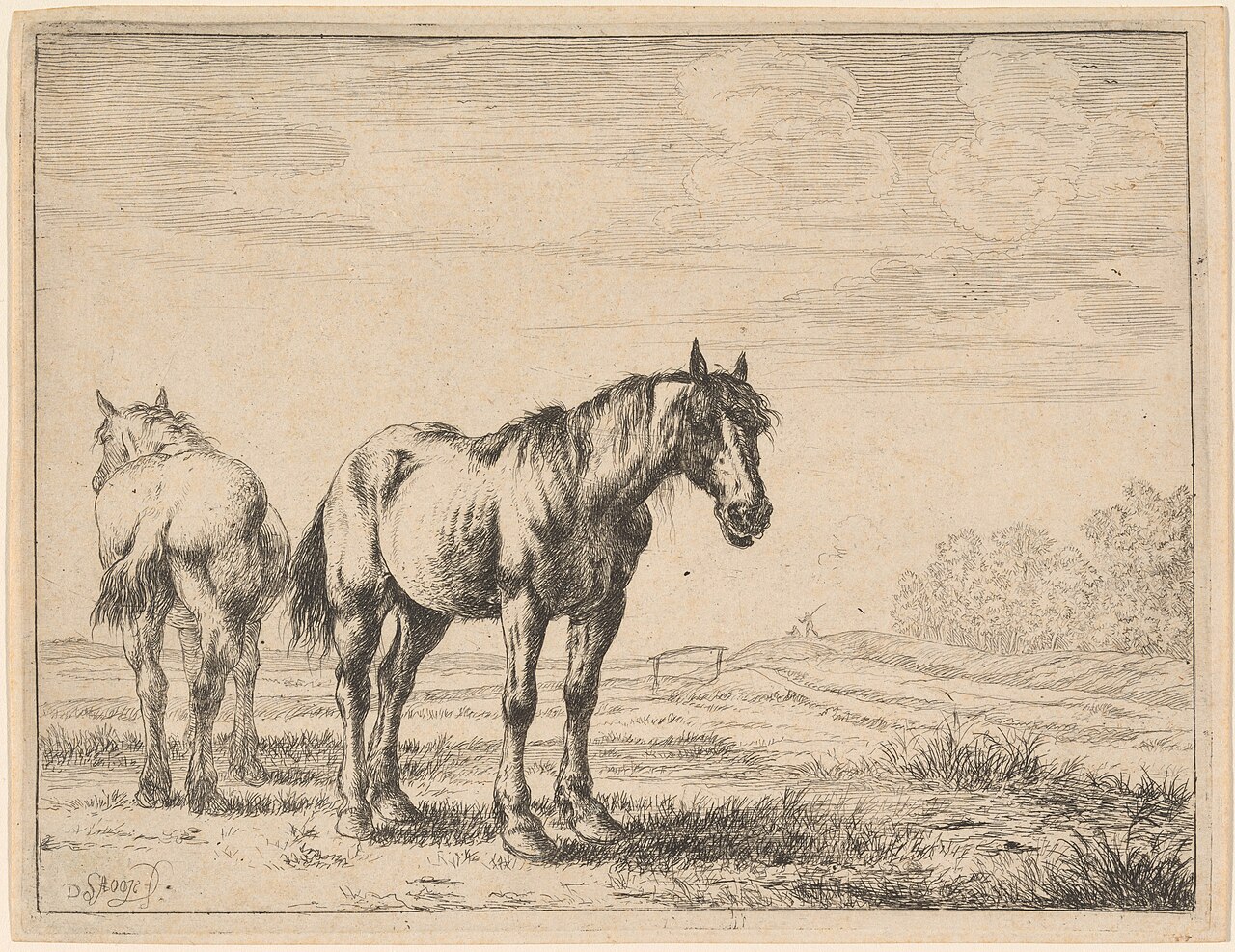
- The Short Answer: Why Horses Sleep Standing Up
- What the Stay Apparatus Actually Does
- Do Horses Sleep Standing Up All the Time? No — and Here Is Why
- Light Sleep vs. Deep Sleep in Horses
- The Evolutionary Logic Behind Standing Rest
- Herd Life and the Buddy System
- How Much Do Horses Sleep? A Daily Breakdown
- Why Diet Shapes Sleep
- What Happens When a Horse Cannot Lie Down
- Creating Good Sleeping Conditions
- Common Myths About Horses Sleep Standing Up
- How Horses Compare With Other Animals
- Frequently Asked Questions
- Can a horse dream while standing up?
- How long can a horse go without lying down?
- Do wild horses sleep differently from domestic horses?
- Why do foals lie down so much?
- The Stable Truth: Standing Sleep Is a Survival Superpower
- ❓ Frequently Asked Questions
Ask almost anyone who has spent time around a stable, and they will tell you the same curious thing: horses sleep standing up for most of their rest, yet they also need to lie down to truly recharge. That contradiction has puzzled horse lovers for centuries and given rise to plenty of myths — from the idea that horses are simply too lazy to get up, to the belief that they never lie down at all. The real answer sits at the crossroads of anatomy, evolution, and herd behavior, and it is far more fascinating than the folklore.
The Short Answer: Why Horses Sleep Standing Up
The core reason horses can sleep standing up comes down to a remarkable piece of biological engineering called the stay apparatus. This is a network of ligaments, tendons, and specialized joints in the horse's legs that allows the animal to lock its limbs in place with almost no muscular effort. Once the system is engaged, a horse can doze upright for hours without its legs buckling underneath it.
In practical terms, the stay apparatus turns the horse's legs into something closer to a set of kickstands than a set of muscles doing constant work. The knee and hock joints of the hind legs can lock into position, while the front legs are supported by a sling of tendons and the large suspensory ligament. Because the horse is not actively flexing muscles to remain upright, the energy cost of standing is tiny compared with the effort a human would expend trying to sleep on their feet.
This matters enormously for a prey animal. A horse that had to lie down for every nap would be vulnerable for hours each day. Instead, it can rest on its feet in the open, ready to flee within a fraction of a second.
What the Stay Apparatus Actually Does
The stay apparatus is not a single structure but a coordinated system. In the hind leg, the patella (the kneecap) can slide over a ridge on the femur and lock the stifle joint, while the reciprocal apparatus links the hock and stifle so they move together. In the front leg, the suspensory ligament and the check ligaments support the fetlock and knee joints, preventing them from overextending.
Veterinarians can actually test this system. When a horse is standing quietly, a gentle nudge will often not move it because the joints are mechanically locked. Only when the horse consciously unlocks the apparatus does it step forward or shift its weight. This is why a sleeping horse can look almost statuesque — it is not frozen in fear, it is simply parked.
Do Horses Sleep Standing Up All the Time? No — and Here Is Why
Here is the twist that surprises most people: horses cannot achieve deep, restorative sleep while standing. They can enter light, slow-wave sleep on their feet, but to reach REM sleep — the stage associated with dreaming and true physical recovery — they must lie down. During REM sleep, a horse's muscles relax completely, and the stay apparatus cannot hold the body upright. If a horse tried to enter REM while standing, it would collapse.
So the daily routine of a healthy horse is a blend. It spends the majority of its rest time standing in a state of drowsy vigilance, then lies down for a few short but essential bouts of deep sleep. Studies of domestic horses suggest they lie down for deep sleep for roughly one to three hours per day, often split into several sessions, while total sleep across a 24-hour period may reach four to five hours. Foals, by contrast, lie down far more — newborn foals may spend half the day recumbent — because their growing bodies demand more restorative rest.
Light Sleep vs. Deep Sleep in Horses
Researchers generally divide equine sleep into two broad categories. Slow-wave sleep can occur standing or lying down and is characterized by a lowered head, relaxed ears, and a slightly drooping lower lip. REM sleep occurs only when the horse is lying flat on its side, with its head resting on the ground and its legs occasionally twitching. If a horse is deprived of REM sleep — for example, because of pain, a noisy environment, or an unsuitable stall — it will often become irritable and may eventually suffer health consequences.
This is why a horse that never lies down is a red flag. Owners and veterinarians treat it as a potential sign of discomfort, injury, or stress rather than a harmless quirk.
The Evolutionary Logic Behind Standing Rest
To understand why horses sleep standing up, it helps to remember what a horse is in the wild: a large, grass-eating mammal with almost no natural weapons and a long list of predators. Wild and feral horses live in open grasslands and steppes where cover is scarce, and they share that landscape with wolves, mountain lions, and other carnivores.
A horse's primary defense is flight. It can accelerate from a standstill to a full gallop in a few strides and reach speeds of around 40 to 55 miles per hour (roughly 65 to 88 kilometers per hour) in short bursts. But that escape only works if the horse is already on its feet. An animal that had to scramble up from the ground every time a predator approached would lose precious seconds — and in the wild, seconds decide who survives.
Standing sleep, therefore, is an evolutionary compromise. It lets the horse rest while keeping its legs under it and its senses alert. The ability to lock the legs with minimal energy expenditure made that compromise affordable.
Herd Life and the Buddy System
Horses rarely rely on their own senses alone. In a herd, individuals take turns standing watch while others rest. Some horses will lie down to sleep while one or more herdmates remain upright, ears swiveling and eyes scanning the horizon. This social vigilance means a horse can afford to lie down for deep sleep because a companion is effectively on guard duty.
This behavior is easy to observe in domestic settings. In a pasture with several horses, you will often see one or two standing quietly while others are flat out on the grass. The standing horses are not being antisocial; they are doing the job the herd evolved to share. A lone horse, by contrast, tends to be far more reluctant to lie down and may sleep standing up almost exclusively, because it has no one to watch its back.
How Much Do Horses Sleep? A Daily Breakdown
Horses are not big sleepers compared with humans. A typical adult horse sleeps in short, scattered bouts across the day and night rather than in one long stretch. The pattern varies with age, workload, environment, and health.
- Total sleep: roughly 4 to 5 hours per day in adults, though some individuals manage with less.
- Standing (slow-wave) sleep: the majority of rest time, often in brief episodes of 15 minutes or so.
- Lying (REM) sleep: about 1 to 3 hours per day, usually split into two or more sessions.
- Foals: much more, often sleeping 12 hours or more in the first weeks of life, with frequent lying-down periods.
- Senior horses: may lie down more often, but can also struggle to rise, which sometimes reduces recumbent sleep.
Horses are also polyphasic sleepers, meaning they do not follow a single long nighttime sleep. They may nap in the afternoon sun, doze at midnight, and catch a few more minutes at dawn. This flexible pattern fits their role as grazing animals that need to eat for much of the day.
Why Diet Shapes Sleep
A horse's digestive system is built for almost continuous eating. Horses are hindgut fermenters and grazers that in the wild spend 16 to 18 hours a day foraging on grasses. Their stomachs are small relative to their body size, so they cannot gorge and then fast for long periods. This constant grazing leaves less time for sleep than a carnivore might enjoy.
Domestic horses fed concentrated meals twice a day can develop ulcers and behavioral problems precisely because their feeding rhythm is unnatural. When horses are kept on pasture or given free-choice hay, they tend to settle into a more relaxed pattern that includes normal standing and lying rest.
What Happens When a Horse Cannot Lie Down
Because REM sleep requires lying down, anything that prevents a horse from getting comfortable on the ground can cause serious problems. Pain from arthritis, laminitis, or a hoof abscess is a common culprit. A stall that is too small, bedding that is too thin, or a floor that is slippery can also discourage a horse from lying down.
Horses deprived of REM sleep may show signs that look a lot like human sleep deprivation: irritability, dullness, poor performance under saddle, and even collapse. In rare cases, a severely sleep-deprived horse will suddenly buckle at the knees and fall into a brief REM episode while standing, a condition sometimes called sleep deprivation collapse or "sleep attacks." It looks alarming, but once the underlying cause is addressed — usually by providing a safe, comfortable place to lie down — the behavior typically resolves.
Owners should also watch for horses that lie down but cannot get back up. A horse that has been recumbent for too long can develop muscle damage and pressure sores, and may need veterinary help and a sling to rise safely.
Creating Good Sleeping Conditions
Good management goes a long way toward letting a horse sleep naturally. A clean, deeply bedded stall with rubber matting, adequate space to lie flat, and a quiet environment encourages recumbent rest. Turnout with compatible companions gives the horse the herd security it instinctively craves. And routine veterinary care for lameness or pain removes the most common barrier to deep sleep.
Common Myths About Horses Sleep Standing Up
The unusual sleeping habits of horses have generated plenty of misinformation. Here are a few of the most persistent myths, corrected.
- Myth: Horses never lie down. False. Healthy horses lie down regularly for REM sleep and sometimes simply to rest.
- Myth: Horses lock their legs and that is the whole story. Partly true, but the stay apparatus only supports light sleep. Deep sleep still requires lying down.
- Myth: A horse that lies down is sick. Not necessarily. Lying down is normal, especially in foals and in horses with herdmates standing watch.
- Myth: Horses sleep only at night. False. Horses nap throughout the day and night in short bouts.
- Myth: Standing sleep means the horse is fully rested. False. Standing rest is valuable, but it does not replace REM sleep.
Understanding the difference between light standing rest and deep lying sleep helps owners interpret what they see in the barn or field. A horse snoozing on its feet is behaving perfectly normally. A horse that never lies down is the one worth a closer look.
How Horses Compare With Other Animals
Horses are not the only animals that rest on their feet. Elephants, cattle, deer, and many other large herbivores also sleep standing up to varying degrees, and some birds, such as flamingos, lock their legs to nap upright. What makes the horse notable is how completely its anatomy is adapted to the task. The stay apparatus is one of the most specialized standing-sleep systems in the animal kingdom, and it reflects millions of years of life on open ground with predators never far away.
Frequently Asked Questions
Can a horse dream while standing up?
Probably not in the way humans and dogs dream. Dreaming is associated with REM sleep, and REM sleep requires the horse to be lying down with its muscles fully relaxed. A horse dozing on its feet is in light, slow-wave sleep and is unlikely to be experiencing vivid dreams.
How long can a horse go without lying down?
A horse can survive for a while without lying down, but it will not thrive. Sleep deprivation builds up, and within days to weeks a horse denied REM sleep may show behavioral changes or even collapse. Any horse that avoids lying down for more than a day or two should be evaluated by a veterinarian.
Do wild horses sleep differently from domestic horses?
The basic biology is the same, but wild and feral horses often have more room to choose safe sleeping spots and live in stable herds that share watch duties. Domestic horses in isolated stalls may actually have more difficulty achieving normal sleep than their wild counterparts.
Why do foals lie down so much?
Foals are growing rapidly and need large amounts of restorative sleep. In the first weeks of life, a foal may sleep 12 hours or more per day, much of it lying flat. As the foal matures, its sleep pattern gradually shifts toward the adult rhythm of standing rest plus shorter lying sessions.
The Stable Truth: Standing Sleep Is a Survival Superpower
Horses sleep standing up because evolution gave them a body that can rest on its feet and a brain that never fully switches off the警报 — the alarm. The stay apparatus lets them lock their limbs and conserve energy, while herd life and sharp senses provide the security that lets them lie down when deep sleep is truly needed. Far from being a strange quirk, standing sleep is one of the clearest windows into what it means to be a horse: a powerful runner, a devoted herd animal, and a creature built to survive in a world full of predators. The next time you see a horse dozing in a sunny paddock, you will know it is not being lazy or stubborn. It is doing exactly what millions of years of evolution taught it to do — resting smart, and staying ready to run.
❓ Frequently Asked Questions
💬 Can horses sleep lying down?
Yes, horses can and do lie down to sleep, especially for deep REM sleep, which they can only get while lying flat. They typically lie down for short periods, often just a few hours total per day, and prefer to do so when they feel safe.
💬 How do horses sleep standing up without falling over?
Horses use a mechanism called the stay apparatus, a system of ligaments, tendons, and joints that locks their legs in place with minimal muscle effort. This lets them doze lightly while standing and still react quickly to danger.
💬 Do all horses sleep standing up all the time?
No. Horses alternate between standing dozes and lying-down deep sleep, and they need both for good health. Foals and some older or ill horses may lie down more often, while horses in herds often take turns standing guard.
💬 Why did horses evolve to sleep standing up?
As prey animals, horses evolved to stay ready to flee from predators at a moment's notice, and standing sleep allows a faster escape than getting up from the ground. The stay apparatus made this energy-efficient, so standing rest became a survival advantage.