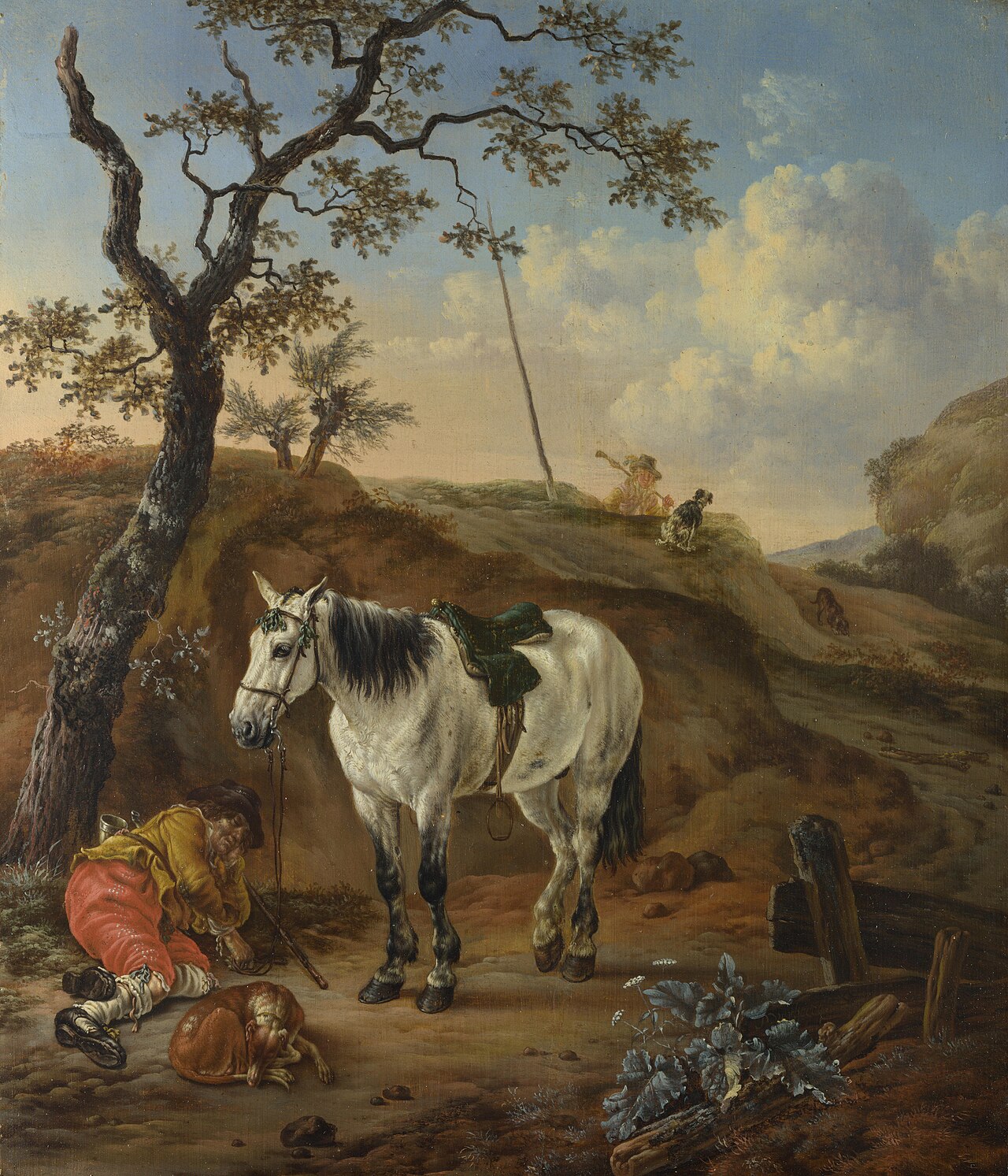
- The Evolution Behind Why Horses Sleep Standing
- The "Stay Apparatus": A Biological Lock
- The Three Stages of Horses Sleep Standing
- Slow-Wave Sleep (NREM)
- REM Sleep: The Lying-Down Requirement
- How Much Do Horses Actually Sleep?
- The Risks and Realities of Recumbent Sleep
- Common Misconceptions About Horses Sleep Standing
- How Domestication Has Changed Horses Sleep Standing
- Practical Implications for Horse Owners
- Conclusion: The Beautiful Balance of Equine Rest
- ❓ Frequently Asked Questions
Have you ever glanced into a pasture and spotted a horse with its head drooping, eyes half-closed, and three legs locked tight, only to wonder if it has suddenly passed away mid-afternoon? The sight is startling, but it is one of the most iconic behaviors in the animal kingdom. The question of why horses sleep standing is not just a quirky piece of trivia; it is a fascinating story of evolutionary survival, specialized anatomy, and the delicate balance between rest and danger. While the simple answer involves a clever locking mechanism in their legs, the full truth reveals a complex sleep strategy that is far more nuanced than most people realize.
The Evolution Behind Why Horses Sleep Standing
To understand why horses sleep standing, you have to look back at their ancestry. Modern horses (Equus ferus caballus) are prey animals, and their wild relatives—such as Przewalski's horses and the mustangs of the American West—evolved on open grasslands alongside formidable predators like wolves, big cats, and early humans. Unlike a lion or a bear, a horse cannot afford to be caught flat on its side, vulnerable and slow to rise. The ability to doze while remaining upright was a life-or-death adaptation that allowed them to flee in an instant.
Consider the math of survival: a horse that is lying down takes roughly one to two seconds to scramble to its feet, but a horse that is already standing can bolt immediately. In a herd, the first few seconds of a predator's charge are critical. By remaining upright, a horse shaves off precious time that could mean the difference between escaping and becoming a meal. This evolutionary pressure shaped not only their behavior but also their entire skeletal and muscular system, making the standing sleep not just a preference but a biological necessity.
Furthermore, standing sleep is a social behavior. Wild horses sleep in shifts, with some individuals acting as sentinels while others doze. This cooperative vigilance allows the herd to rest collectively while minimizing individual risk. The standing posture is not a sign of anxiety or discomfort; it is a finely tuned survival strategy honed over millions of years.
The "Stay Apparatus": A Biological Lock
The secret to this upright slumber lies in a marvel of biomechanics known as the stay apparatus. This is not a single muscle or bone, but a complex network of tendons, ligaments, and joint capsules that work together to allow a horse to lock its major joints without muscular effort. Specifically, the stay apparatus supports the shoulder, stifle (the horse's knee equivalent), hock, and fetlock joints.
When a horse shifts its weight onto three legs, the stay apparatus in the supporting hind leg engages. The patella (kneecap) has a unique hook-like structure that can slip over a ridge on the femur, effectively "catching" the leg in a locked position. This is similar to how a human might stand with their hip locked, but in horses, the mechanism is far more robust and passive. The tendons and ligaments, particularly the suspensory ligament and the superficial digital flexor tendon, act like guy wires, holding the leg straight without any active muscle contraction.
This means a horse can relax its major muscle groups completely while standing. The energy cost of standing is minimal because the skeleton, not the muscles, bears the weight. However, it is crucial to note that this lock is not a full-body paralysis. The horse can still shift its weight, swish its tail, and even twitch its skin to dislodge flies. The stay apparatus is a passive brake, not a rigid cast.
The Three Stages of Horses Sleep Standing
Not all sleep is created equal, and the phrase horses sleep standing is only half the story. Sleep in mammals is broadly divided into two categories: non-rapid eye movement (NREM) sleep and rapid eye movement (REM) sleep. Horses experience both, but they do so in very different physical positions.
Slow-Wave Sleep (NREM)
This is the light, restorative dozing that horses do while standing. During NREM sleep, the horse's brain waves slow down, its heart rate decreases, and its eyelids may droop. The stay apparatus holds the body upright, and the horse can maintain this state for short periods, often lasting 15 to 45 minutes at a time. A horse might accumulate several hours of NREM sleep throughout a 24-hour cycle, but it is always fragmented. This is the sleep you see when a horse appears to be "resting" a hind leg, with the toe of the non-weight-bearing leg barely touching the ground.
REM Sleep: The Lying-Down Requirement
Here is the surprising twist: horses cannot achieve deep REM sleep while standing. REM sleep, the stage associated with vivid dreaming and full muscle paralysis (atonia), requires the horse to lie down completely flat. In REM sleep, the brain is highly active, but the body's skeletal muscles are temporarily paralyzed to prevent acting out dreams. If a horse were to enter this state while standing, its stay apparatus would not be enough to prevent it from collapsing, as the muscle paralysis would override the passive tendon locks.
Therefore, a horse must lie down for at least 20 to 40 minutes each day to get the REM sleep it needs for cognitive function and emotional well-being. Without this, a horse will become sleep-deprived, irritable, and potentially dangerous. In severe cases, horses suffering from REM sleep deprivation can experience sudden "sleep attacks," collapsing to the ground without warning, a condition known as narcolepsy in equines.
How Much Do Horses Actually Sleep?
Understanding the total sleep budget of a horse is essential to appreciating the standing behavior. On average, an adult horse sleeps between 5 and 7 hours per 24-hour period. However, this is not a solid block of slumber. Instead, it is broken into dozens of short bouts.
- Total NREM sleep: 4 to 6 hours, mostly accumulated while standing in 15-30 minute sessions.
- Total REM sleep: 30 to 60 minutes, always in a recumbent (lying down) position, usually in 5-15 minute stretches.
- Foals: Young foals sleep much more than adults, often up to 12 hours a day. They will lie down frequently, as their stay apparatus is not fully developed and they need more REM sleep for brain development.
- Senior horses: Older horses may struggle to lie down due to arthritis or stiffness, leading to a dangerous reduction in REM sleep. Owners must monitor senior horses carefully.
It is also worth noting that horses are polyphasic sleepers, meaning they have multiple sleep periods across the day and night. They do not have a single "bedtime." Instead, they will doze intermittently, with the majority of their deep sleep occurring during the quiet hours of the night, often between midnight and 4 a.m.
The Risks and Realities of Recumbent Sleep
If standing sleep is so efficient, why does a horse ever lie down at all? The answer is that lying down is physiologically compulsory for REM sleep, but it is also a vulnerable state. A horse lying down is at a significant disadvantage. If a predator approaches, the horse must go through a complex series of movements: lift its heavy head, tuck its legs, roll onto its sternum, and then heave its large body upright. This process takes time and coordination, and a horse that is startled from a deep sleep can panic, potentially injuring itself.
Moreover, lying down for extended periods can be physically harmful to a horse. Their large body mass can compress muscles and restrict blood flow to the limbs, leading to a condition called "compartment syndrome" or nerve damage. A healthy horse will only lie down for short, specific periods for REM sleep, then get up, shake, and resume standing rest. If a horse spends more than a few hours lying down continuously, it is a red flag for illness, colic, or severe lameness. Veterinarians often use the phrase "down horse" to describe a critical emergency, as a horse that cannot or will not stand is in grave danger.
Interestingly, horses also choose their lying-down spots with care. In a pasture, they will often lie in a sunny, dry area with good visibility. In a stable, they prefer deep, clean bedding that provides cushioning for their joints. A horse that refuses to lie down in a new environment, such as a horse show stall, may suffer from sleep deprivation until it feels safe enough to collapse.
Common Misconceptions About Horses Sleep Standing
There is a popular myth that horses never lie down, or that they only lie down when they are sick or dying. This is completely false. While it is true that a healthy horse spends the majority of its resting time on its feet, it is entirely normal to see a horse lying flat out in a field on a sunny afternoon, legs stretched, tail swishing, soaking up the warmth. This is often a sign of deep comfort and security, not distress.
Another misconception is that a horse is "asleep" the entire time it is standing still. In reality, a horse standing with its head low and eyes half-closed is likely in a state of quiet wakefulness or light NREM sleep. They are still aware of their surroundings. Their ears will rotate independently, tracking sounds, and they will react to sudden noises or movements. True unconsciousness only occurs during REM sleep, which is why a horse that is accidentally startled from REM sleep will often leap up in a frenzy, disoriented and frightened.
Finally, some people believe that the stay apparatus is a "locking" of the knee joint. This is anatomically inaccurate. The locking occurs primarily in the stifle joint (the equivalent of the human knee), while the hock and fetlock are supported by tension in the tendons. Understanding this distinction is important for anyone who works with horses, as a problem with the stay apparatus can manifest as a "dropped fetlock" or a "locked stifle" that requires veterinary intervention.
How Domestication Has Changed Horses Sleep Standing
Wild horses and domesticated horses share the same anatomical hardware, but their sleep patterns differ due to environmental factors. A wild horse must be constantly vigilant, and its sleep is often fragmented by noise, weather, and predator pressure. Domesticated horses, on the other hand, live in safer, more predictable environments. They have access to shelter, regular feeding, and veterinary care, which allows them to achieve deeper and more restful sleep overall.
However, domestication has introduced a new set of challenges. A horse confined to a small stall may not have enough space to lie down comfortably and roll over. The ideal stall size for a horse is at least 12x12 feet, but many are smaller. If a stall is too cramped, a horse may choose to remain standing to avoid the awkward and potentially dangerous process of getting up. This can lead to chronic REM sleep deprivation, which manifests as irritability, poor performance, and a general "dopey" appearance.
Conversely, horses that are turned out to pasture with a compatible herd often exhibit more natural sleep behaviors. They will take turns lying down while others graze and stand guard. Social hierarchy also plays a role: dominant horses may choose the best lying-down spots, while subordinate horses may be forced to stand more often. As a responsible horse owner, observing your horse's sleep habits is one of the best ways to gauge its overall welfare. If you notice your horse is never lying down, or conversely, is lying down excessively, it is time to consult an equine veterinarian.
Practical Implications for Horse Owners
Understanding the mechanics of equine sleep is not just academic curiosity; it has direct practical applications. If you own or care for horses, you should ensure they have a safe, comfortable place to lie down. This means providing soft, non-slip footing in stalls and paddocks. Concrete or hard-packed dirt can cause bruising and discourage a horse from lying down, leading to sleep debt.
Additionally, it is crucial to recognize the signs of a healthy sleep cycle. A horse that is getting enough REM sleep will be calm, responsive, and energetic during the day. A horse that is sleep-deprived may yawn excessively, appear lethargic, stumble, or even collapse unexpectedly. In severe cases, a sleep-deprived horse can develop "episodic collapse," where it suddenly drops to the ground without warning, which is extremely dangerous for both the horse and any rider.
Here are a few key takeaways for horse owners:
- Monitor lying time: A healthy adult horse should lie down for at least 20-30 minutes daily. If you never see your horse lying down, investigate why.
- Provide a safe environment: Ensure stalls are large enough and deeply bedded. Pastures should be free of sharp objects and have dry, elevated areas.
- Consider companionship: Horses are herd animals and feel safer when they have a companion. A lone horse may be too anxious to lie down for REM sleep.
- Respect the 3-hour rule: If a horse lies down for more than 3 hours in a 24-hour period, it is a medical emergency. Call a vet immediately.
Conclusion: The Beautiful Balance of Equine Rest
The answer to why horses sleep standing is not a single fact but a beautiful tapestry of evolutionary biology, mechanical engineering, and behavioral adaptation. The stay apparatus is a testament to nature's ingenuity, allowing a 1,000-pound animal to rest its muscles while remaining ready to bolt from danger. Yet, the full truth is that horses sleep standing only for light rest; they must surrender to the ground for the deep, restorative sleep that dreams are made of. This dual strategy—standing for safety, lying for sanity—is a perfect metaphor for the horse's existence as a prey animal. They are masters of compromise, balancing the need for vigilance with the absolute necessity of deep rest. The next time you see a horse dozing on its feet, you can appreciate the silent, intricate machinery holding it upright, and you can also know that somewhere, in the quiet hours of the night, that same horse will lie down, close its eyes, and finally let go of its weight, dreaming of open plains and the freedom of the gallop.
❓ Frequently Asked Questions
💬 Why do horses sleep standing up?
Horses sleep standing up primarily as a survival mechanism, allowing them to quickly flee predators if needed. Their unique 'stay apparatus' in their legs locks their joints, so they can doze without falling over.
💬 Do horses ever lie down to sleep?
Yes, horses do lie down, but usually only for deep REM sleep, which they need for proper rest. They typically lie down for short periods, often a few minutes to a couple of hours, and only when they feel safe and comfortable.
💬 How long do horses sleep standing up each day?
Horses spend most of their rest time standing, totaling about 5 to 7 hours of light sleep (dozing) per day in short bursts. They only get about 30 to 60 minutes of deep REM sleep lying down, usually in brief sessions.
💬 Can horses sleep standing up without falling over?
Yes, horses have a specialized system of tendons and ligaments called the 'stay apparatus' that locks their major joints, particularly the stifle and hock, allowing them to rest with minimal muscle effort. This lets them doze upright without collapsing.