- The Physics of Hummingbird Hovering: More Than Just Fast Flapping
- How Fast Do Hummingbird Wings Beat?
- Why Hummingbird Hovering Is So Energetically Expensive
- Feeding the Hover: Nectar, Insects, and Torpor
- What Hovering Lets Hummingbirds Do That Other Birds Cannot
- Hovering, Backward Flight, and Precision Maneuvering
- Which Hummingbirds Hover—and Which Species Are the Masters
- Hovering in Different Habitats
- The Anatomy Behind the Hover: Wings, Muscles, and Metabolism
- Lifespan, Size, and the Cost of Being Small
- Common Myths About Hummingbird Hovering
- Conclusion: The Truth About Hummingbird Wings
- ❓ Frequently Asked Questions
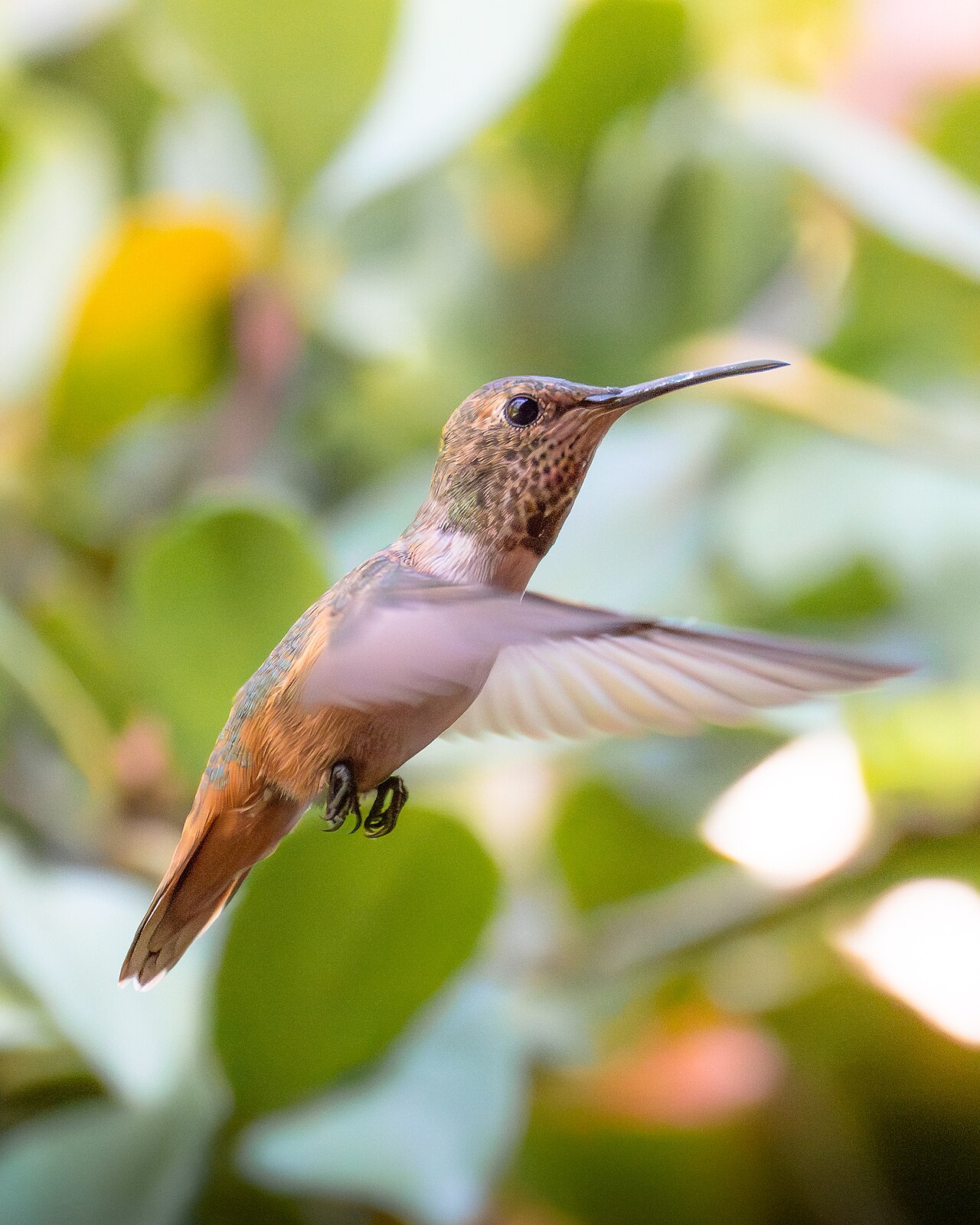
Hummingbird hovering is one of the most extraordinary feats in the animal kingdom—a tiny bird, often weighing less than a penny, holding itself perfectly still in midair while its wings beat so fast they blur into a faint hum. It looks effortless, almost magical. But behind that stationary silhouette is a biomechanical masterpiece: a wing that sweeps through a figure-eight, a shoulder that rotates nearly a full circle, and a metabolism running hotter than almost any other vertebrate on Earth. In this article, we'll unpack the real science behind hummingbird hovering—how the wings work, why hovering is worth the enormous energy cost, which species hover and which don't, and what it takes to keep such a small body aloft.
The Physics of Hummingbird Hovering: More Than Just Fast Flapping
Most birds generate lift only on the downstroke, with the upstroke largely a recovery phase. Hummingbirds do something fundamentally different. Their wings beat in a shallow, tilted figure-eight pattern, and both the forward and backward strokes produce lift. On the forward stroke, the wing moves through the air leading-edge first; on the backward stroke, the wing flips over and slices back the other way, leading-edge first again. The result is that a hummingbird generates useful force during the entire wingbeat cycle rather than half of it.
This is possible because of a remarkable shoulder joint. Unlike most birds, hummingbirds can rotate their wings at the shoulder by roughly 180 degrees, allowing them to invert the wing surface on each stroke. That rotation is what lets them hover, fly backward, and even fly briefly upside down. The wings themselves are relatively stiff and paddle-like compared with the feathered, slotted wings of soaring birds—an aerodynamic trade-off that favors agility and precise control over gliding efficiency.
How Fast Do Hummingbird Wings Beat?
Wingbeat rates vary with body size. Small species such as the ruby-throated hummingbird beat their wings roughly 50 to 80 times per second in normal flight, and the rate climbs during hovering and maneuvering. Larger hummingbirds, like the giant hummingbird of South America—the largest species at around 20 centimeters (8 inches) in length—beat more slowly, in the range of 10 to 15 times per second. During courtship dives, some males reach wing speeds that produce the loud, chirping sounds used to impress females and warn rivals.
The characteristic hum that gives hummingbirds their name comes from the air moving across the wings and from the wingbeat frequency itself. Some species produce sounds at frequencies audible to humans; others, particularly certain North American species in the genus Selasphorus, generate tones near the upper edge of human hearing.
Why Hummingbird Hovering Is So Energetically Expensive
Hovering is not free flight with the brakes on—it is among the most demanding forms of locomotion known in vertebrates. A hovering hummingbird must support its full body weight with no forward airspeed, so all lift comes from wing motion alone. Studies of oxygen consumption during hovering have found that hummingbirds expend energy at rates far above those of similarly sized birds in forward flight. Relative to body mass, hovering flight in hummingbirds is one of the highest sustained metabolic efforts measured in any bird.
To fuel it, hummingbirds run an extraordinary engine. Their heart rate can exceed 1,000 beats per minute during activity, and their body temperature runs high. Their flight muscles—the pectoralis and supracoracoideus—make up a large fraction of total body mass, sometimes roughly a quarter to a third, depending on the species and season. That is a lot of muscle packed into a bird that may weigh only 3 to 5 grams.
Feeding the Hover: Nectar, Insects, and Torpor
Hummingbirds are nectarivores with an insect habit. Their diet is dominated by flower nectar, which supplies rapid sugar energy, but they also catch small insects and spiders—especially during breeding season, when protein is needed for egg production and chick growth. A hummingbird may visit hundreds of flowers a day and can consume nectar amounting to a substantial share of its body weight daily. Sugar solutions in feeders are typically mixed at roughly one part sugar to four parts water to approximate natural nectar concentrations.
At night, or during cold or food-scarce periods, many hummingbirds enter torpor—a controlled, temporary drop in body temperature and metabolic rate that can cut energy use dramatically. Torpor is the counterweight to the daytime cost of hovering. Without it, a small hummingbird might not survive a cool night on stored fat alone. In some species, torpor can lower body temperature by roughly 20 to 30 degrees Celsius below normal active levels.
What Hovering Lets Hummingbirds Do That Other Birds Cannot
The payoff for all that energy is access. Hovering lets a hummingbird hold position in front of a flower, sip nectar without landing, and move to the next bloom in a fraction of a second. Many of the flowers hummingbirds visit—trumpet-shaped blooms like those of trumpet vine, columbine, and various penstemons—are oriented so that a hovering bird can reach the nectar while staying clear of thorns and foliage. Some plants have evolved floral structures that accommodate hovering visitors specifically, and hummingbirds are important pollinators across the Americas.
Hovering also supports behaviors beyond feeding. Males of many species perform elaborate aerial displays: pendulum flights, vertical climbs, and steep dives, all built on precise hovering control. Territory defense is another. Hummingbirds are famously aggressive for their size, and a hovering bird can face down intruders at a feeder, darting and pivoting in place to block access. The combination of backward flight and sustained hovering makes them difficult to displace.
Hovering, Backward Flight, and Precision Maneuvering
Hummingbirds are the only birds known to fly backward routinely and under full control. That ability is a direct extension of the same wing mechanics that make hovering possible. The wing's ability to reverse its angle of attack means the bird can generate thrust in either direction. In practice, hummingbirds use backward flight to withdraw from flowers, reposition at feeders, and escape tight spaces. They can also hover in gusty wind and adjust almost instantaneously to a swaying bloom.
Which Hummingbirds Hover—and Which Species Are the Masters
All hummingbirds belong to the family Trochilidae, found only in the Americas, with the greatest diversity in the tropical Andes and Central America. There are more than 350 recognized species, ranging from the tiny bee hummingbird of Cuba—the smallest bird in the world at about 5 to 6 centimeters (roughly 2 inches) and under 2 grams—to the giant hummingbird of the Andes. Nearly all hover, but habitat and body size shape how they do it.
Among the most familiar hoverers in North America is the ruby-throated hummingbird, which breeds across eastern North America and migrates across the Gulf of Mexico in a nonstop flight of roughly 800 kilometers (500 miles) or more. Its hovering is quick and precise, and males defend feeding territories vigorously. In the western United States, Anna's hummingbird is a year-round resident in many areas and a frequent feeder visitor, known for its sharp, buzzy song and persistent hovering at flowers and feeders. The rufous hummingbird, a long-distance migrant, is famously pugnacious and will hover aggressively to guard nectar sources.
Hovering in Different Habitats
Hummingbird habitat spans rainforest understory, cloud forest, desert scrub, mountain meadows, and suburban gardens. In dense tropical forest, hovering allows birds to work flowers in tight, cluttered spaces where landing would be awkward or expose them to predators. In open, windy habitats, hovering demands constant, fine correction. Species that specialize in long, tubular flowers tend to hover with the body held nearly vertical, reaching the bill forward; species that feed at shallower blooms may approach from different angles. Even the angle of the body during hovering differs among species.
The Anatomy Behind the Hover: Wings, Muscles, and Metabolism
The hummingbird wing is built for control rather than soaring. The bones of the wing are relatively short and stout, and the flight feathers are stiff, with limited flex. The wing's shape and stiffness let it function as a paddle that can be pitched and rotated rapidly. The shoulder joint's wide range of motion is the key enabler—without it, the figure-eight stroke and the inverted upstroke would be impossible.
Powering all this are the pectoral muscles, which in hummingbirds are proportionally among the largest of any bird group. The muscles are richly supplied with blood vessels and mitochondria-dense fibers suited to sustained, high-output aerobic work. The respiratory system is also specialized: hummingbirds have highly efficient lungs and air sacs that support rapid oxygen uptake, and their hearts are large relative to body size. Together, these features let a hovering bird sustain metabolic rates that would exhaust most animals of comparable size.
Lifespan, Size, and the Cost of Being Small
Hummingbirds are small, and small animals lose heat quickly and burn energy fast. Most hummingbirds live a few years in the wild; banding studies have documented individuals surviving well beyond that, with some ruby-throated hummingbirds recorded at 8 to 9 years old. The bee hummingbird, the smallest of all, faces the most extreme energy demands relative to its size. Larger species like the giant hummingbird have somewhat lower relative metabolic costs but still hover with impressive precision.
Size also shapes wingbeat and hovering style. Smaller hummingbirds beat faster and can change direction more abruptly; larger ones beat more slowly and may use slightly different stroke geometry. Researchers studying hovering aerodynamics have found measurable differences in wake structure and force production between small and large species—evidence that hovering is not one fixed trick but a tunable skill.
Common Myths About Hummingbird Hovering
One persistent myth is that hummingbirds hover by "standing" on air with rapid flapping alone. In reality, the figure-eight stroke and wing rotation are essential; speed without the right wing pitch would produce turbulence rather than lift. Another myth holds that hummingbirds only hover and never perch. In fact, they perch frequently—to rest, digest, and sleep—and perching saves considerable energy compared with hovering.
A third misconception is that hummingbirds must eat constantly or die within minutes. While their energy demands are high, they routinely go minutes between feedings and rely on torpor at night. Finally, the idea that hummingbirds are fragile is misleading: they are aggressive, resilient migrants capable of crossing vast distances, and their hovering ability is a product of rugged physiology, not delicacy.
- Hovering is a full-cycle lift strategy: both wing strokes generate force, unlike most birds.
- Shoulder rotation is the secret: roughly 180 degrees of wing rotation enables hovering and backward flight.
- Energy cost is extreme: hovering demands one of the highest sustained metabolic rates among birds.
- Torpor is essential: nighttime metabolic shutdown offsets the daytime cost of hovering.
- Hovering serves feeding, display, and defense: it is a versatile behavior, not just a feeding technique.
Conclusion: The Truth About Hummingbird Wings
Hummingbird hovering is not magic—it is a precise, high-cost engineering solution built from a rotating shoulder, a stiff paddle-like wing, a figure-eight stroke, and one of the most demanding metabolisms in the bird world. The wings do the visible work, but the truth behind the hover lies in the joint that lets them flip, the muscles that drive them, and the nectar-and-insect diet that fuels them. Next time you watch a hummingbird hang motionless at a feeder, you are seeing a bird spend energy at a rate most animals could not sustain—and make it look easy.
❓ Frequently Asked Questions
💬 How do hummingbirds hover in place?
Hummingbirds hover by beating their wings in a figure-eight pattern, sweeping them forward and backward rather than just up and down. This lets them generate lift on both the forward and backward strokes, so they can stay suspended in one spot.
💬 How fast do hummingbirds flap their wings while hovering?
Most hummingbirds beat their wings around 50 times per second while hovering, though smaller species can exceed 70 to 80 beats per second. Larger species flap more slowly, sometimes closer to 20 to 30 beats per second.
💬 Why do hummingbirds hover at flowers instead of perching?
Hovering lets hummingbirds feed quickly from flowers that can't support their weight and move on before competitors or predators arrive. It also gives them the agility to dart between blossoms and feed while staying ready to escape.
💬 Do hummingbirds use a lot of energy hovering?
Yes, hovering is extremely demanding, and hummingbirds have among the highest metabolic rates of any bird to sustain it. To cope, they feed frequently on nectar and can enter a deep energy-saving sleep called torpor overnight.