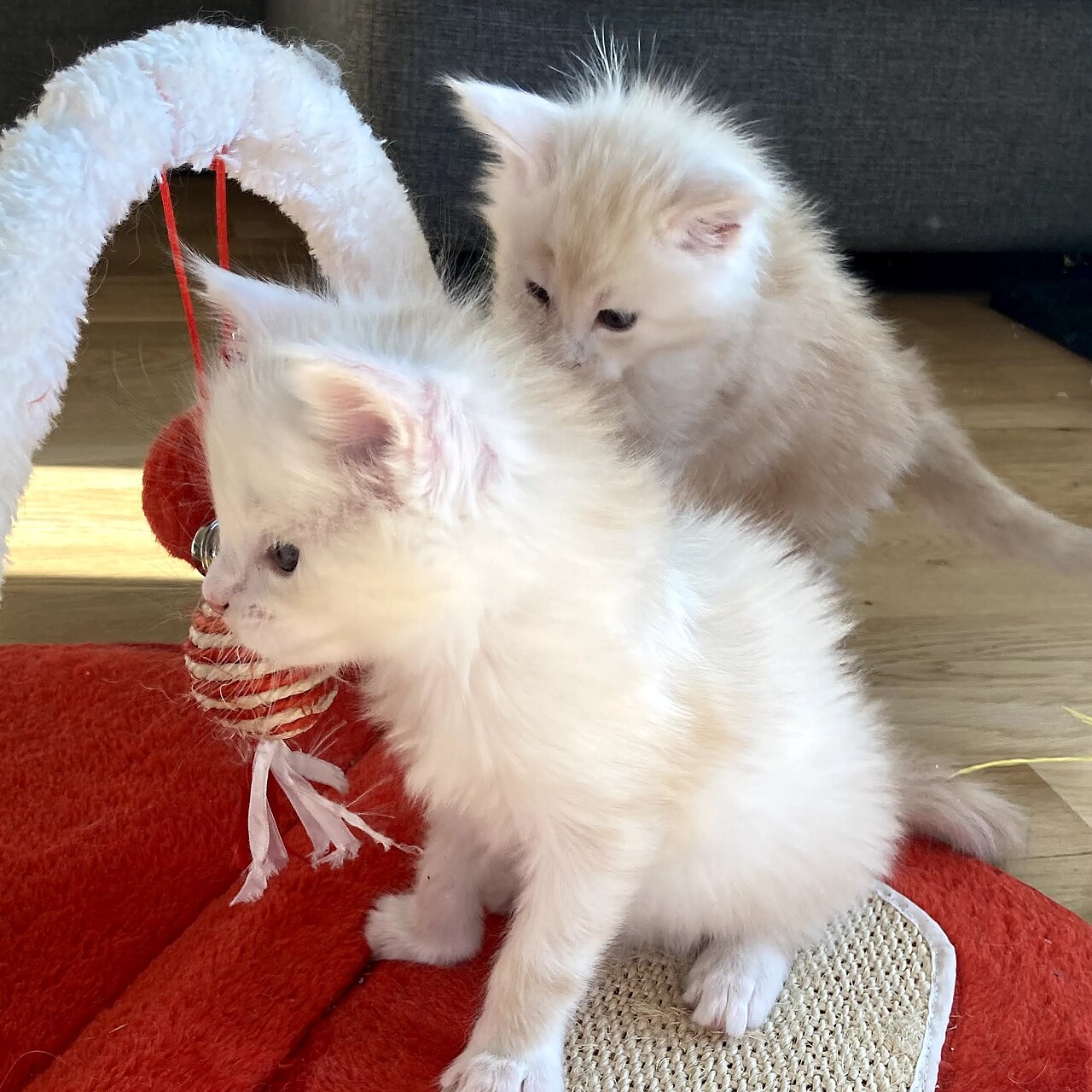
- Maine Coon Big Paws: The Short Answer
- Why Maine Coon Big Paws Made Evolutionary Sense
- Snowshoe Feet for Soft Ground
- Insulation and Cold Protection
- Grip, Balance, and Climbing
- Anatomy: What Is Actually Inside Those Paws?
- Do Big Paws Mean a Big Cat? Reading the Kitten Clues
- What to Look For in a Kitten
- Realistic Size Expectations
- Living With Maine Coon Big Paws: Practical Care
- Grooming the Tufts
- Nail Trimming and Scratching
- Litter Box Considerations
- Floor Traction and Joint Health
- Common Myths About Maine Coon Paws
- Myth: Big Paws Mean a Huge Adult Cat, Guaranteed
- Myth: The Tufts Are Purely Decorative
- Myth: All Maine Coons Are Polydactyl
- Myth: Big Paws Mean a Lazy Cat
- A Gentle Giant's Feet: Behavior and Temperament
- Health and Longevity: Caring for the Whole Cat
- The Gentle Giant Truth
- ❓ Frequently Asked Questions
If you have ever watched a Maine Coon stroll across a kitchen floor, you have probably noticed the feet first: broad, tufted, almost snowshoe-like platforms that seem out of proportion even for a cat that can weigh as much as a small dog. Maine Coon big paws are one of the breed's most distinctive features, and they are far more than a cute quirk. They are a functional inheritance from a harsh climate, a set of built-in tools for climbing, walking on snow, and gripping prey, and — in a slightly awkward twist for owners — one of the most reliable clues that a kitten may grow into a very large adult. Understanding why these paws are so big means understanding the breed's history, its anatomy, and the practical realities of living with a gentle giant.
Maine Coon Big Paws: The Short Answer
Maine Coon paws are large because the breed evolved in the cold, snowy northeastern United States, where a cat needed wide, well-furred feet to spread its weight on soft surfaces, insulate against frozen ground, and grip icy or uneven terrain. The paws are also packed with extra structure: thick pads, heavy bone, and tufts of fur that grow between the toes. In other words, the size is not decorative. It is a working design, refined over generations of outdoor life in Maine's long winters.
Breed standards reflect this. Major registries describe the Maine Coon as a large, rugged, natural-appearing cat with substantial bone and a rectangular body, and they specifically call for large, round, well-tufted paws. The paws are meant to look like they belong to a cat that could handle snow, rock, and forest floor without difficulty — because that is exactly what the ancestors of today's Maine Coons did.
Why Maine Coon Big Paws Made Evolutionary Sense
The Maine Coon is often described as a "natural breed," meaning it developed largely on its own in a specific region rather than being engineered in a show hall. That region was New England, particularly the state of Maine, where winters are long, wet, and cold. Cats that survived and reproduced there were the ones best equipped for those conditions, and foot size was part of the package.
Snowshoe Feet for Soft Ground
Wide paws act like snowshoes. By spreading a cat's weight over a larger surface area, big feet reduce how far the animal sinks into snow, mud, or loose forest debris. A Maine Coon working a farm in January benefited from exactly the same physics that make a snowshoe useful to a human. The tufts of fur between the toes add extra surface and traction, and they also provide a layer of insulation between the pad and the frozen ground.
Insulation and Cold Protection
Maine Coons carry a dense, shaggy, water-resistant coat, a thick ruff around the neck, and a bushy tail they can wrap around themselves like a scarf. The paws fit into that same cold-weather strategy. Heavy fur on and between the toes helps keep the extremities warmer, and the substantial pads provide a barrier between skin and ice. A cat with small, thin paws would lose heat faster and be more vulnerable to frostbite and injury.
Grip, Balance, and Climbing
Big paws are not just about warmth. They give a large, heavy cat better grip on bark, rocks, and uneven ground, and they improve balance when moving through trees or over fences. Maine Coons are famously agile for their size, and their feet are a big part of why. The tufts also function a bit like the tread on a hiking boot, adding friction on slick surfaces.
Anatomy: What Is Actually Inside Those Paws?
A Maine Coon paw is not simply a scaled-up version of an ordinary cat paw. Several features combine to produce that oversized, almost lynx-like look.
- Heavy bone structure: The breed standard calls for substantial bone throughout the body, and the legs and feet are no exception. Thick metacarpal and metatarsal bones give the paw its solid, blocky appearance.
- Large, thick pads: The cushioning pads are broad and leathery, providing shock absorption for a cat that may weigh 15 to 25 pounds (7 to 11 kilograms) or more.
- Toe tufts: Long fur grows between and around the toes, especially in winter coats. These tufts are one of the breed's signature traits and are sometimes called "snowshoe tufts."
- Polydactyly in some lines: Historically, many Maine Coons in Maine carried the polydactyl gene, giving them extra toes and even wider feet. Polydactyl Maine Coons are still beloved by many owners, though most registries require five toes on the front feet and four on the back for show cats.
- Thick skin and fur coverage: The skin on the paw is tough, and the surrounding fur protects the delicate areas between the toes.
Put together, these features create a foot that looks disproportionate on a kitten and impressively sturdy on an adult. It is also worth noting that the front paws tend to look even larger than the back, partly because of how the cat carries its weight and partly because of the fur distribution.
Do Big Paws Mean a Big Cat? Reading the Kitten Clues
One of the most common questions new owners ask is whether paw size predicts adult size. The short answer is: somewhat, but not precisely. Breeders and experienced owners often joke that a Maine Coon kitten "grows into its feet," and there is real truth to the observation that kittens with notably large, knuckly paws tend to become larger adults. However, paw size is only one signal among many.
What to Look For in a Kitten
Beyond paw size, breeders look at bone thickness in the legs, the width of the chest, the length of the body, and the overall "substance" of the kitten. A kitten with heavy bone and a broad head is more likely to mature into a big cat than one with a delicate frame, regardless of paw size. Growth rate matters too: Maine Coons are slow maturing and may continue filling out until they are three to five years old, so a lanky adolescent with enormous feet may simply be mid-growth-spurt.
Realistic Size Expectations
Adult male Maine Coons typically weigh between 13 and 25 pounds (6 to 11 kilograms), with some reaching 30 pounds or more. Females are generally smaller, often 8 to 15 pounds (4 to 7 kilograms). The longest recorded domestic cat, a Maine Coon named Stewie, measured 48.5 inches (123 centimeters) from nose to tail tip, and the breed holds several records for length. Not every Maine Coon is a record-breaker, though — plenty of perfectly healthy adults sit comfortably in the mid-teens, and their paws still look enormous relative to their bodies.
Living With Maine Coon Big Paws: Practical Care
Those impressive feet come with real maintenance needs. Owners who ignore paw care often end up with mats, nail problems, or a cat that is uncomfortable walking on hard floors.
Grooming the Tufts
The fur between the toes can mat, collect litter, and trap debris from outdoors. Regular brushing, plus a quick check of the paw fur every week or two, keeps things tidy. Some owners trim the tufts slightly for hygiene or for cats that slip on smooth floors, though many keep them intact for the classic look. Never cut into the pad or between the toes without care — the skin there is sensitive.
Nail Trimming and Scratching
Big paws mean big claws. Maine Coons need regular nail trims, typically every two to four weeks, and a sturdy scratching post that can handle a large cat's weight and strength. A flimsy post will wobble or tip, which discourages use and can lead to furniture damage. Look for posts with a wide base and tall, durable sisal surfaces.
Litter Box Considerations
A large cat with large feet needs a large litter box. Many standard boxes are simply too small, leading to accidents or reluctance to use the box. High-sided boxes help contain litter kicked by powerful back feet, and low-entry options suit older cats. Clumping litter that does not stick to fur is a practical choice for tufted paws.
Floor Traction and Joint Health
Maine Coons are prone to hip dysplasia and other joint issues, and a heavy cat slipping on hardwood or tile can injure itself. Rugs, runners, and non-slip mats in high-traffic areas make a real difference. Keeping the cat at a healthy weight is equally important: extra pounds on a large frame stress the joints, and the paws are the contact points that absorb the impact.
Common Myths About Maine Coon Paws
The breed's popularity has produced plenty of folklore, and some of it is misleading.
Myth: Big Paws Mean a Huge Adult Cat, Guaranteed
Paw size is a hint, not a promise. Genetics, nutrition, and overall bone structure all play roles. A kitten with big feet from two average-sized parents may still mature to an average size. Responsible breeders will talk about the parents' sizes and the kitten's overall build rather than making guarantees based on feet alone.
Myth: The Tufts Are Purely Decorative
Toe tufts serve real functions: insulation, traction, and protection. They are not just a show feature, even though they are prized in the ring.
Myth: All Maine Coons Are Polydactyl
Polydactyly is common in the breed's history and still appears in some lines, but most Maine Coons have the standard number of toes. A polydactyl cat is not "more pure" — it is simply a cat with a genetic variation that produces extra toes and often extra-wide feet.
Myth: Big Paws Mean a Lazy Cat
Maine Coons are famously gentle and sociable, but they are also playful and surprisingly athletic. The "gentle giant" reputation refers to temperament, not lethargy. These cats enjoy interactive play, puzzle toys, and climbing, and their big paws are well suited to all of it.
A Gentle Giant's Feet: Behavior and Temperament
Maine Coons are often described as dog-like: they follow their people around, greet them at the door, and sometimes play fetch. Their large paws are part of how they interact with the world. Many owners notice that their Maine Coon uses its paws almost like hands — patting at toys, scooping water, or gently tapping a human's arm to ask for attention. The breed's size and strength are paired with a notably relaxed, affectionate temperament, which is why the "gentle giant" label sticks.
That said, those paws can do damage accidentally. A playful swat from a 20-pound cat is forceful, and kittens need to learn bite and claw inhibition early. Providing appropriate outlets — wand toys, kickers, climbing structures — channels the energy safely. Maine Coons also tend to be vocal, with a distinctive chirp and trill rather than a typical meow, and they often communicate with their paws as much as their voices.
Health and Longevity: Caring for the Whole Cat
Maine Coons generally live 12 to 15 years, with some reaching their late teens. Their large size brings specific health considerations. Hypertrophic cardiomyopathy (HCM) is the most significant inherited concern in the breed, and reputable breeders screen breeding cats for it. Spinal muscular atrophy and hip dysplasia also appear in some lines. Regular veterinary checkups, weight management, and dental care all contribute to a long, comfortable life.
Diet matters too. A large, slow-maturing cat benefits from high-quality protein and portion control; free-feeding a Maine Coon is a fast route to obesity, which compounds joint stress. Fresh water is essential, and many Maine Coons enjoy a running water source. Grooming, exercise, and mental enrichment round out the basics — and paw care is a small but important part of that routine.
The Gentle Giant Truth
Maine Coon big paws are a beautiful example of form following function. They are the legacy of a breed shaped by cold New England winters, built for snow, ice, and rough ground, and refined into one of the most recognizable silhouettes in the cat world. Those oversized, tufted feet are also a reminder that a Maine Coon is a large, powerful animal with specific needs: room to move, sturdy furniture, big litter boxes, regular grooming, and thoughtful joint care. Understand the paws, and you understand a lot about the cat attached to them — a gentle giant whose feet are every bit as practical as they are charming.
❓ Frequently Asked Questions
💬 Are Maine Coon paws actually bigger than other cats' paws?
Yes, Maine Coons genuinely have larger paws than most domestic breeds, both in absolute size and relative to their body, because they are one of the largest cat breeds overall. Their paws are broad, tufted, and built to support a big, heavy frame.
💬 Why do Maine Coons have tufts of fur between their toes?
The fur tufts between the toes act like snowshoes, spreading weight on soft ground and helping insulate the paws in cold weather. They also add protection and grip, which fits the breed's hardy New England origins.
💬 Do big paws mean a Maine Coon kitten will grow extra large?
Large paws are a rough hint that a kitten will mature into a big cat, since Maine Coons keep growing until around 3 to 5 years old. However, paw size alone isn't a reliable predictor, and adult size depends on genetics, sex, and nutrition.
💬 Are Maine Coon paws with extra toes (polydactyl) normal?
Polydactyly, or extra toes, occurs in some Maine Coons and was historically common in the breed, but it is not the standard and most Maine Coons have the usual number of toes. Extra toes are generally harmless, though owners should keep nails trimmed and watch for ingrown claws.