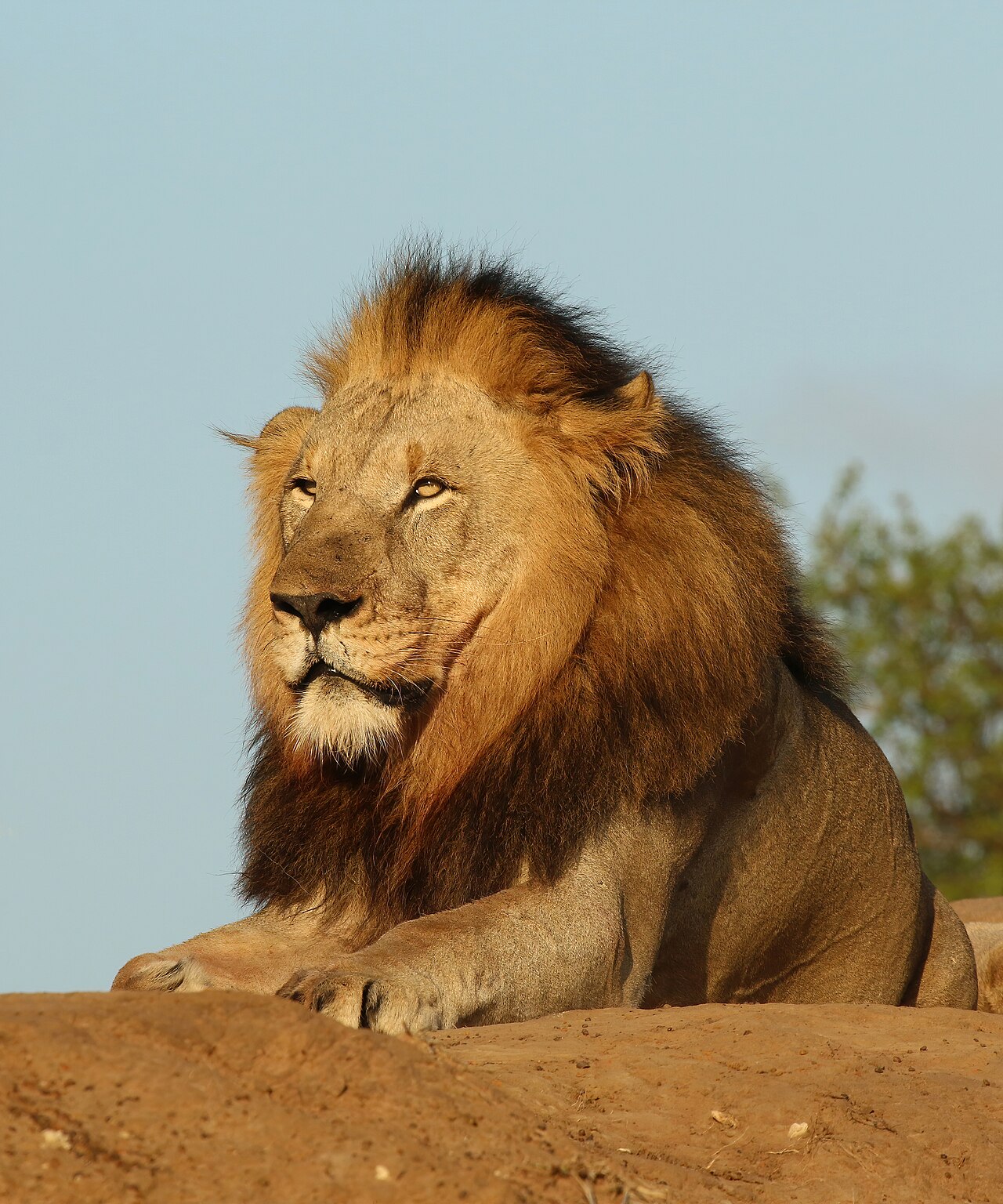
- What Exactly Is a Male Lion's Mane?
- Color and length vary enormously
- Why Do Male Lions Have Manes? The Core Theories
- Protection: armor for the neck
- Signaling: a billboard of fitness
- Temperature: a built-in thermostat
- Why Male Lions Have Manes: Hormones and Health
- The mane as a health record
- Why some males have no mane
- Why Male Lions Have Manes: The Social and Reproductive Payoff
- Deterring rivals
- Attracting mates
- The costs of showing off
- How the Mane Develops Through a Male's Life
- Prime years and decline
- Individual and regional variation
- Common Myths and Misconceptions
- Why the Mane Matters Beyond the Lion
- Lions in the wild today
- What the mane teaches us
- The Roaring Truth About Male Lions and Their Manes
- ❓ Frequently Asked Questions
Walk into any natural history museum, open almost any children's book about Africa, and you'll meet the same iconic figure: a huge cat with a thick, dark halo of hair framing its face. The reason male lions have manes is one of the most studied questions in big-cat biology, and the answer turns out to be far richer than simple decoration. A male lion's mane is part advertisement, part armor, part thermometer, and part health report — all wrapped into one conspicuous package. Understanding it means understanding how lions fight, mate, survive heat, and signal their fitness to rivals and partners alike. This article digs into the science behind the mane, from the hormones that grow it to the temperatures that shape it, and explains why this single feature has become one of the most recognizable traits in the animal kingdom.
What Exactly Is a Male Lion's Mane?
The mane is a growth of long, coarse hair that covers a male lion's head, neck, and shoulders, and in some individuals extends down the chest and belly. It begins to develop when a male reaches sexual maturity, usually around two to four years of age, and continues thickening and darkening as the animal grows older. Females (Panthera leo) do not grow manes, though they occasionally develop sparse neck ruffs, and cubs of both sexes start life with faintly spotted coats that fade with age.
The mane is not a single uniform garment. Researchers describe it in parts: the hackles on the top of the head and neck, the ruff around the cheeks and throat, the chest fringe, and the belly fringe. Each region can vary independently, which is one reason two males from the same pride can look strikingly different.
Color and length vary enormously
Manes range from pale blond to jet black. Length varies too: some males sport short, scruffy ruffs, while others carry dense manes that hang well past the shoulders. A handful of populations — notably the lions of Tsavo in Kenya and some males in Senegal's Niokolo-Koba National Park — are famous for having very little mane at all, sometimes none. These exceptions were once treated as oddities; today biologists see them as clues about how environment and genetics interact.
Why Do Male Lions Have Manes? The Core Theories
Scientists have proposed several explanations for the mane, and most evidence suggests more than one is at work simultaneously. The leading ideas fall into three broad categories: protection, signaling, and temperature regulation.
Protection: armor for the neck
Male lions live violent lives. Fights over territory and access to females can be brutal, with combatants raking each other with claws and biting at the neck and throat. A thick mane can absorb or deflect some of that punishment, cushioning bites and claw strikes aimed at vulnerable areas. Studies of fight injuries have found that males with fuller manes tend to suffer fewer wounds to the neck and shoulders, supporting the armor hypothesis — though the evidence is suggestive rather than conclusive, since well-maned males may simply be stronger fighters overall.
Signaling: a billboard of fitness
The mane is also a conspicuous signal. Because hair growth is energetically costly and sensitive to condition, a large, dark, symmetrical mane advertises that its owner is well fed, parasite-free, and hormonally robust. Rival males use it to judge whether to challenge or retreat, and females appear to use it when choosing mates. In one well-known series of experiments using life-sized lion models, researchers found that females approached models with darker, longer manes more often, and that male intruders were more cautious around them. The mane, in other words, is a public statement of quality.
Temperature: a built-in thermostat
The temperature story is more subtle than it first appears. You might assume a heavy mane is pure burden in the African heat, but studies measuring mane length and color against local climate found a counterintuitive pattern: males in hotter regions tend to have shorter and lighter manes, while darker manes cluster in cooler areas. This suggests the mane can act as insulation, helping regulate body temperature, and that its size and color are tuned to local conditions. The dark mane's cost — absorbing more heat — is offset by the fitness signal it sends, but only where the climate allows.
Why Male Lions Have Manes: Hormones and Health
Behind the mane is a hormonal engine. Testosterone drives mane growth, and the relationship is direct enough that castrated males typically lose their manes or fail to grow them. Males in prime condition, with high testosterone and good nutrition, tend to produce the fullest, darkest manes. Conversely, illness, injury, malnutrition, or chronic stress can cause a mane to thin or lighten.
The mane as a health record
Because mane quality reflects condition, it functions as an honest indicator — a biological résumé. A male with a ragged, pale mane is likely struggling; one with a dense, dark mane is likely thriving. This is why mane-watching is useful to field biologists: changes in a male's mane can hint at shifts in his health or status before other signs appear.
Why some males have no mane
The mane-less males of Tsavo and parts of West Africa show that the trait is not fixed. Explanations include hotter climates favoring shorter manes, genetic differences in isolated populations, and possibly lower testosterone levels or nutritional stress. Some Tsavo males are famously bald or nearly so, yet they still hold territories and sire cubs — proof that a mane is helpful but not essential.
Why Male Lions Have Manes: The Social and Reproductive Payoff
Lions are social cats, living in prides of related females, their cubs, and a coalition of resident males. The mane matters in this society in several ways.
Deterring rivals
Territory defense is the central drama of a male lion's life. A resident male or coalition must repel challengers, often younger males seeking to take over. A big, dark mane makes a male look larger and more formidable, and playback and model experiments suggest intruders respond to mane size and darkness when deciding whether to press an attack. The mane thus saves energy and risk by winning some contests before they start.
Attracting mates
Female lions are choosy, and the mane gives them information. Experimental work with dummy lions found that females preferred males with darker manes, and that this preference held across different prides. Since darker manes correlate with good condition and possibly better genes, the preference makes evolutionary sense. The mane is, in effect, a courtship display that doubles as a threat display.
The costs of showing off
None of this is free. Growing and maintaining a large mane costs energy and nutrients, and a dark mane absorbs heat, making males in hot climates pay a thermal price. That cost is exactly what makes the signal trustworthy: only a male in genuinely good shape can afford to display it. This is the logic of honest signaling, and the lion's mane is one of the animal kingdom's clearest examples.
How the Mane Develops Through a Male's Life
A male lion's mane is a lifelong project. Cubs are born with faintly spotted, fluffy coats and no mane. As they grow, a sparse ruff appears, usually around the time they approach sexual maturity at two to four years old. From there, the mane thickens and darkens, often reaching its fullest expression between ages four and seven, when males are in their prime and most likely to hold territory.
Prime years and decline
Males in their prime — roughly four to eight years old — typically carry the most impressive manes. As they age and face the wear of territorial defense, injuries, and competition, mane quality can decline. Wild male lions rarely live beyond 12 to 14 years; many die far younger in fights or from starvation after losing territory. A male's mane, in a sense, traces the arc of his fortunes.
Individual and regional variation
Beyond age, mane appearance depends on genetics, nutrition, and climate. Males in the same coalition can differ noticeably. Regional differences are pronounced: lions in cooler, higher-altitude areas such as the Ngorongoro Crater in Tanzania often have fuller, darker manes than those in hot lowland savannas. This geographic pattern is one of the strongest pieces of evidence that temperature shapes the trait.
Common Myths and Misconceptions
Popular culture has saddled the mane with several myths worth correcting.
- Myth: The mane makes males better hunters. In fact, males are less successful hunters than females, and the mane can make a male more conspicuous. Lionesses do most of the pride's hunting, often cooperatively and at night.
- Myth: All male lions have big manes. Some populations, such as the Tsavo lions, have males with little or no mane.
- Myth: A dark mane always means an older lion. Darkness correlates with condition and hormones, not simply age; a young male in excellent condition can have a darker mane than an older, struggling one.
- Myth: The mane is purely for looks. It serves protection, signaling, and thermoregulation simultaneously.
Another persistent confusion is the idea that mane size directly determines fighting ability. It does not. A mane is a signal, not a weapon, and many a scruffy male has beaten a splendidly maned rival.
Why the Mane Matters Beyond the Lion
The mane is a window into evolution. It shows how a single trait can serve several functions at once, how honest signals evolve when displays are costly, and how environment shapes anatomy. It also has practical value for conservation. Because mane characteristics reflect health and condition, researchers can use them as a non-invasive indicator of population stress, habitat quality, and even climate effects.
Lions in the wild today
Wild lions once ranged across much of Africa, the Middle East, and parts of India and Europe. Today they survive in fragmented populations, mostly in sub-Saharan Africa, with a small Asiatic population in India's Gir Forest. African lions number in the low tens of thousands, and they face habitat loss, human-wildlife conflict, and prey depletion. Understanding the mane helps scientists monitor these populations and tells a broader story about how magnificent animals adapt to changing conditions.
What the mane teaches us
The mane is a reminder that nature rarely does anything for a single reason. Protection, courtship, rivalry, and temperature all converge in one conspicuous feature. That convergence is what makes the lion's mane such a compelling subject — and why it has fascinated humans for millennia.
The Roaring Truth About Male Lions and Their Manes
The reason male lions have manes is not one simple answer but a layered one. The mane is armor that cushions the neck in fights, a billboard that advertises health and genetic quality to rivals and mates, and a thermostat tuned to local climate. It is shaped by testosterone, nutrition, age, and geography, and it varies from the dense black manes of cool highlands to the near-bald heads of Tsavo. It is costly to grow and maintain, and that cost is precisely what makes it trustworthy. Far from decoration, the mane is one of the animal kingdom's most elegant examples of honest signaling — a feature that tells the truth about the lion wearing it. Next time you see a male lion, look past the majesty and read the message: his mane is telling you exactly how he is doing.
❓ Frequently Asked Questions
💬 Do all male lions have manes?
No—mane development varies widely by age, genetics, and region, and males in some hot populations (like Tsavo in Kenya) have very sparse or almost no manes. Young males and those under heavy stress or poor nutrition also grow thinner manes.
💬 What is the purpose of a lion's mane?
The mane signals a male's health, age, and fighting ability to rivals and mates, and it helps protect the neck during fights. Darker, fuller manes tend to indicate better condition and higher testosterone.
💬 Why do male lions have manes but lionesses don't?
Manes are driven by male hormones, mainly testosterone, so they develop at puberty and grow fuller as males mature. Lionesses lack the hormone profile that produces a mane, though rare cases of maned females have been documented.
💬 Does a darker mane mean a stronger lion?
Studies suggest darker manes are linked to better nutrition, higher testosterone, and greater fighting success, making them attractive to females. However, dark manes also absorb more heat, so they're more common in cooler climates.