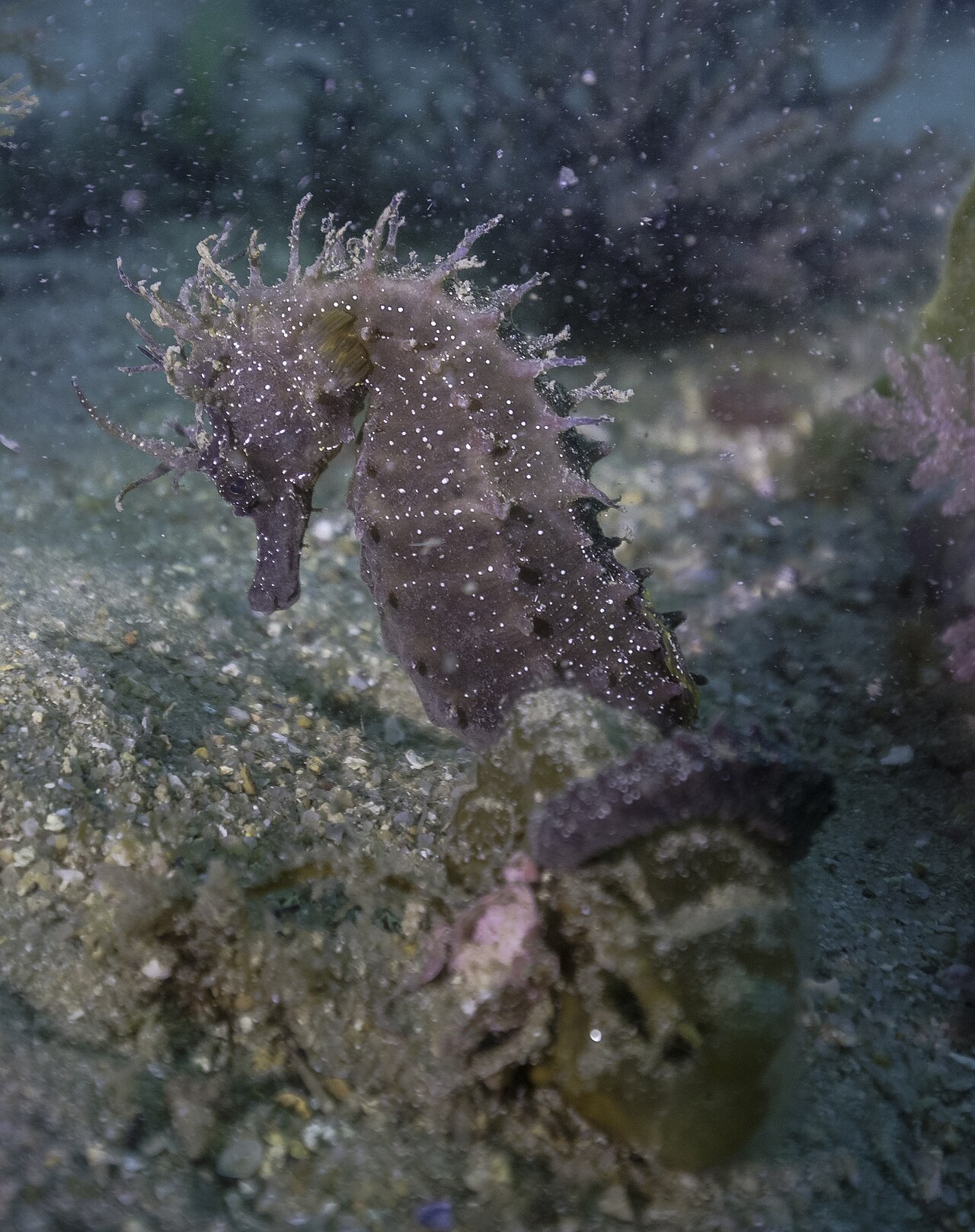
- The Truth About Why Male Seahorses Give Birth
- A True Biological Pregnancy
- How Male Seahorses Give Birth: From Dance to Delivery
- The Courtship Dance
- Gestation Inside the Pouch
- The Delivery
- The Brood Pouch: A Microscopic Marvel
- Placenta-Like Functions
- Osmoregulation and Protection
- Evolutionary Advantages of Male Pregnancy
- Real-Life Seahorse Species and Their Remarkable Births
- The Dwarf Seahorse
- The Big-Bellied Seahorse
- The Lined Seahorse
- The Tiger-Tailed Seahorse
- What Happens After Male Seahorses Give Birth?
- Human Threats and Conservation Challenges
- Global Protections
- Fascinating Facts About Seahorse Fathers
- Conclusion: A Father Like No Other
- ❓ Frequently Asked Questions
When we talk about pregnancy and childbirth in the animal kingdom, few facts surprise people more than the revelation that male seahorses give birth. It is one of the most famous, and most misunderstood, biological quirks in nature. Unlike almost every other vertebrate on Earth, male seahorses take on the role of pregnancy, incubating eggs inside a specialized pouch until fully developed miniature seahorses burst forth into the ocean. This is not a symbolic gesture or a bit of parental care—it is a true, biologically costly pregnancy. Let's dive into the astonishing reality of how and why these incredible fathers do the heavy lifting.
The Truth About Why Male Seahorses Give Birth
To understand why male seahorses give birth, we have to look at the evolutionary pressures that shaped their strange reproductive system. Seahorses belong to the family Syngnathidae, a group that also includes pipefish and seadragons. Across this family, males are the brooders, but seahorses have taken this to the most extreme level with a fully enclosed brood pouch—a warm, protective chamber located on the front of the male's abdomen or tail.
The fundamental reason for this role reversal boils down to two main factors: protection and reproductive efficiency. In most fish species, females release eggs into the open water, where they are fertilized externally and left to fend for themselves. This is a numbers game—produce millions of eggs and hope a few survive. Seahorses, however, are slow, clumsy swimmers that cannot flee from predators or migrate to safer spawning grounds. Their survival strategy is based on quality over quantity, and carefully protecting a smaller number of well-developed young gives their offspring a much higher chance of survival.
There is another critical evolutionary driver at play: sexual selection. In seahorse society, the males are actually the choosy sex. Because males have a limited pouch capacity, they can only carry a finite number of eggs at once. Females, meanwhile, can produce hundreds or thousands of eggs rapidly. This flips the typical animal kingdom script. Female seahorses compete aggressively for male attention, and males reject suitors they deem too small or unhealthy. Some species, like the big-bellied seahorse, display elaborate courtship dances where both partners change color, intertwine tails, and "dance" for hours. The female is essentially paying for a viable pregnancy by providing her eggs—and she wants a strong, capable father to carry them well.
A True Biological Pregnancy
Many people assume that the male seahorse is simply a "babysitter" holding eggs glued to his skin. This could not be further from the truth. The male seahorse's pouch is a highly sophisticated organ that function much like a mammalian womb. It contains blood vessels, a mucus lining, and a specialized internal environment that does far more than just store eggs.
When the female deposits her eggs into the pouch, the male releases sperm to fertilize them internally. Over the next few weeks, the pouch walls thicken, become more vascular, and develop a placenta-like structure. This creates a direct connection between the father's bloodstream and the developing embryos, allowing the transfer of oxygen, calcium, amino acids, and other essential nutrients. The male actively regulates the pouch's salinity, pH, and waste removal, effectively acting as a maternal environment for the developing young.
How Male Seahorses Give Birth: From Dance to Delivery
The process of how male seahorses give birth is a spectacular sequence of biological precision and remarkable stamina. It begins weeks before labor with an extraordinary courtship ritual.
The Courtship Dance
Before mating, seahorses engage in a highly choreographed dance that can last for hours or even days. In species such as the lining seahorse or the common seahorse, the pair will swim side by side, mirror each other's movements, vibrate their tails, and perform spiral ascents through the water column. They also undergo dramatic color changes, often brightening to vivid yellows, pinks, and oranges. This dance synchronizes the pair's reproductive cycles, ensuring that the female's eggs are fully mature and ready to transfer at the moment of mating.
When the moment arrives, the female extends a long, tube-like organ called an ovipositor and deposits her eggs directly into the male's open brood pouch. This transfer can take just a few seconds for some species, though the preceding dance may have lasted for eight hours. As the eggs slide into the pouch, the male releases his sperm, and fertilization takes place internally.
Gestation Inside the Pouch
Once the eggs are safely tucked away, the male seals the pouch and begins his pregnancy. Gestation periods vary by species and water temperature, but most seahorses carry their young for two to four weeks. During this time, the male undergoes significant physiological changes. His heart rate increases, his metabolism rises, and his pouch becomes engorged with blood vessels to nourish his growing offspring. The embryos develop within individual egg chambers inside the pouch, each one bathed in a carefully maintained fluid environment.
The Delivery
When the babies are ready, the male goes into labor. This phase is physically exhausting and can last from a few hours to over two days. The male anchors himself with his prehensile tail to a piece of seagrass, coral, or a mangrove root, bracing his body against the current. Then, through a series of powerful, rhythmic muscular contractions, he pushes the tiny seahorses out of his pouch one by one, or in small clusters.
The visual spectacle is unforgettable. Hundreds or even thousands of miniature seahorses, each measuring just 7 to 12 millimeters in length, stream outward in a living cloud. They emerge fully formed, looking like tiny replicas of their parents, complete with curled tails, tiny snouts, and iridescent speckles. Don't let their fragile appearance fool you though—these newborns are immediately independent. They swim to the surface or find cover in the water column, begin hunting microscopic plankton, and receive absolutely no parental care from their exhausted father.
The Brood Pouch: A Microscopic Marvel
The brood pouch itself deserves a closer look because it is arguably one of the most remarkable organs in the animal kingdom. It is not a simple sac; it is a complex, dynamic, and highly regulated life-support system. Researchers studying the pouch have found that it goes through distinct phases that closely mirror a mammalian pregnancy.
Placenta-Like Functions
Scientists have identified prolactin, a hormone associated with pregnancy and milk production in mammals, in the seahorse pouch. This hormone triggers changes in the pouch lining, causing it to swell with blood vessels. The pouch also produces a viscous, nutrient-rich fluid in which the embryos float. Studies have shown that this fluid contains amino acids, sugars, and lipids that are selectively absorbed by the developing embryos. In this way, the male is not just offering shelter; he is literally feeding his offspring through a connection analogous to a mammalian placenta.
Osmoregulation and Protection
Seahorses live in a variety of environments, from fully marine coral reefs to brackish estuaries. The pouch helps regulate the osmotic balance of its internal fluid, protecting embryos from sudden changes in salinity. It also provides a safe haven from the numerous predators that would happily snack on helpless fish eggs and larvae. In the open ocean, survival rates for fish eggs are abysmally low—often less than 1%. Inside the protective pouch, survival rates for seahorse embryos are dramatically higher, which is why males can afford to produce "only" hundreds or thousands of young instead of the millions typical of other fish.
Evolutionary Advantages of Male Pregnancy
The question remains: why did this bizarre system evolve in the first place? Biologists believe the answer lies in the seahorse's unique lifestyle and the specific demands of their environment.
- Limited mobility: Seahorses are terrible swimmers. With their rigid, bony armor and near-vertical swimming posture, they are neither fast nor agile. They cannot chase down mates or escape predators. Taking on the burden of pregnancy allows the pair to stay anchored together, reducing the need for dangerous movement.
- Thermoregulation: A male can position his body and pouch to control the temperature and oxygen flow of his developing young. He can pump water through the pouch, essentially providing a customized incubation environment.
- Faster reproductive cycling: This is a key advantage. By offloading the eggs onto the male, the female frees herself to develop another batch of eggs almost immediately. In some species, a female can produce a fresh clutch of eggs within days of depositing the previous one. This allows a bonded pair to reproduce multiple times in a single breeding season, rapidly increasing their reproductive output.
- Paternity assurance: Because fertilization occurs internally inside the male's own pouch, the male is 100% certain that the babies are his. He never has to waste energy raising someone else's offspring. This is a luxury that many other male animals do not have.
This system is so successful that it has driven the evolution of extreme species variation. Today, there are approximately 46 known species of seahorse, and they all employ this same fundamental strategy, though their sizes, pouch capacities, and reproductive details vary.
Real-Life Seahorse Species and Their Remarkable Births
The seahorse family is far more diverse than most people realize. These remarkable creatures range from tiny thumb-sized dwarfs to giants in the kelp forests. Here are a few specific examples that highlight the adaptability of male pregnancy.
The Dwarf Seahorse
The dwarf seahorse measures only about 1.5 to 2.5 centimeters in length and lives in seagrass beds in the Gulf of Mexico and the Caribbean. Despite its tiny size, its male still carries up to 55 babies per pregnancy. These miniature fathers exemplify how the mechanism scales down without losing its effectiveness. Their entire lifespan is typically just 1 year, so they reproduce rapidly to sustain their populations.
The Big-Bellied Seahorse
At the opposite extreme is the big-bellied seahorse, found in the coastal waters of southern Australia and New Zealand. This gentle giant can grow up to 35 centimeters long—the largest of all seahorse species. Its enormous pouch can hold more than 1,000 babies in a single pregnancy. Interestingly, this species is known for its strong pair bonding; the same male and female may mate repeatedly throughout their 3 to 5 year lifespans, performing elaborate greetings every morning.
The Lined Seahorse
Found along the Atlantic coast of North and South America, the lined seahorse inhabits seagrass meadows, mangroves, and oyster reefs. A single male can release up to 1,500 fry in one birthing event. These fry are highly vulnerable and drift with the plankton before settling onto the seafloor. The lined seahorse has become a model species for studying seahorse reproduction in captivity, giving scientists a front-row seat to the entire pregnancy and birth process.
The Tiger-Tailed Seahorse
In the coral reefs of Southeast Asia, the tiger-tailed seahorse uses its long, striped tail to anchor itself to gorgonian corals and sponges. This species is highly prized in traditional Chinese medicine, leading to severe overfishing. Its birth rates and breeding behaviors are therefore crucial to conservationists working to rebuild wild populations.
What Happens After Male Seahorses Give Birth?
Immediately after delivery, the male seahorse is physically depleted. The muscular contractions required to expel hundreds of babies take a serious toll on his body. He will often rest, bracing himself securely to a holdfast for several hours, pumping water through his now-empty pouch to flush out any remaining fluids and debris. Within a few days, his pouch begins to regenerate its lining, readying itself for the next batch of eggs.
Seahorse fathers can become pregnant again remarkably quickly. In some species, a male will take new eggs from the same female (or occasionally a new female) within just 24 to 48 hours of giving birth. This rapid turnover means a single male can undergo multiple pregnancies in one breeding season, which typically aligns with warmer water temperatures and increased food availability.
The newborn seahorses go their separate ways, drifting in the plankton for weeks before developing the characteristic prehensile tail that allows them to grip seagrass and coral. Their diet consists of copepods, rotifers, and tiny crustacean larvae. They grow quickly but face a perilous life; scientists estimate that fewer than 1% of wild seahorses survive to adulthood. This grim statistic makes the male's investment in gestation all the more valuable—every well-nourished, fully developed baby he releases is a tiny victory against overwhelming odds.
Human Threats and Conservation Challenges
Seahorse populations are in serious trouble across the globe, and their unique reproductive biology makes them vulnerable to pressure. Seahorses are caught by the millions each year, both accidentally in shrimp trawls and intentionally for use in traditional medicines, aquarium trade, and as curiosities. Horrifyingly, dried seahorses are sold by weight—up to millions of animals annually—with the largest, most mature males fetching the highest prices. This selectively removes the very individuals that are best at breeding.
The destruction of critical habitat is an even greater threat. Seagrass meadows, coral reefs, and mangroves—the seahorse's essential nurseries—are disappearing at alarming rates due to coastal development, pollution, and climate change. Rising water temperatures and ocean acidification disrupt seahorse physiology, potentially affecting pouch function and embryo survival.
Global Protections
The good news is that conservation efforts are underway. In 2002, all seahorse species were listed in CITES Appendix II, which regulates international trade and requires countries to prove their seahorse exports are sustainable. Organizations like Project Seahorse work with local fishing communities to establish marine protected areas, encourage seahorse-friendly fishing practices, and restore seagrass habitats. Sustainable aquaculture programs now raise seahorses for the aquarium trade, reducing pressure on wild populations. While the challenges remain significant, there is genuine hope for these extraordinary animals.
Fascinating Facts About Seahorse Fathers
Before we wrap up, let's highlight some of the most astonishing, little-known facts about male seahorses and their reproductive superpower.
- No stomachs: Seahorses have no true stomach. They must feed almost constantly, consuming up to 3,000 small crustaceans per day. Pregnant males, however, reduce their feeding during gestation to focus their energy on reproduction.
- Grasping tails: A seahorse's tail is so strong and flexible that it can wrap around seagrass blades with a grip strong enough to resist strong currents. During birth, males rely on this grip to stay anchored during the exhausting labor process.
- Independent babies: Baby seahorses are not nursed or protected. From their very first moment of life, they are miniature predators, hunting tiny zooplankton on their own.
- Synchronized births: Some aquarium observers have noted that male seahorses in the same tank sometimes give birth around the same time. This may be triggered by environmental cues such as moon phases, water temperature shifts, or barometric pressure changes.
- Unique in the animal kingdom: While male pipefish and seadragons also carry eggs, only seahorses have evolved the complex, fully enclosed placenta-like brood pouch that defines true male pregnancy.
Conclusion: A Father Like No Other
Male seahorses give birth because evolution found an extraordinary solution to the challenges of their environment. By carrying, nourishing, and protecting their developing young inside their own bodies, these unusual fathers have flipped the rules of parenthood on their head. They are not just caregivers; they are living incubators, complete with functional placentas and a maternal dedication rare in the animal world. Their unique biology reminds us that nature is infinitely creative, and that some of the most fascinating miracles in the animal kingdom hide in the shallow, swaying seagrass beds of our oceans. The seahorse father, with his swollen pouch and weary but proud posture, may be the single best example of paternal devotion in nature.
❓ Frequently Asked Questions
💬 Do male seahorses actually give birth?
Yes, in a unique twist, male seahorses undergo a form of pregnancy and give birth. The female deposits eggs into a special brood pouch on the male's belly, where he fertilizes and carries them until they hatch, and then he actively expels the tiny live young.
💬 Why do male seahorses carry the babies instead of females?
Scientists believe this role reversal helps females produce more eggs, since they don't have to carry the developing young. The male's brood pouch provides a protected, nutrient-rich environment that regulates oxygen and salinity, giving the embryos better survival odds than if they were simply released into the sea.
💬 How long are male seahorses pregnant?
A male seahorse's pregnancy typically lasts anywhere from 10 days to six weeks, depending on the species and water temperature. During this time, the embryos develop inside his brood pouch, and he even undergoes contractions during labor to push the tiny seahorses out.
💬 How many babies does a male seahorse give birth to at once?
A single male seahorse can give birth to anywhere from a few dozen to over 1,000 babies at once, depending on the species. These newborn seahorses, called fry, are fully independent immediately after birth, but only a tiny fraction survive to adulthood due to predators and ocean currents.