- What Exactly Is a Narwhal Tusk? The Anatomy Behind the Narwhal Tusk Purpose
- The Tooth With Ten Million Nerve Endings
- Where Narwhals Live: The Arctic Habitat That Shaped the Tusk
- Summer Migrations and Winter Dives
- The Leading Theories on Narwhal Tusk Purpose
- Sensory Detection: Reading the Arctic Environment
- Sexual Selection: The Tusk as a Display of Status
- Feeding and Foraging: A Tool, but Not a Spear
- Ice Management and Navigation
- Why Only Males? The Puzzle of Sexual Dimorphism
- A Costly Structure
- Narwhal Behavior, Diet, and Lifespan: The Life Behind the Tusk
- Predators and Threats
- Narwhal Tusk Purpose in Myth, Trade, and Science
- Conclusion: The Real Answer to the Narwhal Tusk Question
- ❓ Frequently Asked Questions
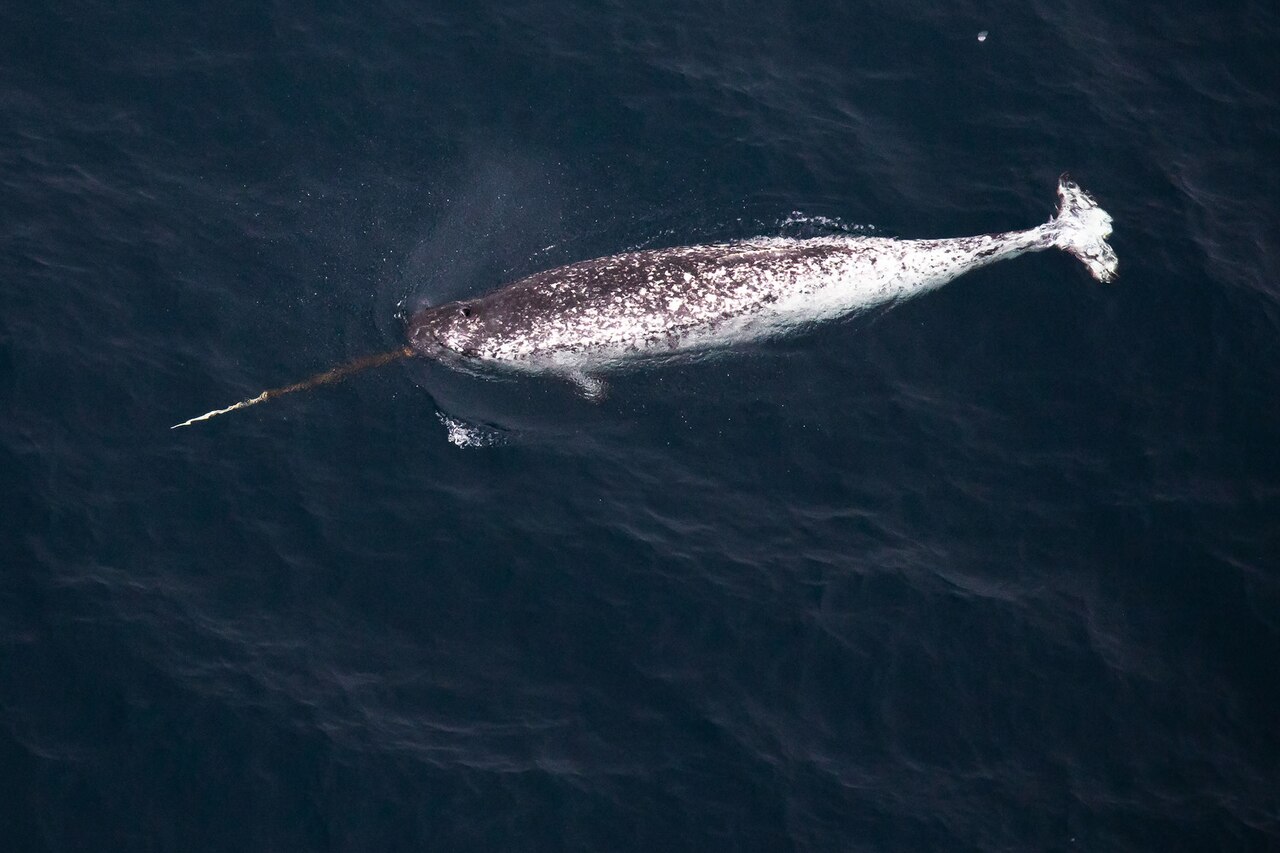
The narwhal tusk purpose has puzzled observers for centuries, and it is easy to see why: a single spiraling rod of ivory, up to three meters long, jutting from the upper lip of a small Arctic whale looks less like a practical tool than a piece of mythology made flesh. That resemblance explains the animal's nickname — the "unicorn of the sea" — and it also explains why the tusk was once sold across Europe as unicorn horn, worth more than its weight in gold and credited with neutralizing poison. The real explanation is stranger and more interesting than the legend. The narwhal tusk is not a horn at all, it is not used for spearing fish, and it is not even, strictly speaking, a male-only feature. It is a tooth: an overgrown, left-handed spiral of dentine with a remarkable secret running through its core.
What Exactly Is a Narwhal Tusk? The Anatomy Behind the Narwhal Tusk Purpose
To understand the narwhal tusk purpose, you first have to understand what the structure actually is. Most people assume the tusk is a horn, like a rhino's or an antelope's. It is not. A horn has a core of living bone wrapped in keratin, the same protein that makes fingernails. The narwhal tusk is a tooth — specifically the upper left canine — and it grows continuously throughout the animal's life, protruding through the upper lip rather than emerging from the mouth.
The tusk is hollow for most of its length, with a pulp cavity running up the center, and it is covered in a layer of cementum. But the most striking feature is its external structure: the tusk is spiraled, almost always in a left-handed direction, giving it the grooved, twisted appearance that made sailors think of unicorn horns. Most males grow one tusk. Roughly one in 500 males grows two, one from each upper canine, and females occasionally grow a tusk as well, usually a shorter one.
The Tooth With Ten Million Nerve Endings
For a long time, scientists assumed the tusk was a rigid, decorative structure with little sensory function. Research published in the mid-2000s overturned that assumption. The tusk's surface is perforated by millions of tiny channels — estimates run to around ten million — that connect the outer surface to the pulp cavity and, through it, to the animal's nervous system. In other words, the tusk is not dead ivory. It is a living, innervated organ bathed in seawater, and it appears to be one of the most sensitive structures in the entire animal kingdom.
That single discovery reframed the entire question of narwhal tusk purpose. A structure that can detect subtle changes in its environment is not merely a display ornament; it is a sensor. The tusk's sensitivity is now thought to be central to how narwhals navigate and interpret their surroundings.
Where Narwhals Live: The Arctic Habitat That Shaped the Tusk
Narwhals are among the most northerly of all whales, and their range is essentially the Arctic Ocean and its adjacent waters. They are found primarily in the waters around Greenland, Canada's High Arctic, Svalbard, and the Russian Arctic, with the vast majority of the global population — estimated at around 170,000 animals — concentrated in the Canadian Arctic and Greenland. They are rarely seen south of the Arctic Circle.
Their habitat is defined by sea ice. Narwhals spend much of the year in deep, ice-covered fjords and channels, and in winter they move offshore into heavy pack ice, where they dive beneath floes and into cracks in the ice to feed. This is a demanding environment: water temperatures hover near freezing, and the animals must surface repeatedly through narrow leads in the ice to breathe.
Summer Migrations and Winter Dives
In summer, narwhals migrate toward shallow coastal bays and fjords, where they congregate in large numbers. These summer aggregations can number in the hundreds or even thousands, and they are the best opportunity scientists have to study the animals. In winter, the whales disperse into the pack ice, where they are far harder to observe.
Narwhals are also exceptional divers. They routinely descend to depths of several hundred meters, and researchers using satellite tags have recorded dives exceeding 1,500 meters — among the deepest dives of any marine mammal. These deep dives, often made beneath dense ice, are where the tusk's sensory capabilities may prove most valuable.
The Leading Theories on Narwhal Tusk Purpose
There is no single settled answer to the question of narwhal tusk purpose. Instead, there is a set of hypotheses, each supported by different lines of evidence, and most researchers now believe the tusk serves several functions at once. Here are the main theories.
Sensory Detection: Reading the Arctic Environment
The sensory hypothesis is the most scientifically compelling. Because the tusk is densely innervated and bathed in seawater, it may allow narwhals to detect changes in salinity, temperature, and pressure — all of which matter enormously in an environment where ice forms, melts, and shifts constantly. A narwhal swimming beneath ice could, in theory, use its tusk to sense the boundary between fresh meltwater and saltier seawater, or to detect the subtle pressure changes that precede ice formation.
This hypothesis remains debated. Some researchers point out that the tusk's sensitivity has been demonstrated in laboratory conditions, but direct evidence of narwhals using the tusk to sense their environment in the wild is still limited. Even so, the anatomy strongly suggests the tusk is not purely decorative.
Sexual Selection: The Tusk as a Display of Status
The most widely accepted explanation for the tusk's size and prominence is sexual selection. Tusks are far more common and far larger in males than in females, which is the classic signature of a trait shaped by competition for mates. Males are known to engage in "tusking" behavior — raising their tusks out of the water and crossing or rubbing them against those of other males — which is generally interpreted as a display of dominance or a form of ritualized competition rather than serious combat.
Notably, tusking rarely results in visible injury. That suggests the behavior is about assessment and display rather than violence: a long, symmetrical tusk is a costly structure to grow, so it may honestly signal a male's health, age, and genetic quality to rivals and to females.
Feeding and Foraging: A Tool, but Not a Spear
One persistent myth is that narwhals use their tusks to spear fish. There is no good evidence for this. Narwhals feed mainly on Arctic cod, Greenland halibut, squid, shrimp, and other small prey, and they capture these by suction — the whales have no teeth in their mouths apart from the tusk itself, and they draw prey in with a powerful vacuum created by retracting the tongue.
Some researchers have proposed that the tusk may be used to disturb prey from the seabed, or to stun small fish with a sideways swipe. Footage of narwhals apparently using their tusks to tap or stun cod has been recorded, but such behavior appears opportunistic rather than routine. The tusk is not a hunting weapon in any meaningful sense.
Ice Management and Navigation
Another long-standing idea is that narwhals use their tusks to break thin ice or to test the thickness of ice above them so they can find breathing holes. The tusk is certainly strong enough to crack thin ice, and narwhals do live in an environment where locating a breathing hole is a matter of survival. However, direct observations of this behavior are rare, and many biologists consider it a secondary or occasional use rather than a primary function.
Why Only Males? The Puzzle of Sexual Dimorphism
The fact that tusks are overwhelmingly a male feature is one of the strongest clues to narwhal tusk purpose. In most tusked or horned mammals, the structure is tied to male competition, and the narwhal fits that pattern: males grow tusks far more often and far larger than females. A typical male tusk is roughly two to three meters long and can weigh around ten kilograms, while female tusks, when they occur, are usually much shorter.
But the picture is not quite that simple. Females with tusks do exist, and the tusk's sensory anatomy is present in both sexes. Some researchers argue that the tusk evolved first as a sensory organ and was later co-opted for display, while others argue the reverse. The debate is unresolved, and it is one of the reasons the narwhal remains such a rewarding subject for biologists.
A Costly Structure
Whatever its function, the tusk is expensive to grow. It is a massive investment of calcium and energy in an animal that lives in one of the harshest environments on Earth. Evolution does not usually sustain such costly structures without a payoff, which is why researchers take the tusk seriously as a functional organ rather than dismissing it as an evolutionary accident.
Narwhal Behavior, Diet, and Lifespan: The Life Behind the Tusk
Narwhals are medium-sized whales. Adults typically measure around four to five meters in length, excluding the tusk, and weigh between 800 and 1,600 kilograms, with males larger than females. They are stocky, mottled grey animals with a rounded head and no dorsal fin — an adaptation that lets them swim beneath ice without snagging on it.
They are highly social. Narwhals travel in pods, sometimes of a few individuals and sometimes of hundreds, and they communicate with a complex repertoire of clicks, whistles, and pulsed calls. Like other toothed whales, they use echolocation to navigate and hunt in dark, ice-covered waters.
Their diet is dominated by Arctic cod and Greenland halibut, supplemented by squid, shrimp, and other invertebrates. They feed mainly in deep water, which is one reason their winter behavior is so difficult to study. Narwhals can live for at least 50 years, and possibly considerably longer; age is estimated by counting growth layers in the teeth and in the tusk itself.
Predators and Threats
Narwhals face predation from orcas and, in some regions, from polar bears, which can ambush them at breathing holes. But the greatest threat is human activity and climate change. Sea ice loss is altering the timing and extent of their migrations, opening the Arctic to shipping, oil and gas exploration, and increased disturbance. Narwhals are also hunted legally by Inuit communities in Canada and Greenland, where the hunt is culturally and nutritionally significant and is managed under quota systems.
The species is currently listed as Least Concern by the International Union for Conservation of Nature, but several subpopulations are small and vulnerable, and the trajectory of Arctic warming makes the long-term picture uncertain.
Narwhal Tusk Purpose in Myth, Trade, and Science
No account of the narwhal tusk is complete without the history of what people believed it was. For centuries, narwhal tusks entered European markets as "unicorn horns," sold by Norse and later Danish traders. They were fashioned into goblets, scepters, and medicinal powders, and were believed to detect and neutralize poison — a belief that made them extraordinarily valuable. The Danish kings' coronation throne, still housed at Rosenborg Castle in Copenhagen, is famously made partly of narwhal tusk.
This trade is a reminder that the tusk's meaning has always been shaped by human imagination as much as by biology. Today, the scientific study of the tusk — its microstructure, its innervation, its growth layers — has replaced the myths, and the narwhal has become a symbol of Arctic conservation. The tusk's growth layers even record chemical signatures of the whale's diet and environment, making it a kind of biological archive that scientists can read.
Conclusion: The Real Answer to the Narwhal Tusk Question
So why do narwhals have tusks? The honest answer is that the narwhal tusk purpose is probably plural. The tusk is a sexually selected display structure that signals a male's quality to rivals and mates; it is a densely innervated sensory organ that may help narwhals read the chemistry and physics of their icy world; and it may occasionally serve as a foraging aid or a tool for interacting with ice. It is not a spear, it is not a horn, and it is not a myth — it is a tooth that evolution has pushed to an extraordinary extreme.
The narwhal remains one of the least understood large mammals on Earth, largely because its winter life beneath the pack ice is so hard to observe. As Arctic warming reshapes its habitat, understanding the tusk is not just a matter of curiosity. It is part of understanding how one of the ocean's most specialized animals makes its living — and what it will need in order to keep doing so.
❓ Frequently Asked Questions
💬 Is a narwhal's tusk a tooth or a horn?
A narwhal's tusk is actually an elongated tooth, not a horn. It grows through the upper lip, usually on the left side, and can reach up to 3 meters (10 feet) in males.
💬 Do female narwhals have tusks?
Females can have tusks, but they are much less common and typically shorter than those of males. Only about 15% of females develop a visible tusk.
💬 What do narwhals use their tusks for?
The tusk is used for sensing environmental changes like temperature and salinity, and males may use it in social displays or mild jousting. It is not used for spearing prey.
💬 Why do narwhals have tusks if they don't use them for hunting?
The tusk likely serves multiple purposes: it is packed with nerve endings for sensing, and in males it may signal status or help in competition for mates. Its exact primary function is still debated by scientists.