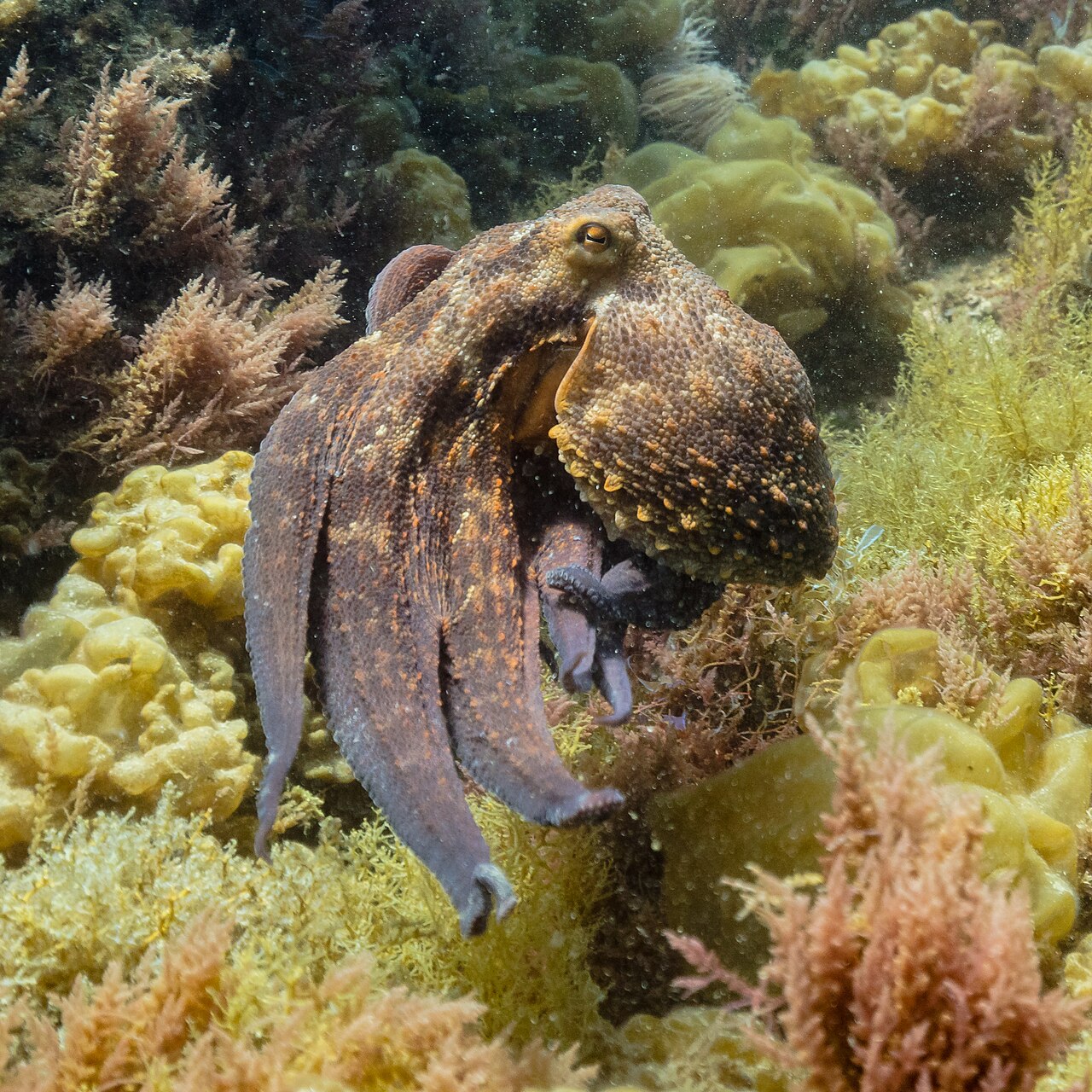
- Meet the Octopus: A Blue-Blooded, Eight-Armed Wonder
- What Exactly Is the Octopus Three Hearts System?
- Why Two Hearts for the Gills?
- Why One Heart for the Body?
- Copper Instead of Iron: The Blue Blood Connection
- The Cost of Blue Blood
- Why Octopuses Stop Swimming: A Heart That Quits
- Walking Beats Swimming
- How the Octopus Three Hearts Fit Into a Strange Body Plan
- Blood Pressure and the Brain
- How Octopuses Breathe and Why It Matters
- Gills, Hearts, and Habitat
- Lifespan, Reproduction, and the Final Chapter
- Why the Three Hearts Matter at the End
- Common Myths and Misconceptions About Octopus Hearts
- What the Octopus Three Hearts Teach Us About Evolution
- Lessons for Science and Medicine
- Conclusion: Three Hearts, One Remarkable Animal
- ❓ Frequently Asked Questions
The octopus three hearts are among the most striking features of an animal already famous for its strangeness. Two of those hearts pump blood to the gills, where it picks up oxygen, while the third — the largest — drives oxygenated blood around the rest of the body. This unusual setup is not a quirk for its own sake. It is a survival solution shaped by hundreds of millions of years of evolution in the ocean, and understanding it reveals a great deal about how octopuses live, hunt, and die.
Meet the Octopus: A Blue-Blooded, Eight-Armed Wonder
Octopuses are cephalopods, a group of marine molluscs that also includes squid, cuttlefish, and nautiluses. There are roughly 300 known species, ranging from the tiny octopus wolfi, which weighs less than a gram, to the giant Pacific octopus, which can weigh over 50 kilograms (110 pounds) and stretch its arms across more than 4 metres (13 feet). They live in every ocean, from shallow coral reefs and rocky shores to the abyssal depths, and they are famously intelligent — capable of opening jars, solving mazes, and squeezing their boneless bodies through gaps barely wider than their eyes.
Unlike most animals, octopuses do not have a single centralized heart like ours. They have three. To understand why, it helps to first understand what makes their circulatory system so different from our own.
What Exactly Is the Octopus Three Hearts System?
An octopus has three distinct hearts working together:
- Two branchial hearts (also called gill hearts) sit at the base of the gills. Each one pumps deoxygenated blood through its gill, where oxygen is absorbed from the water.
- One systemic heart is the largest and most powerful. It receives the freshly oxygenated blood from the gills and pumps it out to the rest of the body — the arms, the brain, the muscles, and the organs.
So the flow works like this: blood returns from the body, passes through the two branchial hearts, gets oxygenated in the gills, then flows to the systemic heart, which sends it back out on its journey. It is essentially a two-stage pump system, with the gill hearts acting as a booster stage before the main engine.
Why Two Hearts for the Gills?
Gills are not the easiest organs to push blood through. The fine, delicate tissues where gas exchange happens create resistance, and blood has to be forced through narrow vessels to make contact with the water. In an octopus, the blood pressure leaving the gills is quite low, so the two branchial hearts provide the extra push needed to send blood onward to the systemic heart. Without them, the main heart would have to work much harder, and the whole system would be less efficient.
Why One Heart for the Body?
The systemic heart handles the higher-pressure job: delivering oxygenated blood to tissues that demand a lot of energy. Octopus arms are packed with muscle, and their large brains are metabolically expensive. The systemic heart is bigger and stronger than the two gill hearts combined, reflecting the greater workload it faces.
Copper Instead of Iron: The Blue Blood Connection
Here is where octopus anatomy gets even more interesting. Octopus blood is not red — it is blue. That is because octopuses use a copper-based protein called hemocyanin to carry oxygen, rather than the iron-based hemoglobin that gives vertebrate blood its red colour.
Hemocyanin works well in cold, low-oxygen environments, which is exactly where many octopuses live. It dissolves directly in the blood plasma rather than being packed into red blood cells, which makes the blood thicker and more viscous. That thickness matters: moving a thick fluid through a body requires more pressure, and that is one more reason the octopus needs a powerful, three-heart system rather than a single pump.
The Cost of Blue Blood
Hemocyanin has a trade-off. It carries less oxygen per unit of blood than hemoglobin, and it becomes even less efficient in warm water. This helps explain why octopuses tend to thrive in cooler seas and why they are so sensitive to temperature. It also helps explain one of their most bizarre behaviours.
Why Octopuses Stop Swimming: A Heart That Quits
When an octopus swims by jet propulsion — forcing water out of its siphon to shoot backwards — something remarkable happens. The systemic heart stops beating. The two branchial hearts keep going, but the main heart pauses, and the octopus tires quickly as a result.
This is why octopuses prefer to crawl along the seabed using their arms, where they can move steadily for long periods. Jet swimming is reserved for emergencies: escaping a predator, catching fast prey, or making a quick getaway. A giant Pacific octopus that jets for too long can exhaust itself to the point of death, which is a striking example of how the three-heart design shapes behaviour.
Walking Beats Swimming
Even more remarkable, some octopuses have been observed "walking" on two arms while using the other six to camouflage themselves as a rolling coconut or a clump of algae. This two-armed walk lets them move while keeping their bodies disguised — and it avoids the oxygen penalty of jetting. It is a neat example of behaviour and physiology working together.
How the Octopus Three Hearts Fit Into a Strange Body Plan
The hearts are only part of what makes octopus anatomy unusual. Consider a few of the other oddities:
- No bones. An octopus has no skeleton at all, which is why it can squeeze through tiny openings. Its only hard part is its beak, which is why it can escape through any gap bigger than its beak.
- Three hearts, two gills, one siphon. The siphon is a muscular tube used for jet propulsion, breathing, and even expelling waste.
- A distributed nervous system. Around two-thirds of an octopus's neurons are located in its arms, not its brain. Each arm can act semi-independently, which is one reason octopuses can explore and manipulate objects with such dexterity.
- Regenerating arms. If an octopus loses an arm to a predator, it can regrow it over time.
- Ink as a defence. Many species release a cloud of dark ink to confuse predators while they escape.
All of these features are supported by the circulatory system. The arms need a reliable blood supply to function independently, the brain needs constant oxygen, and the gills need a dedicated pump to keep working efficiently. The three hearts make this possible.
Blood Pressure and the Brain
One consequence of the octopus's low-pressure, copper-based circulatory system is that blood pressure is much lower than in mammals. The systemic heart generates only a modest pressure, and the blood moves relatively slowly. This is fine for a cold-blooded animal with a slower metabolism, but it does mean the octopus cannot sustain intense activity for long. The three hearts are a compromise: enough pumping power for an active predator, but not enough to support the kind of high-endurance lifestyle a mammal or a bird enjoys.
How Octopuses Breathe and Why It Matters
Octopuses breathe by drawing water into the mantle cavity and passing it over the gills. The gills are feathery structures with a large surface area, and they extract dissolved oxygen from the water. The two branchial hearts pump blood through the gills in the opposite direction to the water flow, which maximises the amount of oxygen the blood can absorb — a principle called countercurrent exchange.
This is an efficient system, but it depends on a steady supply of oxygen-rich water. In warm, stagnant, or polluted water, oxygen levels drop, and the octopus's blue blood struggles to keep up. That is one reason octopuses are often found in well-oxygenated coastal waters and why they are vulnerable to environmental changes such as ocean warming and deoxygenation.
Gills, Hearts, and Habitat
Different octopus species live in very different habitats, and their circulatory systems reflect that. The common octopus (Octopus vulgaris) thrives in warm, shallow Mediterranean and Atlantic waters. The giant Pacific octopus prefers the cold, oxygen-rich waters of the North Pacific. Deep-sea octopuses, such as the Dumbo octopus, live in the cold, dark abyss where oxygen is scarce and metabolism is slow. In all cases, the three-heart system is tuned to the demands of the environment.
Lifespan, Reproduction, and the Final Chapter
Octopuses are short-lived compared to many intelligent animals. Most species live only one to two years, and even the giant Pacific octopus rarely exceeds three to five years. They grow fast, mature quickly, and reproduce only once.
Reproduction is a dramatic and ultimately fatal event. The male uses a specialized arm called the hectocotylus to transfer sperm to the female. The female then produces a large clutch of eggs — sometimes tens of thousands — and guards them for weeks or months without eating. During this period, her body begins to break down. Her digestive system shrinks, she stops feeding, and she eventually dies shortly after the eggs hatch. The male also dies soon after mating.
Why the Three Hearts Matter at the End
The female's long fast is metabolically demanding, and her circulatory system is under strain. The three hearts continue to work, but the body's resources are redirected toward the eggs. In some species, the female actively aerates the eggs by blowing water over them, which requires energy and oxygen — another job for the circulatory system. By the time the eggs hatch, the mother is exhausted, and her death is a programmed part of the life cycle rather than an accident.
This single-reproduction strategy, called semelparity, is common among cephalopods. It is a stark contrast to the long, repeated reproductive lives of many mammals and birds, and it means every octopus's three hearts are essentially working toward one final reproductive effort.
Common Myths and Misconceptions About Octopus Hearts
Because octopuses are so unusual, misinformation about them spreads easily. Here are a few clarifications:
- Myth: Octopuses have three hearts because they have three body parts. Not true. The three hearts serve two distinct functions: two for the gills and one for the body.
- Myth: All three hearts stop when the octopus swims. Only the systemic heart stops during jet propulsion; the two branchial hearts keep beating.
- Myth: Octopus blood is blue because of iron. It is blue because of copper-based hemocyanin, not iron-based hemoglobin.
- Myth: Octopuses can live for decades. Most species live only one to two years, and even the largest rarely exceed five.
- Myth: The three hearts make octopuses invincible. They are efficient for the octopus's lifestyle, but they also limit endurance and make the animal sensitive to temperature and oxygen levels.
What the Octopus Three Hearts Teach Us About Evolution
The octopus three hearts are a beautiful example of evolution solving a problem with the tools available. Molluscs evolved in the sea, where oxygen is dissolved in water and blood must be pumped through gills. Copper-based hemocyanin works well in that environment, but it is thick and oxygen-poor compared to hemoglobin. The three-heart system compensates: two hearts push blood through the gills, and one heart drives it through the body.
This design is not superior to the mammalian four-chambered heart — it is simply different, adapted to a different set of constraints. An octopus cannot run a marathon, but it can squeeze through a hole the size of its beak, regrow an arm, and solve puzzles with a brain that is distributed across its body. The three hearts are part of that package.
Lessons for Science and Medicine
Researchers study octopus circulatory systems for insights into low-pressure pumping, oxygen transport in cold environments, and the limits of copper-based respiration. Hemocyanin has even been investigated for potential medical applications, including as a blood substitute and in biosensors. The octopus's ability to regenerate arms and its distributed nervous system are also areas of active research in regenerative medicine and robotics.
Conclusion: Three Hearts, One Remarkable Animal
The octopus three hearts are more than a biological curiosity. They are the engine room of an animal that has evolved to thrive in cold, oxygen-poor waters, to hunt with speed and cunning, and to squeeze into spaces no other predator can reach. Two gill hearts and one systemic heart work together to move thick, blue, copper-based blood through a boneless body — a system that powers everything from jet propulsion to arm regeneration to the final, fatal act of reproduction.
Understanding why octopuses have three hearts helps us appreciate them not as alien oddities but as finely tuned survivors. Every time an octopus crawls across the seabed or shoots through the water to escape a predator, those three hearts are working in concert, doing a job that a single heart simply could not manage. It is a reminder that in nature, there is rarely one right answer — only solutions shaped by millions of years of pressure, opportunity, and change.
❓ Frequently Asked Questions
💬 Why do octopuses have three hearts?
Two branchial hearts pump deoxygenated blood through the gills to pick up oxygen, while a single systemic heart then pumps that oxygen-rich blood to the rest of the body. This split system helps overcome the sluggish flow of their copper-based blood.
💬 What happens to an octopus's hearts when it swims?
The systemic heart stops beating when an octopus swims, which is why they tire quickly and prefer crawling along the seafloor. This is also why many octopuses would rather jet away in short bursts than swim long distances.
💬 Do all octopuses have three hearts?
Yes, all octopus species have three hearts, and the same three-heart setup is found in their cephalopod relatives like squid and cuttlefish. Nautiluses, however, are the exception among cephalopods and have four hearts.
💬 Why is octopus blood blue?
Octopus blood uses hemocyanin, a copper-based molecule that carries oxygen and turns blue when oxygenated, instead of the iron-based hemoglobin that makes human blood red. Hemocyanin works well in cold, low-oxygen water but is less efficient, which is part of why octopuses need three hearts.