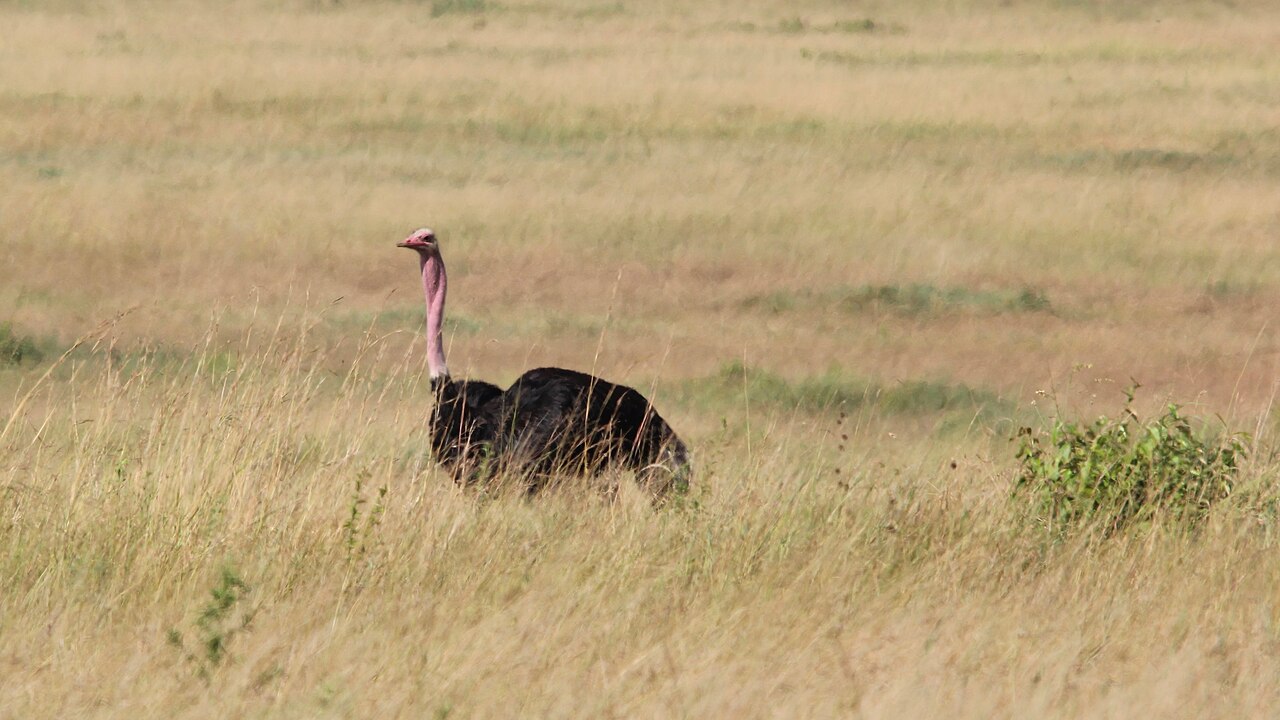
- The Origins of the Ostrich Head Burying Myth
- What Ostriches Actually Do: The Head-Down Posture Explained
- Feeding: The Most Common Cause
- Egg Turning and Nest Maintenance
- The Camouflage Strategy: Why Lowering the Head Saves Lives
- The Science of Ostrich Head Burying: Debunking with Anatomy
- Real-World Examples and Field Observations
- Behavioral Differences: Ostriches vs. Other Ratites
- Conservation, Habitat, and the Future of Ostrich Behavior
- Conclusion: The Truth is More Impressive Than the Myth
- ❓ Frequently Asked Questions
The myth of ostrich head burying is one of the most enduring animal misconceptions in popular culture, yet the real truth is far more fascinating than the cartoonish image of a panicked bird hiding from danger. In reality, ostriches do not bury their heads in the sand to avoid threats, but they do perform a series of ground-level behaviors that look remarkably similar from a distance. Understanding the actual biology, feeding habits, and survival strategies of the world’s largest living bird reveals why this myth persists and what these magnificent creatures are truly doing with their heads close to the earth.
The Origins of the Ostrich Head Burying Myth
The belief that ostriches bury their heads to escape danger dates back over two thousand years. The Roman naturalist Pliny the Elder, writing in the first century AD, described ostriches as creatures that "imagine, when they have thrust their head and neck into a bush, that the whole of the body is concealed." This observation, though partially accurate in describing a real behavior, was misinterpreted by later writers who exaggerated it into the idea of complete head burial in sand.
Ancient travelers and scholars who saw ostriches in North Africa or the Middle East often witnessed birds that appeared to be hiding their heads. However, they failed to understand the ecological context. The myth was then cemented in Western literature and art, appearing in medieval bestiaries and later in popular sayings about "burying one's head in the sand" as a metaphor for willful ignorance.
Modern wildlife filmmakers and photographers have done much to debunk this, but the phrase remains deeply embedded in our language. Interestingly, the myth persists because ostriches do perform a specific behavior called "head-down posture," which involves lowering the head to the ground for extended periods. This is not hiding, but a complex survival mechanism that scientists have only recently begun to fully appreciate.
What Ostriches Actually Do: The Head-Down Posture Explained
When an ostrich appears to bury its head, it is almost always engaging in one of three distinct behaviors: feeding, egg-turning, or camouflage concealment. Each of these involves the head being very close to or touching the ground, which from a distance or through a heat shimmer can easily look like head burying.
Feeding: The Most Common Cause
Ostriches are omnivorous foragers with a diet that requires constant head-down contact with the ground. They consume a wide variety of plant matter, including seeds, grass, leaves, and roots, but they also eat insects, lizards, and small rodents. To reach these food sources, an ostrich spends up to 80% of its daylight hours with its head lowered. The neck, which can measure up to 3 feet long, allows the bird to graze efficiently without bending its massive body. When feeding, the head moves rapidly, pecking at the ground dozens of times per minute, which creates a visual impression of the head "disappearing" into vegetation or sand.
Furthermore, ostriches lack teeth. They must swallow pebbles, sand, and small stones to help grind food in their gizzard, a muscular stomach organ. Picking up these grit particles requires the beak to be pressed firmly against the soil, often for several seconds at a time. To an observer watching from a distance, this stone-swallowing behavior looks exactly like the bird is pushing its head into the ground.
Egg Turning and Nest Maintenance
During the breeding season, both male and female ostriches perform intricate nest duties that involve extensive head-down activity. The nest is a shallow depression scraped into the ground, typically about 3 feet in diameter. An ostrich egg weighs around 3 pounds and has an incredibly thick shell, but it still needs to be turned up to five times a day to ensure even heating and proper embryo development.
To turn an egg, the parent ostrich uses its beak to roll the egg gently, then presses its head and neck flat against the sand to reposition the egg beneath its body. This action, repeated across a clutch of 15 to 20 eggs, takes considerable time and involves the head being in direct contact with the ground for minutes at a time. Additionally, ostriches will deliberately push sand and vegetation over the eggs when they leave the nest to camouflage them. This "covering" behavior involves sweeping motions of the head and neck that look remarkably like burying, but the bird is actually hiding its eggs, not itself.
The Camouflage Strategy: Why Lowering the Head Saves Lives
Ostriches have evolved a sophisticated anti-predator strategy that relies on their incredible eyesight and their ability to blend into the savanna landscape. When a predator such as a lion, hyena, or cheetah is spotted, an ostrich does not run immediately. Instead, it drops its head to the ground and remains perfectly still.
This is not an act of denial but a calculated survival tactic based on visual perception. The ostrich's body, when seen from a distance, can resemble a termite mound, a bush, or a rock outcropping. By lowering the head, the bird breaks up its recognizable silhouette. Predators like lions rely heavily on movement and shape recognition to identify prey. A motionless ostrich with its head flat against the ground becomes nearly invisible in the tall grass, especially when it flattens its neck feathers and presses its body low.
This behavior is particularly effective during the heat of the day when heat waves distort vision. The combination of a low profile, stillness, and the natural coloration of the bird's feathers—which are brown and gray for females and black and white for males—creates an optical illusion that can fool even experienced predators. The ostrich is not hiding from reality; it is using a form of passive camouflage that allows it to avoid detection until the predator passes, at which point the bird will either run at speeds up to 45 miles per hour or, if cornered, deliver a lethal kick with its powerful legs.
The Science of Ostrich Head Burying: Debunking with Anatomy
Anatomy alone disproves the head-burying myth. An ostrich's respiratory system is uniquely adapted to life in arid environments, but it requires free airflow. If an ostrich were to bury its head in sand, it would suffocate within minutes. The bird's nostrils are located at the base of the beak, and while they can be closed for short periods to keep out dust, they cannot function as a breathing tube through sand.
Moreover, the ostrich's neck has a complex structure of 17 cervical vertebrae, allowing for remarkable flexibility. However, the neck is not long enough to reach the ground while the body is in a fully upright position without bending the legs. To actually bury its head, the ostrich would need to crouch completely, which would make it more vulnerable, not less. The bird's eyes, which are larger than any other land animal's eyes, are positioned on the sides of the head, giving it a nearly 360-degree field of vision. This visual advantage is the ostrich's primary defense, not hiding.
Scientific observations using high-speed cameras have confirmed that ostriches never insert their heads into sand. Instead, they use a behavior called "head pressing," where they lay their head and neck flat on the ground in a straight line with their body. This posture allows them to use the ground as a visual horizon line, making it easier to detect subtle movements of predators against the sky. It also helps them hear ground vibrations through their skull, acting as an early warning system.
Real-World Examples and Field Observations
Wildlife researchers in Kenya and South Africa have documented hundreds of hours of ostrich behavior, providing clear evidence against the burying myth. Dr. Sarah Thompson, a ornithologist who studied ostriches in the Masai Mara for over a decade, noted that head-down behavior was most frequently observed during the hottest part of the day. She discovered that ostriches lower their heads to the ground to cool themselves, as the ground temperature at the surface is often significantly cooler than the air temperature just above it. By pressing their bare heads and necks against the soil, they can dissipate heat through a process called "behavioral thermoregulation."
In the Namib Desert, researchers observed ostriches using a different head-down technique: "sand bathing." Ostriches will dig shallow depressions with their beaks and then roll in the sand, coating their feathers with fine dust. This is not head burying but a critical grooming behavior that helps remove parasites, excess oil, and moisture from their plumage. The dust acts as an absorbent and helps maintain feather condition for insulation and display purposes.
Another compelling example comes from ostrich farms, where these birds are raised in captivity. Farmers routinely report that ostriches will "hide" their heads in hay piles or under feed troughs. However, this is always related to foraging or searching for insects, not fear. When a sudden loud noise occurs on a farm, ostriches do not bury their heads; they either freeze, run, or adopt an aggressive stance with their heads raised high.
Behavioral Differences: Ostriches vs. Other Ratites
To fully understand ostrich head burying, it helps to compare them with their relatives, the ratites, which include emus, rheas, and cassowaries. None of these flightless birds bury their heads, but they all exhibit ground-level behaviors that could be misinterpreted.
Emus, native to Australia, are known to lower their heads and necks close to the ground when threatened. They also use this posture to scan the horizon through the grass. Rheas, which live in South America, will sit down and stretch their necks flat along the ground when a predator approaches, a behavior that makes them look like a fallen log. Cassowaries, the most dangerous of the ratites, rarely lower their heads except to feed but will aggressively kick forward with their dagger-like claws.
The key difference between ostriches and these other birds is the ostrich's extreme visual acuity. An ostrich's eye is over 2 inches in diameter, and its retina has a higher density of photoreceptor cells than any other bird. This means that when an ostrich lowers its head, it is not losing sight of its surroundings; it is actually gaining a better view of ground-level threats while simultaneously reducing its own visibility. This sophisticated combination of anatomy and behavior is unique among ratites.
Conservation, Habitat, and the Future of Ostrich Behavior
Understanding the truth about ostrich head burying is not just about correcting a myth; it has practical implications for conservation and wildlife management. Ostriches are native to Africa and are found in savannas, semi-arid plains, and open woodlands. They require large territories of up to 20 square miles, and their survival depends on maintaining these habitats. As human encroachment increases, ostriches are forced into smaller areas where they encounter more human activity.
Misunderstanding ostrich behavior can lead to poor management decisions. For example, if a farmer believes ostriches bury their heads to hide, they might underestimate the bird's stress levels or fail to recognize actual signs of distress. Conservationists working to protect ostrich populations use behavioral observations to monitor the health of the birds. A healthy ostrich will exhibit normal feeding patterns, which involve frequent head-down activity. An unhealthy ostrich, by contrast, may keep its head raised constantly due to respiratory distress or injury.
Ostriches have a lifespan of 30 to 40 years in the wild and up to 50 years in captivity. They are farmed worldwide for their meat, leather, and feathers, with major operations in South Africa, Australia, and the United States. In these farming environments, understanding the natural head-down behavior is essential for designing enclosures that allow for adequate foraging. Farms that provide sandy substrates and scattered vegetation see healthier birds, as the ostriches can engage in natural stone-swallowing and dust-bathing behaviors.
Climate change poses a new threat to ostrich habitats. As temperatures rise and rainfall patterns shift, the savanna ecosystems that ostriches depend on are becoming more arid. This affects the availability of food and water, forcing ostriches to travel longer distances and spend more time with their heads down searching for scarce resources. Researchers are studying how these environmental changes impact ostrich behavior, including the frequency of head-down postures, to predict how the species will adapt.
Conclusion: The Truth is More Impressive Than the Myth
The real truth about ostrich head burying is that these birds are masters of survival, not fools of denial. Their habit of lowering their heads to the ground is a multi-functional adaptation that serves feeding, thermoregulation, camouflage, and nest care. Far from hiding from danger, ostriches use their heads to detect threats, cool their brains, and maintain their health. The myth persists because it is a convenient metaphor for human behavior, but the reality is far more remarkable. The next time you see an ostrich with its head near the sand, you are witnessing one of nature's most efficient survival strategies—a bird using every tool at its disposal to thrive in some of the harshest environments on Earth.
❓ Frequently Asked Questions
💬 Do ostriches really bury their heads in the sand to hide from danger?
No, this is a myth. Ostriches do not bury their heads in the sand to hide; they actually lay their heads flat on the ground to blend in with their surroundings, making them less visible to predators from a distance.
💬 Why do ostriches put their heads down to the ground?
Ostriches lower their heads to the ground primarily to swallow grit and pebbles, which help grind food in their gizzard, and also to inspect or incubate their eggs in the nest, which is a shallow depression in the soil.
💬 How do ostriches actually protect themselves from predators?
Ostriches rely on their powerful legs to run at speeds up to 43 mph (70 km/h) and can deliver lethal kicks with their strong feet. Their long necks and excellent eyesight help them spot threats early, and they often lie flat with their necks stretched out to camouflage themselves.
💬 Where did the myth that ostriches bury their heads come from?
The myth likely originated from ancient Roman naturalist Pliny the Elder, who wrote that ostriches thrust their heads into bushes, which was misinterpreted over time. It was popularized by later writers and cartoons, even though it has no basis in ostrich behavior.