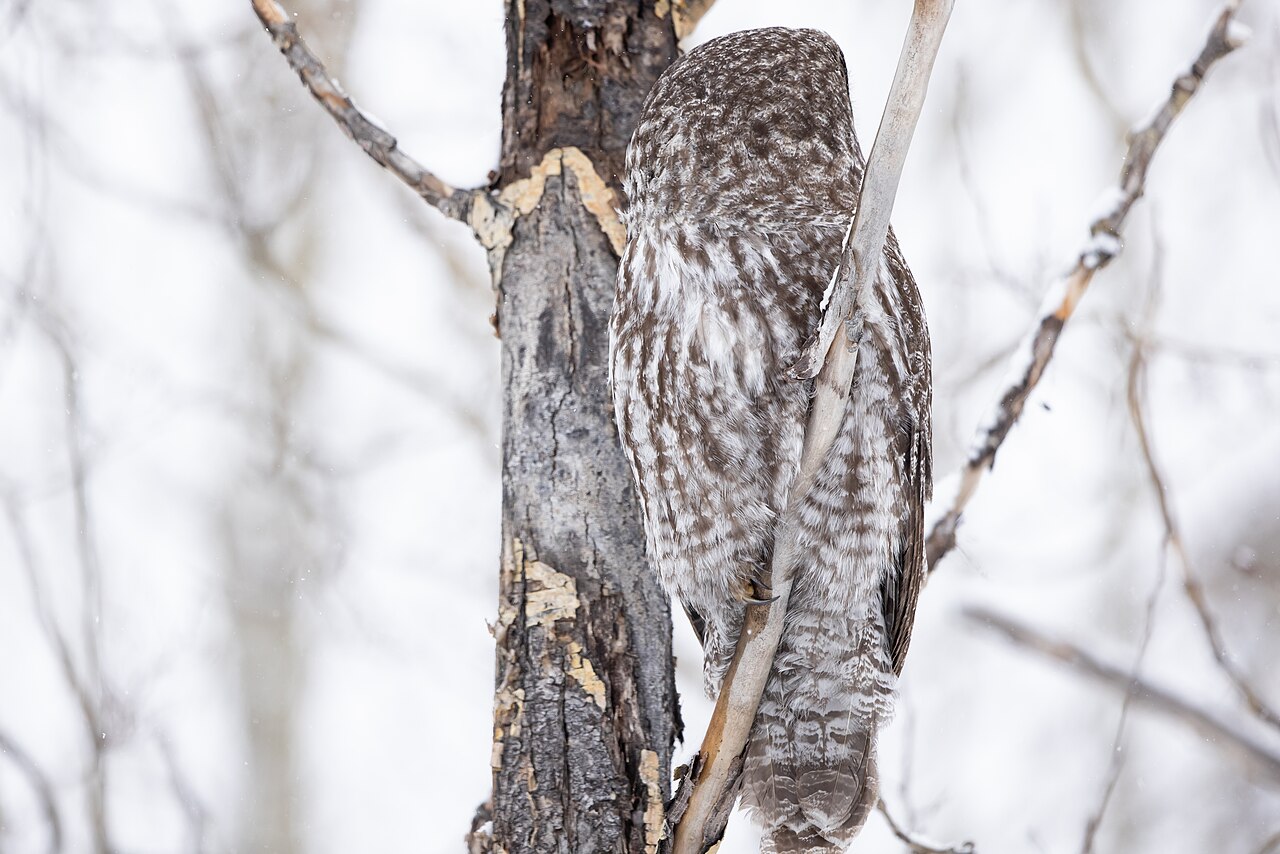
- How Owls Rotate Heads: The Anatomy of Extreme Neck Flexibility
- The Role of the Vertebral Artery
- The Interlocking Vertebrae
- Why Owls Rotate Heads: Compensating for Fixed Eyes
- Binocular Vision and Depth Perception
- Nocturnal Hunting Adaptations
- Real-World Examples: Owls Rotate Heads in Action
- Size and Diet Variations
- The Evolutionary Advantage of Extreme Head Rotation
- Comparison with Other Birds
- Myths and Misconceptions About Owls Rotating Heads
- Behavioral Observations
- How Owls Rotate Heads Affects Their Daily Life
- Roosting and Resting
- Conservation and the Importance of Understanding Owl Behavior
- Lifespan and Habitat
- Conclusion: The Remarkable Adaptation of Owls Rotate Heads
- ❓ Frequently Asked Questions
Owls rotate heads so far because their fixed eye sockets, which are essentially bony tubes, prevent them from moving their eyes, forcing them to rely on an extraordinary range of neck motion to scan their surroundings, and this unique adaptation allows them to be among the most effective nocturnal predators on Earth. While humans can turn their heads about 90 degrees to each side, an owl can rotate its head up to 270 degrees in either direction, a feat that has fascinated scientists and bird enthusiasts alike. This remarkable ability is not just a party trick; it is a critical survival mechanism that compensates for their immobile eyes, enabling them to hunt, avoid predators, and navigate their environment with uncanny precision.
How Owls Rotate Heads: The Anatomy of Extreme Neck Flexibility
The secret behind how owls rotate heads lies in a combination of specialized skeletal and vascular structures. Unlike mammals, owls have 14 neck vertebrae—twice as many as humans—which provides the flexibility needed for such extreme rotation. These vertebrae are interconnected with highly elastic ligaments and joints that allow for a wide range of motion without damaging the spinal cord.
The Role of the Vertebral Artery
One of the most critical adaptations involves the vertebral artery, which supplies blood to the brain. In most animals, twisting the neck too far would cut off blood flow, leading to dizziness or fainting. However, owls have evolved a unique system where the vertebral artery enlarges as it enters the neck, creating a reservoir of blood that can sustain the brain even when the artery is partially compressed. Researchers at Johns Hopkins University discovered that owls have tiny, bony canals in their vertebrae that provide extra space for the arteries to move, preventing them from being pinched during rotation.
The Interlocking Vertebrae
Additionally, the vertebrae in an owl's neck are structured to interlock at extreme angles, providing stability without sacrificing flexibility. This design allows the head to rotate while keeping the spinal cord safe from twisting or stretching. Each vertebra has a large central canal that gives the spinal cord ample room to move, reducing the risk of injury during sharp turns.
Why Owls Rotate Heads: Compensating for Fixed Eyes
The primary reason why owls rotate heads so far is that their eyes are fixed in their sockets, a trait known as "tubular eyes." Unlike humans, who have spherical eyes that can move within the socket, owls have elongated, tube-shaped eyes that are supported by bony plates called sclerotic rings. This structure allows for exceptional light-gathering ability and sharp vision in low light, but it comes at the cost of eye mobility. To see in different directions, owls must move their entire head.
Binocular Vision and Depth Perception
Owls have forward-facing eyes that provide overlapping fields of view, giving them excellent binocular vision and depth perception—essential for judging distances when swooping down on prey. However, this arrangement also means that their field of view is relatively narrow, about 70 degrees compared to a human's 180 degrees. By rotating their heads, owls can scan a much wider area without moving their bodies, which helps them remain hidden from prey and predators alike.
Nocturnal Hunting Adaptations
Owls are primarily nocturnal hunters, relying on their keen senses to locate small mammals, birds, and insects in the dark. Their ability to rotate heads allows them to pinpoint sounds with astonishing accuracy. An owl's ears are asymmetrically placed on its head—one higher than the other—which helps it detect the vertical location of a sound. By turning its head, the owl can align its ears with the sound source, creating a three-dimensional auditory map of its surroundings. This is particularly useful for hunting in dense forests or undergrowth, where visual cues are limited.
Real-World Examples: Owls Rotate Heads in Action
Observing owls in the wild provides concrete examples of how owls rotate heads to survive. The great horned owl (Bubo virginianus), one of the most widespread and adaptable owls in North America, is known for its ability to rotate its head nearly 270 degrees. This species hunts a wide variety of prey, from rabbits and skunks to other birds, and its neck flexibility allows it to track fast-moving targets without losing sight of them. Similarly, the barn owl (Tyto alba), with its heart-shaped face, relies heavily on hearing to hunt in complete darkness. Barn owls can rotate their heads to align their asymmetrical ears with the rustling sounds of voles or mice, often catching them with pinpoint accuracy even when visibility is zero.
Size and Diet Variations
The extent of head rotation can vary slightly among owl species based on their size and hunting strategies. For instance, the tiny northern saw-whet owl (Aegolius acadicus), which weighs only about 100 grams, can rotate its head just as far as larger species, but its smaller neck muscles mean the movement is quicker and more precise. In contrast, the snowy owl (Bubo scandiacus), which inhabits the Arctic tundra and hunts lemmings and ptarmigans, uses its head rotation to scan vast, open landscapes for movement. Snowy owls have a lifespan of about 10 years in the wild, and their ability to rotate heads efficiently is crucial for spotting both prey and predators like arctic foxes.
The Evolutionary Advantage of Extreme Head Rotation
From an evolutionary perspective, the ability of owls rotate heads so far has given them a significant advantage over other nocturnal predators. This adaptation likely evolved alongside their tubular eyes, which are optimized for low-light vision but sacrifice mobility. By compensating with neck flexibility, owls can maintain a wide field of view without the energy cost of moving their entire body. This is particularly important for ambush predators, which need to remain motionless to avoid detection.
Comparison with Other Birds
While many birds can rotate their heads to some degree, few match the owl's range. For example, falcons and hawks have more mobile eyes than owls but still rely on head movements to track prey. However, these raptors typically rotate their heads only about 180 degrees. The owl's 270-degree rotation is unique and is supported by their specialized anatomy, including the extra vertebrae and vascular adaptations mentioned earlier. This trait is so effective that it has been retained across all owl species, from the tiny elf owl (Micrathene whitneyi) of the southwestern United States to the massive Eurasian eagle-owl (Bubo bubo), which can have a wingspan of over six feet.
Myths and Misconceptions About Owls Rotating Heads
One common myth is that owls can rotate their heads a full 360 degrees. While this is a popular trope in movies and cartoons, it is physically impossible. Owls can achieve about 270 degrees of rotation, which is impressive enough. Another misconception is that owls can see in total darkness. In reality, their vision is extremely sensitive to low light, but they still require some ambient light to see. Their head rotation is a key part of their hunting strategy, allowing them to combine visual and auditory cues effectively.
Behavioral Observations
In captivity, owls often display head-rotating behavior when tracking human movement or sounds. Zookeepers and wildlife rehabilitators note that owls will frequently tilt and turn their heads to observe their environment, a behavior that can be mesmerizing to watch. However, this constant movement is not a sign of distress; it is simply the owl's way of gathering information. In the wild, an owl might rotate its head dozens of times per minute while perched, scanning for prey or potential threats.
How Owls Rotate Heads Affects Their Daily Life
The ability of owls rotate heads so far influences nearly every aspect of their behavior, from hunting to social interactions. For example, during the breeding season, male owls often use head rotations to display to females, turning their heads to show off their facial discs or to communicate aggression toward rivals. This behavior is especially common in species like the barred owl (Strix varia), which is known for its distinctive "who-cooks-for-you" call and its habit of bobbing and twisting its head during courtship.
Roosting and Resting
When roosting, owls often tuck their heads into their feathers to conserve heat, but they remain alert to sounds and movements. Even while resting, an owl may slowly rotate its head to check its surroundings before settling back down. This constant vigilance is essential for survival, as owls face threats from larger predators, including other raptors and even mammals like raccoons.
Conservation and the Importance of Understanding Owl Behavior
Understanding why owls rotate heads is not just a matter of curiosity; it has practical implications for conservation. Many owl species are facing habitat loss, climate change, and human disturbance. For instance, the spotted owl (Strix occidentalis) of the Pacific Northwest has seen its population decline due to logging of old-growth forests. By studying their behavior, including head rotation, researchers can develop better strategies for protecting these birds. For example, knowing that owls rely on head rotation to detect threats can inform guidelines for placing nest boxes or establishing buffer zones around nesting sites.
Lifespan and Habitat
Owls have varying lifespans depending on species and habitat. The great horned owl can live up to 13 years in the wild, while barn owls may only live 2 to 5 years due to higher predation and accident rates. Their habitats range from deserts and grasslands to forests and tundra, and in each environment, head rotation plays a role in their ability to adapt. For example, desert-dwelling burrowing owls (Athene cunicularia) use head rotation to scan for predators like coyotes and hawks while perched near their burrows.
Conclusion: The Remarkable Adaptation of Owls Rotate Heads
In summary, the reason owls rotate heads so far is a masterpiece of evolutionary engineering, combining specialized neck anatomy, vascular adaptations, and sensory integration to compensate for their fixed eyes. This ability allows them to hunt with deadly efficiency, avoid predators, and thrive in diverse habitats around the world. From the silent flight of the barn owl to the piercing gaze of the great horned owl, the capacity to rotate their heads is a defining feature that underscores their role as apex nocturnal predators. As we continue to study these fascinating birds, each twist and turn of their heads reveals more about the intricate balance of nature and the remarkable ways in which life adapts to survive.
❓ Frequently Asked Questions
💬 How far can an owl rotate its head?
An owl can rotate its head up to 270 degrees in either direction, which is far more than the 180-degree range of most other birds.
💬 Why can't owls move their eyes like humans?
Owls have fixed eye sockets, so their eyes cannot rotate independently; instead, they rely on extreme head rotation to scan their surroundings.
💬 Do owls ever get hurt from rotating their heads so far?
No, owls have specialized blood vessels and a unique skeletal structure that prevent injury, including extra vertebrae and a cushioning system to maintain blood flow during extreme rotation.
💬 Why do owls need to rotate their heads so much?
Owls rotate their heads to compensate for their fixed eyes, allowing them to spot prey and predators from multiple angles without moving their bodies.