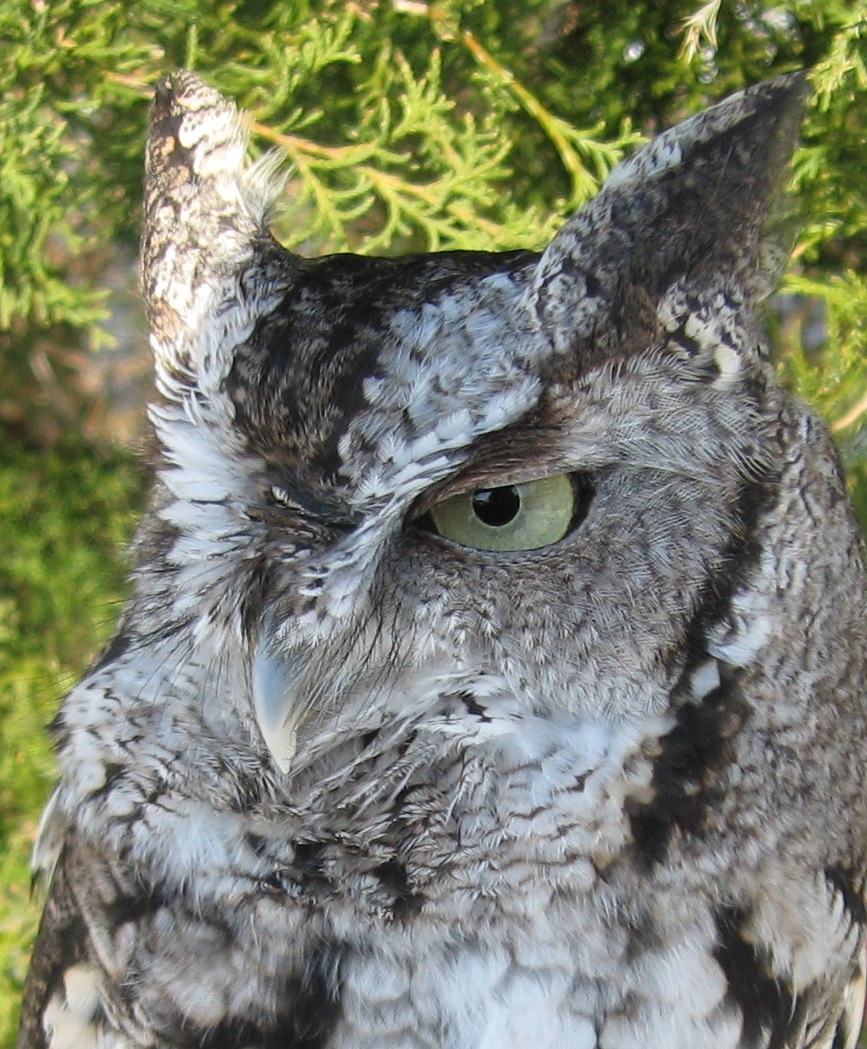
- Why Owl Head Rotation Is So Extreme
- How Far Can Owls Really Turn Their Heads?
- Real examples from common species
- The Anatomy Behind Owl Head Rotation
- What the Head Turn Is For: Hunting and Survival
- Vision and the "locking on" behavior
- Do Owls Get Dizzy or Hurt Themselves?
- Common Myths About Owl Head Rotation
- Owls in Context: Lifespan, Habitat, and Behavior
- How head rotation fits into the bigger picture
- The Turning Truth: A Final Word
- ❓ Frequently Asked Questions
Owls are among the most recognizable birds on Earth, and few of their traits fascinate people more than their ability to twist their heads dramatically from side to side. The truth behind owl head rotation is a remarkable story of anatomy, evolution, and sensory adaptation: some species can turn their heads roughly 270 degrees, far beyond anything a human neck could manage. But why did owls evolve this ability, how does their body pull it off without cutting off blood flow to the brain, and what are the limits? This article explores the science behind one of nature's most striking feats.
Why Owl Head Rotation Is So Extreme
The short answer is that owls cannot move their eyes. Unlike humans, who can roll their eyes within their sockets to scan a scene, an owl's eyes are tubular rather than spherical, and they are held tightly in place by a bony structure called the sclerotic ring. In fact, an owl's eyes are so large relative to its skull that they take up much of the space inside its head. This design gives owls superb light-gathering power and sharp vision, but it leaves them with almost no eye mobility at all.
Because the eyes are fixed, the head must do the work. If an owl wants to look at something to its left, it cannot glance sideways; it has to rotate its entire head. This is the core reason owl head rotation is so pronounced. The neck effectively becomes the owl's "eye movement" system, allowing the bird to scan its surroundings, track prey, and keep a target centered in its field of view.
There is a second benefit: owls are sit-and-wait hunters. Many species, such as the great horned owl and the barn owl, perch motionless and rely on stealth. Turning the head rather than the whole body lets an owl keep its body still and quiet while it monitors a wide area, reducing the chance of alerting prey such as mice, voles, and shrews.
How Far Can Owls Really Turn Their Heads?
Popular claims that owls can rotate their heads 360 degrees are a myth. The widely cited figure is about 270 degrees in either direction, which means an owl can look almost directly behind itself by turning its head one way or the other. Because the head can rotate up to 270 degrees in both directions, it can sweep a very large arc, but it cannot spin continuously like a top.
Owls can also tilt and pitch their heads vertically, sometimes up to about 90 degrees, which helps them aim precisely at sounds or objects above and below them. In total, the range of motion is extraordinary for a vertebrate with a neck this short.
Real examples from common species
Different owls show slightly different ranges. The great horned owl, a large North American species weighing roughly 1.4 kilograms (3 pounds) and standing about 46 to 63 centimeters (18 to 25 inches) tall, is famous for its dramatic head turns. The barn owl, with its distinctive heart-shaped face, relies heavily on head rotation while hunting at night. Smaller species such as the eastern screech-owl, which is only about 16 to 25 centimeters (6 to 10 inches) long, also swivel their heads constantly to scan for insects and small rodents.
The Anatomy Behind Owl Head Rotation
The owl's neck is built for this job. Despite appearances, owls have 14 cervical vertebrae, compared with seven in humans and most other mammals. Having more vertebrae, each with specialized joints, gives the neck greater flexibility and allows the head to rotate in a smooth, controlled way across a wide arc.
The vertebrae are not the whole story. The blood vessels that run through the neck, particularly the vertebral arteries, are adapted to withstand the twisting forces that would damage ordinary vessels. Researchers at Johns Hopkins University, led by medical illustrator and researcher Fabian de Kok-Mercado, studied this in the 2010s and found several protective features:
- Wider artery passages: the canals in the cervical vertebrae through which the vertebral arteries pass are significantly larger in owls than in humans, leaving room for the vessels to flex without being pinched.
- Blood reservoirs: the arteries widen into small reservoirs just before entering the skull, allowing blood to pool and continue supplying the brain even during extreme rotation.
- Backup connections: small connecting vessels between the carotid and vertebral systems provide alternate routes for blood flow if one pathway is momentarily compressed.
Together, these adaptations mean that an owl can turn its head 270 degrees without fainting or suffering a stroke, something that would likely cause serious injury in a human.
What the Head Turn Is For: Hunting and Survival
Head rotation serves several practical purposes in an owl's daily life. The most important is locating prey by sound. Many owls hunt in near-total darkness, and species such as the barn owl are among the most accurate auditory hunters in the animal kingdom. Their ears are placed asymmetrically on the skull, with one slightly higher than the other, so a sound reaches the two ears at slightly different times and volumes. By turning the head, an owl can compare these cues and pinpoint a mouse's position with remarkable precision, even under snow or leaf litter.
Head turning also helps owls scan for predators and rivals. Great horned owls, which are powerful enough to take prey as large as skunks, rabbits, and even other owls, must stay alert to threats from larger birds and from humans. A perched owl that keeps its body still while rotating its head can monitor a wide field of view with minimal energy expenditure.
Vision and the "locking on" behavior
Owls have forward-facing eyes that give them binocular vision and excellent depth perception, useful for judging distance when striking prey. Because the eyes cannot move, the head turn is how an owl "locks on" to a target. If you watch a captive owl at a wildlife center, you may notice it bobbing and rotating its head to fixate on a handler or a food item, adjusting its aim in small increments.
Do Owls Get Dizzy or Hurt Themselves?
A common question is whether all that twisting causes owls discomfort or dizziness. The evidence suggests not. The vascular adaptations described above protect blood flow, and the neck's structure is built to accommodate the movement. However, the rotation is not unlimited: extremely fast or forceful twisting beyond the natural range could still cause injury, which is why owls generally turn smoothly and deliberately rather than snapping their heads around.
It is also worth noting that owls do not rotate their heads constantly. Much of the time they hold the head steady, using small adjustments to track movement. The dramatic full swivel is reserved for moments when the owl needs to change its view quickly, such as when a sound reveals a potential meal behind it.
Common Myths About Owl Head Rotation
Because the behavior is so striking, several misconceptions have grown up around it. Here are the most persistent ones and what the science says:
- Myth: Owls can turn their heads 360 degrees. Reality: the maximum is about 270 degrees in either direction, not a full circle.
- Myth: Owls have extra neck bones compared with other birds. Reality: owls have 14 cervical vertebrae, similar to many other birds; their flexibility comes from the shape of the joints and the blood vessel adaptations, not just the bone count.
- Myth: Owls turn their heads because their eyes are broken or blind. Reality: the fixed eyes are normal and functional; the head turn compensates for the lack of eye mobility.
- Myth: The head turn is a sign of aggression. Reality: it is usually curiosity, scanning, or hunting behavior. An owl that feels threatened may puff up, snap its beak, or hiss instead.
Owls in Context: Lifespan, Habitat, and Behavior
Understanding head rotation is easier when you know how owls live. Owls are found on every continent except Antarctica, in habitats ranging from Arctic tundra to tropical rainforests and deserts. The snowy owl, made famous by its white plumage, hunts lemmings across the open tundra of the far north. The burrowing owl lives in grasslands and deserts of the Americas and nests in underground burrows, often those dug by prairie dogs. The tawny owl is a familiar woodland species across Europe.
Most owls are carnivorous, feeding on rodents, insects, small birds, reptiles, and amphibians. Their diet varies with size: a tiny elf owl, about the size of a sparrow, may eat scorpions and insects, while a Eurasian eagle-owl, one of the largest owls at up to 75 centimeters (30 inches) long with a wingspan near 1.8 meters (6 feet), can take rabbits and large birds.
Lifespan varies widely. Many small owls live only a few years in the wild, while larger species can reach 15 to 20 years or more. In captivity, some great horned owls have lived past 30 years. Owls are generally solitary outside the breeding season, and most species are monogamous, with pairs defending a territory and raising young together.
How head rotation fits into the bigger picture
Every part of an owl's biology is tuned for a particular way of life: silent flight made possible by fringed flight feathers, powerful talons, excellent low-light vision, and acute hearing. The extreme range of owl head rotation is one piece of that package, allowing a largely stationary hunter to gather information from every direction without giving away its position.
The Turning Truth: A Final Word
Owls swivel their heads so far because their eyes are fixed in place, and their necks and blood vessels are specially built to make that compensation safe and effective. The ability reaches about 270 degrees in each direction, supported by 14 cervical vertebrae, enlarged artery canals, blood reservoirs, and backup circulatory routes. Far from being a curiosity, this adaptation is central to how owls hunt, listen, and survive in habitats around the world. The next time you see an owl turn its head almost all the way around, you are watching millions of years of evolution at work, solving a simple problem, fixed eyes, with an elegant and astonishing solution.
❓ Frequently Asked Questions
💬 How far can an owl turn its head?
Most owls can rotate their heads about 270 degrees in either direction, giving them roughly 540 degrees of total swivel. They can also tilt their heads up and down to extend their field of view.
💬 Why can't owls move their eyes like humans do?
Owl eyes are tubular rather than spherical and are fixed firmly in their sockets, so they can't roll or shift within the skull. Turning the head is how they compensate for that limited eye movement.
💬 How do owls turn their heads so far without cutting off blood flow?
Owls have adaptations such as enlarged blood vessels and air-filled spaces in the neck bones that help maintain blood flow to the brain during extreme rotation. These features let them swivel without damaging vessels or nerves.
💬 Do owls really turn their heads 360 degrees?
No, the popular claim of a full 360-degree turn is a myth. Owls can rotate roughly 270 degrees, which looks dramatic but falls short of a complete circle.