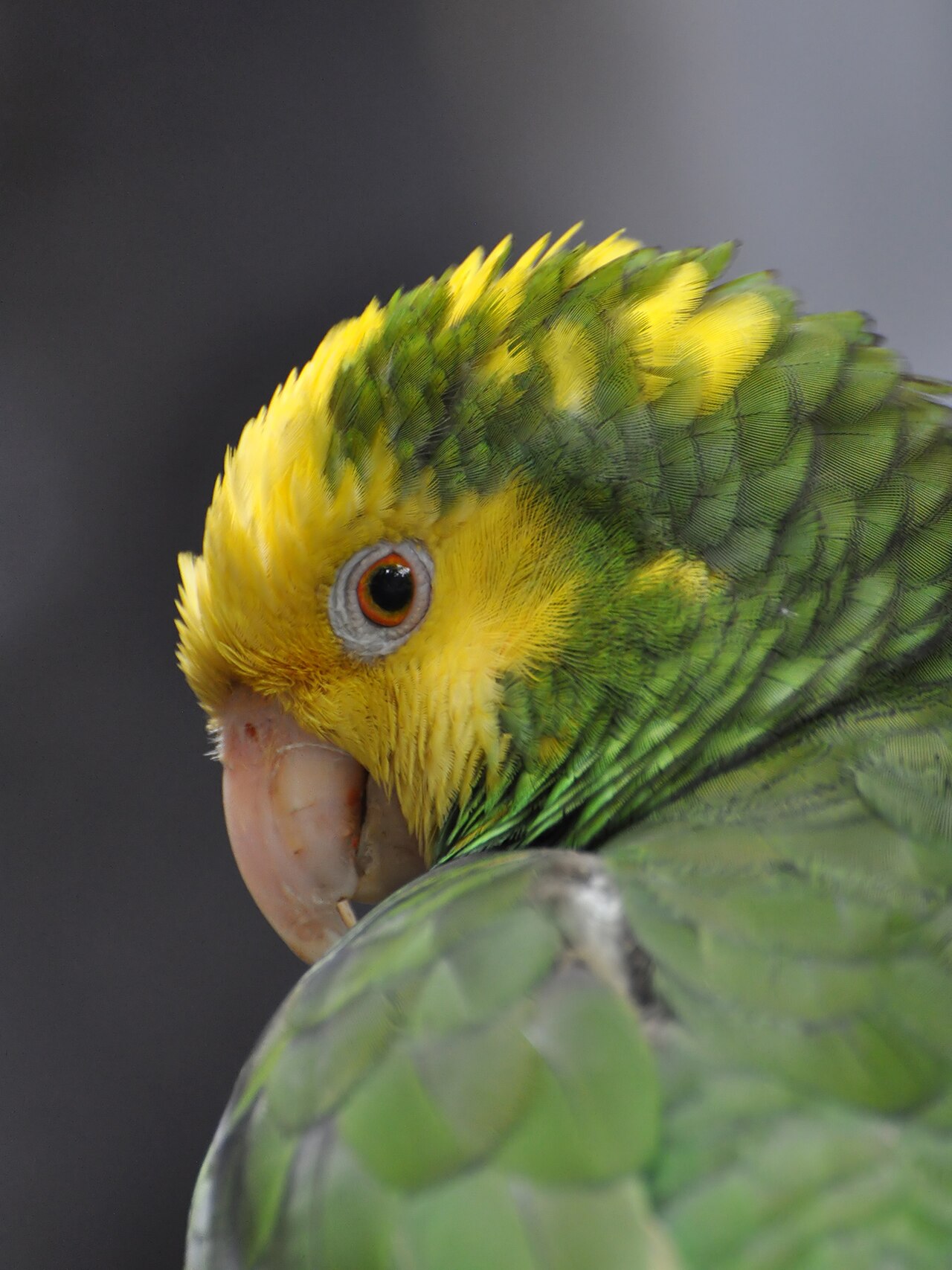
- Why Do Parrots Talk: The Biology of Sound Production
- The Syrinx: A Two-In-One Instrument
- Brain Wiring for Vocal Learning
- Why Do Parrots Talk: The Social Imperative
- Bonding Through Sound
- Flock Integration and Identity
- The Role of Intelligence and Problem-Solving
- Contextual Understanding
- Learning from the Environment
- Why Do Parrots Talk: The Emotional and Psychological Factors
- Stress and Repetition
- Play and Self-Entertainment
- Species-Specific Differences in Talking Ability
- Size and Lifespan
- Diet and Habitat
- The Science Behind Vocal Learning in Parrots
- Brain Structure Comparisons
- Imitation vs. Understanding
- Practical Implications for Parrot Owners
- Creating a Stimulating Environment
- Health and Diet
- Conclusion
- ❓ Frequently Asked Questions
If you have ever lived with a parrot or marveled at a viral video of one, you have likely asked yourself a simple but profound question: why do parrots talk? The answer is far more layered than a party trick or a desire for attention. Parrots do not merely mimic human speech; they engage in a complex form of social communication rooted in their biology, brain structure, and evolutionary history. This article explores the real reasons behind this remarkable ability, from the anatomy that makes it possible to the social bonds that drive it.
Why Do Parrots Talk: The Biology of Sound Production
To understand why parrots talk, we must first examine the physical apparatus that allows them to produce such a wide range of sounds. Unlike humans, who use the larynx (voice box) at the top of the trachea, parrots possess a unique organ called the syrinx. Located at the junction of the trachea and the bronchi, the syrinx is a highly flexible structure with two separate sound sources, one on each side. This dual-system allows parrots to produce two different sounds simultaneously, creating the complex, layered vocalizations that can mimic human speech patterns.
The Syrinx: A Two-In-One Instrument
The syrinx is controlled by a set of muscles that can independently adjust tension, airflow, and shape. In large species like the African grey parrot (Psittacus erithacus), the syrinx can be up to 2 centimeters long, while the tiny budgerigar (Melopsittacus undulatus) has a syrinx smaller than a grain of rice. This anatomical versatility is the foundation of their vocal mimicry. Parrots also have a highly mobile tongue—thick, muscular, and agile—which they use to modulate sound, much like a human uses their lips and tongue. The tongue of a macaw, for example, can be up to 5 centimeters long and is covered in papillae that help shape vowels and consonants.
Brain Wiring for Vocal Learning
Beyond anatomy, the parrot brain is uniquely adapted for vocal learning. Parrots belong to a small group of animals—including songbirds, hummingbirds, and humans—that can learn new sounds through imitation. The parrot brain contains specialized regions known as the song system (or vocal learning circuitry), which includes areas like the HVC (high vocal center) and the RA (robust nucleus of the arcopallium). Research from Duke University has shown that parrots have an additional neural circuit called the shell region, which is not found in songbirds. This extra circuitry may explain why parrots are better at mimicking human speech than other birds, allowing them to process and reproduce complex sound patterns with remarkable accuracy.
Why Do Parrots Talk: The Social Imperative
While biology provides the tools, social motivation is the primary driver behind speech in parrots. In the wild, parrots are highly social animals that live in flocks ranging from a few individuals to thousands. For example, the monk parakeet (Myiopsitta monachus) builds massive communal nests in South America, while the sulfur-crested cockatoo (Cacatua galerita) of Australia forms flocks that can number over 500 birds. Within these groups, vocal communication is essential for survival—it helps coordinate foraging, warn of predators, and maintain pair bonds. When a parrot imitates human speech, it is essentially treating you as a member of its flock.
Bonding Through Sound
Parrots are obligate social creatures; they need constant interaction to thrive. In captivity, a parrot often forms a strong bond with its human caregiver. By mimicking your voice, the parrot is attempting to strengthen that bond. This is not random noise—it is a deliberate social act. A famous example is Alex the African grey, studied by Dr. Irene Pepperberg at Harvard. Alex learned over 100 words and could use them in context, such as asking for a "nut" or identifying colors. Alex’s ability to answer questions and even make requests demonstrated that mimicry is often a tool for social engagement, not just mindless copying.
Flock Integration and Identity
In a wild flock, each parrot has a unique contact call that acts like a name. When a parrot hears you speak, it may learn to imitate your voice to call you back, much like it would call to a flock mate. This is especially common in species like the cockatiel (Nymphicus hollandicus), which naturally whistle and chirp to maintain contact. A cockatiel that learns to whistle "The Andy Griffith Show" theme is not being funny—it is trying to communicate its presence and location to you. The size of a parrot’s vocabulary often correlates with its social needs: Amazon parrots (e.g., Amazona ochrocephala) are known for their large vocabularies because they live in highly interactive flocks in the Amazon rainforest.
The Role of Intelligence and Problem-Solving
Parrots are not just vocal mimics; they are among the most intelligent animals on Earth. The kea (Nestor notabilis) of New Zealand, for instance, can solve complex puzzles, use tools, and even manipulate locks. This cognitive capacity is directly linked to their ability to talk. A parrot that mimics speech is using the same brain regions it would use for problem-solving and learning. Studies have shown that parrots can associate specific sounds with meanings, a skill that requires associative learning and memory.
Contextual Understanding
Many parrots do not just repeat words—they use them in appropriate contexts. For example, a yellow-naped Amazon might say "hello" when you enter a room and "goodbye" when you leave. This is not mere mimicry; it shows an understanding of the social context. Research published in Animal Cognition found that African grey parrots can learn to label objects, colors, and shapes, and even count up to six. This level of cognitive sophistication means that when a parrot talks, it is often engaging in a meaningful interaction, not just producing sound for the sake of it.
Learning from the Environment
Parrots are also opportunistic learners. In the wild, they pick up sounds from other species, such as the calls of predators or the rustle of leaves. In captivity, they are exposed to human speech, television, and household noises. A budgie that mimics a ringing phone or a lovebird that imitates a microwave beep is simply applying the same learning mechanism it would use in nature. This adaptability is a key reason why parrots are such effective mimics—they are constantly monitoring their environment for new sounds to incorporate into their repertoire.
Why Do Parrots Talk: The Emotional and Psychological Factors
Emotions play a powerful role in why parrots talk. Parrots are empathetic animals that can sense your mood and respond accordingly. A parrot that is bored, lonely, or stressed may talk more to seek attention, while a happy, well-stimulated parrot may use speech to express contentment. The eclectus parrot (Eclectus roratus), known for its calm demeanor, often uses soft, gentle vocalizations to communicate relaxation. Conversely, a sun conure (Aratinga solstitialis) might screech loudly when excited or alarmed.
Stress and Repetition
In some cases, excessive or repetitive mimicry can indicate stress or boredom. Parrots that are left alone for long periods, have a small cage, or lack enrichment may develop stereotypic behaviors, including constant talking or screaming. For example, a cockatoo that repeats the same phrase hundreds of times a day might be showing signs of anxiety. Providing a varied diet, plenty of toys, and daily interaction can reduce this behavior. A healthy, stimulated parrot will use speech in a more balanced, contextual way.
Play and Self-Entertainment
Many parrots talk simply because it is fun. They enjoy the sound of their own voice and will experiment with new sounds for amusement. Young parrots, especially, go through a "babbling" phase where they practice sounds without clear meaning. This is similar to a human baby experimenting with syllables. A parrotlet (Forpus passerinus) might spend hours chirping and clicking, building its vocal skills for later social use. This playfulness is a sign of a healthy, curious mind.
Species-Specific Differences in Talking Ability
Not all parrots are equally skilled at talking. While many species can learn a few words, some are renowned for their extensive vocabularies. The African grey parrot is widely considered the best talker, with individuals like Alex learning over 100 words and using them in sentences. Amazon parrots, especially the double yellow-headed Amazon (Amazona oratrix), are also excellent talkers, often mimicking human speech with clear intonation. On the other hand, parakeets and lovebirds tend to have smaller vocabularies but can still learn a few phrases or sounds.
Size and Lifespan
Larger parrots generally have larger brains and longer lifespans, which correlates with better talking ability. The hyacinth macaw (Anodorhynchus hyacinthinus), the largest parrot species, can live up to 60 years in captivity and is known for its deep, resonant voice. Smaller species like the budgerigar have shorter lifespans (5-10 years) but can still learn dozens of words if trained. However, the key factor is not just size but the social structure of the species. Parrots that live in large, complex flocks tend to be better talkers, as they need more sophisticated communication.
Diet and Habitat
A parrot’s diet and habitat also influence its vocal behavior. In the wild, parrots that feed on a variety of fruits, nuts, and seeds—such as the blue-and-yellow macaw (Ara ararauna)—often have complex social calls to coordinate foraging. In captivity, a parrot's diet can affect its health and mood, which in turn impacts its willingness to talk. A malnourished parrot may be lethargic and less vocal, while a well-fed parrot with access to enrichment is more likely to engage in vocal play. For example, conures thrive on a diet of pellets, fresh fruits, and vegetables, and their high energy levels often translate into more frequent vocalizations.
The Science Behind Vocal Learning in Parrots
The ability to learn and produce speech is a rare trait in the animal kingdom. Parrots, along with songbirds and hummingbirds, are the only birds that can do it. Recent genetic studies have shed light on why. In 2015, researchers at the University of California, Berkeley, sequenced the genome of the budgerigar and found that it shares many genes with humans that are involved in vocal learning, including the FOXP2 gene. This gene is crucial for the development of speech in humans and is also present in parrots, suggesting a common evolutionary origin for vocal learning.
Brain Structure Comparisons
Parrots have a brain-to-body ratio comparable to that of primates. The cerebrum, which controls complex behaviors, is particularly large in parrots. In fact, the African grey parrot has a cerebrum that accounts for over 60% of its brain volume, similar to that of a chimpanzee. This neural real estate is used for processing sounds, storing memories, and learning new vocalizations. The nidopallium, a region involved in motor learning, is also highly developed in parrots, allowing them to coordinate the precise muscle movements needed for speech.
Imitation vs. Understanding
While many parrots can imitate human speech, not all of them understand what they are saying. However, studies have shown that some parrots do grasp meaning. Dr. Pepperberg’s work with Alex demonstrated that he could not only label objects but also understand concepts like "same" and "different." For example, Alex would correctly identify that a green block and a green ball shared the color green, even though they were different shapes. This suggests that for some parrots, talking is not just mimicry but a form of cognition.
Practical Implications for Parrot Owners
Understanding why do parrots talk can help you provide better care for your feathered companion. If you want to encourage your parrot to talk, the most important thing is to build a strong bond. Speak to your parrot regularly, use clear, simple words, and reward it with treats or praise when it mimics you. For example, you might say "hello" every time you approach the cage, and soon your parrot will associate that sound with your presence.
Creating a Stimulating Environment
Parrots need mental and physical stimulation to thrive. Provide a variety of toys, perches, and foraging opportunities. The African grey is particularly intelligent and needs puzzles and interactive games to stay engaged. A bored parrot may stop talking or develop negative behaviors. Also, consider playing recordings of other parrots or nature sounds to encourage vocalization. Many parrots learn faster when they hear other birds talking.
Health and Diet
A healthy parrot is a talkative parrot. Ensure your bird has a balanced diet that includes pellets, fresh fruits, vegetables, and occasional nuts. Avoid feeding it avocado, chocolate, or caffeine, which are toxic. Regular vet check-ups are essential, as illnesses like respiratory infections can affect vocalization. A parrot that suddenly stops talking may be sick or stressed, so monitor its behavior closely.
Conclusion
So, why do parrots talk? The answer is a fascinating blend of biology, social instinct, intelligence, and emotion. From the specialized syrinx and brain circuits that enable sound production to the deep-seated need for social bonding and mental stimulation, every aspect of a parrot’s life influences its ability to mimic human speech. Whether it is a budgerigar chirping a simple greeting or an African grey carrying on a meaningful conversation, talking is a window into the complex, intelligent, and social world of parrots. By understanding the real reasons behind this behavior, we can better appreciate these remarkable birds and provide them with the care and companionship they need to thrive.
❓ Frequently Asked Questions
💬 Why do parrots mimic human speech?
Parrots mimic human speech primarily for social bonding, as they are highly social creatures that use vocalizations to communicate and fit in with their flock, which in captivity often includes their human caregivers.
💬 Do parrots understand what they are saying?
While parrots can learn to associate words with specific objects, actions, or contexts through conditioning, they generally do not understand the meaning of words like humans do, though some may use words appropriately in certain situations.
💬 Can all parrot species talk?
Not all parrot species can mimic human speech; the ability varies widely, with African greys, Amazon parrots, and budgies being among the best talkers, while others may only make simple sounds or none at all.
💬 How do parrots learn to talk?
Parrots learn to talk through vocal learning, a process where they listen to and imitate sounds in their environment, often starting with simple noises and gradually repeating words or phrases they hear frequently from their human flock.