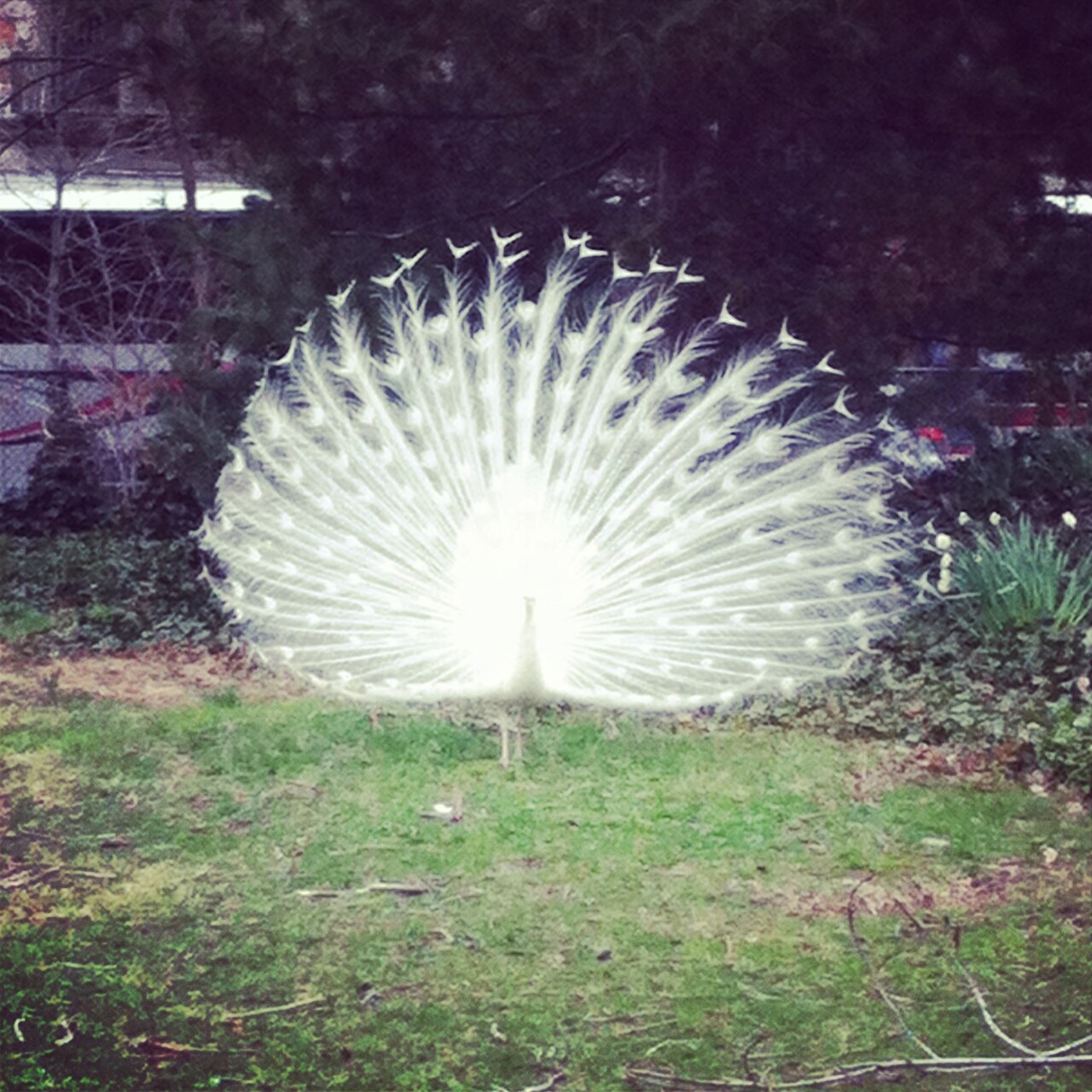
- The Basics: What Exactly Is a Peacock?
- What Is Really Happening When Peacocks Spread Feathers?
- The Mechanics of the Fan
- Why Peacocks Spread Feathers: The Courtship Explanation
- What the Female Is Actually Judging
- The Shocking Truth: It Is Not All About Mating
- Predator Defense and Startle Displays
- Dominance and Territory
- Simple Arousal and Weather
- How the Train Grows, and What It Costs
- Where Peafowl Live and What They Eat
- Common Myths About the Peacock Display
- Why the Display Still Puzzles Scientists
- Conclusion: The Real Truth Behind the Fan
- ❓ Frequently Asked Questions
When a male Indian peafowl fans out his iridescent train into a shimmering wall of blue, green, and gold, it is one of the most spectacular sights in the animal kingdom — and when peacocks spread feathers, they are doing far more than showing off. That famous fan is a carefully engineered communication device, a survival tool, and a subject of intense scientific debate. And the "shocking truth"? Much of what most people believe about it is wrong. The feathers are not the tail. The display is not just about beauty. And the bird doing the displaying is not even called a peacock in the way most of us assume.
The Basics: What Exactly Is a Peacock?
Before we can understand the display, we need to get the names straight, because confusion here causes most of the myths that follow. The term "peacock" strictly refers to the male of the peafowl family. The female is called a peahen, and the general species name for both sexes is peafowl. So when someone says "the peacock spread its feathers," they are always talking about a male bird.
There are three main species kept and studied around the world. The most familiar is the Indian peafowl (Pavo cristatus), native to the Indian subcontinent and the national bird of India. The green peafowl (Pavo muticus) lives across Southeast Asia, from Myanmar to Java, and is endangered in the wild. The Congo peafowl (Afropavo congensis), discovered only in 1936, is a secretive forest bird from the Democratic Republic of Congo and looks almost nothing like its flashy cousins — males have a modest fan but no long train at all.
Indian peafowl are the birds you see in parks, zoos, and hotel gardens worldwide. Males typically weigh between 4 and 6 kilograms (9–13 pounds) and can measure up to 2.3 meters (about 7.5 feet) from beak to the tip of the train — with more than 60 percent of that length being feathers. Females are smaller, duller, and built for camouflage in browns and greens. In the wild, peafowl live roughly 15 to 20 years, and in captivity they can reach 20 to 25 years.
What Is Really Happening When Peacocks Spread Feathers?
Here is the first genuinely surprising fact: the giant fan is not made of tail feathers. Those long, eye-spotted plumes are called upper tail coverts — modified feathers that grow from the bird's back and overlay the true tail underneath. The actual tail feathers (called rectrices) are stiff, brownish, and relatively short. They act as a support structure, like the ribs of an umbrella, holding the enormous covert fan in place.
A full train can contain around 150 to 200 of these elongated covert feathers, and each one ends in the famous "eye" — an ocellus made of concentric rings of bronze, blue, green, and violet. The colors are not pigment. They are produced by structural coloration: microscopic layers of melanin rods inside the feather barbules that bend and reflect light at specific wavelengths. Change your viewing angle, and the color shifts. That is why a peacock's fan seems to shimmer and change as the bird turns.
The Mechanics of the Fan
Spreading the train is a muscular and skeletal performance. The bird raises its tail coverts, tilts the fan forward toward the viewer, and fans the feathers out laterally. At the same time, it often drops its wings slightly and shivers them, creating a rustling sound. The whole display can be held for minutes at a time, and the bird may vibrate the fan at high speed — studies have measured the shivering at around 20 to 25 times per second, producing a low-frequency rumble that peahens can apparently feel as well as hear.
Holding up a train that can weigh over a kilogram and span nearly two meters requires serious muscle and energy. That cost is central to why the display is such an honest signal of male quality.
Why Peacocks Spread Feathers: The Courtship Explanation
The classic answer is courtship, and it is largely correct. The train display is the male's primary advertisement to nearby peahens. During the breeding season — typically the monsoon months in India, roughly April through September — males establish small display territories called leks. Several males may gather in the same area, each defending a patch of ground and performing for visiting females.
A displaying male does several things at once. He fans the train, angles it toward the female, shivers the feathers, and sometimes turns his back to her. That last move is not a mistake: the rear of the train is also densely ornamented, and researchers have found that males position themselves so the female sees the display from the angle she prefers, which varies with her position.
What the Female Is Actually Judging
Peahens are not simply dazzled. Research going back to the work of Marion Petrie in the 1990s at Whipsnade Zoo in England showed that females tend to choose males with more eye-spots on their trains. In one well-known study, males with around 160 eyespots got far more mating opportunities than males with fewer. When researchers experimentally trimmed eyespots from some males' trains, those males lost mating success — strong evidence that the eyespots themselves matter.
Other studies have found that train size and symmetry correlate with male health, parasite load, and even offspring survival. In a long-term study of Indian peafowl, chicks fathered by males with larger trains were more likely to survive their first months. This is the logic of the "handicap principle" proposed by biologist Amotz Zahavi: only a genuinely healthy male can afford to grow and carry such an extravagant, cumbersome ornament, so the display is a truthful advertisement.
The Shocking Truth: It Is Not All About Mating
Now for the part that surprises people. Peacocks spread their feathers for reasons that have nothing to do with attracting a mate — and some of them are about pure survival.
Predator Defense and Startle Displays
A peacock confronted by a predator will fan its train, lean forward, and hiss. To a tiger, leopard, or feral dog, a suddenly enormous, eye-covered wall of feathers can look like a much larger animal — or like dozens of staring eyes. This is a deimatic display, a startle tactic used across the animal kingdom, from butterflies to cats. The eyespots may be especially effective against predators that are hardwired to react to being watched.
Peafowl are ground-foraging birds that roost in trees. They are vulnerable on the ground, especially at dawn and dusk, and their loud alarm calls and aggressive posturing are a real defense. A cornered male will also strike with his spurs — sharp, bony spikes on the backs of his legs, roughly 2 to 4 centimeters long.
Dominance and Territory
Males also fan at each other. During lekking season, rival males will display toward one another, sometimes in tense standoffs lasting several minutes. The bird that holds the display longer, or that occupies the more central lek position, often wins access to the best territory without a fight. It is a ritualized contest: expensive to perform, but cheaper than physical combat.
Simple Arousal and Weather
Peafowl sometimes fan their trains with no audience at all. Keepers report males displaying at passing cars, at lawnmowers, at reflections, and at nothing in particular. The behavior appears to be tied to hormonal state and general excitement. On hot days, a fanned train may also help with thermoregulation — increasing surface area so the bird can shed heat, a function documented in several large ground birds with big plumage.
How the Train Grows, and What It Costs
The train is not a permanent feature. Each year, after the breeding season ends — usually around August or September — the male sheds his entire train in a process called molting. For several months he looks almost like a large, dull peahen. Then, starting in winter, the coverts regrow, and by the following spring the full fan is back, often slightly larger and with more eyespots than the year before.
Growing 150 or more feathers, some over a meter long, is metabolically expensive. It requires protein, minerals, and energy at a time when food may be scarce. This is one reason the train is considered an honest signal: a male that is sick, malnourished, or heavily parasitized simply cannot produce a full, symmetrical, brightly colored train.
- Time to regrow: roughly 4 to 6 months for a complete train
- Feather count: around 150–200 elongated upper tail coverts
- Train length: often 1.4–1.6 meters (4.5–5.2 feet) in mature males
- Weight: the full train can add over 1 kilogram to the bird
Where Peafowl Live and What They Eat
Wild Indian peafowl are adaptable. They thrive in open forests, scrubland, farmland edges, and near human settlements across India, Sri Lanka, and neighboring countries. They have also been introduced to places as varied as Hawaii, Florida, the Bahamas, New Zealand, and parts of the United Kingdom, where feral populations of Indian peafowl are well established — famously in the village of Ushaw Moor in County Durham and around several English stately homes.
Their diet is broad and opportunistic. Peafowl are omnivores, eating seeds, grains, berries, figs, buds, and shoots, plus a wide range of invertebrates — termites, ants, beetles, grasshoppers, spiders, and millipedes. They also take small vertebrates such as lizards, frogs, and snakes, including young cobras, which has earned them a reputation as snake-killers in parts of India. This varied diet, combined with their tolerance of disturbed habitat, is why they often thrive near people — and why they can become agricultural pests.
Peafowl are strong fliers despite their size, but they usually fly only short distances, typically to reach a roost tree or escape a threat. They are social outside the breeding season, forming flocks that forage together and roost communally in tall trees, often 10 to 15 meters above ground.
Common Myths About the Peacock Display
Because the display is so iconic, it has collected a thick layer of folklore. Here are the most persistent myths, corrected.
- Myth: The fan is the tail. It is made of upper tail coverts, not tail feathers. The true tail is hidden underneath and provides structural support.
- Myth: Peacocks spread feathers only to attract mates. They also fan at predators, at rival males, and sometimes for no obvious reason at all.
- Myth: Peahens have no interest in the display. They do — but they are evaluating eyespot number, symmetry, and train quality, not just color.
- Myth: The colors come from pigment. They come mostly from structural coloration, which is why they shift with the light.
- Myth: "Peacock" means the species. It means the male. The species is peafowl; the female is a peahen.
Why the Display Still Puzzles Scientists
Even after decades of study, the peacock's train remains a live scientific question. If females prefer more eyespots, why do trains not keep growing indefinitely? Part of the answer is that the ornament has real costs — it is heavy, it attracts predators, and it makes the male less maneuverable in flight. There is also evidence that the display works through multiple channels at once: visual, acoustic (the feather shiver), and possibly even infrasonic, since the shivering produces low-frequency vibrations that peahens may detect physically.
Some researchers have argued that the train's effect on females is weaker than the textbook story suggests, and that male success depends heavily on territory position within the lek. Others have found that the fan's structure creates a kind of optical illusion, with the concentric eyespots forming repeating patterns that exploit how the peafowl brain processes visual information. In short, the display is not one signal — it is a layered, multi-sensory performance, and we are still decoding it.
Conclusion: The Real Truth Behind the Fan
When peacocks spread feathers, they are performing one of nature's most elaborate and expensive acts of communication. The fan is not a tail but a shield of upper tail coverts, built from microscopic light-bending structures rather than pigment. It serves courtship first, but also predator defense, dominance, thermoregulation, and simple excitement. It costs months of growth and a kilogram of body weight to carry, which is exactly why it works: only a strong, healthy, well-fed male can afford to display it.
So the shocking truth is not that peacocks are vain. It is that the display is honest — a physical billboard advertising the male's health, genes, and stamina, aimed at peahens, rivals, and predators alike. The next time you see that shimmering fan snap open, you are watching a bird spend a huge share of its annual energy budget on a single, spectacular message.
❓ Frequently Asked Questions
💬 Why do peacocks spread their feathers?
Peacocks fan out their tail feathers mainly to attract peahens during courtship, showing off the size, color, and number of eyespots as a sign of health and good genes. They also spread their feathers to look bigger and intimidate rivals or predators.
💬 Do female peacocks spread their feathers?
Peahens do not have the long, colorful train that males do, so they cannot fan out feathers the same way. They may raise their smaller tail feathers slightly during mating or when alarmed, but the famous display belongs to the male peacock.
💬 At what age do peacocks start spreading their feathers?
Male peafowl usually begin developing their long train around two years old and start displaying more fully by age three. Their train keeps growing and becomes most impressive when they reach full maturity at about four to five years.
💬 Do peacocks spread their feathers when they are scared or angry?
Yes, peacocks also fan their feathers as a threat display when they feel frightened, cornered, or challenged. The sudden burst of size and the loud rustling sound can startle predators and warn other birds.