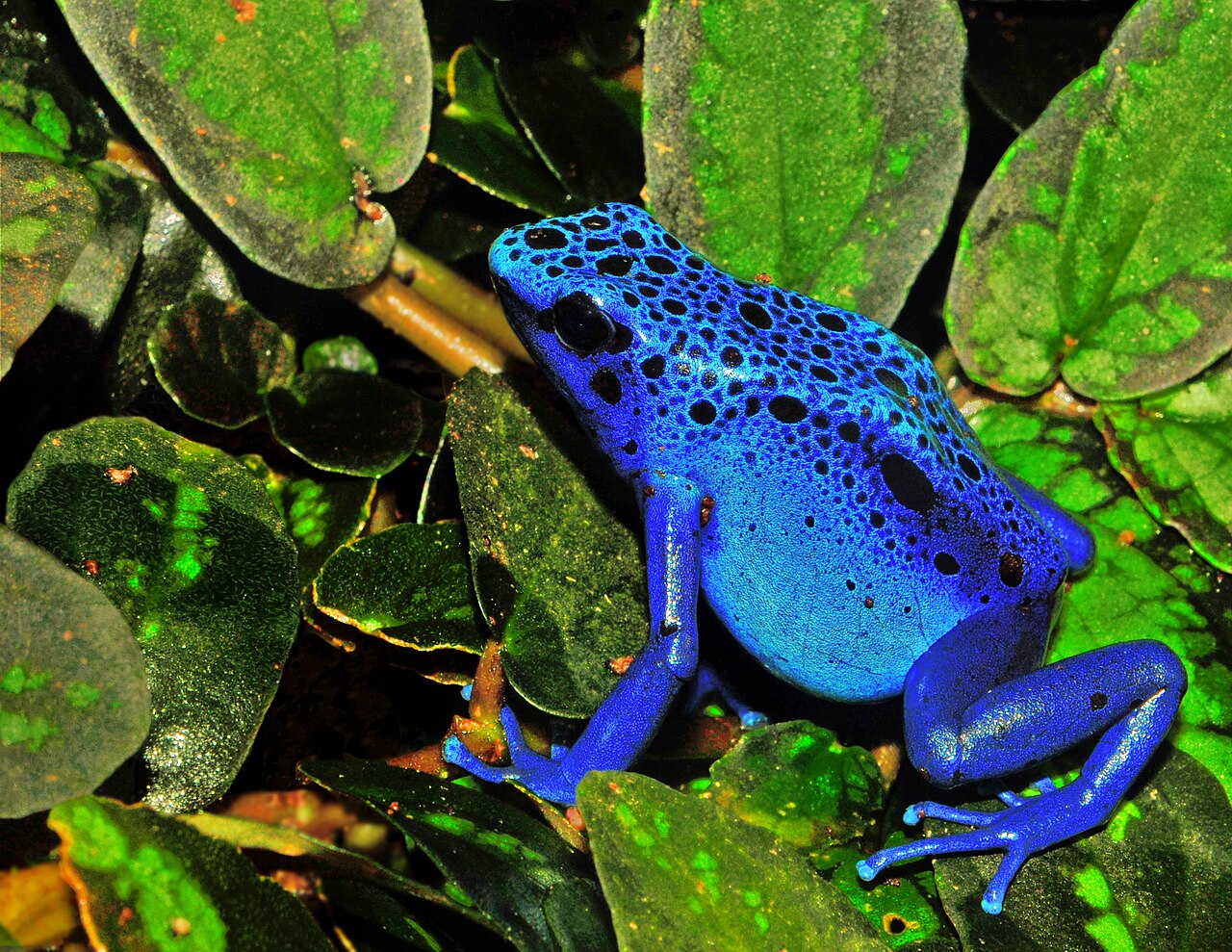
- Poison Dart Frog Colors: A Visual Warning System
- Why Bright Colors Beat Camouflage
- How Poison Dart Frog Colors Connect to Real Toxins
- Where the Toxicity Comes From
- Variation in Poison Dart Frog Colors Across Species
- Sexual Selection and the Color Paradox
- Behavior and Life History Behind the Warning
- Parental Care and Tadpole Transport
- Are Poison Dart Frogs Dangerous to Humans?
- What Poison Dart Frog Colors Teach Us About Evolution
- The Warning Truth, Summed Up
- ❓ Frequently Asked Questions
Poison dart frog colors are among the most striking in the animal kingdom — electric blues, molten oranges, acid yellows, and warning reds that seem almost too vivid to be natural. Those colors are not decoration. They are a billboard, a biological announcement that says, in the plainest terms a predator can understand: eating me is a mistake you will not make twice. This article unpacks the science behind that warning, from the alkaloid toxins in a frog's skin to the evolutionary arms race that produced them, and explains why some of the world's smallest vertebrates are also among its most dangerous.
Poison Dart Frog Colors: A Visual Warning System
The technical term for this strategy is aposematism, from the Greek apo (away) and sema (sign). An aposematic animal advertises its unpalatability or toxicity with conspicuous coloration, giving predators a clear, memorable cue to associate with a bad experience. Poison dart frogs are the textbook example — literally, in many biology courses — because their colors are unusually pure and their toxins unusually potent.
The logic works only if the signal is honest and consistent. A bright frog that turns out to be harmless would teach predators the wrong lesson and undermine the warning for the whole population. So the colors and the toxins evolve together: the more toxic a species, the more boldly it tends to be colored, and the more reliably predators learn to leave that pattern alone.
Why Bright Colors Beat Camouflage
For most small frogs, hiding is the sensible strategy. Dart frogs do the opposite. Their forest-floor habitat is dim, cluttered with leaf litter, and full of visual noise, so a small animal that stays still and brownish is genuinely hard to find. A frog that instead wears neon is instantly visible — which is exactly the point. The signal must be seen to work, and it must be seen by predators that hunt by sight, including birds, snakes, and small mammals.
There is a trade-off, of course. Conspicuous frogs are easier for a determined predator to locate. The evolutionary bet is that the cost of being found is outweighed by the benefit of being avoided after one bad taste. In practice, that bet pays off handsomely: field observations consistently show that naive predators attack brightly colored dart frogs once, suffer the consequences, and then avoid similar frogs for a long time.
How Poison Dart Frog Colors Connect to Real Toxins
The warning is not bluff. Poison dart frogs sequester potent alkaloid toxins in granular glands concentrated in their skin, particularly on the back. More than 500 distinct alkaloids have been identified from frog skin secretions, and a single frog of a highly toxic species may carry enough toxin to deter or kill multiple predators. The most famous compounds include batrachotoxin, found in the golden poison frog (Phyllobates terribilis), and pumiliotoxin and histrionicotoxin classes found across many species.
Batrachotoxin is a sodium-channel blocker. It locks voltage-gated sodium channels open, causing relentless depolarization of nerve and muscle cells. The result is paralysis, arrhythmia, and eventually cardiac failure. The golden poison frog, a creature roughly the size of a paperclip, is considered one of the most toxic vertebrates on Earth; indigenous Emberá people of Colombia's Pacific lowlands have traditionally used its secretions to tip blowgun darts, which is the origin of the "dart frog" name.
Where the Toxicity Comes From
Here is the detail that surprises most people: poison dart frogs are not born toxic. They acquire their alkaloids from their diet. In the wild, they eat ants, mites, beetles, and other small invertebrates that themselves contain or manufacture alkaloids, and the frogs sequester those compounds intact. Captive-bred frogs fed on fruit flies and crickets — a diet free of alkaloid-bearing prey — grow up essentially non-toxic, even though they keep their bright colors.
This has been demonstrated repeatedly in the pet trade and in zoo breeding programs. It means the bright coloration is genetically fixed while the chemical payload is environmentally acquired. The frog inherits the billboard but must gather its own ammunition. Researchers have used this quirk to study alkaloid uptake, and it also explains why captive dart frogs, while still visually stunning, are not the hazard their wild relatives are.
Variation in Poison Dart Frog Colors Across Species
Dart frogs belong to the family Dendrobatidae, which contains more than 300 described species across genera such as Phyllobates, Dendrobates, Oophaga, Epipedobates, and Ameerega. They range from about 1.5 centimeters to roughly 6 centimeters in body length, and they occur from Nicaragua south through Costa Rica, Panama, Colombia, Ecuador, Peru, and into the Amazon basin. Their colors vary enormously:
- Golden poison frog (Phyllobates terribilis): uniform metallic yellow, gold, or mint green; among the most toxic vertebrates known.
- Blue poison frog (Dendrobates tinctorius "azureus"): vivid sky-blue with black spots; native to a small area of southern Suriname.
- Strawberry poison frog (Oophaga pumilio): famously variable, with red-and-blue "strawberry" forms in Nicaragua and green, orange, or white forms elsewhere in Costa Rica and Panama.
- Dyeing poison frog (Dendrobates tinctorius): black-and-yellow or black-and-blue banding; the name comes from a historical (and dubious) claim that indigenous peoples used the frogs to dye parrot feathers.
- Phantasmal poison frog (Epipedobates tricolor): red stripes on a dark ground; the source of the painkiller research compound epibatidine.
Some species also show Müllerian mimicry, in which two genuinely toxic species converge on similar warning patterns and thereby share the cost of educating predators. Others display Batesian-style variation in which less-toxic populations still wear bold colors. The strawberry poison frog is a celebrated case study in local color divergence: populations on different islands and mainland sites differ dramatically in hue, likely driven by a mix of genetic drift, predator learning, and sexual selection.
Sexual Selection and the Color Paradox
Bright coloration does double duty. In many dart frog species, females prefer more intensely colored males, and males use color and calling to defend small territories. This creates a tension: the same signal that warns predators also attracts mates. The resolution appears to be that toxicity makes the risk affordable. A male who is both conspicuous and well-armed can advertise boldly without paying the usual price.
Behavior and Life History Behind the Warning
Dart frogs are diurnal, unlike most frogs, which are active at night. Being awake in daylight makes conspicuous coloration even more effective as a warning, since visually hunting predators are also active then. They are small, territorial, and largely ground-dwelling, though many species climb low vegetation.
Their reproductive behavior is unusual and worth knowing. Males call to attract females, then lead them to damp leaf litter or a suitable deposition site. In many species the female lays a small clutch of eggs — often just 3 to 10 — on land, and the male guards and keeps them moist. When the eggs hatch, one parent carries the tadpoles on their back to water, sometimes to tiny pools inside bromeliad leaf axils.
Parental Care and Tadpole Transport
The strawberry poison frog takes this further: females lay trophic (unfertilized) eggs in bromeliad pools for their tadpoles to eat, returning repeatedly to feed each one individually. This level of parental investment is rare among amphibians and helps explain the small clutch sizes. Lifespan in the wild is typically estimated at 3 to 15 years depending on species, with some captive individuals living considerably longer.
Diet in the wild centers on ants, termites, mites, springtails, and small beetles — precisely the alkaloid-rich prey that fuel their chemical defenses. They are sit-and-wait predators with sticky, projectile tongues, and they have excellent vision for movement.
Are Poison Dart Frogs Dangerous to Humans?
For most people, the practical answer is no, provided you do not handle wild frogs and then touch your eyes or mouth. The toxins are primarily defensive and are absorbed through mucous membranes or broken skin; intact skin contact is generally low risk but still unwise. The golden poison frog is the exception that demands respect — its skin secretions are potent enough that careless handling has caused serious harm.
Captive-bred frogs, as noted, are effectively non-toxic. This is why the international pet trade in dart frogs is legal in many jurisdictions and why keepers can work with them safely. Wild collection, by contrast, is restricted or banned in most range countries, and habitat loss — deforestation, agriculture, and climate shifts — is the primary threat to wild populations.
What Poison Dart Frog Colors Teach Us About Evolution
The dart frog system is a compact lesson in several evolutionary principles at once. It shows honest signaling: color reliably predicts toxicity because both are costly to produce and maintain. It shows predator learning: aposematism only works if predators generalize from one bad experience to similar-looking prey. And it shows phenotypic plasticity: the same genome can produce a lethal frog or a harmless one depending on diet.
It also illustrates the limits of the warning. Not every bright frog is deadly, and not every deadly frog is bright. Some dendrobatids are drab; some non-toxic frogs mimic toxic ones. The system is a negotiation, not a guarantee, and predators that learn the local rules gain an advantage.
The Warning Truth, Summed Up
Poison dart frog colors are not vanity. They are an honest, hard-won advertisement backed by real chemistry — alkaloids sequestered from prey, stored in skin glands, and delivered to any predator that ignores the sign. The colors evolved because they work, and they work because the toxins are real. Understanding that link explains why a two-centimeter frog in a Colombian rainforest can afford to be the brightest thing on the forest floor, and why the safest response to that flash of blue or gold is simple: admire it, photograph it, and keep your hands to yourself.
❓ Frequently Asked Questions
💬 Are poison dart frogs poisonous to touch?
Yes, the skin of most poison dart frog species secretes toxins, and some, like the golden poison frog, are among the most toxic animals on Earth. However, captive-bred frogs fed typical diets are usually far less toxic, and no frog is dangerous merely to look at—you just shouldn't handle wild ones.
💬 Why are poison dart frogs so brightly colored?
Their vivid colors are aposematic, meaning they warn predators that the frog is toxic or foul-tasting. Predators that eat one and survive learn to avoid anything with that color pattern, so bright coloration protects the frog.
💬 Do poison dart frogs lose their toxicity in captivity?
Often, yes. Their toxins appear to come largely from their wild diet of ants, mites, and other invertebrates, so frogs raised on fruit flies and similar food in captivity typically become much less or even non-toxic.
💬 What should I do if I touch a poison dart frog?
Wash your hands thoroughly with soap and water and avoid touching your eyes, mouth, or face before washing. Seek medical help if you develop symptoms like numbness, muscle twitching, or breathing difficulty, though serious exposure from brief contact is rare.