- The Genetic Blueprint Behind the Pug Curly Tail
- Hemivertebrae: The Key Structural Difference
- The Role of the Screw Tail Gene
- Historical Origins: Why the Pug Curly Tail Was Bred For
- From Imperial China to European Royalty
- The Double Curl as a Breed Ideal
- Health Implications of the Pug Curly Tail
- Tail Fold Dermatitis: A Common Issue
- Intervertebral Disc Disease (IVDD) Risk
- Behavioral and Communication Aspects of the Tail
- Tail Position and Mood
- The Tail as a Breed Identifier
- Comparing the Pug Curly Tail to Other Breeds
- Genetics Across Breeds
- Caring for Your Pug’s Curly Tail
- Exercise and Tail Safety
- Grooming Tips
- Conclusion: Celebrating the Pug Curly Tail
- ❓ Frequently Asked Questions
The pug curly tail is one of the breed’s most beloved and immediately recognizable features, a tight, double-coiled corkscrew that seems to defy gravity. But this charming trait is more than just a cute quirk—it is a direct result of centuries of selective breeding, a specific genetic mutation, and the pug’s unique spinal structure. Understanding the real reason behind the pug curly tail requires a deep dive into canine genetics, breed history, and the evolutionary trade-offs that have shaped this ancient companion dog.
The Genetic Blueprint Behind the Pug Curly Tail
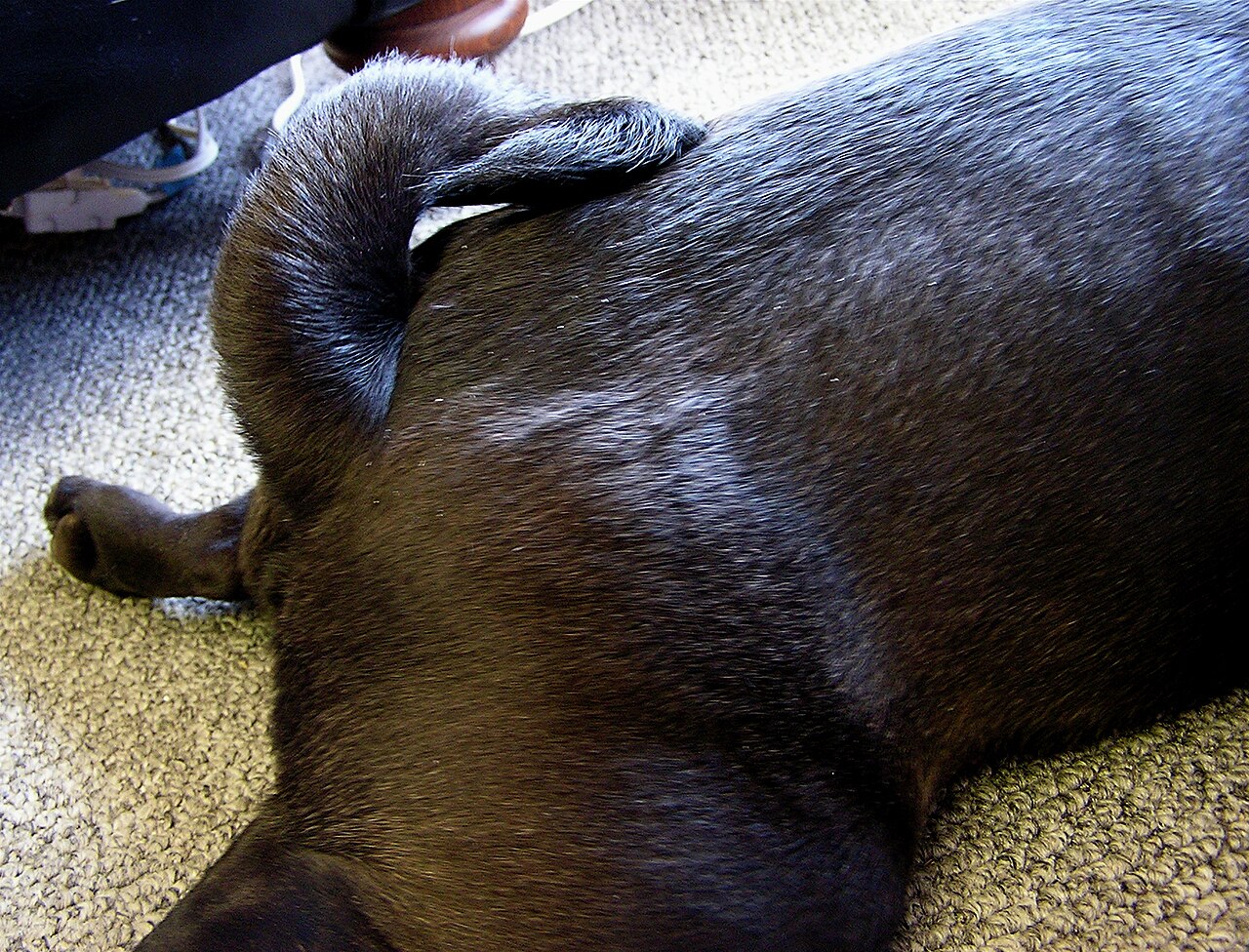
The primary cause of the pug curly tail is a genetic mutation that affects the development of the vertebrae in the tail. In most dog breeds, the tail is composed of a series of distinct, interlocking bones called caudal vertebrae, which are typically straight or gently curved. In pugs, however, a specific gene—often linked to the same mutation that causes the breed’s brachycephalic (flat-faced) skull shape—alters the shape and fusion of these vertebrae. The result is a tail that is naturally malformed into a tight, helical coil.
Hemivertebrae: The Key Structural Difference
Unlike the wedge-shaped vertebrae in a standard dog tail, pugs often possess hemivertebrae—butterfly-shaped or triangular vertebrae that do not align properly. Instead of forming a straight line, these irregular bones stack in a way that forces the tail to curl into a circle or double loop. Studies in veterinary orthopedics have confirmed that nearly all pugs with a classic curly tail have at least one hemivertebra in their tail region. This is not a disease but a breed-standard anatomical variation. In fact, the American Kennel Club (AKC) breed standard explicitly states that the pug’s tail should be “curled as tightly as possible over the hip,” with a double curl being considered ideal.
The Role of the Screw Tail Gene
Research published in the journal PLOS Genetics has identified a mutation in the DVL2 gene as a major contributor to both the pug’s flat face and its curly tail. This gene is involved in a signaling pathway called Wnt, which regulates embryonic development, including the formation of bones and cartilage. In pugs, a variant of this gene disrupts the normal segmentation of the spine, leading to a shortened, kinked vertebral column and, consequently, the characteristic tail curl. Interestingly, this same mutation is present in French Bulldogs and Boston Terriers, both of which also commonly have screw tails. This genetic link explains why the pug curly tail is not an isolated trait but part of a broader skeletal pattern.
Historical Origins: Why the Pug Curly Tail Was Bred For
The pug curly tail did not arise by accident. Ancient Chinese breeders, who developed the pug over 2,000 years ago, deliberately selected for this feature. In Chinese culture, the curl of a dog’s tail was believed to represent luck, prosperity, and a connection to the spiritual world. The tighter the curl, the more auspicious the dog was considered. Pugs were cherished companions of emperors and Buddhist monks, and their tails were seen as a symbol of a well-bred, noble animal.
From Imperial China to European Royalty
When Dutch traders brought pugs to Europe in the 16th century, the breed’s curly tail quickly became a hallmark of exoticism and status. European aristocrats, including William III of England and Marie Antoinette, prized pugs for their distinctive appearance. The tail was often emphasized in paintings and sculptures, further cementing its importance. Breeders continued to prioritize tight curls, sometimes even using physical manipulation (such as taping the tail to the back) in young puppies to encourage the desired shape. While such practices are now considered unethical, they underscore how deeply the pug curly tail was ingrained in breed standards.
The Double Curl as a Breed Ideal
Today, show pugs are judged heavily on the quality of their tail. A single curl is acceptable, but a double curl—where the tail loops over itself—is considered the gold standard. This preference has driven breeders to continue selecting for the genetic variants that produce the most extreme curvature. However, this has also led to health concerns, as overly tight tails can be associated with spinal abnormalities, such as hemivertebrae that cause pain or neurological issues. Responsible breeders now balance aesthetics with health, avoiding extreme conformations that compromise the dog’s well-being.
Health Implications of the Pug Curly Tail
While the pug curly tail is adorable, it is not without potential health risks. The same hemivertebrae that create the curl can sometimes lead to a condition called hemivertebra-associated spinal cord compression, particularly if the malformed vertebrae press on the spinal nerves. This can cause weakness in the hind limbs, incontinence, or even paralysis in severe cases. Fortunately, most pugs with a curly tail do not experience these problems, as the tail vertebrae are far from the spinal cord’s main mass. However, breeders and owners should be aware of the risks.
Tail Fold Dermatitis: A Common Issue
The deep crevices formed by the pug curly tail can trap moisture, dirt, and bacteria, leading to a condition known as tail fold dermatitis or “screw tail” infection. This is especially common in pugs with very tight curls that create a pocket of skin at the base of the tail. Symptoms include redness, odor, discharge, and discomfort. Regular cleaning with a gentle, pet-safe wipe and keeping the area dry can prevent infections. In chronic cases, a veterinarian may recommend a tail fold resection surgery, though this is a last resort. Owners should check their pug’s tail daily, especially after walks or baths.
Intervertebral Disc Disease (IVDD) Risk
Pugs are already prone to intervertebral disc disease due to their short, curved spines, and the presence of hemivertebrae in the tail can be an indicator of broader spinal instability. While the tail itself is rarely the source of IVDD, the same genetic factors that produce the curl may contribute to disc degeneration elsewhere in the spine. A 2019 study in the Journal of Small Animal Practice found that pugs with extremely tight tail curls had a slightly higher incidence of thoracolumbar IVDD compared to those with looser curls. This reinforces the importance of responsible breeding practices that prioritize moderate tail curl over extreme aesthetics.
Behavioral and Communication Aspects of the Tail
Despite its rigid structure, the pug curly tail is still an important tool for communication. Unlike dogs with flexible tails that can wag freely in all directions, a pug’s tail is more limited in its range of motion. A tightly curled tail that remains in place while the dog is at rest or moving indicates a calm, content state. However, pugs do express excitement or happiness through a rapid, side-to-side vibration of the entire rear end, often accompanied by a wiggling body. This is sometimes called the “pug wiggle” and is the breed’s equivalent of a vigorous tail wag.
Tail Position and Mood
If a pug’s tail suddenly uncurls or hangs down, it can be a sign of fear, stress, or illness. A tail that is carried lower than usual, especially if the dog is also hiding or avoiding eye contact, warrants attention. Conversely, a tail that is held even tighter against the back may indicate arousal or excitement, such as when greeting a favorite person. Observing the pug curly tail in context with other body language—ears, eyes, and posture—provides valuable insights into the dog’s emotional state.
The Tail as a Breed Identifier
The pug curly tail is so distinctive that it serves as a key breed identifier, even from a distance. In a mixed-breed dog, the presence of a curly tail often suggests pug ancestry, especially when combined with a short muzzle and wrinkled face. This trait is so strongly associated with the breed that some rescue organizations use tail curl as a primary factor in identifying pug mixes. However, it is worth noting that not all pugs have a perfect curl—some have a single loop or a loose spiral, which is still within the breed standard but less prized in the show ring.
Comparing the Pug Curly Tail to Other Breeds
The pug is not the only breed with a curly tail, but its tail is unique in its tightness and position. Other brachycephalic breeds, such as the French Bulldog and English Bulldog, also have screw tails, but these are often shorter and may not curl as high over the back. In contrast, the pug curly tail typically rests directly on the hip, forming a complete circle or figure-eight. The Basenji has a tightly curled tail that lies flat against the back, while the Chow Chow’s tail curls over the spine. However, the pug’s tail is notably more flexible at the base than a Chow Chow’s, allowing for the characteristic wiggle.
Genetics Across Breeds
Research has shown that the DVL2 mutation is present in all three major screw-tail breeds (pug, French Bulldog, Boston Terrier), but the expression varies. Pugs have the highest frequency of the double curl, likely due to centuries of selective pressure. In contrast, the mutation in French Bulldogs often produces a shorter, stubbier tail that may not form a complete loop. This genetic diversity highlights how the same underlying mutation can result in different tail shapes depending on other modifying genes and breeding history.
Caring for Your Pug’s Curly Tail
Proper care of the pug curly tail is essential for preventing health issues and ensuring your dog’s comfort. Because the tail is often pressed against the skin, it can create a warm, moist environment ideal for bacterial or yeast overgrowth. Owners should gently lift the tail daily to inspect the skin underneath. If you notice redness, swelling, or a foul odor, consult your veterinarian. Regular cleaning with a mild antiseptic wipe or a solution recommended by your vet can help maintain hygiene.
Exercise and Tail Safety
Pugs are prone to overheating due to their brachycephalic airways, and the tail’s tight curl can restrict air circulation around the rear end. During hot weather, avoid strenuous exercise and provide plenty of water. Additionally, be cautious when handling the tail—never pull or twist it, as this can cause pain or injury to the underlying vertebrae. If your pug seems sensitive when you touch the tail, have a vet examine it for signs of arthritis or nerve compression. Most pugs enjoy gentle scratches at the base of the tail, but respect their boundaries if they pull away.
Grooming Tips
While the pug’s coat is short, the tail area still requires attention. Use a soft brush to remove loose hair and debris from around the tail fold. Some owners use a small amount of cornstarch or a veterinarian-approved drying powder to keep the area dry. Bathing should be done with a gentle, hypoallergenic shampoo, and the tail must be thoroughly dried afterward. Avoid using harsh chemicals or scented wipes, as these can irritate the sensitive skin. A clean, well-maintained tail is less likely to develop infections and will remain a source of joy rather than concern.
Conclusion: Celebrating the Pug Curly Tail
The pug curly tail is a remarkable example of how human preference, genetics, and evolution combine to create a unique trait. From its origins in ancient Chinese palaces to its role as a beloved feature in modern homes, the curly tail tells a story of selective breeding, cultural symbolism, and the enduring bond between humans and dogs. While it comes with certain health considerations—such as the need for diligent hygiene and awareness of spinal issues—it remains a defining characteristic that makes pugs instantly recognizable and endlessly endearing. By understanding the real reason behind the curl, owners can better appreciate their pug’s history and care for this charming feature with knowledge and compassion. Whether it’s a single loop or a perfect double curl, the pug curly tail is a testament to the breed’s rich heritage and its special place in the hearts of dog lovers worldwide.
❓ Frequently Asked Questions
💬 Is a pug's curly tail a sign of good breeding?
Yes, in purebred pugs, a tightly curled tail is considered a breed standard and a hallmark of good conformation, though the curl itself is caused by a genetic spinal mutation rather than intentional selection for health.
💬 Does a pug's curly tail cause health problems?
While the curl itself is usually harmless, the underlying spinal malformation can sometimes lead to hemivertebrae, which may cause pain, nerve issues, or mobility problems in severe cases.
💬 Can a pug's curly tail straighten out?
Pug tails are permanently curled due to the shape of their vertebrae, but they may temporarily relax when the dog is sleeping, relaxed, or very young, only to curl back up when active.
💬 Why do pugs have curly tails instead of straight ones?
The curl results from a genetic mutation that causes wedge-shaped vertebrae (hemivertebrae), which stack in a curve, and this trait was selectively bred by ancient Chinese breeders for aesthetic and symbolic reasons.