- What "Going Limp" Actually Looks Like in Ragdoll Cats
- How It Differs From a Normal Cat Response
- It Is Not a Medical Collapse
- Why Do Ragdoll Cats Go Limp? The Genetics and Breeding Story
- Is There a Specific "Floppy Gene"?
- The Role of Early Handling
- Ragdoll Cats Go Limp: The Temperament Behind the Behavior
- Common Ragdoll Personality Traits
- What Happens When a Ragdoll Is Startled
- Physical Characteristics That Support the Floppy Reputation
- Size, Growth, and Lifespan
- Grooming and Care Basics
- Common Myths About Limp Ragdoll Cats
- Myth: Ragdolls Feel No Pain
- Myth: They Are Immune to Fear
- Myth: All Ragdolls Go Limp Every Time
- What to Do When Your Ragdoll Goes Limp
- Safe Holding Technique
- When Limpness Is a Warning Sign
- Living With a Floppy Cat: Practical Realities
- The Floppy Truth, Summed Up
- ❓ Frequently Asked Questions
Few things surprise new cat owners quite like watching their cat suddenly collapse into a puddle of fur, only to realize the animal is perfectly fine. When Ragdoll cats go limp, it can look alarming at first — the cat flops over in your arms, drapes itself across your lap like a wet towel, or hangs upside down with its paws dangling and its eyes half-closed. But this behavior is not a sign of illness or injury. It is one of the most famous and endearing traits of the breed, and understanding why it happens reveals a lot about Ragdoll genetics, temperament, and history.
What "Going Limp" Actually Looks Like in Ragdoll Cats
The Ragdoll's signature behavior is exactly what its name suggests. Pick up a Ragdoll and, more often than not, the cat will relax completely rather than stiffen or struggle. Its body becomes soft and pliable, its legs dangle loosely, and its head may rest against your arm or shoulder. Some Ragdolls will even let you cradle them on their backs like a baby, a position most cats tolerate for only a second or two.
This is not a momentary reaction. Many Ragdolls stay relaxed for as long as they are held, and some will remain floppy even when placed on a slippery surface or passed between people. Owners frequently describe carrying their Ragdoll around the house one-handed while doing chores, with the cat hanging contentedly like a scarf.
How It Differs From a Normal Cat Response
Most cats have a strong "righting reflex" and a deep dislike of being restrained. When a typical domestic shorthair is picked up incorrectly or held too long, it will tense its muscles, flatten its ears, flick its tail, and squirm free within seconds. A Ragdoll does the opposite. It yields. That contrast is what makes the behavior so striking to anyone who has lived with other cats.
It Is Not a Medical Collapse
It is important to distinguish relaxed flopping from a genuine loss of muscle tone caused by illness. A Ragdoll going limp during handling is alert, responsive, and will snap back to normal the moment it wants to move. A cat that is limp because of a health problem will typically show other signs: unresponsiveness, labored breathing, vomiting, or an inability to stand when placed on the floor. If your cat is limp and unwell, that is a veterinary emergency, not a breed quirk.
Why Do Ragdoll Cats Go Limp? The Genetics and Breeding Story
The short answer is that Ragdolls were deliberately bred to be this way. The breed originated in the 1960s in Riverside, California, when a breeder named Ann Baker developed a line of cats from a white, longhaired neighborhood cat named Josephine. Josephine's kittens were noted for their unusually placid, non-aggressive temperament and their tendency to relax completely when handled.
Baker selected for these traits, and subsequent breeders continued the practice. Over roughly six decades, the Ragdoll gene pool has been shaped around docility, which is why the floppy response is now so consistent within the breed rather than a rare individual quirk.
Is There a Specific "Floppy Gene"?
There is no single gene that has been identified as the "limp switch." The behavior appears to be polygenic — influenced by many genes affecting muscle tone, stress hormone response, and temperament — combined with early socialization. Kittens that are handled gently from a young age learn that being held is safe and rewarding, which reinforces the relaxed response into adulthood.
Reputable Ragdoll breeders also breed for health and temperament rather than extreme floppiness alone, because a cat that is too passive can be vulnerable. The goal is a confident, friendly cat that chooses to relax, not one that cannot react.
The Role of Early Handling
Socialization matters enormously. Ragdoll kittens raised in busy households, handled daily, and exposed to different people, sounds, and surfaces tend to be the floppiest adults. Kittens kept in isolation or handled roughly may retain more typical feline caution, even within the breed.
Ragdoll Cats Go Limp: The Temperament Behind the Behavior
Floppiness is really the physical expression of a broader personality. Ragdolls are consistently ranked among the most docile and people-oriented cat breeds. They are often described as dog-like: they follow their owners from room to room, greet visitors at the door, and rarely show aggression.
This temperament has practical consequences. Ragdolls are generally poor candidates for outdoor life because they lack the wariness that keeps most cats out of trouble. They are also famously tolerant of children, gentle handling, and even being dressed up or carried in a sling.
Common Ragdoll Personality Traits
- Affectionate: Ragdolls seek out laps and physical contact throughout the day.
- Quiet: They have soft voices and rarely meow loudly, though they do "chirp" to greet people.
- Non-aggressive: They typically will not scratch or bite even when annoyed, choosing to walk away instead.
- Social: Many Ragdolls do well in homes with other cats or cat-friendly dogs.
- Playful but gentle: They enjoy interactive toys and fetch, but play tends to be low-intensity.
What Happens When a Ragdoll Is Startled
Even a Ragdoll has limits. A sudden loud noise, a strange animal, or rough handling can trigger a normal stress response. A startled Ragdoll may stiffen, flatten its ears, or bolt. The breed's reputation for total passivity is exaggerated; these are still cats with instincts, and owners should never test the limit by deliberately frightening or mishandling them.
Physical Characteristics That Support the Floppy Reputation
Ragdolls are large, heavy cats, and their build contributes to the impression of softness. Adult males typically weigh 15 to 20 pounds (6.8 to 9 kg), while females usually range from 10 to 15 pounds (4.5 to 6.8 kg). Some males exceed 20 pounds. They are among the largest domestic cat breeds.
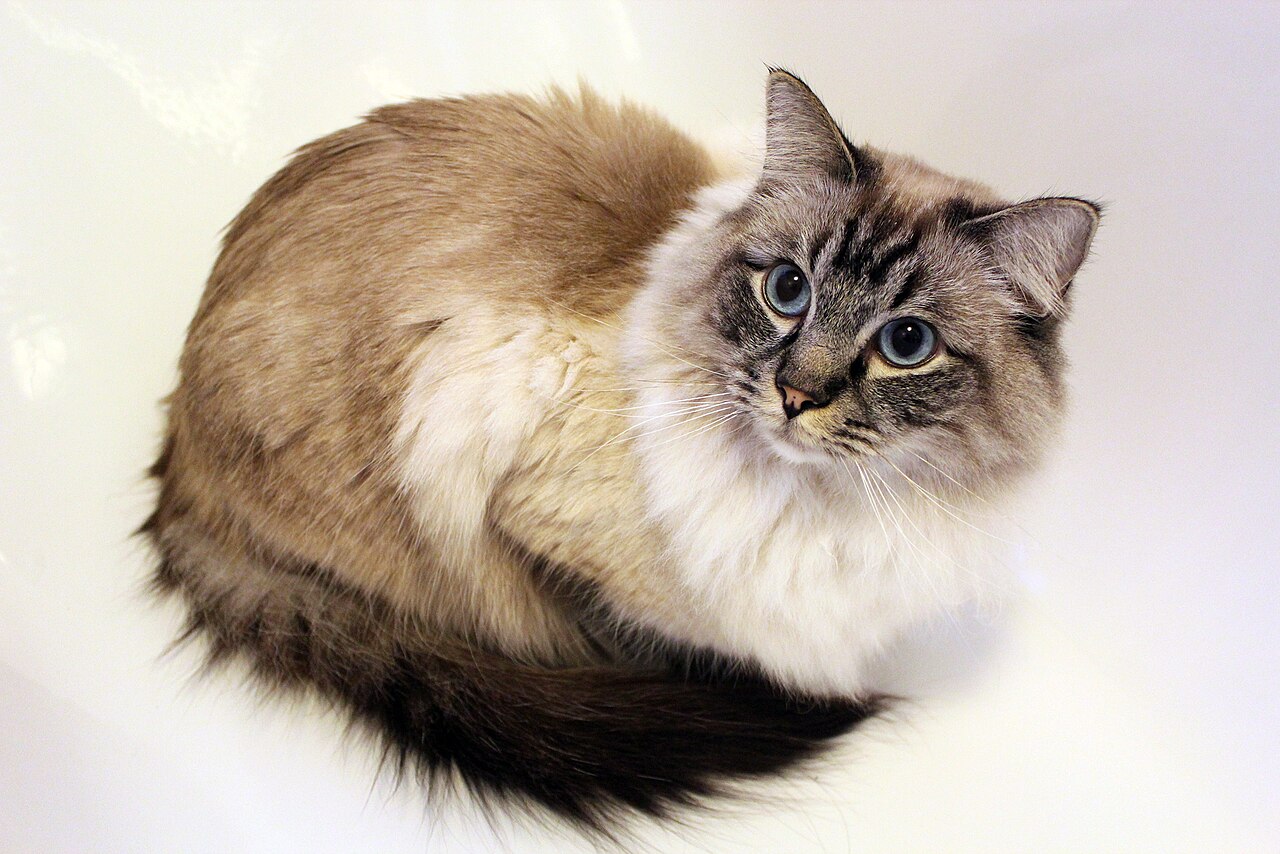
Their coats are semi-long, silky, and dense, with a soft undercoat. The breed is known for its blue eyes and colorpoint pattern — a pale body with darker fur on the face, ears, legs, and tail. Recognized patterns include colorpoint, mitted, and bicolor, and accepted colors include seal, blue, chocolate, lilac, red, and cream.
Size, Growth, and Lifespan
Ragdolls mature slowly. They may not reach full size until they are three to four years old, which is later than most cats. Their average lifespan is 12 to 17 years, with many well-cared-for indoor Ragdolls living into their late teens.
The combination of a large, heavy body and a relaxed temperament means that when a Ragdoll goes limp, it genuinely feels like holding a sack of warm flour — substantial, soft, and completely unhelpful in the best possible way.
Grooming and Care Basics
Ragdolls need brushing two to three times a week to prevent mats, more often during seasonal shedding. They are indoor cats by nature and should be kept inside for their own safety. A high-protein diet formulated for cats, fresh water, regular veterinary checkups, and yearly dental care cover the essentials.
Common Myths About Limp Ragdoll Cats
The breed's unusual behavior has generated a lot of folklore, and not all of it is accurate. Separating fact from fiction helps owners care for their cats properly.
Myth: Ragdolls Feel No Pain
This is false and potentially dangerous. Ragdolls feel pain normally. They may be less likely to complain or struggle, which means owners must watch for subtle signs of discomfort such as hiding, reduced appetite, limping, or changes in grooming habits. A Ragdoll that stops jumping onto furniture may be in pain, not simply being lazy.
Myth: They Are Immune to Fear
Ragdolls experience fear like any other cat. Their calm demeanor reduces the outward drama, but a frightened Ragdoll can still bolt, hide, or become stressed. Respecting the cat's signals matters more than relying on the breed's reputation.
Myth: All Ragdolls Go Limp Every Time
Floppiness varies by individual. Some Ragdolls go completely limp in any position; others relax only with familiar people or only when tired. Age, health, and mood all play a role. A Ragdoll that suddenly stops relaxing when held, when it used to enjoy it, may be experiencing pain or illness and should be evaluated by a veterinarian.
What to Do When Your Ragdoll Goes Limp
Handling a floppy Ragdoll safely is straightforward once you know the basics. The cat is not fragile, but its relaxed state means it will not help support its own weight, so you must do the work.
Safe Holding Technique
- Support the chest with one hand and the hindquarters with the other.
- Keep the cat close to your body to reduce strain on its spine.
- Avoid holding a Ragdoll by the scruff or letting it dangle from the front legs alone.
- Limit upside-down cradling to short periods, and never while standing on a hard floor.
- Put the cat down gently, feet first, and let it choose when to walk away.
When Limpness Is a Warning Sign
Contact a veterinarian promptly if your Ragdoll shows any of the following alongside unusual limpness:
- Difficulty breathing or open-mouth breathing
- Unresponsiveness or confusion
- Vomiting, diarrhea, or refusal to eat for more than 24 hours
- Weakness in the hind legs or an inability to stand
- Sudden collapse that is not triggered by being picked up
These signs point to medical issues such as heart disease, neurological problems, or metabolic disorders, all of which occur in cats regardless of breed. Ragdolls are also known to carry a genetic mutation associated with hypertrophic cardiomyopathy (HCM), which is why responsible breeders screen breeding cats and why regular veterinary checkups matter.
Living With a Floppy Cat: Practical Realities
Sharing a home with a Ragdoll means adjusting a few habits. Because the cat may not resist being picked up, guests and children need guidance on how to hold it properly. Because it trusts easily, it should never be left unsupervised outdoors. Because it seeks company, it may become unhappy if left alone for long stretches.
Most owners find the trade-offs worthwhile. A Ragdoll that goes limp in your arms is offering a kind of trust that most cats never give. It is a breed shaped by human hands over generations, and the floppy response is the clearest expression of that history.
The Floppy Truth, Summed Up
When Ragdoll cats go limp, they are doing exactly what they were bred to do: relaxing completely in the presence of people they trust. The behavior reflects a combination of selective breeding, genetics, early socialization, and a naturally docile temperament, supported by a large, soft, heavily built body. It is not a medical condition, not a sign of weakness, and not a party trick — it is a genuine breed characteristic with real care implications. Enjoy the flop, handle your Ragdoll with proper support, watch for changes in behavior, and keep up with routine veterinary care. Do that, and you will have one of the most affectionate, easygoing companions in the cat world, happily draped across your lap for years to come.
❓ Frequently Asked Questions
💬 Why do Ragdoll cats go limp when you pick them up?
Ragdolls are selectively bred for a docile, trusting temperament, and many simply relax rather than tense up when handled. This floppy response is a breed trait, not a medical condition, though individual cats vary in how relaxed they get.
💬 Is it normal for a Ragdoll to go completely limp?
Yes, going limp during gentle handling is normal and expected for many Ragdolls, especially when they feel safe and comfortable. However, sudden limpness with weakness, collapse, or unresponsiveness is not normal and needs a vet immediately.
💬 Do all Ragdoll cats go limp?
No, not every Ragdoll goes limp, and the trait ranges from mildly relaxed to fully floppy depending on the individual cat. Some Ragdolls are quite active and dislike being held despite the breed's reputation.
💬 When should I worry if my Ragdoll goes limp?
Worry if the limpness comes on suddenly, lasts unusually long, or is paired with symptoms like lethargy, vomiting, trouble breathing, or unresponsiveness. Those signs suggest illness or injury rather than the breed's typical relaxed handling response, so contact your vet.