- The Red-Eyed Tree Frog's Startling Defense Mechanism
- The Physiological Timing of the Flash
- How the Red-Eyed Tree Frog Uses Its Eyes for Survival
- The Science Behind the Red Iris
- The Art of Flash Coloration: More Than Just Eyes
- The Evolutionary Trade-Offs of Having Red Eyes
- Predator Vision and Adaptation
- A Geographic Lens: The Red-Eyed Tree Frog's Natural History
- Lifecycle and Lifespan
- Debunking Myths: Red Eyes Are Not for Mating
- Conservation: Protecting the Red-Eyed Tree Frog
- The Incredible Hypnotist of the Rainforest
- ❓ Frequently Asked Questions
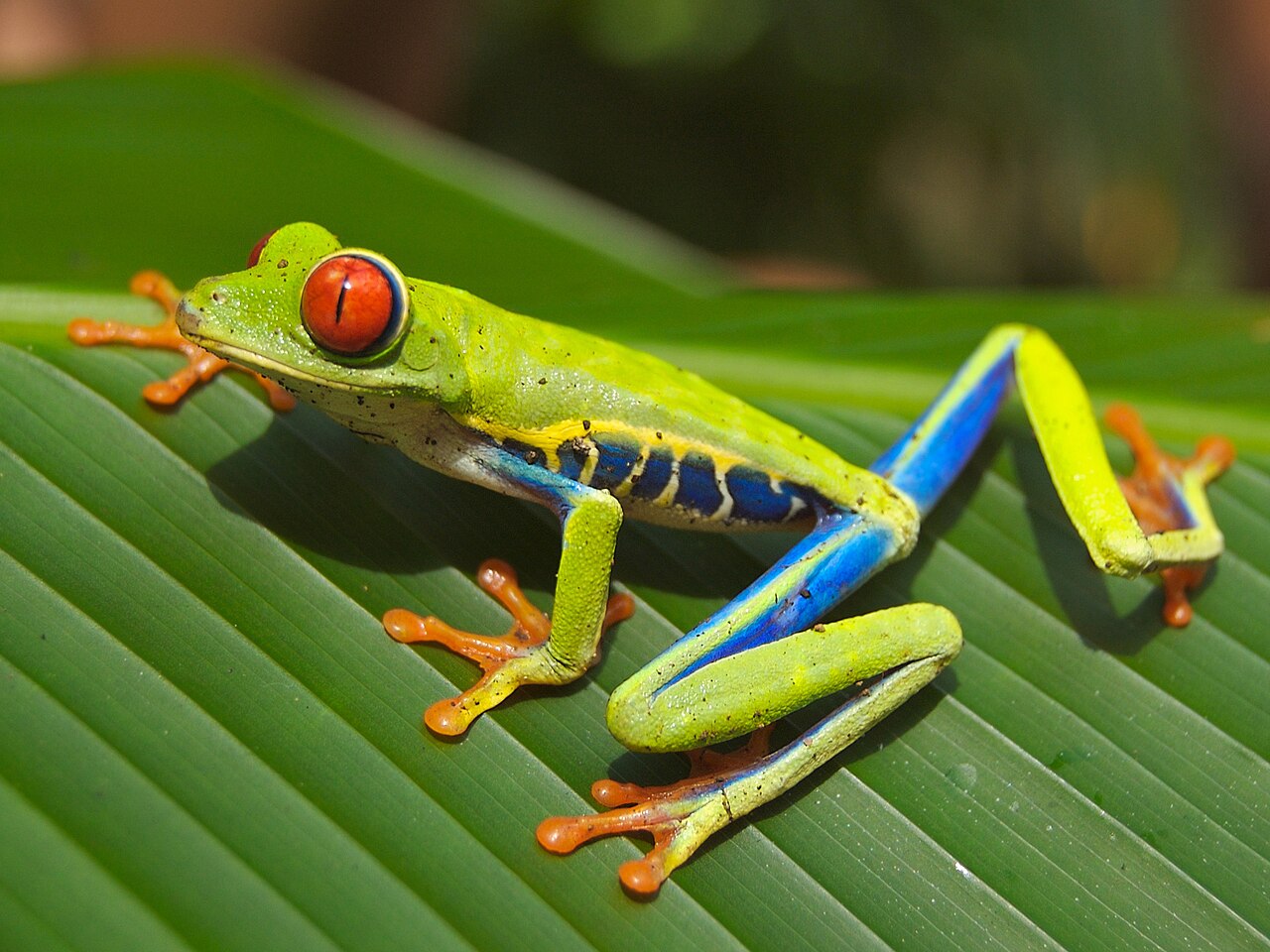
The red-eyed tree frog (Agalychnis callidryas) is the undisputed supermodel of the amphibian world, instantly recognized by its vibrant green body, electric blue-and-yellow flanks, orange toes, and those striking crimson eyes that seem to stare right through you. But behind that famous photograph lies a deeper biological mystery: if camouflage and hiding are the primary survival strategies for these small tree frogs, why would they evolve such loud, shocking, and conspicuous red eyes? The real answer is not about beauty—it is a high-stakes game of psychological warfare, predator deception, and evolutionary genius.
The Red-Eyed Tree Frog's Startling Defense Mechanism
The primary reason for the red-eyed tree frog's shocking appearance is rooted in a specialized survival tactic known as flash coloration, or more specifically, startle coloration. When this frog is resting during the day, it tucks its body tightly against a leaf, closes its bright orange feet to hide their color, and folds its limbs inward. In this sleeping posture, the frog displays only its dorsal (back) surface, which is a camouflaged, smooth green that blends seamlessly with the surrounding rainforest foliage. Daytime predators, such as birds, snakes, and tarantulas, will simply pass it by, mistaking it for a plain green leaf.
However, if a predator happens to notice the frog and gets too close, the frog's response is sudden and dramatic. It instantly opens its large, blood-red eyes wide and flashes its bright blue and yellow sides and orange feet. This explosive burst of color creates a momentary visual shock—a split-second of confusion that is known as a deimatic display. The sudden appearance of such loud, contrasting colors momentarily startles the attacker, causing it to hesitate or recoil. In that tiny window of confusion, the red-eyed tree frog leaps away to safety.
The Physiological Timing of the Flash
Research has shown that this startle reflex is highly effective. A study conducted by behavioral ecologists observed that owls predating on these frogs were momentarily confused by the flashing display, giving the frog a critical extra half-second to escape. This display is so effective because it works on the auditory and visual processing systems of the predator. The frog doesn't just show its eyes; it often lets out a high-pitched distress call simultaneously, amplifying the overwhelming sensory overload.
How the Red-Eyed Tree Frog Uses Its Eyes for Survival
Beyond the psychological shock value, the physical structure of the red-eyed tree frog's eyes is a marvel of nocturnal engineering. These frogs are strictly nocturnal, meaning they sleep during the day and become active at night. Their eyes are specifically adapted to maximize light intake and improve depth perception in dark, dense rainforest canopies.
Unlike the rounded pupils of many other creatures, the red-eyed tree frog possesses vertical slit pupils, much like a domestic cat. This vertical orientation allows the frog to effectively use binocular vision. The narrow slit pupils create a larger depth of field in the vertical plane, which is crucial for judging distances when leaping from branch to branch or snatching insects from the air in three-dimensional space. At night, these pupils dilate enormously to let in as much of the faint moonlight and starlight as possible, giving them excellent scotopic (low-light) vision to hunt the moths, crickets, and flies that are active after dusk.
The Science Behind the Red Iris
The striking red color of the iris itself is a fascinating biological feature. The red hue comes from a combination of factors, including dense blood vessels supplying the iris and specialized pigment cells. But the color also has a functional aspect. Scientists believe the blood vessels appear red because, at night, the frogs' pupils are wide open, and the iris needs a rich blood supply to function efficiently in low-light conditions. In the dark, the color red is nearly invisible to many predators. To a nighttime hunter like a snake or an owl, the frog's open eye appears almost black, blending into the darkness of the leaf, while its green body is the first thing to be detected. The red color is, in a sense, a "cryptic" adaptation for the dark—it disappears from the visual spectrum of predators that are primarily sensitive to blue and green light.
The Art of Flash Coloration: More Than Just Eyes
To truly understand the red-eyed tree frog's strategy, we must look at the entire package, not just the face. The frog's vivid appearance is a coordinated display involving multiple body parts, each contributing to the overall "shock and awe" effect.
- The Red Eyes: The primary shocking agent, drawing the predator's focus immediately to the frog's head.
- Electric Blue Sides: When the frog jumps, its legs extend, exposing the brilliant blue and yellow vertical stripes on its flanks and upper legs. This pattern breaks up the shape of the airborne frog's body, making it harder for a predator to track its exact trajectory.
- Orange or Red Feet: The bright orange toes and fingers serve as "flash distractors." As the frog leaps, its flailing orange feet act as a secondary visual target, drawing the predator's gaze away from the frog's vital organs (head and body) and toward its extremities.
- White Belly: Even the pale, white underbelly has a role—it provides stark contrast against the dark forest floor when the frog jumps downward, making the flash of color even more dazzling.
This multi-modal defense is known as predator deflection. The combination of startling eyes and baffling peripheral colors prevents the predator from getting a "lock" on the frog
The Evolutionary Trade-Offs of Having Red Eyes
Evolution is a game of compromise. If red eyes are so effective at startling predators, why don't all frogs have them? The answer lies in the severe trade-off between camouflage and communication. For a diurnal (daytime) frog, having bright red eyes would be a death sentence, advertising its location to every bird in the canopy. The red-eyed tree frog gets away with its striking appearance because it has a strict behavioral schedule: camouflage by day, spectacle by night.
During the day, the frog must rely entirely on its ability to hide. It minimizes its surface area, flattens its body against the leaf, and shuts its eyes tightly. You might think closing its eyes is just part of sleeping, but it is a crucial part of its defense. By closing its eyes, the frog hides the red signal that would break up its green outline. The hidden blue sides and orange feet also allow the green dorsal region to function as an unbroken, leaf-like surface. The moment this disguise fails, the frog flips the switch, generating a "scare" display that is extremely effective but burns vital energy and puts the frog in a vulnerable position if the predator isn't scared.
Predator Vision and Adaptation
The effectiveness of this strategy depends entirely on the visual capabilities of the frog's predators. Birds are tetrachromats (they see four primary colors), including ultraviolet (UV) light, making their vision exceptionally acute. To a bird, the frog's camouflage works perfectly, but the sudden opening of those eyes is a burst of contrast. Snakes, on the other hand, often rely on heat and vibration rather than color. The dramatic flash doesn't affect them visually, but the sudden movement accompanied by the startle call is enough to make a snake hesitate briefly. This indicates that the red eyes are an evolutionary synergy—designed primarily for birds and mammals, but effective against cold-blooded predators via the accompanying acoustic signal.
A Geographic Lens: The Red-Eyed Tree Frog's Natural History
To appreciate the environment that shaped these incredible eyes, we have to travel to the lowland and foothill tropical rainforests of Central America, ranging from southern Mexico (Yucatan Peninsula) south through Belize, Guatemala, Honduras, Nicaragua, Costa Rica, and into Panama. These frogs prefer to be closer to water sources, usually residing in the vegetation overhanging ponds, slow-moving creeks, and forest pools.
The red-eyed tree frog is a relatively small amphibian. Adults typically reach 2 to 3 inches (5 to 7.5 centimeters) in body length, with females being significantly larger than males. Their diet is exclusively carnivorous, consisting primarily of moths, crickets, flies, grasshoppers, and other small invertebrates. They are opportunistic feeders, waiting patiently on leaves for insects to fly by, then using their powerful leg muscles and sticky toe pads to launch themselves at their prey.
Lifecycle and Lifespan
The life of a red-eyed tree frog is intimately tied to water. They have a lifespan of about five years in the wild, though they can exceed ten years in captivity. Their breeding season coincides with the rainy season, typically from May through November. Males gather around ponds and emit a loud "chack-chack" call to attract mates. The female then selects a mate and leads him to a suitable leaf overhanging the water. Here, she lays a clutch of around 20 to 50 gelatinous eggs, which the male fertilizes externally.
One of the most remarkable behaviors is the hatching of the tadpoles. The embryos develop inside the eggs for about 6 to 7 days. When they are ready to hatch, they detect vibrations from predators attacking the eggs or the threat of becoming dried out. They perform dramatic, precocious hatching—wiggling out of the egg and dropping directly into the water below, where they will spend the next 1 to 3 months developing into juvenile, fully-formed frogs.
Debunking Myths: Red Eyes Are Not for Mating
When people think of vividly colored animals, the immediate assumption often leans toward sexual selection. Bright colors on a male bird or a male lizard are often there to attract a mate. However, for the red-eyed tree frog, this is a myth. The red eyes are not a sexual signal. In fact, both male and female red-eyed tree frogs possess the exact same bright red eyes, blue sides, and orange feet. There is no sexual dimorphism in their coloration.
If the red eyes were a mating display, we would expect to see a difference in size, intensity, or coloring between the sexes. Instead, the uniformity across the species confirms that the adaptation is purely for survival. In the dark at night, visual signals to potential mates are less important than acoustic signals. Male frogs rely heavily on their calls to attract females. The female chooses her mate based on the specific quality and frequency of the male's "chack" call, which indicates his size and health, rather than the brightness of his eyes. The red eyes serve a single, vital purpose: keeping the frog alive long enough to breed.
Conservation: Protecting the Red-Eyed Tree Frog
While the red-eyed tree frog is currently listed as Least Concern by the International Union for Conservation of Nature (IUCN), its populations are depleting in certain regions due to habitat loss, deforestation, climate change, and the exotic pet trade. These frogs are highly dependent on pristine, humid, lowland forests with access to clean water for breeding.
Their vulnerability to environmental changes makes them excellent bioindicators. Their permeable skin absorbs toxins and pollutants directly from the environment and water sources. A sudden decline in a red-eyed tree frog population can alert conservationists to severe ecological issues, such as excessive pesticide runoff in the rainforest or the devastating effects of the chytrid fungus, which has decimated amphibian populations globally. Conservation efforts focus on preserving their natural rainforest habitats, establishing biological corridors, and promoting sustainable ecotourism, recognizing that the beauty of these frogs is a direct product of the complex, ancient forests they inhabit.
The Incredible Hypnotist of the Rainforest
So, why do red-eyed tree frogs have red eyes? Because they are masters of illusion. The red eyes are not simply a decoration, but a carefully honed weapon against predators, a paradoxical disguise that relies on being intensely visible for a split second to ensure a lifetime of invisibility. They are a perfect example of evolutionary compromise, showcasing how a creature can use extreme extravagance to achieve the ultimate mundane goal: survival. The next time you see that iconic photograph, remember you are not looking at a pretty face—you are looking at one of nature's most brilliant conservation secrets, a hypnotist who uses fear, color, and sheer audacity to outwit death in the jungle canopy.
❓ Frequently Asked Questions
💬 Why do red-eyed tree frogs have red eyes?
The bright red eyes are a defense mechanism called a startle display. When a predator gets close, the frog suddenly opens its eyes and flashes its bright colors to surprise the threat, giving it a moment to escape. The red color also helps the frog see well at night because it is nocturnal.
💬 Are red-eyed tree frogs born with red eyes?
No, they are not. Tadpoles and young froglets have brownish or golden eyes, and the bright red color develops as they mature into adults.
💬 Does the red eye color help red-eyed tree frogs camouflage?
Yes, it actually helps them stay hidden during the day. When sleeping on a green leaf, they keep their eyes closed and tuck their bright legs in, so the red eyes are completely hidden and only the green body is visible, blending in with the leaves.
💬 Do red-eyed tree frogs use their red eyes to warn predators that they are poisonous?
The bright red eyes are a warning signal, but the frog is not truly poisonous to touch. The startling display tricks predators into thinking the frog is dangerous or toxic, giving the frog a better chance to get away.