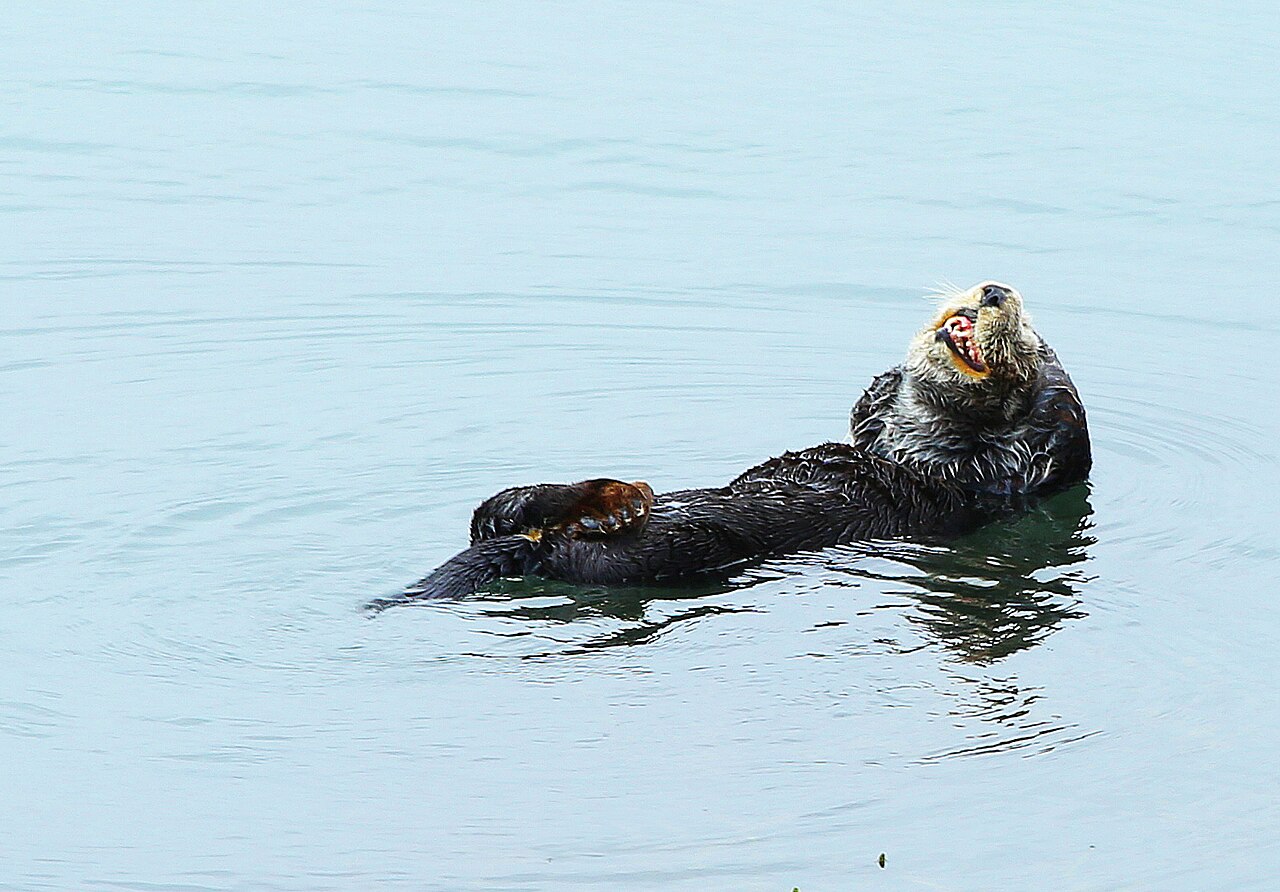
- Meet the Sea Otter: A Marine Mammal Unlike Any Other
- Why Do Sea Otters Hold Hands? The Science Behind the Cuteness
- Anchoring: Kelp Beds and the "Raft" Strategy
- Mother and Pup: The Most Important Grip of All
- How Sea Otters Hold Hands: Paws, Posture, and Sleep
- Why Holding Hands Matters: Survival, Not Just Cuteness
- Do All Sea Otters Hold Hands? Species, Sex, and Situation
- Beyond Hand-Holding: Other Remarkable Otter Behaviors
- Tool Use and the Famous Rock Pocket
- Grooming: The Full-Time Job
- Feeding, Foraging, and the Kelp Connection
- Vocalizations and Communication
- Conservation: Why These Behaviors Are Worth Protecting
- The Cute Truth About Sea Otters Holding Hands
- ❓ Frequently Asked Questions
If you have ever seen a photograph of two sea otters drifting on their backs, paws clasped like a couple on a first date, you already know why the question "why do sea otters hold hands?" goes viral every few months. The image is almost impossibly charming, and it has made the sea otter one of the most beloved marine mammals on the planet. But behind that adorable behavior is a set of hard practical reasons rooted in survival, physics, and the otter's unusual social life. Sea otters hold hands — or more precisely, they grasp one another's paws or forelegs — primarily to keep from drifting apart while they rest, sleep, and eat on the surface of the ocean. In this article, we will unpack exactly how and why they do it, what else is going on in those famous "rafts," and why this single behavior tells us so much about one of the most remarkable animals in the sea.
Meet the Sea Otter: A Marine Mammal Unlike Any Other
Before diving into the hand-holding itself, it helps to understand the animal doing the holding. The sea otter (Enhydra lutris) is the heaviest member of the weasel family, the Mustelidae, which also includes river otters, badgers, wolverines, and ferrets. Adult males typically weigh between 22 and 45 kilograms (49–99 pounds) and can measure up to 1.5 meters (about 5 feet) from nose to tail tip, while females are somewhat smaller, usually 14 to 33 kilograms (31–73 pounds). That makes them far larger than their freshwater cousins.
Sea otters are found along the coasts of the North Pacific Ocean, from Japan and Russia's Kuril Islands and Kamchatka Peninsula, across the Aleutian Islands and Alaska, down the coast of British Columbia, Washington, and Oregon, to central California. A small, reintroduced population also lives in Elkhorn Slough near Monterey Bay. They rarely venture more than a kilometer or so from shore, preferring shallow coastal waters, kelp forests, and estuaries where they can dive to the seafloor for food.
Their diet is famously expensive in energy terms. Sea otters eat sea urchins, crabs, clams, mussels, abalone, snails, scallops, and occasionally fish and octopus. Because they have no blubber, they rely instead on an incredibly dense coat — up to one million hairs per square inch, the densest fur of any mammal — plus a furious metabolism. A sea otter must eat roughly 20 to 25 percent of its body weight every single day just to stay warm in cold water. For a 30-kilogram otter, that is about 6 to 7.5 kilograms of shellfish daily. This constant need to feed shapes nearly everything about otter behavior, including why they spend so much time floating at the surface rather than swimming.
In the wild, sea otters typically live 10 to 15 years, with females often outliving males. They reach sexual maturity around three to five years of age and usually produce a single pup per year after a gestation period of about six months, sometimes with a delayed implantation that stretches the interval. Pups are born at sea, weigh only about 1.5 to 2.3 kilograms (3–5 pounds), and are completely dependent on their mothers for several months.
Why Do Sea Otters Hold Hands? The Science Behind the Cuteness
The core answer is simple: sea otters hold hands to avoid drifting apart. The ocean surface is not a calm, stationary place. Tides, currents, wind, and waves constantly push floating objects — including otters — in different directions. An otter resting alone can easily drift hundreds of meters or more while asleep, and a mother can lose track of her pup in minutes. Linking paws creates a physical connection that keeps a group together with almost no effort, so the animals can relax instead of paddling constantly to stay in place.
Anchoring: Kelp Beds and the "Raft" Strategy
Hand-holding is only part of the story. Sea otters also use kelp. When an otter wants to nap without drifting, it will often wrap itself in a strand of giant kelp or bull kelp, rolling over and over until the fronds drape across its body like a blanket. This anchors the animal in place. In areas with abundant kelp, otters may not need to hold hands at all, because each one can simply tether itself to the forest. But in open water, or in areas where kelp is sparse — including many parts of California where kelp has declined — holding paws becomes the practical alternative.
Otters also form what biologists call "rafts": groups of otters resting together on the surface. Rafts can be small, just two or three animals, or large, sometimes numbering dozens or even more than a hundred individuals in places like Alaska. Within a raft, otters may hold hands in pairs or clusters, and mothers frequently hold their pups on their chests rather than by the paw.
Mother and Pup: The Most Important Grip of All
For a mother sea otter, holding on is not a cute quirk but a matter of life and death. A newborn pup cannot swim well and cannot regulate its own body temperature effectively. The mother carries the pup on her chest almost constantly, grooming its fur to trap air and keep it warm, and nursing it frequently. When she needs both paws free to dive for food, she may leave the pup floating on the surface — but only after wrapping it securely in kelp or leaving it in a sheltered spot. If a pup does drift away, it cries loudly, and the mother responds immediately. Observers have reported mothers gripping a pup's paw or scruff with their own forepaw while resting, keeping the pair together even as currents push them around.
Pups stay with their mothers for roughly six to eight months, and in some populations up to a year. During that time, the mother's ability to keep track of her pup is the single biggest factor in whether it survives. Hand-holding and kelp-wrapping are two tools in that ongoing job.
How Sea Otters Hold Hands: Paws, Posture, and Sleep
Sea otters are built for life on the surface. Their hind limbs are large, flat, and webbed, positioned far back on the body and used as flippers for swimming and steering. Their forelimbs are short, dexterous, and clawed, used for grooming, cracking open shells, and — yes — grasping. When an otter floats on its back, its forepaws are free, and it can reach out to a neighbor with surprising precision.
The typical hand-holding posture looks like this: two otters lie side by side on their backs, each with one forepaw extended, and their paws touch or overlap. Sometimes one otter grips the other's wrist, foreleg, or even the loose skin at the shoulder. In larger rafts, you may see a chain of otters linked in a loose line. The grip is not a tight, locked hold; it is more of a light, resting contact that is enough to keep them moving together without restricting either animal's movement.
Sleep is where this behavior matters most. Sea otters are active in bursts and sleep in short periods throughout the day and night. Because they must surface to breathe, they cannot simply sink into a deep, oblivious slumber the way a seal might. Instead, they nap at the surface, often in rafts, and the paw-to-paw connection lets them drift safely together. When one otter wakes and moves, the tug often wakes its partner, which helps the group stay coordinated.
Why Holding Hands Matters: Survival, Not Just Cuteness
It is tempting to interpret hand-holding as affection, and there is no reason to think otters get nothing pleasant out of it. But from a biological standpoint, the behavior solves several concrete problems at once.
- Energy conservation: Paddling constantly to stay in position burns calories. An otter that can rest while linked to a partner conserves energy for diving and hunting.
- Group cohesion: Rafts provide safety in numbers. Staying together makes it harder for a predator such as a shark or killer whale to isolate an individual.
- Pup protection: Keeping a pup close prevents it from being swept away or lost in rough water.
- Social bonding: Otters are highly social animals, and physical contact — grooming, touching, holding — reinforces relationships within a group.
- Warmth: Huddling together, even loosely, reduces heat loss in cold water, which matters enormously for an animal with no blubber.
In other words, the behavior that looks like a romantic gesture is really a multipurpose survival strategy. It is one of those rare cases where the cute explanation and the scientific explanation point in the same direction.
Do All Sea Otters Hold Hands? Species, Sex, and Situation
Not every sea otter holds hands, and not all the time. The behavior is most commonly observed in resting rafts, and it is especially associated with females and pups, and with groups in areas where kelp anchoring is unreliable. Males also raft together, particularly in "bachelor" groups outside the breeding season, and they may hold paws or simply rest in close contact.
It is worth noting that the other otter species do not generally do this. River otters (Lontra canadensis) are more solitary and territorial, and they spend much of their time on land or in freshwater, where currents are not the same kind of problem. Giant otters of South America live in family groups and are highly social, but they swim and rest differently. The sea otter's floating, back-stroke lifestyle is what makes paw-holding so useful.
Even within sea otters, individual variation exists. Some otters seem to prefer wrapping in kelp; others link up with neighbors. In crowded rafts, otters may hold hands with more than one partner at a time, forming loose clusters. Researchers studying otters in California, Alaska, and Russia have all documented the behavior, though it is most photogenic — and most frequently photographed — in the calm, kelp-rich waters off Monterey Bay and the Aleutian Islands.
Beyond Hand-Holding: Other Remarkable Otter Behaviors
The paw-holding habit is only one entry in a long list of unusual sea otter behaviors. Understanding these helps put the hand-holding in context.
Tool Use and the Famous Rock Pocket
Sea otters are one of the few non-primate mammals known to use tools routinely. When feeding on hard-shelled prey such as clams, mussels, and sea urchins, an otter will often balance a flat rock on its chest and smash the shell against it. Some otters carry a favorite rock in a loose fold of skin under the foreleg, called the "rock pocket," and reuse it dive after dive. This behavior has been documented for decades and is passed down culturally: mothers teach pups which foods to eat and how to open them.
Grooming: The Full-Time Job
Because sea otters depend on trapped air in their fur for insulation, grooming is not vanity — it is thermoregulation. Otters spend several hours a day grooming, rubbing, blowing air into their coats, and rolling to distribute natural oils. A dirty or matted coat loses its insulating power, and an otter with compromised fur can die of hypothermia. This is also why oil spills are so catastrophic for the species: the oil destroys the fur's ability to trap air.
Feeding, Foraging, and the Kelp Connection
Sea otters are a keystone species. By eating sea urchins, they protect kelp forests from being overgrazed. Where otters have been removed, urchin populations explode and kelp forests collapse into "urchin barrens." Where otters have returned, kelp recovers, along with the fish, invertebrates, and other species that depend on it. This ecological role is one reason otter conservation matters far beyond the otters themselves.
Vocalizations and Communication
Otters are not silent animals. Mothers and pups exchange a distinctive high-pitched whine or coo. Adults may hiss, growl, or screech when threatened or competing for food or mates. In a raft, these sounds help animals keep track of one another even when they are not physically touching.
Conservation: Why These Behaviors Are Worth Protecting
Sea otters were hunted nearly to extinction for their fur during the 18th and 19th centuries. The maritime fur trade reduced a global population once estimated at 150,000 to 300,000 animals to a few small remnant groups — perhaps as few as 1,000 to 2,000 individuals by the early 1900s. Thanks to international protection, reintroductions, and the Marine Mammal Protection Act of 1972 in the United States, some populations have recovered. The California population has grown from a few dozen animals in the 1930s to around 3,000 today, though it remains threatened and is listed as a federally threatened subspecies.
Today the main threats are oil spills, disease, shark bites, entanglement in fishing gear, and — increasingly — the loss of kelp forests due to warming oceans and urchin population booms. Climate change and marine heat waves have stressed kelp in parts of California, which in turn affects where otters can anchor and rest. When kelp is scarce, behaviors like rafting and hand-holding become even more important for keeping groups together.
Protecting sea otters means protecting the coastal ecosystems they live in: clean water, healthy kelp, and abundant shellfish. It also means respecting wildlife. Otters in popular viewing areas such as Moss Landing and Morro Bay draw crowds, and well-meaning observers sometimes get too close. Disturbing a resting raft forces otters to spend energy they cannot spare. The best way to enjoy them is from a distance, with binoculars or a telephoto lens.
The Cute Truth About Sea Otters Holding Hands
So why do sea otters hold hands? Because the ocean is always moving, because they sleep on the surface, because pups are small and currents are strong, and because an animal with no blubber cannot afford to waste energy paddling in place. The behavior is a practical solution to a real problem — and it happens to be one of the most endearing things in the animal kingdom. It is a reminder that cuteness and survival are not opposites. The same grip that keeps a mother and pup together in rough water is the grip that made the world fall in love with sea otters. If you ever get the chance to watch a raft of otters drifting through a kelp bed, take a moment to appreciate what you are seeing: not just a sweet photo opportunity, but a finely tuned adaptation that has helped this species survive in one of the harshest environments on Earth.
❓ Frequently Asked Questions
💬 Why do sea otters hold hands?
Sea otters often hold hands, or more precisely grasp each other's paws, to keep from drifting apart while they rest or sleep on the water's surface. Since they float individually, linking together forms a loose raft that keeps the group, especially mothers and pups, from being separated by currents or tides.
💬 Do sea otters hold hands while sleeping?
Yes, they frequently link paws while resting or sleeping so they don't float away from one another. Mothers also often hold their pups on their chests, and groups of otters may wrap themselves in kelp as an added anchor while they doze.
💬 Is holding hands unique to sea otters, or do other animals do it too?
Holding paws to stay together is especially associated with sea otters, though other social animals also stay in close physical contact for safety and warmth. Among otters, this rafting behavior is most noticeable in sea otters because they spend so much time floating in open water.
💬 Do sea otters hold hands with the same partner?
Sea otters don't form lifelong hand-holding pairs; they typically raft with whichever otters are nearby, often other females and pups. Mothers and their pups stay closely linked, but adult males and females generally associate only briefly for mating.