- The Unique Anatomy of the Seahorse Tail
- Square Plates vs. Round Tubes
- Muscle and Tendon Coordination
- How the Seahorse Tail Functions as an Anchor
- Grip Strength and Adaptability
- Habitat-Specific Anchoring
- The Seahorse Tail as a Defense Mechanism
- Camouflage and Tail Posture
- Escape Behavior
- Reproduction and the Role of the Seahorse Tail
- Tail Locking in Courtship
- Paternal Care and Tail Stability
- Evolutionary Origins of the Seahorse Tail
- Fossil Evidence and Transitional Forms
- Adaptive Advantages of the Prehensile Tail
- Biomimicry and Scientific Inspiration from the Seahorse Tail
- Armor Design and Protective Gear
- Robotics and Grasping Mechanisms
- Conservation and the Future of Seahorse Tails
- Threats to Tail Function
- Conservation Efforts
- Conclusion: The Enduring Wonder of the Seahorse Tail
- ❓ Frequently Asked Questions
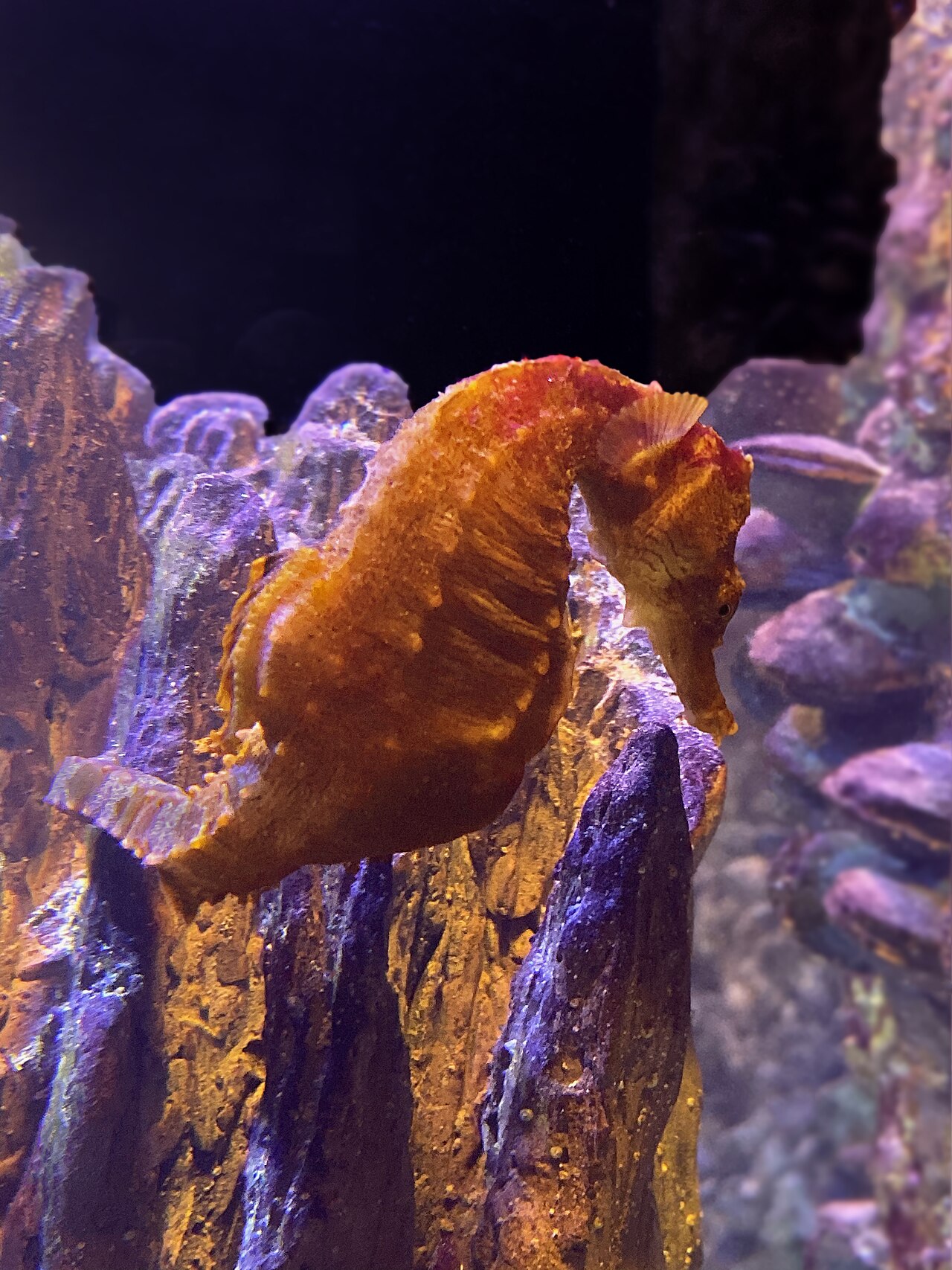
The seahorse tail is one of the most extraordinary structures in the natural world, combining flexibility, strength, and a unique grasping ability that sets these fish apart from all others. Unlike the tails of most fish, which are primarily used for propulsion, the seahorse tail has evolved into a prehensile, armor-plated appendage that serves as both an anchor and a defense mechanism. This remarkable adaptation allows seahorses to thrive in dynamic marine environments, from seagrass meadows to coral reefs, where currents and predators pose constant challenges.
The Unique Anatomy of the Seahorse Tail
The seahorse tail is composed of a series of bony, square-shaped plates arranged in a segmented, interlocking structure. This design is unlike the flexible, finned tails of typical fish, which are built for swimming speed. Instead, the seahorse tail is prehensile, meaning it can curl and grip objects like a monkey's tail. Each segment, or vertebra, is protected by a ring of bony armor, and these rings are connected by flexible joints that allow the tail to coil tightly around seagrass, coral branches, or even the tail of a mate.
Square Plates vs. Round Tubes
Biomechanical research has revealed that the seahorse tail's square cross-section is a key innovation. Unlike round tails, which are common in other animals, the square shape provides greater resistance to twisting and crushing. A study published in Science in 2015 demonstrated that the square plates distribute stress more evenly, making the tail up to 40% more resistant to compression than a round structure of the same size. This is critical for seahorses, which often anchor themselves in strong currents or during storms.
Muscle and Tendon Coordination
Inside the tail, a specialized arrangement of muscles and tendons enables precise control. The seahorse can curl its tail in any direction, with a range of motion that includes tight spirals and gentle curves. This muscular control is essential for feeding, as seahorses remain stationary while waiting for prey, and for reproduction, during which males use their tails to secure themselves during courtship displays.
How the Seahorse Tail Functions as an Anchor
Seahorses are poor swimmers, relying on their small dorsal fin for slow, vertical propulsion and their pectoral fins for steering. Their weak swimming ability means they cannot chase prey or flee from predators effectively. Instead, the seahorse tail acts as a living anchor, allowing them to hold onto structures in their habitat. By wrapping their tail around seagrass blades, coral branches, or mangrove roots, seahorses can remain stationary even in turbulent water. This behavior conserves energy and makes them less visible to predators like crabs, tuna, and rays.
Grip Strength and Adaptability
The grip of a seahorse tail is surprisingly strong for an animal that weighs only a few grams. A large seahorse, such as the Pacific seahorse (Hippocampus ingens), can exert a gripping force equivalent to several times its body weight. This strength comes from the interlocking plates and the tension of the tendons, which lock the tail in place without constant muscular effort. Seahorses can maintain their grip for hours, even while sleeping or digesting food.
Habitat-Specific Anchoring
Different seahorse species have adapted their tail use to specific habitats. For example, the common seahorse (Hippocampus kuda) inhabits seagrass beds and uses its tail to wrap around long, flexible blades. In contrast, the pygmy seahorse (Hippocampus bargibanti), which lives exclusively on gorgonian corals, has a shorter, more robust tail that can grip the rigid coral branches. This specialization reduces competition and allows seahorses to occupy diverse ecological niches.
The Seahorse Tail as a Defense Mechanism
Beyond anchoring, the seahorse tail serves as a critical defense tool. When threatened, seahorses can curl their tails into tight, protective coils, shielding their vulnerable body. The bony plates act as armor, making it difficult for predators to crush or swallow them. Additionally, the tail's flexibility allows seahorses to wedge themselves into crevices or among dense vegetation, where predators cannot follow.
Camouflage and Tail Posture
Seahorses are masters of camouflage, and their tails play a role in this. Some species, such as the leafy seadragon (a close relative), have tail appendages that mimic the shape of seaweed. While seahorses themselves lack such elaborate extensions, they can use their tail to hold onto objects that help them blend in, such as a piece of algae or a coral branch. By remaining perfectly still with their tail curled, they become nearly invisible to both prey and predators.
Escape Behavior
In extreme danger, seahorses can release their grip and use their tail to flick themselves away from a threat. This rapid movement is not a swim but a quick escape that allows them to reposition or drop into deeper water. While not as fast as fish, this behavior can be enough to avoid a sudden attack.
Reproduction and the Role of the Seahorse Tail
Seahorses are famous for their unique reproductive system, where males carry fertilized eggs in a brood pouch. The seahorse tail plays a vital role in this process. During courtship, males and females perform elaborate dances, often intertwining their tails. This tail-locking behavior strengthens their bond and synchronizes their movements before egg transfer. The male then uses his tail to secure himself to a stable object while carrying the developing embryos, ensuring he is not swept away by currents.
Tail Locking in Courtship
The "tail lock" is a characteristic behavior of many seahorse species. The pair will grasp each other's tails and spin together in the water column, often for hours. This ritual not only reinforces the pair bond but also allows them to coordinate the timing of egg release and fertilization. The strength and flexibility of the tail are essential for this display, as the animals must maintain their grip while moving in sync.
Paternal Care and Tail Stability
After mating, the male seahorse carries the eggs in his brood pouch for 10 to 25 days, depending on the species. During this period, the male uses his tail to anchor himself to a secure spot, such as a seagrass stem or coral branch. This stability is crucial for the developing embryos, as it reduces stress and ensures a steady supply of oxygen through the pouch's membranes. The male's tail grip also allows him to remain hidden from predators while he is more vulnerable due to the weight and bulk of the brood.
Evolutionary Origins of the Seahorse Tail
The seahorse tail is a product of millions of years of evolution, shaped by the pressures of living in shallow, complex marine environments. Seahorses belong to the family Syngnathidae, which also includes pipefish and seadragons. Fossil evidence suggests that early syngnathids had straight tails, similar to modern pipefish. Over time, the tail became curved and prehensile, allowing seahorses to adopt their upright posture and specialized lifestyle.
Fossil Evidence and Transitional Forms
The oldest known seahorse fossils, dating back around 13 million years to the Miocene epoch, show an intermediate form between pipefish and modern seahorses. These fossils, found in Slovenia, have a slightly curved tail but lack the fully prehensile capability of today's species. By around 5 million years ago, fossils from the Pliocene show tails that are nearly identical to those of living seahorses, indicating that the unique tail structure was well-established by then.
Adaptive Advantages of the Prehensile Tail
The shift from a swimming tail to a grasping tail allowed seahorses to exploit a new ecological niche: the epibenthic zone, just above the seafloor. By anchoring themselves, they could ambush small crustaceans and plankton without expending energy on swimming. This strategy was so successful that seahorses have since diversified into at least 46 species, ranging from the tiny pygmy seahorse, which measures just 1.5 centimeters (0.6 inches) in length, to the giant seahorse (Hippocampus abdominalis), which can reach 35 centimeters (14 inches).
Biomimicry and Scientific Inspiration from the Seahorse Tail
The unique properties of the seahorse tail have inspired engineers and scientists to develop new technologies. Its combination of flexibility and strength, achieved through square plates and interlocking joints, offers lessons for robotics, materials science, and medical devices. Researchers at the University of California, San Diego, have created robotic arms modeled on the seahorse tail that can bend and grip while resisting damage. These designs are being explored for applications in search-and-rescue operations, where robots must navigate tight spaces, and in minimally invasive surgery, where flexible instruments are needed.
Armor Design and Protective Gear
The segmented armor of the seahorse tail has also influenced the development of protective gear for humans. By mimicking the overlapping plates, engineers have created flexible yet strong materials for use in body armor and protective clothing. These materials can absorb impacts while allowing freedom of movement, much like the seahorse tail protects its owner from predators and environmental hazards.
Robotics and Grasping Mechanisms
In robotics, the seahorse tail's ability to grip without slipping has led to new designs for manipulators and grippers. Traditional robotic grippers rely on rigid structures, but seahorse-inspired designs use flexible, segmented arms that can conform to objects of various shapes and sizes. This is particularly useful for handling delicate items, such as fruit or electronic components, without causing damage.
Conservation and the Future of Seahorse Tails
Seahorses face numerous threats in the wild, including habitat destruction, overfishing, and the illegal wildlife trade. Their unique tails make them particularly vulnerable: seahorses are often caught as bycatch in trawling nets, and they are also targeted for use in traditional medicine and as curiosities. The destruction of seagrass beds and coral reefs, their primary habitats, further reduces their ability to anchor and survive.
Threats to Tail Function
When seahorse habitats are degraded, the structures they rely on for anchoring—seagrass, corals, and mangroves—become sparse or damaged. This forces seahorses to expend more energy swimming or to settle in suboptimal locations where they are more exposed to predators. Additionally, pollution and climate change can weaken the grip of seahorse tails by causing physical stress or disease.
Conservation Efforts
Conservation organizations, such as Project Seahorse, work to protect seahorse populations by establishing marine protected areas, promoting sustainable fishing practices, and combating the illegal trade. Research into seahorse biology, including their tail mechanics, helps inform these efforts by identifying the most critical habitats and behaviors to preserve. Public education also highlights the importance of seahorses as indicators of ocean health.
Conclusion: The Enduring Wonder of the Seahorse Tail
From its square, armored plates to its prehensile, grasping ability, the seahorse tail is a masterpiece of evolutionary design. It allows these delicate fish to anchor themselves in turbulent waters, defend against predators, perform intricate courtship dances, and care for their young. Beyond its biological role, the seahorse tail inspires new technologies and reminds us of the incredible diversity of life in our oceans. Protecting seahorses and their habitats ensures that this unique adaptation—and the countless others that depend on it—will continue to captivate and inform us for generations to come.
❓ Frequently Asked Questions
💬 What makes seahorse tails different from other animals' tails?
Seahorse tails are prehensile, meaning they can grip and wrap around objects, unlike most fish tails which are used for swimming. Their square, segmented shape provides strength and flexibility for anchoring to seagrass or coral.
💬 Why do seahorses have square tails instead of round ones?
The square cross-section of a seahorse tail offers better crush resistance and a stronger grip than a round tail, helping them withstand ocean currents and predators. This unique shape also allows them to coil tightly around objects without damaging their skeleton.
💬 How do seahorses use their tails for survival?
Seahorses use their tails to anchor themselves to seaweed, coral, or seagrass, which prevents them from being swept away by strong currents. This also helps them ambush prey and hide from predators in their environment.
💬 Can a seahorse regrow its tail if it gets damaged?
No, seahorses cannot regrow their tails like some lizards or starfish. Tail damage can be serious because their bony plates and structure are not designed for regeneration, often affecting their ability to grip and survive.