- The Short Answer: We Made Them This Way
- What Happens If You Don't Shear a Sheep?
- Overheating
- Parasites and Skin Disease
- Mobility and Hygiene Problems
- How Sheep Shearing Actually Works
- The Position
- The Tools
- The Fleece
- How Often Do Sheep Need Shearing?
- The Economics and Ethics of Wool Production
- The Value of a Fleece
- Contract Shearing Teams
- Animal Welfare Standards
- Common Myths About Sheep Shearing
- Sheep Shearing Around the World
- Australia and New Zealand
- The United Kingdom
- North America
- Developing Regions
- What Happens to the Wool After Shearing?
- The Bottom Line on Sheep Shearing
- ❓ Frequently Asked Questions
Every spring, across farms from the English Cotswolds to the Australian outback, a strange and ancient ritual plays out: humans wrestle sheep onto their rumps, buzz off their thick fleeces in a few sweeping passes, and release the animals looking half their former size. Sheep shearing is one of the oldest partnerships between humans and livestock, dating back thousands of years, yet it still puzzles onlookers. Why do we take a sheep's wool? Doesn't the animal need it? Wouldn't it just grow back? The answers reveal a fascinating story about domestication, biology, and the unusual bargain sheep have struck with humanity.
The Short Answer: We Made Them This Way
The single most important fact about sheep shearing is this: modern domestic sheep cannot shed their wool on their own. Unlike wild sheep, which grow a thick winter coat and then molt it naturally each spring, domestic sheep have been selectively bred for thousands of years to produce ever more wool — and to keep producing it year-round.
This is a classic case of unintended consequences in domestication. When humans bred sheep for maximum fleece, they accidentally stripped away the natural shedding cycle. A wild mouflon, the ancestor of most domestic sheep, grows a short, hairy coat in summer and a warm undercoat in winter, then sheds the undercoat in spring. A domestic Merino, by contrast, just keeps growing wool. Left unshorn, a domestic sheep's fleece becomes a serious welfare problem.
So the honest answer to "why do sheep get sheared?" is: because we bred them to need it. Shearing is not a luxury or a cosmetic choice — for many breeds, it is a life-saving necessity.
What Happens If You Don't Shear a Sheep?
It is tempting to think a sheep would simply be warmer and happier with more wool. In reality, an unshorn fleece becomes a deadly burden.
Overheating
Wool is an outstanding insulator. That is wonderful in February and dangerous in July. A sheep carrying a full year or more of fleece can suffer heat stress in warm weather, leading to lethargy, loss of appetite, and in severe cases, death. Sheep cannot sweat effectively through a massive fleece, and they cannot take off their coat the way a human removes a jumper.
Parasites and Skin Disease
A thick, matted fleece is a five-star hotel for parasites. Fly strike — where blowflies lay eggs in soiled wool and the hatching maggots burrow into the sheep's skin — is one of the most serious and painful conditions in sheep farming. Fleece rot, lice, and fungal infections all thrive in dense, damp wool. Regular shearing is a core part of flock health management.
Mobility and Hygiene Problems
Extremely overgrown fleeces can blind a sheep, trap urine and feces against the skin, and make walking difficult. There are well-documented cases of sheep found in the wild — often escapees or abandoned animals — carrying fleeces so heavy they could barely stand. In 2015, an Australian sheep named Chris, found near Canberra, was shorn of a fleece weighing 40.45 kilograms (about 89 pounds), a world record at the time. Chris had been living feral for years and his fleece had grown into a massive, felted mat. He survived, but the story illustrates how quickly an unmanaged fleece becomes a crisis.
How Sheep Shearing Actually Works
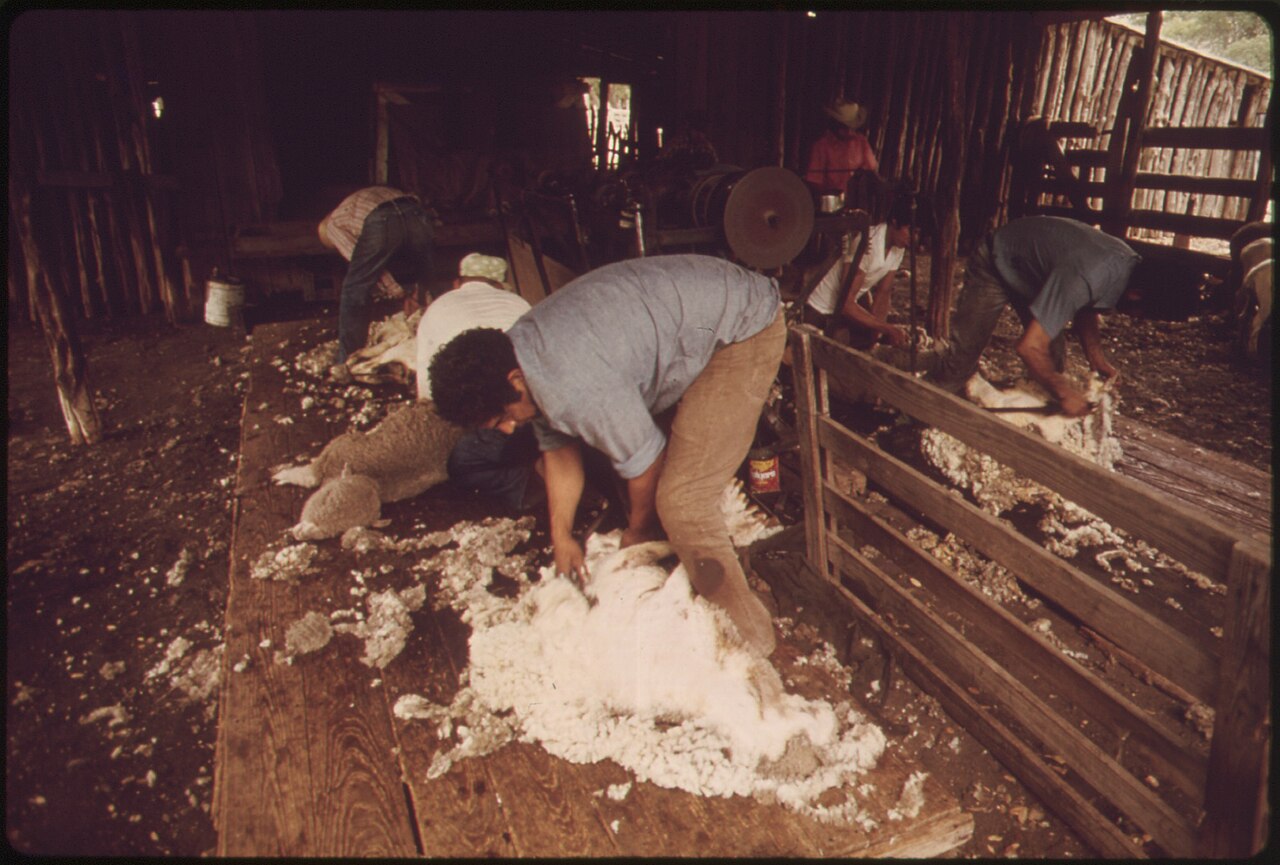
Shearing looks brutal to the untrained eye. A shearer grabs a sheep, flips it into a seated position against their legs, and runs electric clippers across the belly, legs, and back in long, deliberate strokes. The sheep often looks remarkably calm — and it usually is.
The Position
The standard shearing position, developed in Australia and New Zealand, uses the sheep's own anatomy to keep it comfortable and still. The sheep rests on its rump with its back against the shearer's legs, which prevents it from kicking and keeps its skin taut. A skilled shearer can remove a fleece in a single connected piece, called a "blanket," in as little as 60 to 90 seconds for an experienced professional.
The Tools
Modern shearers use electric handpieces with a toothed comb and cutter. The comb lifts the wool slightly away from the skin, and the cutter slices through the fibers close to the surface without cutting the animal. Blades are sharpened and swapped frequently. Before electricity, shearers used hand blades — and in some small farms and heritage breeds, hand shearing is still practiced today.
The Fleece
A single fleece from a good wool breed can weigh anywhere from 2 to 8 kilograms (4.5 to 18 pounds). Merino wool, prized for its fineness, is measured in microns — the diameter of individual fibers. Fine Merino wool ranges from about 15 to 24 microns, while coarser breeds like Romney or Lincoln produce wool in the 30 to 40 micron range, better suited to carpets and heavy outerwear.
How Often Do Sheep Need Shearing?
Most sheep are shorn once a year, typically in late spring after the last cold snap but before the heat of summer. In some regions with mild climates, sheep may be shorn twice a year. Timing matters enormously: shear too early and the sheep may be exposed to late frosts; shear too late and the animal suffers in the heat and the fleece may become matted or contaminated with seeds and debris that reduce its value.
Lambs are usually shorn for the first time at around six to eight months old, once their fleece is long enough to harvest. Pregnant ewes are typically shorn before lambing, partly because a shorter fleece makes it easier for newborn lambs to find the udder and nurse.
Some breeds, like the Wiltshire Horn, naturally shed their wool and need little or no shearing. Others, like the Icelandic sheep, are "double-coated" and produce two distinct fiber types — a soft undercoat called thel and a longer outer coat called tog — which are sometimes shorn together and separated later.
The Economics and Ethics of Wool Production
Sheep shearing is not just animal care — it is also a global industry. Wool is a valuable commodity, and the economics of shearing shape how the practice is carried out around the world.
The Value of a Fleece
Wool prices fluctuate dramatically. In good years, a fine Merino fleece can sell for well over $100. In bad years, the price of wool can fall below the cost of shearing. This creates a genuine problem: when wool is worthless, some farmers struggle to justify the expense of hiring a shearer, even though the sheep still needs to be shorn for welfare reasons. This is one reason programs exist to help farmers manage flocks during wool market downturns.
Contract Shearing Teams
In Australia, New Zealand, and the United Kingdom, shearing is often done by traveling contract teams who move from farm to farm during the season. These teams work long, physically punishing days. Shearing is recognized as one of the most physically demanding jobs in agriculture, with high rates of back and wrist injuries. Competitive shearing — where shearers race to shear a set number of sheep — is a serious sport in Australia and New Zealand, with world records exceeding 700 sheep in eight hours.
Animal Welfare Standards
Because shearing involves close contact and sharp tools, welfare organizations monitor the practice closely. Reputable industry bodies set standards requiring that shearers be trained, that cuts be treated promptly, and that sheep not be handled roughly. The vast majority of shearing is done competently and humanely, but the industry has faced legitimate criticism in some regions, and reforms — including independent audits and mandatory training — have followed.
Common Myths About Sheep Shearing
Misconceptions about shearing are widespread, especially online. Here are some of the most persistent ones, corrected.
- Myth: Shearing hurts the sheep. Wool is dead keratin, like human hair. Cutting it does not hurt. Accidental nicks can occur, but a skilled shearer avoids them, and any small cuts are treated with antiseptic.
- Myth: Sheep would be fine without shearing. For most domestic breeds, this is false. Unshorn sheep face overheating, fly strike, and mobility problems. Shearing is a welfare requirement, not a cosmetic one.
- Myth: Sheep are killed for their wool. Sheep are shorn repeatedly throughout their lives — typically for five to eight years — and are not killed in the process. Wool is a renewable product, which is one of its environmental advantages.
- Myth: All sheep need shearing. Some breeds, including the Wiltshire Horn and the Katahdin, shed naturally and require little to no shearing. The need for shearing is breed-specific.
- Myth: Shearing is always done in summer. Timing depends on climate and breed. In hot regions, shearing may happen in early spring; in cooler climates, it may be delayed to avoid cold stress.
Sheep Shearing Around the World
Different countries have developed distinct shearing cultures, shaped by climate, breed, and tradition.
Australia and New Zealand
These two nations dominate global wool production and shearing expertise. Australian Merino wool is world-renowned for its fineness. New Zealand, with roughly 26 million sheep — about five per person — has a deeply embedded shearing culture, including the famous Golden Shears competition held annually in Masterton.
The United Kingdom
Britain has a long history of sheep farming, with breeds like the Romney, Suffolk, and Bluefaced Leicester. Shearing there is often tied to agricultural shows, where fleece quality is judged and traditional hand-shearing techniques are demonstrated.
North America
In the United States and Canada, sheep shearing is less industrialized than in the Southern Hemisphere, but it remains essential for flock health. Small farms often hire mobile shearers who travel regionally. The American Sheep Industry Association estimates the U.S. flock at around 5 million head — a fraction of its peak in the 1940s, when it exceeded 50 million.
Developing Regions
In parts of Central Asia, the Middle East, and Africa, sheep are often sheared by hand using traditional knives or clippers. In some communities, shearing is a communal event tied to seasonal festivals. The wool may be used locally for felt, carpets, and clothing rather than sold on global markets.
What Happens to the Wool After Shearing?
Once the fleece is off the sheep, the work is far from over. Raw wool, called "greasy wool," contains lanolin, dirt, sweat, and vegetable matter. It is skirted (the dirty edges are removed), sorted by quality, baled, and sold — often at auction.
At the mill, the wool is scoured (washed in hot water and detergent), carded (combed into alignment), and spun into yarn. Lanolin, the natural oil removed during scouring, is a valuable byproduct used in cosmetics, ointments, and industrial lubricants. From a single fleece, you might get a sweater, a carpet, a blanket, or a set of piano hammers — wool has hundreds of uses.
Wool is also biodegradable, renewable, and naturally flame-resistant, which has driven renewed interest in it as a sustainable textile. A single sheep can produce wool for years, making it one of the most efficient natural fibers on the planet.
The Bottom Line on Sheep Shearing
Sheep shearing is not a mystery, a cruelty, or a trivial chore. It is the logical endpoint of a 10,000-year relationship between humans and sheep — a relationship that gave us one of the world's most useful fibers but also created an animal that genuinely depends on us to stay comfortable and healthy. Domestic sheep have been bred to grow wool continuously, and they cannot shed it themselves. Shearing is how we hold up our end of the bargain.
The next time you see a freshly shorn sheep, looking oddly naked and slightly indignant in a field, remember: that animal is not embarrassed. It is relieved. The wool that was weighing it down is now on its way to becoming a jumper, a blanket, or a carpet — and the sheep is free to spend the summer grazing in comfort, ready to grow another fleece for next year.
❓ Frequently Asked Questions
💬 Does shearing hurt sheep?
No, shearing doesn't hurt sheep when done properly; it's like getting a haircut, and experienced shearers work quickly and carefully to avoid nicks. Sheep often seem calmer or even relieved afterward, especially in warm weather.
💬 Do sheep need to be sheared to survive?
Domestic sheep have been bred for thousands of years to produce continuously growing wool, so most breeds must be sheared at least once a year for their health. Without shearing, the fleece can become matted, trap heat, attract parasites, and make it hard for the sheep to move or regulate its body temperature.
💬 How often are sheep sheared?
Most sheep are sheared once a year, typically in late spring or early summer before the heat sets in. Some breeds, or sheep in warmer climates, may be sheared twice a year.
💬 What happens to the wool after sheep are sheared?
The fleece is collected, sorted by quality, cleaned to remove dirt and grease, and then spun into yarn or processed into fabric and other products. A single sheep can produce several kilograms of wool per year, depending on the breed.