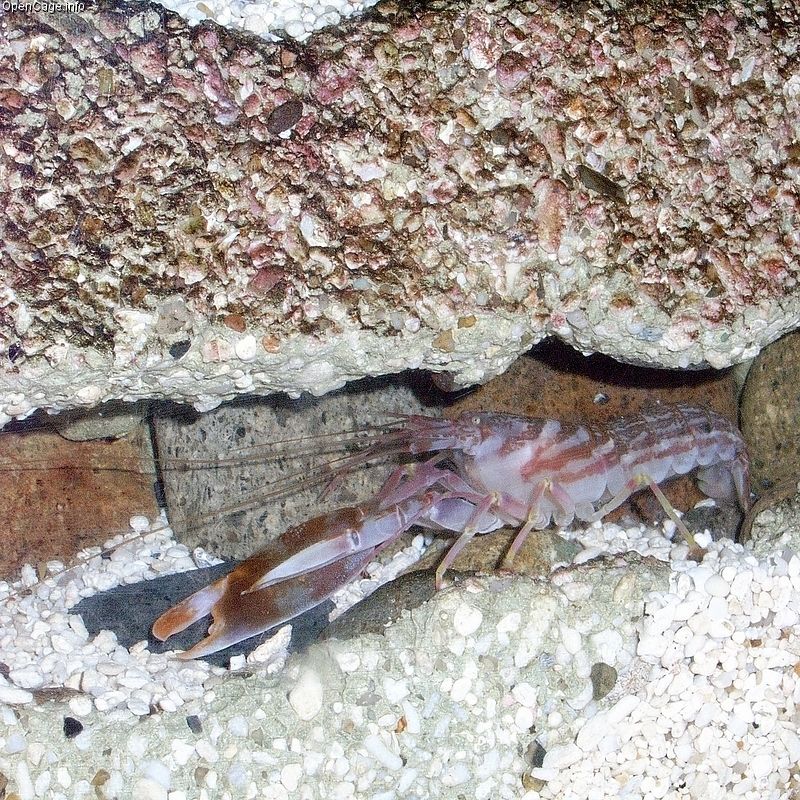
- Meet the Snapping Shrimp
- The Two Claw Types
- Where They Live
- How the Snapping Shrimp Sound Is Made
- The Cocking Mechanism
- The Release and the Bubble
- How Loud Is It?
- Why Snapping Shrimp Snap
- Stunning and Killing Prey
- Defense and Territory
- Communication
- Digging
- Snapping Shrimp and Their Roommates
- The Goby Partnership
- Sponge and Coral Dwellers
- Eusocial Shrimp
- The Ecological Importance of All That Noise
- A Dominant Sound Source
- Shaping the Food Web
- Noise and Human Activity
- Life Cycle and Survival
- Common Myths and Misconceptions
- How Scientists Study Snapping Shrimp
- Conclusion: The Ocean's Loudest Small Voice
- ❓ Frequently Asked Questions
If you have ever snorkeled over a coral reef or dangled a hydrophone into a warm coastal sea, you may have been startled by what sounds like a continuous frying pan of bacon — a crackling, popping, sizzling chorus that scientists call the snapping shrimp sound. The noise is so loud and so constant that it once confounded the U.S. Navy, which used underwater microphones to hunt for submarines during World War II and found its sonar screens blanketed by an anonymous static crackle. That crackle turned out to come from one of the smallest, strangest, and most important animals in the ocean: the snapping shrimp, also known as the pistol shrimp.
Meet the Snapping Shrimp
Snapping shrimp are not the shrimp you find on a seafood platter. They belong to the family Alpheidae, a sprawling group of roughly 1,100 described species found in oceans worldwide, with the greatest diversity in tropical and subtropical waters. Most measure between 3 and 8 centimeters (about 1 to 3 inches) long, though a few reach 10 centimeters. They have a soft, translucent or mottled body, long antennae, and one feature that defines the entire family: a massively enlarged front claw that can make up nearly half the animal's body mass.
That claw exists in two very different forms, and the difference explains a lot about how these animals live.
The Two Claw Types
In one group, the "snapping" claw is a slender, hinged pistol. In the other, the claw is a blunt, hammer-like club. Both can produce a shockwave, but they do it in different ways, and the pistol type is the one responsible for the classic crack that divers hear. Some species have the enlarged claw on the left side, others on the right, and a shrimp that loses its weapon to a predator or a bad molt can regrow it — sometimes switching which side carries the big claw in the process.
Where They Live
Snapping shrimp are burrowers and crevice-dwellers. They tuck themselves into coral rubble, sponge cavities, rock crevices, seagrass roots, and the tunnels of other animals. They are abundant in the shallow waters of the Caribbean, the Indo-Pacific, the Mediterranean, and the Gulf of Mexico, and they thrive in oyster reefs and mangrove roots in warmer parts of the Atlantic and Pacific. Some species live in the intertidal zone, enduring hours of exposure at low tide inside a sealed, water-filled burrow. A few have even been found in freshwater caves in Mexico and in deep-sea vents thousands of meters down.
How the Snapping Shrimp Sound Is Made
The snap is not a simple clack of shell on shell. It is a two-stage physical event that happens faster than a human eye can follow.
The Cocking Mechanism
To prepare, the shrimp opens its claw wide and locks a small, plunger-like piece called the dactyl into a socket on the fixed part of the claw, held in place by a latch. This stores elastic energy in the joint, much like drawing back a bowstring. The shrimp can hold this cocked position for a while, waiting for the right moment.
The Release and the Bubble
When the latch releases, the plunger accelerates at extraordinary speed — the tips of the claw can move at roughly 20 to 30 meters per second, and the whole strike is over in well under a millisecond. That is fast enough to generate a jet of water moving at around 25 meters per second. The jet's pressure drops so sharply that dissolved gas in the seawater is forced out of solution, forming a cavitation bubble. The bubble expands, then collapses violently. It is the collapse — not the claw itself — that produces the crack you hear.
When the bubble implodes, it focuses energy into an extremely small point, briefly creating temperatures estimated at over 4,000 degrees Celsius (more than 7,000 degrees Fahrenheit) and pressures high enough to shatter the surrounding water. The bubble also emits a flash of light, a phenomenon called sonoluminescence. For a few trillionths of a second, a single shrimp claw creates conditions hotter than the surface of the Sun.
How Loud Is It?
Measured at close range, a single snap reaches peak sound levels of roughly 200 to 218 decibels in water — comparable to the noise of a large ship's sonar or a sperm whale's click. Because water carries sound far more efficiently than air, the crack can travel a kilometer or more. Colonies of snapping shrimp are so loud that they can interfere with sonar, mask the sounds of submarines, and even jam underwater acoustic communication. During the Cold War, navies learned to work around "shrimp noise" the way a city dweller learns to sleep through traffic.
Why Snapping Shrimp Snap
A weapon that powerful is worth using, and snapping shrimp use it for several distinct purposes.
Stunning and Killing Prey
The shockwave is a hunting tool. A snap delivered at close range can stun or kill small fish, worms, amphipods, and other crustaceans outright, and it damages the nervous systems of larger prey. The shrimp then drags the meal back into its burrow. Some species fire the claw into a school of small fish and pick off the ones that go belly-up.
Defense and Territory
Snapping shrimp are fiercely territorial about their burrows, which are valuable real estate on a crowded reef. When an intruder approaches, the resident shrimp snaps repeatedly, and the blasts can deter predators, drive off rivals, and even kill small attackers. The crack is a warning shot with real stopping power.
Communication
Snaps also carry information. Shrimp produce different patterns of snaps in different contexts — a rapid burst during a fight, a single snap when startled, a steady rhythm while excavating a burrow. Because sound travels so well underwater, a snap is an efficient way to advertise ownership of a burrow to neighbors without a costly physical fight. Researchers studying snapping shrimp sound have found that colonies create a constant acoustic backdrop that other reef animals may use to judge habitat quality.
Digging
Many species use the claw to excavate and maintain burrows in mud, sand, and rubble. The same blast that stuns prey can loosen sediment and help the shrimp carve out tunnels it would struggle to dig with its smaller claw alone.
Snapping Shrimp and Their Roommates
One of the most fascinating things about snapping shrimp is that many species live with partners. These relationships are called symbioses, and they range from casual to completely interdependent.
The Goby Partnership
The best-known example pairs a snapping shrimp with a small bottom-dwelling fish called a goby. The shrimp digs and maintains a shared burrow, doing the heavy excavation work while the goby stands guard at the entrance. The shrimp keeps one antenna touching the goby's tail at all times. If a predator approaches, the goby flicks its tail and darts into the burrow, and the shrimp follows instantly. The shrimp gets eyes it does not have; the goby gets a safe home it could not build. Neither species does well without the other.
Sponge and Coral Dwellers
Other snapping shrimp live inside living sponges, in the branches of staghorn corals, or in the burrows of worms and other shrimp. Some species are "commensal," meaning they take shelter and food scraps without harming their host. A few have evolved to live in the gills or body cavities of other invertebrates, and one group even makes its home inside the guts of sea cucumbers.
Eusocial Shrimp
The most surprising social arrangement belongs to a handful of species that live in large colonies inside sponges and form a social structure reminiscent of ants or termites. In these colonies, a single large queen reproduces while her offspring — including a soldier caste with oversized claws — defend the sponge and care for the young. This is one of the only known examples of eusociality in a marine animal.
The Ecological Importance of All That Noise
The snapping shrimp sound is not just a curiosity. It is a measurable feature of the marine environment with real consequences.
A Dominant Sound Source
On many shallow reefs, snapping shrimp are the loudest biological sound source after whales and dolphins. Their combined crackle — sometimes called the "reef crackle" — dominates the underwater soundscape from dusk until dawn. Marine scientists use hydrophones to record this sound as a way of monitoring reef health: a healthy reef with abundant snapping shrimp sounds like a busy kitchen, while a degraded reef goes quiet. That makes snapping shrimp sound a practical tool for conservation.
Shaping the Food Web
Snapping shrimp are both predators and prey. They eat small invertebrates and fish, and they are eaten by larger fish, octopuses, and crabs. Their burrowing aerates sediment, mixes nutrients, and creates habitat that other small animals use. In oyster reefs and seagrass beds, their tunnels can increase water flow and provide refuge for juvenile fish.
Noise and Human Activity
Because snapping shrimp rely on sound for communication and hunting, they are sensitive to noise pollution from shipping, sonar, and construction. Loud human-made noise can mask their snaps, making it harder for them to find mates, defend burrows, or detect predators. Researchers are still working out how much this matters, but the concern is real: an animal that evolved to shout across a reef may struggle to be heard over the drone of engines.
Life Cycle and Survival
Snapping shrimp begin life as eggs carried under the female's abdomen, where she tends them until they hatch. The larvae drift as plankton for weeks, which is how the family has spread to reefs and coastlines around the world. After settling, juveniles molt repeatedly as they grow, and each molt is a vulnerable period: the new shell is soft, and the shrimp hides until it hardens.
Lifespans vary by species and habitat. Many small reef species live around one to two years, while larger burrowing species may reach three years or more in the wild. Some form long-term pair bonds and share a burrow for life, while others are solitary outside the breeding season. Predators include groupers, snappers, octopuses, mantis shrimp, and crabs, and the snapping shrimp's best defense is usually its burrow — plus, of course, a well-aimed crack.
Common Myths and Misconceptions
Because the snap is so dramatic, it has attracted its share of exaggeration.
- Myth: The snap is the sound of the claw hitting itself. In pistol shrimp, the crack is the collapse of a cavitation bubble, not the impact of shell on shell.
- Myth: Snapping shrimp are dangerous to humans. A snap can sting if you handle one carelessly, and it can crack a small glass jar, but it is not a serious threat to people.
- Myth: All snapping shrimp look and behave the same. The family includes pistol-type and club-type species with very different anatomy, diets, and social lives.
- Myth: The noise is random. The snapping shrimp sound follows daily patterns, peaking at night, and varies with species, colony density, and water temperature.
How Scientists Study Snapping Shrimp
Researchers use high-speed video cameras recording thousands of frames per second to capture the claw strike, and hydrophones to measure the resulting sound. They tag individual shrimp to track burrow use, and they play recorded snaps back into the water to see how neighbors respond. In the lab, scientists have measured the cavitation bubble's temperature and light emission, confirming that the snap is one of the fastest and most extreme biological events known. New work uses machine learning to identify shrimp species from their snap patterns, turning a wall of noise into a data-rich census of reef life.
Conclusion: The Ocean's Loudest Small Voice
The snapping shrimp sound is one of those rare natural phenomena that rewards a closer look. What begins as an annoying crackle on a hydrophone turns out to be a feat of physics, a weapon, a language, and an ecological signal all at once. A creature barely the length of your thumb generates a shockwave hotter than the Sun's surface, uses it to hunt and defend a burrow, and forms partnerships with fish and sponges that are among the most remarkable in the animal kingdom. Next time you hear that frying-bacon static on an underwater recording, you will know exactly what is making it — and how much is riding on every snap.
❓ Frequently Asked Questions
💬 How loud is a snapping shrimp's crack?
A single snap can reach around 200 decibels, making it one of the loudest sounds produced by any marine animal. Colonies of snapping shrimp can create enough noise to drown out sonar and submarine communications.
💬 How does a snapping shrimp make the sound without hitting anything?
It snaps its oversized claw shut so fast that a high-speed water jet shoots out, and the collapsing bubble it creates produces the loud crack. This process is called cavitation, and the collapsing bubble briefly reaches temperatures near that of the sun's surface.
💬 Does the snapping shrimp's crack kill prey?
Yes, the shock wave from the collapsing bubble can stun or kill small fish, crabs, and other prey at close range. The shrimp then drags the stunned victim into its burrow to eat.
💬 Are snapping shrimp dangerous to humans?
No, snapping shrimp are not dangerous to people; their snap is far too small to injure a human. The main annoyance is the loud crackling noise, which can disturb sleep for people living near dense colonies.