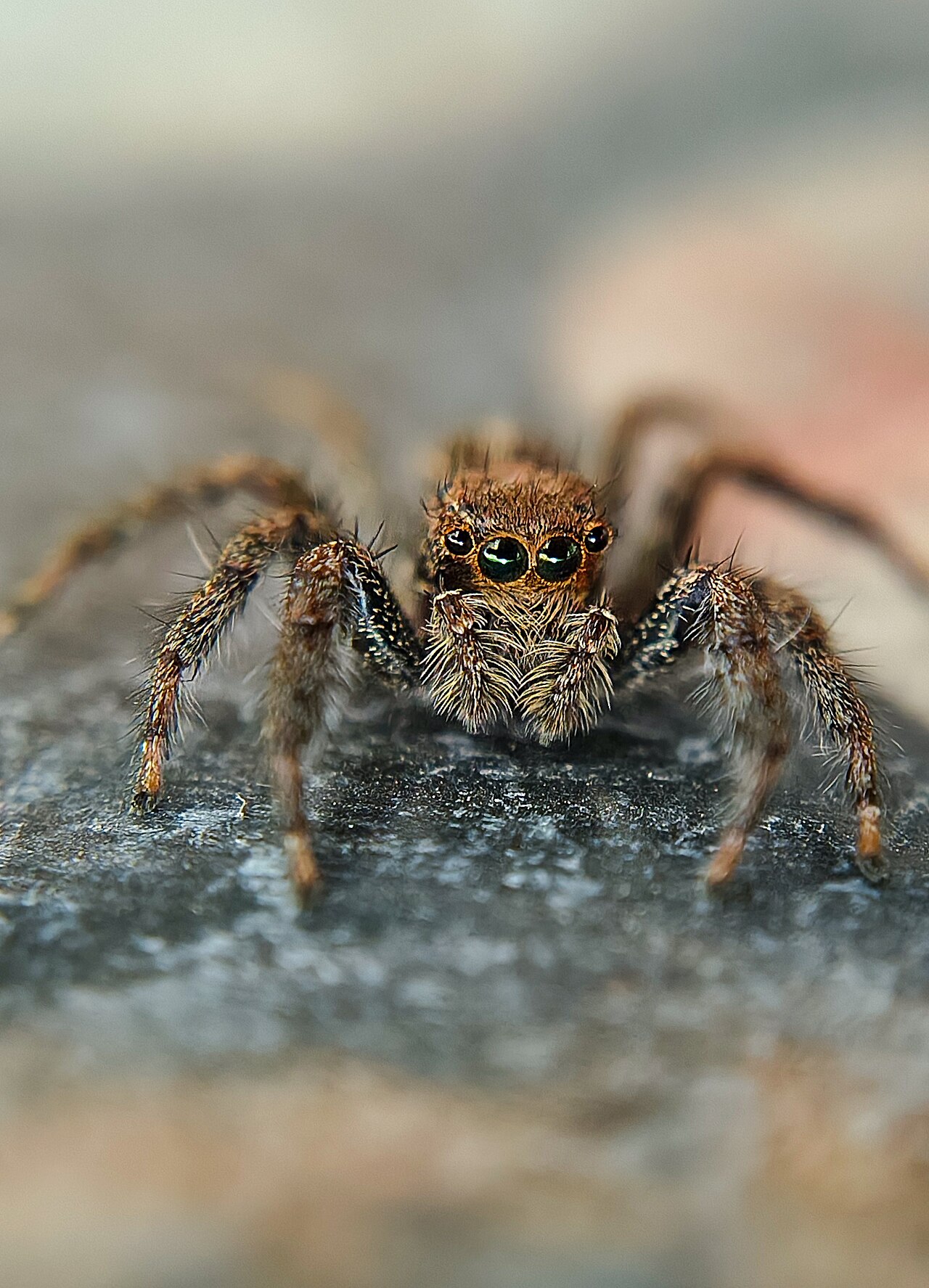
- The Short Answer: Why Spiders Eight Legs Is a Matter of Anatomy and Ancestry
- Not Legs, But Mouthparts: The Hidden Extra Appendages
- Why Spiders Eight Legs Work So Well for Movement and Hunting
- Walking, Running, and Jumping Champions
- Why Spiders Eight Legs Are Also Superb Sensory Tools
- How Many Eyes and Legs Do Spiders Really Need?
- Common Myths About Spider Legs, Debunked
- How Spider Legs Compare to Those of Insects and Other Arthropods
- Real Examples Across Spider Families
- Evolution: Why Eight Legs Persisted for Over 500 Million Years
- What About Leg Loss and Regeneration?
- Frequently Asked Questions About Spider Legs
- Conclusion: The Enduring Genius of Eight Legs
- ❓ Frequently Asked Questions
If you have ever watched a spider scramble across a wall or dangle from a single silken thread, you may have wondered about the simple but strange question of why spiders have eight legs — and why that number never seems to change. It is one of the most recognizable features in the animal kingdom, yet it is also one of the most misunderstood. Spiders are not insects, and their eight legs are not just an accident of evolution. They are a deeply practical, carefully engineered solution to the challenges of hunting, sensing, moving, and surviving in an enormous range of habitats, from tropical rainforests to desert dunes and even the inside of your bathroom.
The Short Answer: Why Spiders Eight Legs Is a Matter of Anatomy and Ancestry
To understand why spiders have eight legs, you first need to know where they sit in the animal family tree. Spiders belong to a group called the arachnids, which also includes scorpions, ticks, mites, and harvestmen (often called daddy longlegs). Arachnids are chelicerates, a major branch of arthropods that split off from the branch leading to insects and crustaceans more than 500 million years ago.
All adult arachnids share the same basic body plan: two main body sections, called the cephalothorax (a fused head and thorax) and the abdomen, plus four pairs of walking legs. That is eight legs in total. Insects, by contrast, have three body sections and three pairs of legs, which is six. The difference is not random — it reflects a deep evolutionary divergence that happened long before dinosaurs, mammals, or even most modern insects existed.
In other words, the eight-legged body plan was inherited from an ancient ancestor and has been retained because it works extremely well. Evolution rarely fixes what is not broken, and for spiders, eight legs have proven remarkably effective for hundreds of millions of years.
Not Legs, But Mouthparts: The Hidden Extra Appendages
One common source of confusion is that spiders appear to have more than eight appendages. Look closely at a spider’s front end and you will see two small, leg-like structures called pedipalps. These are not walking legs. They are used for sensing, manipulating prey, and, in males, transferring sperm during mating. In front of those are the chelicerae, the fangs that deliver venom. So a spider’s full set of appendages includes eight walking legs, two pedipalps, and two chelicerae — but only the eight are true legs.
Why Spiders Eight Legs Work So Well for Movement and Hunting
Having eight legs gives spiders a level of mobility and stability that six-legged insects cannot easily match. Each leg is divided into several segments and is powered not mainly by muscles inside the leg, but by hydraulic pressure. Spiders push fluid (hemolymph) into their legs to extend them, and use flexor muscles to bend them. This system allows rapid, precise movements and is one reason spiders can make sudden lunges or leaps.
Eight legs also mean a spider can afford to lose one. If a leg is grabbed by a predator or damaged, many spiders can shed it — a process called autotomy — and escape. Young spiders can often regenerate a lost leg when they molt, though adults usually cannot. Even with seven legs, most spiders remain surprisingly capable hunters.
Walking, Running, and Jumping Champions
Different spiders use their eight legs in different ways. Jumping spiders (family Salticidae), which number more than 6,000 species, use their powerful hind legs to leap distances up to 50 times their own body length. The giant huntsman spider (genus Heteropoda), with a leg span that can reach 30 centimeters (about 12 inches), uses its long legs to sprint across tree trunks and walls at remarkable speed. Wolf spiders chase down prey on the ground rather than spinning webs, relying on eight sensitive legs to detect vibrations from insects several centimeters away.
Some spiders, like the net-casting spider (Deinopis), hold a small silk net between their front legs and stretch it over passing prey. Others, such as the bolas spider, swing a sticky droplet on a silk line like a lasso. Every one of these hunting styles depends on the coordination of eight legs working together.
Why Spiders Eight Legs Are Also Superb Sensory Tools
Legs are not just for walking. A spider’s legs are covered in thousands of tiny hairs and slit-like organs that detect vibrations, air currents, and even chemicals. This makes the legs a kind of distributed sensory network, allowing the spider to "feel" its environment with extraordinary precision.
Consider the fishing spider (Dolomedes), which rests on the surface of ponds and streams. It detects ripples made by insects trapped on the water’s surface and darts across the water film to grab them. Its legs are so sensitive that it can distinguish the vibration of a struggling fly from a falling leaf.
How Many Eyes and Legs Do Spiders Really Need?
Most spiders have eight simple eyes, arranged in different patterns depending on the species. Jumping spiders have exceptionally sharp vision and can see in color, but many web-building spiders have poor eyesight and rely far more on leg-based touch and vibration. This is a key example of how the eight-leg design compensates for other senses. A spider sitting in its web does not need to see a fly — it feels the fly’s struggle through the silk and through the sensitive hairs on its legs.
Common Myths About Spider Legs, Debunked
Because spiders are so often misunderstood, several myths about their legs persist. Here are the most common ones and what the science actually says.
- Myth: Daddy longlegs are spiders with extra-long legs. The name "daddy longlegs" is used for at least three different animals. Harvestmen (order Opiliones) have eight legs but are not spiders. Crane flies are insects with six legs. Only some true spiders, like cellar spiders, are also called daddy longlegs.
- Myth: Spiders can regrow legs at any age. Regeneration is possible mainly in young spiders during molting. Once a spider reaches adulthood and stops molting, a lost leg stays lost.
- Myth: All spiders have exactly eight legs all the time. Occasionally a spider is born with a mutation that changes leg number, or loses legs through injury. But the normal, healthy adult spider always has eight.
- Myth: More legs means more speed. Centipedes and millipedes have far more legs, but they are not faster than spiders. Speed depends on leg length, muscle arrangement, and hydraulic pressure, not raw leg count.
How Spider Legs Compare to Those of Insects and Other Arthropods
Comparing spiders to insects helps clarify why the eight-leg design is so distinctive. Insects have six legs and three body regions, and many also have wings. Spiders have no wings and never have. Their four pairs of legs are attached to the cephalothorax, along with the pedipalps and chelicerae. This compact arrangement gives them a low center of gravity and excellent balance.
Scorpions, close arachnid relatives, also have eight legs, but their front appendages have evolved into large pincers called pedipalps. Ticks and mites, also arachnids, have eight legs as adults but only six as larvae. So even within the arachnid group, leg number can shift during development — but the adult spider always settles on eight.
Real Examples Across Spider Families
The diversity of spiders is staggering: more than 48,000 species have been described, and scientists estimate there may be many more. A few examples show how eight legs are used in wildly different ways:
- Goliath birdeater (Theraphosa blondi): The world’s largest spider by mass, with a leg span up to 30 centimeters. Found in the rainforests of northern South America, it can weigh over 170 grams and lives for up to 25 years in captivity.
- Golden orb-weaver (Nephila): Builds massive webs up to 1.5 meters across. Its long legs help it move across the web without getting stuck.
- Zebra jumping spider (Salticus scenicus): A small, common spider in Europe and North America that uses its legs to stalk and pounce on flies with pinpoint accuracy.
- Trapdoor spider (family Ctenizidae): Ambushes prey from a silk-lined burrow, grabbing insects with its front legs and fangs as they pass.
- Water spider (Argyroneta aquatica): Lives underwater in a silk diving bell and uses its legs to swim and carry air bubbles.
Evolution: Why Eight Legs Persisted for Over 500 Million Years
The first arachnids appeared during the Cambrian or Ordovician periods, long before the first dinosaurs. Fossils of early chelicerates show body plans with multiple pairs of appendages, but over time the group settled on four pairs of walking legs. This number appears to be a kind of evolutionary sweet spot: enough legs for stability and speed, but not so many that the body becomes heavy or movement becomes inefficient.
Eight legs also allow a spider to specialize its front pairs for tasks like grasping prey or sensing, while keeping the rear pairs for propulsion. This division of labor is one reason spiders have been able to occupy nearly every land habitat on Earth, from the Arctic tundra to deserts, caves, and high mountain forests. They even live in freshwater and intertidal zones.
What About Leg Loss and Regeneration?
Because spiders rely on hydraulic pressure, losing a leg can affect their movement, but many adapt quickly. A spider missing one leg may walk with a slight limp or use a different gait. Juveniles that lose a leg can often replace it at the next molt, though the new leg may be smaller. Adults, which typically stop molting, cannot regenerate. This trade-off — flexibility in youth, permanence in adulthood — is common among arthropods.
Frequently Asked Questions About Spider Legs
Do all spiders have eight legs? Yes, all true spiders have eight legs as adults. If you count fewer, the spider may have lost one, or you may be looking at a harvestman, which is a different arachnid.
Why do spiders have eight legs instead of six? Because they evolved from a different ancestral lineage than insects. Arachnids inherited four pairs of walking legs, while insects inherited three pairs. Both designs work well for their respective lifestyles.
Can spiders survive with fewer than eight legs? Often, yes. Many spiders can hunt, build webs, and mate with seven legs. Losing multiple legs, however, can reduce their ability to catch prey and escape predators.
Do spider legs have muscles? Spider legs contain flexor muscles that bend the joints, but extension is driven mainly by hydraulic pressure. This is why a dead spider’s legs curl inward — the pressure is gone.
How long do spider legs grow? Leg length varies enormously. The smallest spiders, like Patu digua, have a body length of under 0.5 millimeters. The largest, like the goliath birdeater, have legs spanning up to 30 centimeters. Most spiders live between one and two years, though some tarantulas can live for decades.
Conclusion: The Enduring Genius of Eight Legs
The question of why spiders have eight legs leads to a story about deep evolutionary history, hydraulic engineering, sensory biology, and remarkable adaptability. Eight legs give spiders the stability to sprint, the sensitivity to detect the faintest vibrations, the flexibility to lose a limb and keep going, and the specialization to hunt in wildly different ways. From the tiny money spider spinning a sheet web in a garden hedge to the goliath birdeater stalking the rainforest floor, the eight-legged body plan has proven itself for more than 500 million years. Far from being a random quirk, it is one of nature’s most successful and elegant designs — and it is the reason spiders remain among the most diverse and fascinating animals on the planet.
❓ Frequently Asked Questions
💬 Are spiders insects?
No, spiders are arachnids, not insects. Insects have six legs and three body segments, while spiders have eight legs and two body segments.
💬 Do all spiders have eight legs?
Yes, all spiders have eight legs. However, some may appear to have fewer due to leg loss from injury or autotomy, but they are born with eight.
💬 Why do spiders need eight legs?
Eight legs provide spiders with stability, agility, and the ability to perform complex tasks like web-spinning, prey capture, and sensing vibrations. Each leg pair often serves specialized functions.
💬 What is the evolutionary advantage of having eight legs?
Eight legs allow for efficient locomotion and precise control, which is crucial for hunting and escaping predators. This trait has been conserved in arachnids for hundreds of millions of years.