- The Evolutionary Blueprint: Why Spiders Eight Legs Are a Legacy of Ancient Ancestors
- The Chelicerate Lineage
- Comparison with Insects
- Anatomy and Function: How Spiders Eight Legs Are Built for Survival
- Leg Structure
- Size and Speed Variations
- Autotomy: The Art of Leg Loss
- Hunting and Web-Building: The Role of Spiders Eight Legs in Prey Capture
- Web-Weaving Spiders
- Hunting Spiders
- Ambush Predators
- Habitat and Behavior: How Spiders Eight Legs Adapt to Diverse Environments
- Terrestrial Spiders
- Aquatic Spiders
- Urban Spiders
- Myths and Misconceptions About Spiders Eight Legs
- The "Eight Legs Are for Speed" Myth
- The "All Spiders Have Eight Eyes" Myth
- Evolutionary Advantages: Why Spiders Eight Legs Persist Today
- Conclusion: The Enduring Legacy of Spiders Eight Legs
- ❓ Frequently Asked Questions
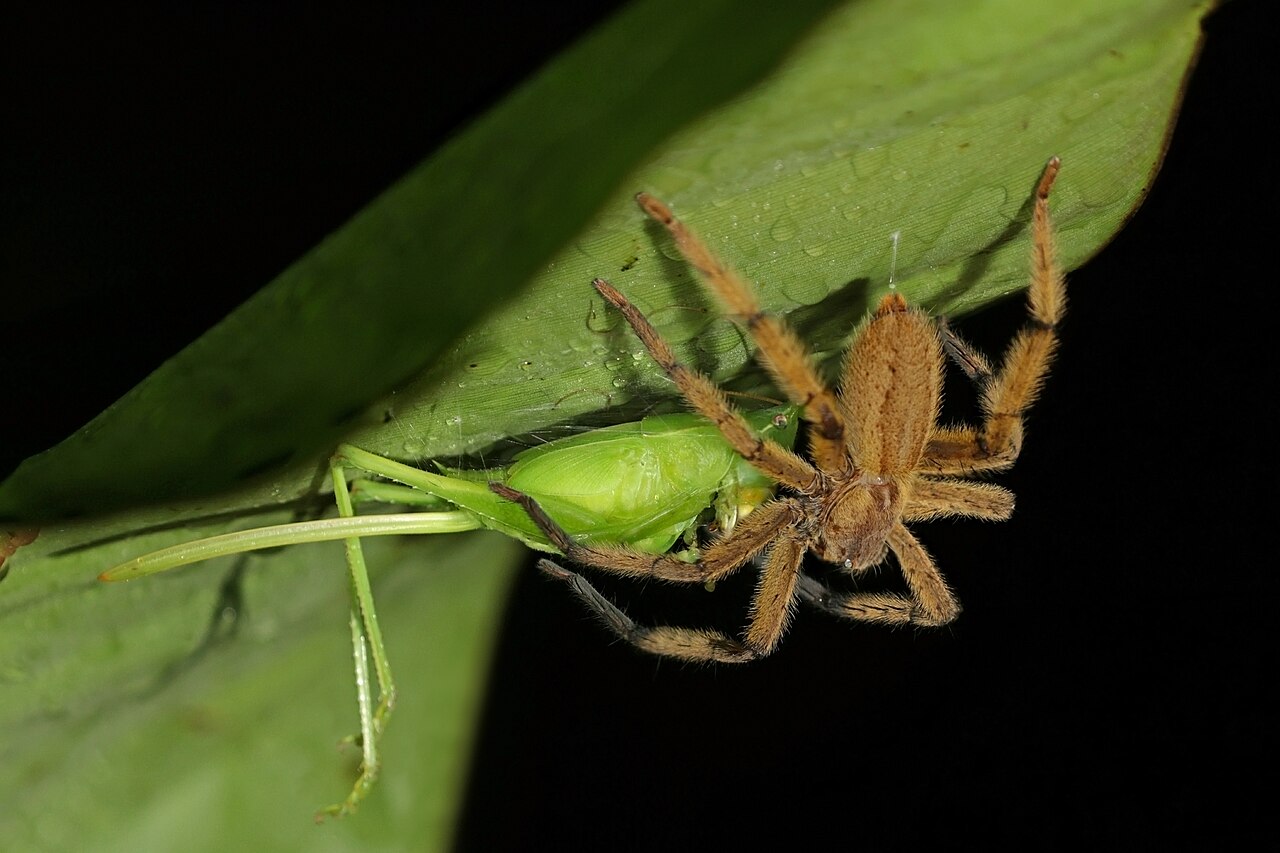
When you look at a spider scuttling across your floor, the first thing you likely notice is its eight legs. But why do spiders have eight legs while most other arachnids and insects have fewer? The answer lies deep in evolutionary history, stretching back over 400 million years. The evolutionary truth behind spiders eight legs is a fascinating story of ancient ancestors, body segmentation, and survival adaptations that set spiders apart from all other arthropods.
The Evolutionary Blueprint: Why Spiders Eight Legs Are a Legacy of Ancient Ancestors
To understand why spiders have eight legs, we must travel back to the Silurian period, around 420 million years ago. At this time, the first arachnids emerged from the sea onto land. Spiders belong to the class Arachnida, which also includes scorpions, mites, and ticks. All arachnids share a common body plan: two main body segments (the cephalothorax and abdomen) and four pairs of walking legs. This is not a coincidence—it is a conserved trait from their earliest common ancestor.
The Chelicerate Lineage
Spiders are part of a larger group called chelicerates, which includes horseshoe crabs and sea scorpions (eurypterids). These ancient creatures had multiple pairs of appendages, but evolution gradually reduced them to a standardized set. The first pair of appendages became chelicerae (the fangs), the second pair became pedipalps (used for sensing and reproduction), and the remaining four pairs became walking legs. This arrangement is so fundamental that it has remained unchanged for over 400 million years in spiders.
Comparison with Insects
Insects, by contrast, belong to a different subphylum (Hexapoda) and have only three pairs of legs. This difference arises from a separate evolutionary path: insects evolved from crustacean-like ancestors that had many legs, but their body plan condensed to three thoracic segments, each bearing one leg pair. Spiders retained four pairs because their body segmentation never reduced in the same way. The evolutionary truth is that spiders eight legs are a legacy of their chelicerate heritage, not a random accident.
Anatomy and Function: How Spiders Eight Legs Are Built for Survival
Each of a spider’s eight legs is a marvel of hydraulic engineering and sensory biology. Unlike insects, which rely almost entirely on muscles for leg movement, spiders use a combination of muscles and hydraulic pressure. The legs are hollow and filled with hemolymph (spider blood). When a spider wants to extend its leg, it contracts muscles in the cephalothorax, forcing hemolymph into the leg, which straightens it. This hydraulic system allows spiders to move with incredible speed and agility.
Leg Structure
A spider’s leg consists of seven segments: coxa, trochanter, femur, patella, tibia, metatarsus, and tarsus. At the tip of the tarsus are two or three claws, depending on the species. Web-weaving spiders often have an additional claw called the median claw, which helps them grip silk threads. The legs are covered with sensory hairs called trichobothria, which detect vibrations in the air and on surfaces. This allows spiders to sense prey, predators, and even potential mates from a distance.
Size and Speed Variations
Spiders exhibit a remarkable range of leg sizes. The giant huntsman spider (Heteropoda maxima) has a leg span of up to 12 inches (30 cm), while the smallest spiders, like Patu digua, have legs so tiny they are nearly invisible to the naked eye. Leg length also affects speed: the fastest spiders, such as the sun spider (Solifugae), can run up to 10 miles per hour (16 km/h) using their eight legs to generate rapid, powerful strides.
Autotomy: The Art of Leg Loss
Spiders can voluntarily detach a leg to escape predators—a process called autotomy. A special joint at the coxa-trochanter connection allows the leg to break off cleanly with minimal blood loss. The spider then regenerates the leg over several molts. However, a spider missing more than two legs may struggle with balance and hunting. In captivity, some tarantulas have been observed surviving with only five legs, but their mobility is significantly reduced.
Hunting and Web-Building: The Role of Spiders Eight Legs in Prey Capture
The eight legs of spiders are not just for walking—they are specialized tools for capturing prey. Different spider families use their legs in unique ways, from building intricate webs to pouncing with lightning speed.
Web-Weaving Spiders
Orb-weaving spiders (family Araneidae) use their eight legs to construct the classic spiral webs. The fourth pair of legs is particularly important, as they comb silk from the spinnerets and guide it into place. The spider uses its legs to measure distances, tension the silk, and repair damage. A single web can take several hours to build and requires precise coordination of all eight limbs. The legs also detect vibrations from trapped insects, allowing the spider to locate prey instantly.
Hunting Spiders
Wolf spiders (family Lycosidae) and jumping spiders (family Salticidae) do not build webs. Instead, they use their eight legs for active pursuit. Jumping spiders have exceptionally strong hind legs that allow them to leap up to 50 times their body length. They use their front legs to grasp prey after the jump, while the other six legs provide stability. Wolf spiders use their legs to dig burrows and carry egg sacs, which they attach to their spinnerets and drag behind them.
Ambush Predators
Crab spiders (family Thomisidae) have legs that are adapted for sideways movement, like crabs. Their front two pairs are longer and stronger, allowing them to grab passing insects with a sudden strike. These spiders rely on camouflage, often sitting motionless on flowers, and their eight legs enable them to remain stable while holding prey larger than themselves.
Habitat and Behavior: How Spiders Eight Legs Adapt to Diverse Environments
Spiders inhabit every continent except Antarctica, and their eight legs have evolved to suit a wide range of habitats, from deserts to rainforests to your own home.
Terrestrial Spiders
Ground-dwelling spiders, such as tarantulas (family Theraphosidae), have robust, hairy legs adapted for digging and climbing. The hairs (urticating setae) on their legs can be flicked at predators as a defense mechanism. Tarantulas also use their legs to sense vibrations from prey walking on the ground. Their lifespan can exceed 20 years in captivity, and they molt periodically to grow new leg segments.
Aquatic Spiders
The diving bell spider (Argyroneta aquatica) is the only spider that lives entirely underwater. It uses its eight legs to construct a silk dome that traps air, creating a bubble that allows it to breathe. Its legs are covered with fine hairs that hold a layer of air, providing buoyancy and insulation. This spider can stay submerged for up to 24 hours, hunting aquatic insects and small fish.
Urban Spiders
House spiders (family Theridiidae) have adapted to living in human structures. Their eight legs allow them to climb smooth surfaces using tiny hairs called scopulae, which create adhesive forces. They build messy cobwebs in corners and feed on common household pests like flies and mosquitoes. The average lifespan of a house spider is about one year, but they can survive longer in stable indoor environments.
Myths and Misconceptions About Spiders Eight Legs
Despite their commonality, many myths surround spider legs. One persistent myth is that spiders always have eight legs, but this is not entirely true—some species have fewer due to injury or birth defects. Another myth is that spiders use all eight legs for walking, but in reality, they often use a tripod gait, moving three legs at a time while keeping five on the ground for stability.
The "Eight Legs Are for Speed" Myth
While eight legs do provide stability, they are not necessarily faster than six. Insects like cockroaches can outrun many spiders because they have a more energy-efficient muscle system. Spiders compensate with their hydraulic leg extension, which allows for rapid bursts of speed but is less efficient for sustained running.
The "All Spiders Have Eight Eyes" Myth
Many people confuse legs with eyes. While spiders typically have eight eyes, some species have six, four, or even two. The number of eyes is unrelated to the number of legs. For example, jumping spiders have eight eyes arranged in three rows, giving them exceptional vision, while cave-dwelling spiders may have reduced eyesight but still retain their eight legs.
Evolutionary Advantages: Why Spiders Eight Legs Persist Today
If six legs work for insects, why did spiders keep eight? The answer lies in the specific ecological niches spiders occupy. Eight legs provide several key advantages:
- Redundancy: Losing a leg to a predator is less crippling when you have spares. A spider can function with seven legs and regenerate the lost one.
- Load Distribution: Eight legs spread the spider’s weight evenly, allowing it to walk on fragile surfaces like water or silk threads without sinking.
- Multi-Tasking: Spiders use different legs for different tasks simultaneously—for example, holding prey with front legs while spinning silk with hind legs.
- Stability During Molting: When a spider molts, it needs all eight legs to extract itself from the old exoskeleton. Fewer legs would make this process riskier.
These advantages have been so successful that spiders have diversified into over 50,000 known species, with estimates of up to 200,000 total. Their eight-legged design has remained largely unchanged for hundreds of millions of years, a testament to its effectiveness.
Conclusion: The Enduring Legacy of Spiders Eight Legs
From their ancient chelicerate ancestors to the diverse species we see today, spiders eight legs are a defining feature that has stood the test of time. This evolutionary adaptation is not arbitrary—it is a finely tuned system for hunting, reproducing, and surviving in almost every environment on Earth. Whether you admire their web-building prowess or shudder at their speed, the eight legs of spiders are a remarkable example of nature’s engineering. Next time you see a spider, take a moment to appreciate the 400-million-year journey that gave it those eight legs—a journey that continues to fascinate scientists and nature lovers alike.
❓ Frequently Asked Questions
💬 Why do spiders have eight legs instead of six like insects?
Spiders and insects evolved from different ancient arthropod ancestors; spiders belong to the class Arachnida, which retained eight walking legs, while insects belong to the class Insecta, which evolved a body plan with three pairs of legs.
💬 Did spiders always have eight legs?
Fossil evidence suggests ancient spider ancestors, like the extinct trigonotarbids, had eight legs, but some early relatives had more leg-like appendages that later specialized into pedipalps and chelicerae.
💬 What is the evolutionary advantage of eight legs for spiders?
Eight legs provide spiders with greater stability, speed, and agility for hunting and web-building, and allow them to distribute weight efficiently for climbing and sensing vibrations.
💬 Can spiders lose a leg and still survive?
Yes, spiders can autotomize (self-amputate) a leg to escape predators and can survive with fewer legs, though they may have reduced mobility and hunting efficiency until the next molt.