- Tadpole Tail Metamorphosis: What Is Actually Happening?
- Shrinkage, Not Shedding
- Why "Losing" Is the Wrong Word
- The Hormone Switch That Triggers Tadpole Tail Metamorphosis
- Tissue-Specific Responses
- The Role of Prolactin
- How the Tail Is Dismantled: Apoptosis and Autophagy
- Programmed Cell Death (Apoptosis)
- Autophagy and Tissue Remodeling
- What Happens to the Nutrients
- Why Tadpoles Have Tails in the First Place
- Diet and the Tail's Role
- Habitat and Lifespan Context
- From Water to Land: The Full Metamorphosis Timeline
- Behavioral Changes
- Real Examples Across Frog and Toad Species
- Common Frog (Rana temporaria)
- American Bullfrog (Lithobates catesbeianus)
- African Clawed Frog (Xenopus laevis)
- Spadefoot Toads
- Common Myths and Misconceptions
- Myth: The Tail Falls Off
- Myth: Tadpoles Turn Into Frogs Overnight
- Myth: All Tadpoles Become Frogs
- Why This Matters: Science and Conservation
- The Bottom Line on Tadpole Tail Metamorphosis
- ❓ Frequently Asked Questions
Every spring, ponds and streams across the world fill with wriggling tadpoles, and nearly every child who catches one asks the same question: where does the tail go? The answer is a remarkable story of tadpole tail metamorphosis, a process in which a swimming larva literally digests and reabsorbs part of its own body to become a frog. It is not a tail falling off, and it is not a trick of the light — it is controlled self-destruction and recycling at the cellular level, timed by hormones and fine-tuned by evolution over hundreds of millions of years.
Tadpole Tail Metamorphosis: What Is Actually Happening?
To understand the disappearing tail, you first need to understand what a tadpole is. A tadpole is the aquatic larval stage of a frog or toad, and it looks almost nothing like the adult. Most tadpoles have a rounded or flattened body, no limbs at first, internal gills, a long coiled gut suited to a plant-based diet, and a powerful muscular tail fin that propels them through water with a side-to-side wiggle.
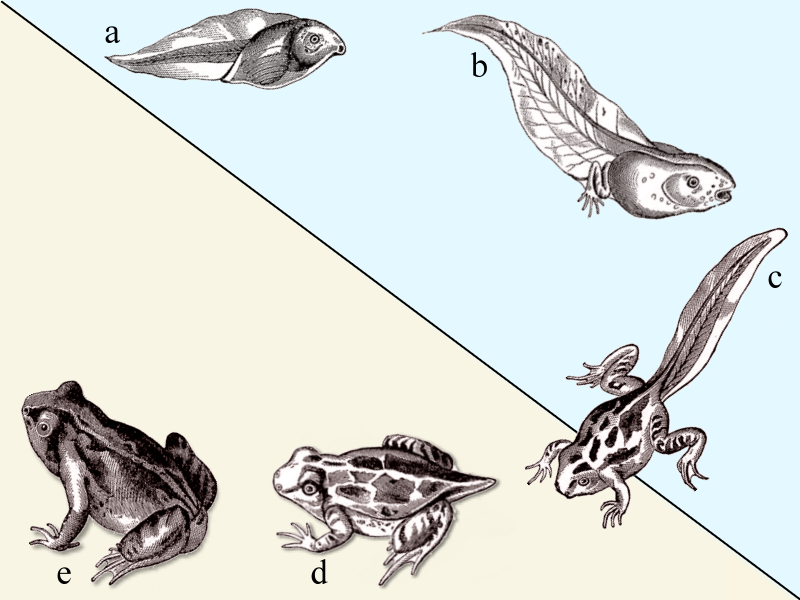
During metamorphosis, the tadpole's body is rebuilt. Legs sprout, the gills are absorbed and replaced by lungs, the gut shortens and switches to a carnivorous design, the skin thickens, and the mouthparts transform from a rasping beak into the wide jaw of a frog. The tail, no longer needed for swimming once legs and lungs take over, is dismantled. Crucially, the tail is not shed like a lizard's tail and it does not rot away — it is resorbed, meaning its cells are broken down and the raw materials are shipped into the growing body to build new tissues.
Shrinkage, Not Shedding
If you watch a tadpole in the final stages of metamorphosis, you will see the tail become thinner, shorter, and increasingly translucent over roughly a week to ten days, depending on species and temperature. The fin edge frays first, then the muscular core narrows from the tip toward the body until only a small stub remains at the base of the spine. In many frog species, a tiny remnant of tail tissue persists for a day or two after the young frog leaves the water, then vanishes entirely.
Why "Losing" Is the Wrong Word
The common phrase "losing their tails" suggests something discarded, but the reality is closer to recycling. Estimates from classic studies suggest a large share of the tail's mass is reused rather than excreted, making metamorphosis one of the most efficient remodeling events in the animal kingdom. The tail is not waste — it is raw material for a new body plan.
The Hormone Switch That Triggers Tadpole Tail Metamorphosis
The entire transformation is orchestrated by the thyroid gland. As a tadpole matures, its thyroid gland begins releasing thyroxine (T4) and triiodothyronine (T3), the same hormones that regulate metabolism in humans. Rising thyroid hormone levels act as a biological switch, turning on metamorphosis across the whole body — but different tissues respond in different ways, which is why legs grow while the tail shrinks at the same time.
Tissue-Specific Responses
This is one of the most elegant details of the process. Thyroid hormone tells the cells of the developing legs to divide and build, while it tells tail cells to self-destruct. The difference lies in which genes each tissue switches on in response to the hormone. Tail muscle and fin cells activate "death" programs, while limb bud cells activate growth programs. The same chemical signal produces opposite outcomes depending on the tissue's identity.
The Role of Prolactin
Prolactin, another hormone, acts as a brake on metamorphosis in young tadpoles, keeping them in the larval stage while they grow. As the tadpole reaches a critical size and the thyroid axis matures, the balance tips and metamorphosis begins. This is why tadpoles of the same species in the same pond can transform at different times — size, temperature, food supply, and crowding all influence the timing.
How the Tail Is Dismantled: Apoptosis and Autophagy
The tail does not simply wither. It is actively destroyed by the tadpole's own cells through two main processes.
Programmed Cell Death (Apoptosis)
Apoptosis is programmed cell death — a tidy, genetically controlled self-destruction that avoids inflammation. In the tail, thyroid hormone triggers a cascade of enzymes called caspases that dismantle cells from within. The dying cells package their remains into membrane-bound parcels that are quickly engulfed by scavenger cells called macrophages, which migrate into the tail in large numbers during metamorphosis.
Autophagy and Tissue Remodeling
Alongside apoptosis, tail cells use autophagy — literally "self-eating" — to break down their own internal components. Muscle fibers shrink, the fin's collagen matrix is degraded by enzymes called matrix metalloproteinases, and the tail's blood vessels regress. Researchers studying Xenopus frogs, the classic laboratory model for metamorphosis, have documented that the tail's epidermis, muscle, notochord, and fin each follow their own timetable of breakdown, coordinated so the tail remains functional for swimming until the legs are strong enough to take over.
What Happens to the Nutrients
As the tail breaks down, amino acids, lipids, and minerals are released into the tadpole's body and reused. During metamorphosis, tadpoles typically stop feeding entirely, so the tail becomes an internal food reserve that helps fuel the construction of legs, lungs, and skin. A tadpole transforming in a temporary pond may go a week or more without eating, living off its own tail and stored fat.
Why Tadpoles Have Tails in the First Place
The tail is a larval survival tool. Tadpoles are almost entirely aquatic and must escape predators, find food, and navigate crowded ponds. A broad, muscular tail with a fin membrane provides efficient propulsion with a simple side-to-side motion, and it can be flicked instantly to dart away from danger.
Diet and the Tail's Role
Most tadpoles are herbivorous or omnivorous, grazing on algae, detritus, and plant matter with a keratinized beak and rows of tiny teeth. Some species are carnivorous and will eat other tadpoles or small invertebrates. The tail supports the foraging lifestyle: it lets the tadpole hover, cruise along pond bottoms, and make quick escapes. Once the gut shortens and the mouth changes for a carnivorous adult diet, the tail's swimming design becomes obsolete — legs are better for walking, hopping, and climbing out of the water.
Habitat and Lifespan Context
Tadpole stages vary enormously. Common frog tadpoles in temperate ponds may transform in about 10 to 16 weeks, while bullfrog tadpoles can spend one to three years as larvae in larger waters. Spadefoot toads in desert temporary pools can race through metamorphosis in as little as two to three weeks if the water is drying up. The tail must last exactly as long as the larval lifestyle does — no longer.
From Water to Land: The Full Metamorphosis Timeline
Tail resorption is only one act in a longer drama. A typical frog metamorphosis unfolds in recognizable stages.
- Early larval stage: External gills appear, then are covered; the tadpole feeds heavily and grows rapidly.
- Hind limb buds: Small bumps appear at the base of the tail, which gradually lengthen into legs.
- Front limbs: Front legs emerge, often hidden under the gill cover until they break through.
- Lung development: Gills shrink and lungs expand; the tadpole begins surfacing for air.
- Tail resorption: The tail shrinks from the tip inward as thyroid hormone peaks.
- Froglet stage: A miniature frog with a tail stub climbs out of the water, often within days of full resorption.
In many species, the entire sequence from first limb bud to froglet takes only a few weeks, though temperature is a major factor — warmer water speeds metabolism and metamorphosis, while cold water slows it dramatically.
Behavioral Changes
Metamorphosing tadpoles become increasingly restless. They surface more often for air, seek shallow edges, and eventually leave the water. This behavioral shift is also hormone-driven, and it ensures the young frog emerges before its tail is fully gone, minimizing the vulnerable transition period.
Real Examples Across Frog and Toad Species
Tail metamorphosis is universal among frogs and toads, but the details differ by species.
Common Frog (Rana temporaria)
In Europe, common frog tadpoles hatch in spring and typically metamorphose by mid-to-late summer. Their tails are broad and dark-speckled, and resorption takes roughly one to two weeks under warm conditions.
American Bullfrog (Lithobates catesbeianus)
Bullfrog tadpoles are among the largest, reaching 10 to 15 centimeters (4 to 6 inches) in some populations, and they may remain larvae for two or three years in cooler northern waters. Their tail resorption is correspondingly dramatic — a large tail is broken down and recycled to support a hefty young frog.
African Clawed Frog (Xenopus laevis)
This species is the workhorse of metamorphosis research. Its tadpoles are transparent enough that scientists can watch tail regression under a microscope, and its thyroid hormone response is well documented. Much of what we know about apoptosis in the tail comes from Xenopus studies.
Spadefoot Toads
Desert spadefoot tadpoles live in ephemeral pools and can complete metamorphosis in as little as two weeks. Their tails are resorbed rapidly, and the froglets emerge small but ready to burrow into the soil before the pool dries.
Common Myths and Misconceptions
Because the process is so strange, several myths persist.
Myth: The Tail Falls Off
The tail is never shed. It is absorbed internally, cell by cell. If you find a tadpole with a "missing" tail, it was likely injured by a predator, not undergoing normal metamorphosis.
Myth: Tadpoles Turn Into Frogs Overnight
Metamorphosis is gradual. Limb growth, lung development, gut remodeling, and tail resorption overlap over days or weeks. A tadpole with legs and a full tail is perfectly normal.
Myth: All Tadpoles Become Frogs
Some amphibians, such as axolotls, can remain in a larval form their entire lives — a phenomenon called neoteny — and breed without ever losing their tails. Others, like some salamanders, keep their tails as adults because tails are useful for swimming and balance throughout life. Frogs and toads lose theirs because the adult body plan does not need one.
Why This Matters: Science and Conservation
Tadpole tail metamorphosis is not just a curiosity. It is a model system for understanding how hormones control development, how cells are programmed to die on cue, and how tissues can be remodeled without scarring. Research on amphibian metamorphosis has informed studies of thyroid disease, tissue regeneration, and developmental timing in other animals.
It is also a warning system. Amphibians are highly sensitive to environmental change, and pollutants, pesticides, and rising water temperatures can disrupt thyroid signaling and alter metamorphic timing. Tadpoles that transform too early may emerge as undersized froglets; those that transform too late may be trapped in drying ponds. Monitoring tadpole development is therefore a practical way to gauge the health of wetlands.
The Bottom Line on Tadpole Tail Metamorphosis
Tadpoles lose their tails because their bodies are rebuilt for a new life on land, and the tail — a superb swimming organ — becomes unnecessary. Guided by thyroid hormones, the tail's cells self-destruct in an orderly way, and their raw materials are recycled to build legs, lungs, and adult skin. It is not loss but transformation: one of nature's clearest demonstrations that an animal can dismantle part of itself and use the pieces to become something entirely new. Next time you see a froglet with a tiny tail stub at the edge of a pond, you will know exactly what is happening — and why it is one of the most remarkable tricks in the animal kingdom.
❓ Frequently Asked Questions
💬 Why do tadpoles lose their tails?
Tadpoles lose their tails during metamorphosis because the tail is made of tissue the frog no longer needs once it develops legs for moving on land. The body reabsorbs the tail's cells and recycles their nutrients to help build the adult frog's body.
💬 Do tadpoles eat their own tails?
No, tadpoles don't eat their tails. The tail is broken down internally by enzymes and the cells are absorbed back into the body, a process called apoptosis, so nothing is eaten or wasted.
💬 How long does it take for a tadpole to lose its tail?
Tail resorption usually takes a few days to a couple of weeks, depending on species, temperature, and food availability. It happens near the end of metamorphosis, after the back legs and front legs have formed.
💬 Is it normal for a tadpole to lose its tail suddenly?
Losing the tail gradually over days is normal, but a tail that disappears suddenly or looks damaged may indicate injury, poor water quality, or a predator. Check water conditions and separate aggressive tank mates if you're raising tadpoles at home.