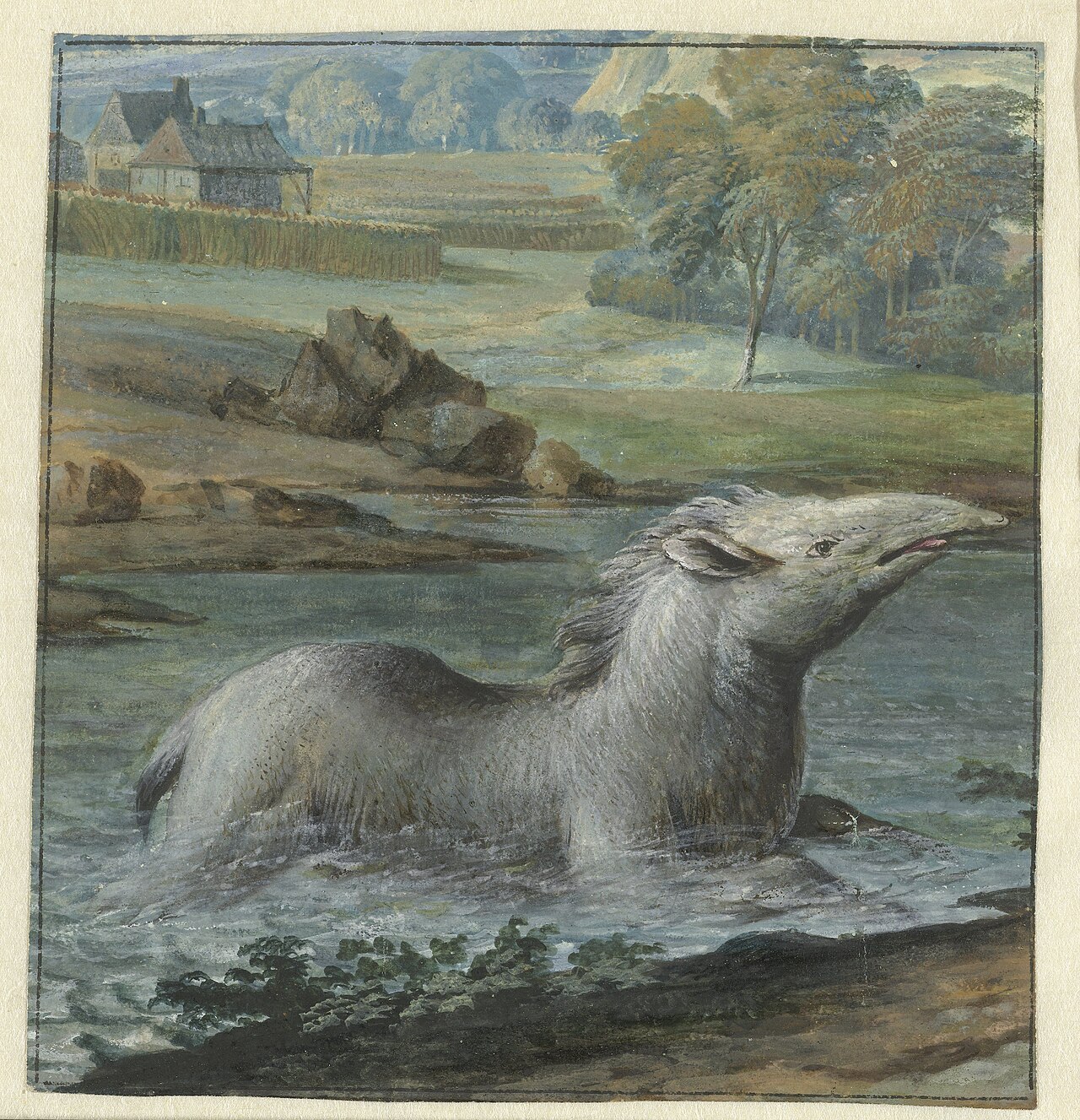
The tapir trunk is one of the most fascinating yet frequently misunderstood appendages in the animal kingdom—a short, fleshy proboscis that looks like a miniature elephant trunk and behaves like a combination of hand, snorkel, and gas mask. If you have ever watched a tapir at a zoo or glimpsed one on a wildlife documentary, you have probably asked the same question: why does this stout, pig-like animal have a trunk at all? The surprising truth is that tapirs are not ancient cousins of elephants, and their trunks did not evolve for the reasons most people assume. Far from being a clumsy oddity, the tapir trunk is a finely tuned survival tool honed by more than fifty million years of evolution.
What Exactly Is the Tapir Trunk?
Anatomically, the tapir trunk is a flexible, prehensile proboscis formed by the fusion of the animal's nose and upper lip. It contains no bones, no heavy cartilage, and no rigid structure—just a dense mesh of muscles, connective tissue, blood vessels, and nerves wrapped in tough skin. The tip of the trunk houses the nostrils, which sit side by side at the very end, and this entire structure can be extended, retracted, curled, and angled with surprising precision.
In proportion to body size, the tapir trunk is modest. An adult lowland tapir standing about one metre tall at the shoulder has a trunk of roughly 10 to 20 centimetres (4 to 8 inches) in length—little more than a fleshy stub compared with the two-metre trunk of an African elephant. Yet that stub is remarkably strong. Tapirs use it to yank leaves from thorny branches, twist ripe fruit from trees, and even drag small branches into reach. Because the tip is lined with sensitive nerve endings, the tapir trunk also works as a delicate sensory probe, letting the animal inspect food, water, and other tapirs in near-total darkness.
If you look closely at a tapir's face, you will notice another clever detail: the trunk is not merely a nose. It is a multitasking device that works together with the animal's keen hearing and excellent sense of smell to make up for its relatively poor eyesight. As naturalist and writer Sy Montgomery once put it, tapirs "see" as much through their trunks as through their eyes. In the dense, dim understory of tropical rainforests, where a flash of movement or a patch of colour is often hidden behind foliage, the trunk becomes the tapir's primary window to the world.
The Surprising Truth About the Tapir Trunk
Most people assume that tapirs must be distant relatives of elephants because both animals have trunks. But the truth is far more interesting. Tapirs are odd-toed ungulates, belonging to the order Perissodactyla, which means their closest living relatives are horses and rhinoceroses, not elephants. Elephants belong to the order Proboscidea, a completely separate branch of the mammalian family tree. In other words, the elephant does not appear on the tapir's family reunion poster at all.
So how did two unrelated animals end up with similar trunks? The answer is convergent evolution: when two species face similar ecological problems, natural selection can fashion similar solutions from entirely different starting points. The tapir trunk began to take shape in the Eocene epoch, around 50 million years ago, when early ancestors of modern tapirs roamed dense forests in the Northern Hemisphere. These early tapirs, similar in size to a sheep and lacking any trunk, were probably selective browsers, reaching into shrubs and trees for the most nutritious leaves and fruits.
As tropical forests became denser and more competitive, the ability to reach slightly farther, to grasp a single leaf, or to strip a bundle of fruit from a high branch became a real advantage. Over millions of years, the nostrils and upper lip, supported by a lengthening nasal skeleton, gradually fused into a mobile prehensile snout. Fossil evidence shows that by the Oligocene epoch, roughly 30 million years ago, tapirs had evolved trunks much like those we see today. The tapir trunk, therefore, is not an unfinished copy of an elephant's trunk; it is a perfectly complete original, refined by an ancient lineage that has successfully survived several mass extinctions.
How Does the Tapir Trunk Compare to an Elephant's Trunk?
Comparing the tapir trunk with an elephant's trunk reveals a fascinating lesson in biology: similar tools can be built to different specifications. An elephant's trunk is a masterpiece of muscular engineering, containing an estimated 40,000 individual muscles and capable of lifting a log weighing hundreds of kilograms or delicately picking up a single peanut. The African elephant's trunk even ends in two flexible "fingers," while the Asian elephant has just one, allowing for fine manipulation that rivals a human hand.
The tapir trunk, by contrast, contains far fewer muscles and cannot twist with the same gymnastic flexibility. It is more like a stiff, fleshy finger with a firm grip
❓ Frequently Asked Questions
💬 What do tapirs use their trunks for?
Tapirs use their flexible trunks to grasp leaves, pluck fruit, and pull down branches for feeding. They also rely on their trunks for sniffing out food and as a snorkel while swimming.
💬 Is a tapir's trunk like an elephant's trunk?
No — a tapir's trunk is an elongated nose and upper lip, not a true trunk like an elephant's. It's much shorter and less dexterous, but it is still prehensile and can be wrapped around objects.
💬 Can tapirs breathe underwater using their trunk?
Yes, tapirs are strong swimmers and use their trunk as a snorkel to breathe while the rest of their body is submerged. This helps them escape predators and forage in rivers.
💬 Do all tapirs have trunks?
Yes, all four living species of tapir — the lowland, mountain, Baird's, and Malayan tapir — have short, prehensile trunks. The trunk is a flexible snout with a distinct tip.