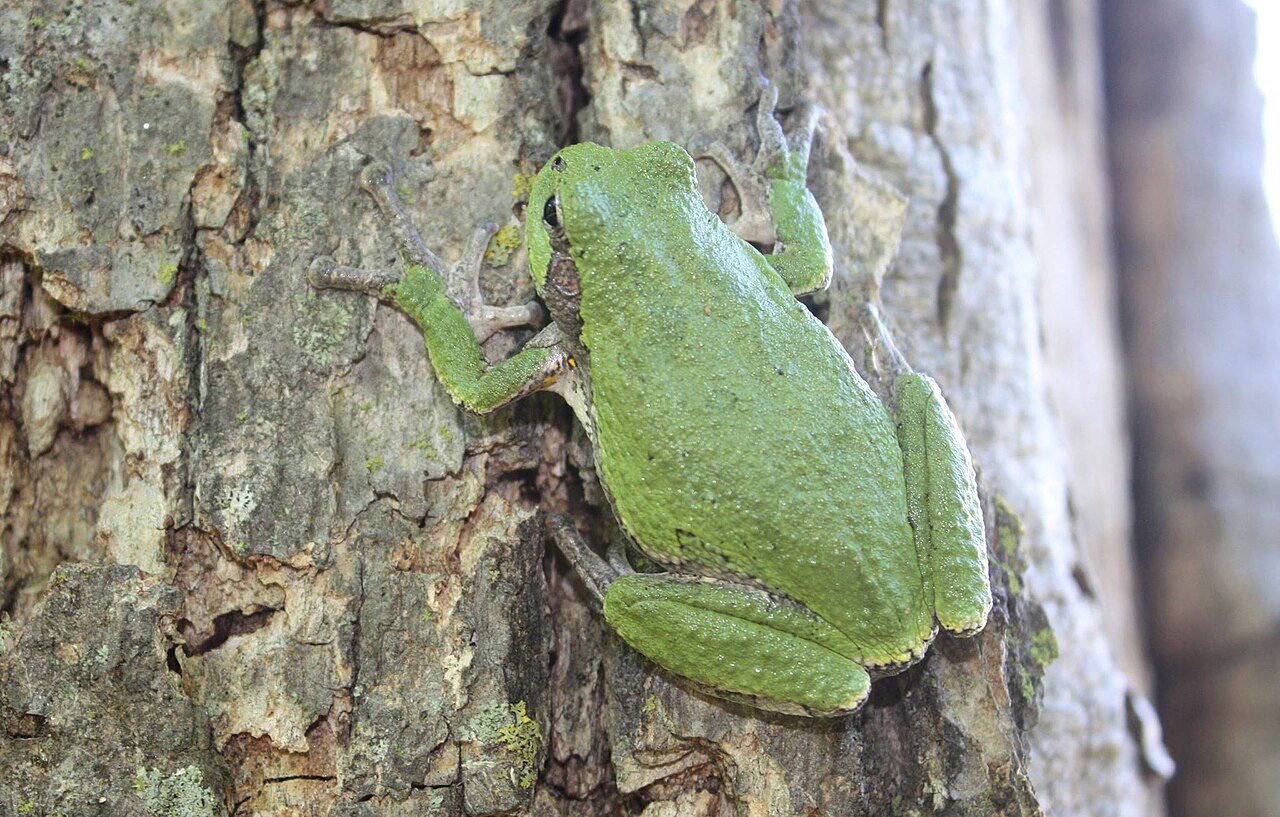
- The Anatomy of Tree Frog Toe Pads
- A Microscopic Landscape of Hexagons
- The Unsung Hero: Mucus Secretion
- The Physics of the "Wet" Stickiness: How Tree Frog Toe Pads Work
- Capillary Forces and the Meniscus
- Friction: The Unsung Hero of Footholds
- Debunking the Myths: Suction Cups and Geckos
- Why Suction is Impossible for Tree Frogs
- Frogs vs. Geckos: A Tale of Two Adhesives
- Masters of the Arboreal Realm: Life with Sticky Toes
- Incredible Species: Size, Diet, and Habitat
- More Than Just a Climbing Aid
- The Self-Cleaning Toe Pads: A Solution to Contamination
- Future Technologies Inspired by Tree Frog Toe Pads
- ❓ Frequently Asked Questions
The remarkable secret of tree frog toe pads lies not in suction cups or static cling, but in a sophisticated combination of wet adhesion, mucus secretion, and nanoscale architecture. Trees are a dangerous place for a small amphibian; a single fall from the canopy could mean injury or becoming a midnight snack for a waiting predator. Yet, tree frogs navigate this vertical world with a confidence that defies our everyday physics. They cling to the undersides of slick, rain-soaked leaves, scale sheer glass windows, and make death-defying leaps between branches with effortless grace. This intricate biological glue, honed by millions of years of evolution, enables them to do all this without expending a single drop of muscular energy on gripping.
The Anatomy of Tree Frog Toe Pads
At a casual glance, a tree frog's foot looks simple, a regular amphibian hand with slightly widened toes. But under a powerful microscope, the surface of the toe pad reveals a complex, alien landscape that is perfectly engineered for one purpose: sticking. The secret is not in the overall shape of the toe, but in the microscopic details of its skin.
A Microscopic Landscape of Hexagons
The skin on the underside of a tree frog's toe pad is not smooth like a human's fingertip. Instead, it is covered in a mosaic of tightly packed, elongated epithelial cells. These cells, typically measuring between 10 and 15 micrometers across, are shaped like hexagonal pillars or prisms, standing side by side with air-tight precision. But this isn't just a simple flat surface. Each hexagonal cell is topped with millions of microscopic, peg-like structures called fibrils or nanopillars. This creates an incredibly high surface area, maximizing the contact between the frog's foot and the surface it's climbing.
These cells are entirely distinct from the rest of the frog's skin. They are highly vascularized, meaning they are packed with blood vessels, which allows for rapid fluid exchange. The outer layer of these cells is made of keratin, the same protein that makes up human hair and nails, but it's arranged in a specialized way that gives the pad both durability and flexibility. The entire structure is designed to interact with a microscopic layer of liquid, creating a bond strong enough to hold the frog's entire body weight.
The Unsung Hero: Mucus Secretion
If the hexagonal cells are the landing pad, mucus is the glue. Tree frog toe pads are dotted with hundreds of specialized glands that continuously secrete a thin layer of mucus onto the pad's surface. This isn't the thick, heavy slime that coats a frog's body to keep its skin moist, though they are chemically similar. The toe pad mucus is a delicate, watery fluid that is precisely engineered to have a specific viscosity.
This continuous secretion is vital. The mucus fills the microscopic valleys and grooves between the hexagonal cells, creating a thin fluid film. When the frog presses its toe against a leaf, this fluid is squeezed out, but not entirely. A layer just a few nanometers thick remains between the frog's toe pad cells and the leaf surface. This ultra-thin layer of liquid is the heart of the frog's sticky secret.
The Physics of the "Wet" Stickiness: How Tree Frog Toe Pads Work
The adhesion mechanism of tree frog toe pads is a classic example of nature solving a complex physics problem. It is not a simple "glue" in the traditional sense, but rather a dynamic process known as wet adhesion. This type of adhesion relies entirely on the presence of a liquid film between two surfaces.
Capillary Forces and the Meniscus
When a liquid is confined between a surface and a flat pad, it forms a shape called a meniscus, which curves at the edges. This curvature creates a pressure difference across the liquid-air interface, generating a force of attraction between the two surfaces. In the case of the tree frog, the mucus creates a massive meniscus at the edges of the hexagonal cells. This capillary force acts like a natural vacuum, pulling the toe pad and the leaf tightly together.
The magic happens because of the channels between the cells. When a frog applies the toe to a surface, fluid is squeezed from the contact zones into these tiny network of channels. This allows the top of the hexagons to get incredibly close to the surface, maximizing the area over which capillary forces can act. The spacing is critical; the channels are just wide enough to allow water to escape, preventing the pad from "hydroplaning" or sliding, but narrow enough to maintain a robust fluid connection.
Friction: The Unsung Hero of Footholds
While capillary forces provide the vertical pull (stickiness), they don't fully explain how frogs stay attached to steep, angled surfaces. The answer lies in friction. Recent studies using high-speed video and force transducers have revealed that tree frog toe pads are incredibly adept at generating friction, especially when the toe is dragged slightly backward.
This frictional force is due to the sheer viscosity of the mucus. As the frog's toe pad settles onto the surface, the mucus acts like a highly viscous glue. When the frog pulls its toe slightly inward (towards its body), it increases the pressure on the fluid film, making it even more resistant to movement. The hexagonal cells also play a role in friction. Their edges act like tiny microscopic "grippers" that interlock with the microscopic roughness of the leaf or branch. This combination of capillary pulling and viscous friction allows a frog to hold its position securely, even on a vertical surface, while expending minimal energy.
Debunking the Myths: Suction Cups and Geckos
It is a common misconception that tree frogs stick to surfaces using suction cups, akin to a rubber toy stuck to a window. This assumption is understandable, but entirely incorrect. Similarly, people often confuse frog adhesion with gecko adhesion, but these two incredible animals use strikingly different biological tricks.
Why Suction is Impossible for Tree Frogs
If tree frogs used suction, they would need an air-tight seal between their toe pads and the surface. They would also require a mechanism to actively pull the center of their pad upward to create a vacuum. Tree frog toe pads are solidly packed with cells and do not have the muscular structure necessary to lift their center. Furthermore, suction simply does not work underwater. Tree frogs frequently climb wet leaves during rainstorms or move in humid environments where water films are prevalent. If a tree frog relied on suction, it would lose all grip force when wetter surfaces submerged its feet. Instead, the capillary and viscous forces provided by their mucus are actually enhanced by a slight presence of water, allowing them to hold their grip in the wettest environments.
Frogs vs. Geckos: A Tale of Two Adhesives
Geckos are the undisputed champions of dry adhesion. Their toe pads are covered in tiny, branching hair-like structures called setae. Each seta is about 100 nanometers thick and ends in hundreds of even smaller structures called spatulae. These spatulae are so small that they interact with the molecules of the surface using weak electromagnetic forces called Van der Waals forces. These forces require a perfectly dry surface; any moisture breaks the intimate spatial contact needed for them to work.
Tree frogs, conversely, operate in a world saturated with moisture. Their "wet adhesion" system is specifically adapted to overcome the issue of liquid films on surfaces. Where a gecko's dry adhesive fails on a wet, slippery leaf, a tree frog excels. They are diametrically opposed evolutionary solutions to the same problem: climbing smooth vertical surfaces.
Masters of the Arboreal Realm: Life with Sticky Toes
The evolution of sticky tree frog toe pads unlocked a world of ecological opportunity. It allowed these amphibians to escape the ground, where countless predators roam, and colonize the vertical wonders of the rainforest canopy. Their lives, diets, and behaviors are intimately tied to their climbing ability.
Incredible Species: Size, Diet, and Habitat
There are over 800 species of tree frogs across the globe, and the adaptations of their toe pads vary gracefully based on their specific lifestyle:
- Red-eyed Tree Frog (Agalychnis callidryas): Immortalized in countless nature documentaries, this vibrant frog measures just 4 to 7 centimeters. It is nocturnal, spending its days sleeping on the undersides of large tropical leaves. Its extensive toe pads allow it to hold onto these smooth, waxy surfaces during heavy rainstorms. They feed on a diet of insects, including moths and crickets, which they catch with a lightning-fast tongue snap while balanced securely on a branch.
- White's Tree Frog (Litoria caerulea): Native to Australia and New Guinea, the White's tree frog is a larger, more robust species, reaching lengths of up to 11 centimeters. It secretes a waxy substance from its toe pads and skin to prevent dehydration. These frogs are incredibly patient predators, using their sticky toes to cling to vertical branches for hours, waiting to ambush unwary beetles or roaches. In captivity, they are known for their remarkable lifespan, often exceeding 15 years, and their iconic "coin" shaped toe pads are a classic example of wet adhesion in a drier environment.
- Waxy Monkey Tree Frog (Phyllomedusa sauvagii): Found in the dry Gran Chaco of South America, this frog uses its toe pads to climb amongst thorns and rough bark. Unlike the liquid-mucus reliant species, it secretes a waxy lipid coating that it smears over its entire body to reduce water loss. Its toe pads function exceptionally well on the drier surfaces it inhabits, showing the versatility of the frog adhesion system.
- European Tree Frog (Hyla arborea): The classic small tree frog of European ponds and wetlands, measuring about 4 to 5 centimeters. They are excellent climbers and utilize their toe pads to climb reeds and tall grasses to sing and hunt for flies. Their toe pads have been the subject of extensive scientific research, particularly regarding how they maintain their grip on wet, flexible surfaces like swaying grass blades.
More Than Just a Climbing Aid
Tree frog toe pads are not just for escaping the ground. They are essential tools for behavioral survival. Male tree frogs must grip the slippery backs of females during amplexus (mating) for extended periods, sometimes for hours or days. Strong toe pad adhesion ensures they don't fall off while other males vie for the female's attention. The pads also provide a stable platform for jumping to catch fast-moving prey and allow for the precise, silent movements needed to approach skittish insects without creating vibrations that might signal danger.
The Self-Cleaning Toe Pads: A Solution to Contamination
Imagine walking through a forest with sticky tape on the bottom of your shoes. Within seconds, the tape would be covered in dirt, leaf litter, and debris, leaving it useless. Tree frogs face this exact problem daily. The surfaces they climb are covered in microscopic dust, pollen, and decaying organic matter. How do they maintain the pristine surface contact required for their sticky toe pads to work?
The answer lies in the amazing self-cleaning properties of wet adhesion. The continuous flow of mucus from the glands acts as a constant wash for the toe pad. As the frog walks, particles (contaminants) are picked up and become embedded in the mucus film. These particles are then moved into the microchannels between the hexagonal cells.
Studies have shown that the shear force generated during the frog's stride is enough to dislodge these particles, and the continuous, slow flow of mucus effectively flushes them off the edge of the pad. This "liquid self-cleaning" is highly efficient, even more so than the dry, gecko-style Van der Waals adhesion. It ensures that the toe pad maintains a near-perfect contact area with the climbing surface, guaranteeing a secure foothold with every single step, even in the dirtiest jungle environments.
Future Technologies Inspired by Tree Frog Toe Pads
Scientists and engineers are acutely aware that nature's design solutions are often millions of years ahead of human innovation. The tree frog toe pads have become a major source of inspiration for a field called bioinspiration, where biological structures are mimicked to solve modern engineering and medical problems.
The challenge with most man-made adhesives is that they either require dry surfaces (like tape) or toxic chemicals (like superglue). The tree frog offers a blueprint for a "smart" adhesive that works on wet, dynamic, and contaminated surfaces. Researchers are attempting to replicate the hexagonal cell pattern and microscopic channels to create synthetic adhesives. These "frog-inspired" adhesives could have an immense impact:
- Medical Adhesives: Imagine a surgical glue or wound dressing that works effectively on internal organs, which are constantly wet with blood and bodily fluids. A frog-inspired adhesive could replace sutures and staples, reducing trauma to tissues. It could also be used for drug-delivery patches that stay attached inside the body for weeks.
- Climbing Robotics: In disaster zones, climbing robots that can scale wet, crumbling walls would be invaluable. A robot with frog-like feet could traverse similar surfaces, using a wet adhesive system to cling to smooth or uneven terrain where traditional wheels or vacuum suction fail.
- Tire Technology: Automotive engineers have looked to frog toe pads to improve the grip of tires on wet roads. The hexagonal channel patterns could inspire tire tread designs that actively evacuate water from the contact patch, preventing dangerous hydroplaning and improving safety.
- Everyday Grips: From non-slip socks for babies to grips for power tools used in damp environments, the applications for a strong, wet-gripping material are
❓ Frequently Asked Questions
💬 How do tree frog toe pads stick to surfaces?
Tree frog toe pads are covered in tiny hexagonal cells with microscopic channels between them, and the cells secrete mucus that creates a thin, watery film. This film generates capillary and van der Waals forces that hold the pad to the surface, much like a wet adhesion system.
💬 Why do tree frog toe pads stick better when wet?
The mucus on a tree frog's toe pads acts as a liquid layer that fills gaps between the pad and the surface, increasing contact area and creating strong capillary adhesion. Unlike dry adhesives, this wet adhesion actually works best in damp or humid conditions.
💬 Do tree frogs have suction cups on their toes?
No, tree frogs do not have suction cups; their toe pads rely on wet adhesion, not vacuum suction. The combination of soft, deformable cells and a thin mucus film allows them to cling to leaves and branches, even at steep angles.
💬 How do tree frogs unstick their toe pads so quickly?
Tree frogs peel their toes away from the surface at a sharp angle, breaking the capillary and van der Waals bonds cell by cell. This quick, lever-like motion lets them move effortlessly without leaving a sticky residue.