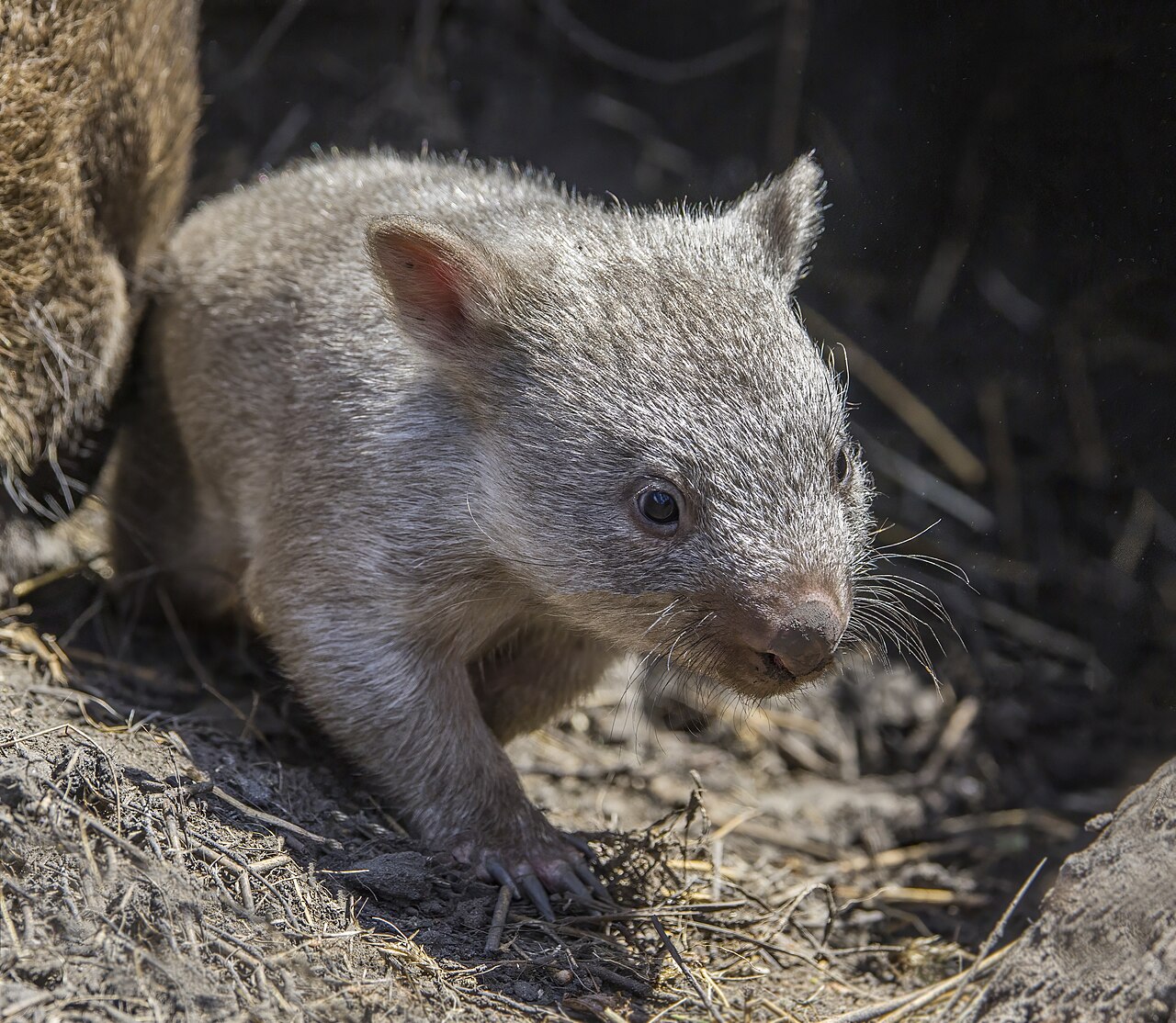
- Meet the Wombat: Australia's Burrowing Bulldozer
- The Anatomy Behind Wombat Cube Poop
- An Extremely Slow Digestion
- The Grooved Intestine That Shapes the Cube
- Why Would an Animal Evolve Cube-Shaped Droppings?
- Stacking Without Rolling
- Scent Marking and Communication
- Other Proposed Benefits
- What a Wombat Cube Actually Looks and Feels Like
- How Scientists Solved the Mystery
- Wombats, Digestion, and the Bigger Picture
- Common Myths About Wombat Cube Poop
- Myth: The cubes are shaped by the anus
- Myth: Wombats only poop cubes
- Myth: The cubes are for building or playing
- Myth: Scientists have known the answer for decades
- Frequently Asked Questions
- How big is a wombat cube?
- How many does a wombat produce?
- Are wombat cubes dangerous?
- Can you keep a wombat as a pet?
- Do other animals poop cubes?
- Conclusion: Small Cubes, Big Science
- ❓ Frequently Asked Questions
The question of why wombats produce wombat cube poop has puzzled scientists, delighted the internet, and confused just about everyone who has ever seen a photo of these strange little blocks. Wombats are already unusual animals — chunky, burrow-dwelling marsupials from Australia with rodent-like teeth and a famously tough rear end — but their droppings are arguably their strangest feature. Instead of the usual pellets or logs, wombats deposit neat, dry cubes, each one roughly two centimetres across, and they leave them in conspicuous places like the tops of rocks and logs. This article explains the real science behind the cube, from the anatomy of the wombat intestine to the evolutionary reasons for stacking droppings like tiny bricks.
Meet the Wombat: Australia's Burrowing Bulldozer
Before getting to the poop, it helps to know the animal. There are three living wombat species: the common wombat (Vombatus ursinus), the southern hairy-nosed wombat (Lasiorhinus latifrons), and the critically endangered northern hairy-nosed wombat (Lasiorhinus krefftii). All three are found only in Australia, and all three are marsupials, meaning females raise their young in a pouch.
Wombats are stocky and powerful. A common wombat typically weighs between 20 and 35 kilograms and measures around 90 to 115 centimetres from nose to a very short tail. They have short, sturdy legs, strong claws built for digging, and a pouch that opens backwards — an adaptation that stops soil from falling into it while the mother digs.
Their habitat ranges from wet forests and coastal scrub in southeastern Australia to dry, semi-arid grasslands and mallee country in the south. Northern hairy-nosed wombats survive in a single small area around Epping Forest National Park in Queensland, with a population that has been painstakingly rebuilt from around 35 individuals in the 1980s to roughly 300 today thanks to fencing, predator control, and careful management.
Wombats are herbivores and grazers. They eat native grasses, sedges, rushes, roots, bark, and mosses, and they can chew tough vegetation with teeth that keep growing throughout their lives, much like a rodent's. They are mostly nocturnal, emerging at night to graze for several hours, and they spend the day resting in burrow systems that can be remarkably extensive. A single wombat may use a dozen or more burrows, and connected tunnel networks have been measured at over 20 metres long in some cases, with multiple entrances.
Lifespan varies by species and conditions. Common wombats in the wild often live around 5 to 15 years, while animals in captivity have reached their twenties. Northern hairy-nosed wombats are slow breeders: females typically produce only one joey every two years, which is one reason the species is so vulnerable.
The Anatomy Behind Wombat Cube Poop
For years, the cube shape was assumed to be the result of the dry, fibrous diet or of the droppings being squeezed as they dried in the sun. That explanation never quite worked, because a soft mass drying out would tend to crack and crumble rather than form clean flat faces and sharp corners. The real answer turned out to lie deep inside the wombat's gut.
An Extremely Slow Digestion
Wombats are among the most efficient digesters in the mammal world. Their food is low in nutrients and high in tough fibre, so they extract as much as possible by holding it in the digestive tract for a long time. A single meal can take roughly two weeks — sometimes up to around 14 to 18 days — to pass all the way through. During that time, the gut absorbs water aggressively, which is a big advantage in dry parts of Australia where every drop counts.
The result is that by the time waste reaches the end of the line, it is unusually dry. Wombat droppings contain very little moisture compared with those of most plant-eating mammals, which is why they come out as firm, solid blocks rather than soft pats.
The Grooved Intestine That Shapes the Cube
The decisive discovery came from a 2018 study led by Patricia Yang, then at the Georgia Institute of Technology, working with researchers including David Hu and scientists who provided wombat specimens from Australia. The team examined the intestines of wombats that had died after being struck by vehicles, and they found something remarkable: the cube shape is created gradually along the last section of the intestine, not at the very end.
The wombat's intestine is roughly 10 metres long, and the final portion — the last metre or so before the exit — has an unusual structure. Its walls are not uniformly thick. Instead, they vary in stiffness around the circumference, creating regions that stretch differently from one another. As faecal material is pushed through this section, the varying elasticity moulds it into a shape with four relatively flat sides and rounded corners.
Yang's team described the process as similar to the way a pastry chef shapes dough by pressing it into a mould, or how a tube with uneven walls deforms its contents as they move through. Crucially, the researchers found that the cubes form in stages: the material starts as a more irregular shape and becomes progressively more cube-like as it travels, with the corners sharpening near the end. By the time a wombat poops, the shape is essentially finished.
The team also noted that the corners of wombat cubes are not perfectly sharp but slightly rounded, which fits with a soft material being squeezed rather than cut. And the shape is consistent: researchers have measured the angles and found them close to the 90 degrees you would expect from a genuine cube, though the faces can be slightly concave or convex depending on how dry the material is.
Why Would an Animal Evolve Cube-Shaped Droppings?
Evolution rarely produces something as specific as a cube without a reason, and the leading explanations involve communication and territory. Wombats are solitary, territorial animals that live in overlapping home ranges and defend burrows. They cannot rely on sight to mark territory at night in dense vegetation, so scent is the practical option.
Stacking Without Rolling
The most widely accepted advantage is simple physics. A cube does not roll. A round dropping placed on a rock or a log would tumble away, especially on the uneven ground of the Australian bush. A cube stays put. That lets a wombat place its droppings precisely on top of rocks, logs, and other raised surfaces where they will be noticed — and where the scent will carry.
Field observations support this. Wombats frequently deposit droppings on prominent objects, sometimes in small piles, and they revisit these sites. A flat-faced block balances reliably on a flat surface, while a sphere would not.
Scent Marking and Communication
Wombat droppings carry chemical signals. They contain secretions from scent glands, and the droppings themselves hold information about the individual — likely including identity, sex, reproductive state, and possibly social status. Because the droppings are dry and durable, the scent persists for a long time, which makes them effective markers.
Researchers have also observed that wombats sometimes defecate in response to disturbance or in the presence of other wombats, and that they sniff and investigate marked objects. In a species that is largely nocturnal and spread out across large home ranges, leaving messages on high points is an efficient way to avoid confrontations. A cube that stays on its rock is a message that keeps being delivered.
Other Proposed Benefits
Some researchers have suggested additional or complementary explanations. The flat shape may make droppings easier to deposit in tight spaces, or the shape may simply be a byproduct of the intestine's structure that happens to be useful. It is also possible that the dryness itself is the primary adaptation — conserving water — and the cube is a side effect that natural selection then exploited for marking. As with many evolutionary questions, the honest answer is that the cube probably serves more than one purpose.
What a Wombat Cube Actually Looks and Feels Like
If you ever encounter one, the reality matches the reputation. A typical wombat cube is about two centimetres on each side, though size varies with the animal and the species. They are greyish-brown to dark brown, dry to the touch, and surprisingly hard once fully dried. They have four distinct faces and slightly rounded edges, and they often show faint ridges or grooves from the intestine walls.
Wombats produce a lot of them. An adult can deposit around 80 to 100 droppings in a night, which adds up to a substantial amount of marking material over a home range. Because the droppings are so dry and fibrous, they break down slowly and can remain visible on a rock for weeks.
For anyone who has only seen the internet memes, the most surprising detail is how orderly they look. They are not roughly cubic or vaguely blocky; they are recognisably, consistently cube-shaped, and they stack. That consistency is what made the 2018 study possible in the first place — the researchers could measure the shapes and trace where in the gut they formed.
How Scientists Solved the Mystery
The cube mystery was solved through a combination of dissection, measurement, and creative engineering. Yang's team obtained intestinal tracts from wombats that had died in road accidents and from zoos, then inflated and examined them. They measured the thickness and stiffness of the intestinal wall at different points and found the alternating stiff and flexible bands that produce the shape.
The team also tested their understanding by making models. They created moulds based on the geometry of the wombat intestine and used materials like silicone to see whether a soft substance pushed through such a channel would emerge as a cube. It did, which supported the idea that the shape is mechanical rather than chemical.
The study, published in the journal Soft Matter in 2018 under the title "How do wombats poop cubes?," drew worldwide attention, partly because the question sounds like a joke and partly because the answer is genuinely elegant. Yang later applied similar thinking to other animals, including work on how different species' guts produce different dropping shapes.
One important limitation is sample size and species coverage. Most detailed work has involved common wombats, and it remains possible that the exact mechanism differs slightly in hairy-nosed species. There is also ongoing interest in whether the intestine's structure varies with diet or season, which could affect how consistently cubes form.
Wombats, Digestion, and the Bigger Picture
The cube is not an isolated oddity. It sits at the intersection of several wombat specialisations that all point in the same direction: surviving on poor food in dry country while living a slow, solitary, burrow-based life.
- Slow digestion extracts maximum nutrition from fibrous grass and conserves water.
- Dry droppings reduce water loss, which matters in arid and semi-arid habitats.
- Backward-facing pouch protects young from flying soil during digging.
- Powerful rump and a reinforced rear end let a wombat crush a predator's head against a burrow roof — a genuine defence against dingoes and foxes.
- Extensive burrow systems provide shelter from heat and predators and create habitat used by other animals.
- Slow reproduction makes populations vulnerable, especially the northern hairy-nosed wombat.
Conservation is a serious part of the wombat story. Common wombats face threats from sarcoptic mange, road collisions, habitat clearing, and drought. Northern hairy-nosed wombats are among the rarest large mammals in the world and depend on intensive protection. Southern hairy-nosed wombats live in fragmented populations across South Australia and are affected by land clearing and disease.
Understanding wombat biology — including something as apparently trivial as the shape of their droppings — helps researchers monitor populations. Scat surveys can reveal where wombats are present, how many there are, and how healthy they seem, without the need to capture animals. Cube-shaped droppings are, in a practical sense, a survey tool.
Common Myths About Wombat Cube Poop
Myth: The cubes are shaped by the anus
This is the most common misconception. The sphincter does not cut the dropping into a cube. The shape is already formed higher up, in the final section of the intestine, and the exit simply releases it. A circular opening cannot produce flat faces and right angles.
Myth: Wombats only poop cubes
Wombats do produce other shapes on occasion, especially when their diet or hydration changes, or when they are ill. Soft or irregular droppings can occur. The cube is the norm for a healthy wombat on a typical diet, but it is not an absolute rule.
Myth: The cubes are for building or playing
Wombats are not stacking blocks for fun, and they do not build structures with their droppings. The stacking behaviour is about scent marking on raised surfaces, not construction. It is a communication strategy, not architecture.
Myth: Scientists have known the answer for decades
The mechanism was only properly described in 2018. Before that, the cube shape was well known to biologists and park rangers but poorly explained. The study was notable precisely because such an obvious question had gone unanswered for so long.
Frequently Asked Questions
How big is a wombat cube?
Roughly two centimetres per side, though this varies with the individual and species. They are small enough to hold several in one hand.
How many does a wombat produce?
An adult may produce around 80 to 100 droppings in a single night, spread across its territory.
Are wombat cubes dangerous?
No. They are dry plant waste. Normal hygiene applies, as with any animal droppings, but they are not venomous or aggressive in any way.
Can you keep a wombat as a pet?
No. Wombats are wild animals protected by law in Australia, they need large territories and specialised diets, and they can be dangerous when cornered. They are not domestic pets.
Do other animals poop cubes?
Not in the same way. Some animals produce blocky or pellet-shaped droppings, and some produce very dry scat, but the wombat's consistent four-sided cube appears to be unique among mammals.
Conclusion: Small Cubes, Big Science
Wombat cube poop is one of those rare natural phenomena that is both funny and genuinely instructive. The cube is not a fluke and not a joke. It is the product of a ten-metre intestine with uneven walls, a digestion process that takes up to two weeks, and a dry diet that leaves almost no water to spare. The shape then does real work: it stops droppings from rolling off rocks and logs, letting wombats leave durable scent messages across their territories.
The next time you see a photo of a wombat's tidy little blocks, remember what they represent. They are a record of slow, efficient digestion, a marker of territory in a solitary nocturnal life, and a reminder that evolution solves problems in ways that can look absurd until you understand them. Wombats have been quietly manufacturing cubes for millions of years. It took scientists until 2018 to work out how — and the answer turned out to be every bit as satisfying as the question.
❓ Frequently Asked Questions
💬 Why do wombats have cube-shaped poop?
Wombats produce cube-shaped droppings because their intestines have varying elasticity, which squeezes waste into distinct corners as it moves through. This shape stops the droppings from rolling away when a wombat uses them to mark territory on rocks and logs.
💬 How does a wombat make cube-shaped poop?
The last section of a wombat's intestine has grooves of different stiffness, so as feces is pushed through it gets molded into a cube with flat sides and rounded edges. The droppings stay soft enough to be shaped but firm enough to hold their form once they exit.
💬 Are wombat droppings really perfectly cube-shaped?
They are close to cubes but not mathematically perfect, with slightly rounded edges and corners. Even so, they are the only known animal droppings that come out as distinct, stackable cubes.
💬 Why do wombats stack their cube poop?
Wombats place their droppings on top of rocks, logs, and other raised spots to mark territory and communicate with other wombats. The cube shape keeps each dropping from rolling off, so the piles stay visible as scent signals.