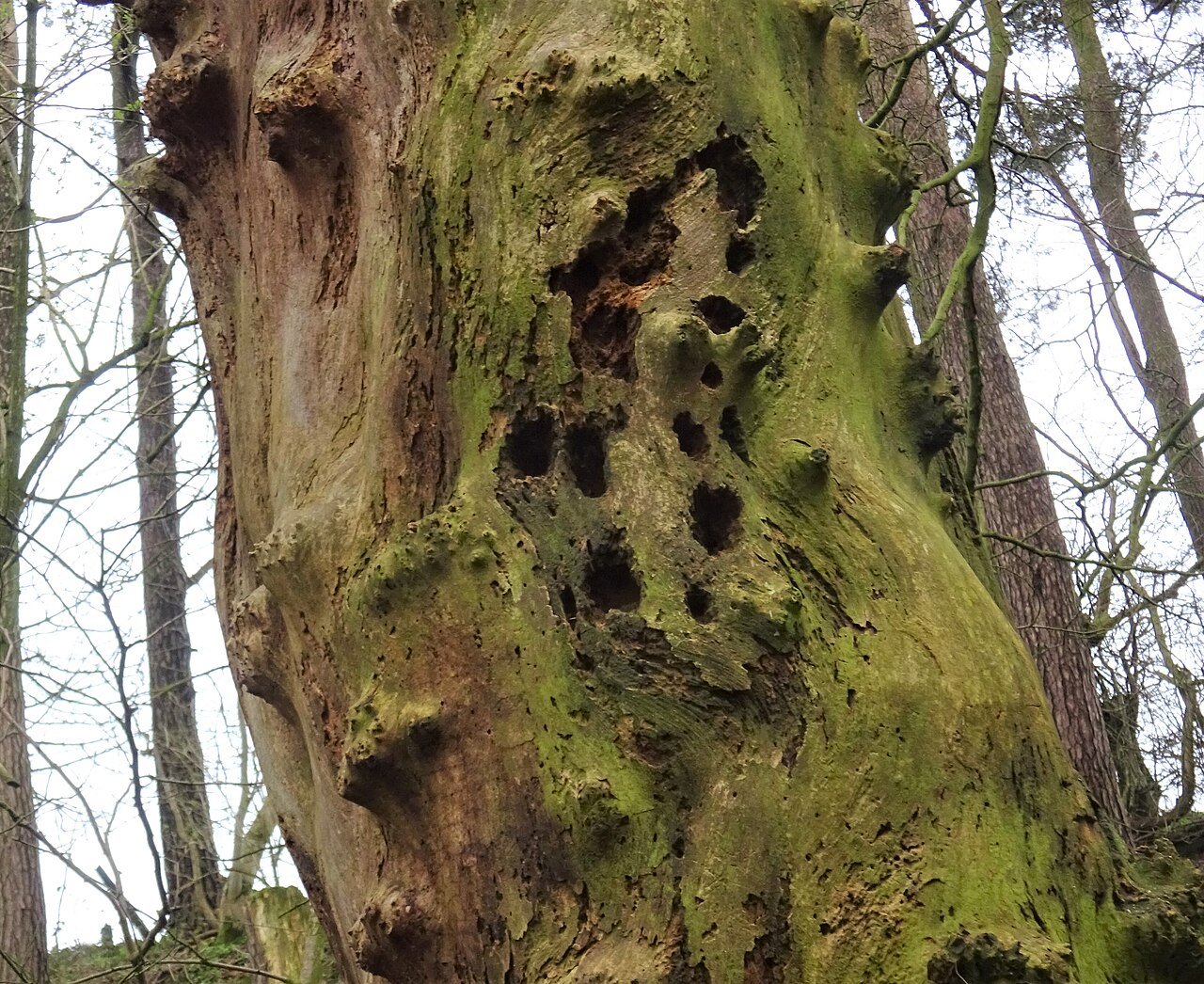
- Why Do Woodpeckers Peck Wood? The Four Core Reasons
- 1. Foraging: Pecking as a Dinner Bell
- 2. Drumming: Communication, Not Construction
- 3. Excavating Cavities: Home Improvement, Woodpecker Edition
- 4. Tapping and Courtship Displays
- Built for Impact: The Anatomy Behind the Head-Banging
- Shock-Absorbing Structures
- More Than Just a Helmet
- Meet the Peckers: Species, Sizes, and Lifestyles
- When Woodpeckers Peck Houses — and What to Do
- Practical Deterrents
- The Ecological Value of All That Noise
- Frequently Asked Questions About Woodpecker Pecking
- Do woodpeckers get headaches?
- Why do woodpeckers peck metal?
- Is pecking ever a sign of a sick tree?
- The Bottom Line on Why Woodpeckers Peck Wood
- ❓ Frequently Asked Questions
If you've ever been jolted awake at dawn by a rapid-fire rat-a-tat on your gutter, you've probably wondered: why do woodpeckers peck wood? The short answer is that pecking isn't vandalism or mischief — it's how woodpeckers eat, communicate, build homes, and even court mates. The longer answer is a fascinating story of evolutionary engineering, because these birds hammer their faces into solid timber thousands of times a day at speeds that would give a human a concussion. This article unpacks the real reasons behind all that drumming, the anatomy that makes it possible, and when the behavior should (and shouldn't) worry a homeowner.
Why Do Woodpeckers Peck Wood? The Four Core Reasons
Woodpeckers don't peck randomly. Nearly every strike serves one of four biological purposes, and understanding them makes it much easier to interpret what you're hearing outside your window.
1. Foraging: Pecking as a Dinner Bell
For most woodpecker species, the primary reason for pecking is food. Woodpeckers are specialized insectivores that hunt by excavating into bark and sapwood to reach beetle larvae, carpenter ants, termites, wood-boring moth caterpillars, and other invertebrates hidden inside trees. A Downy Woodpecker may probe small branches and weed stems, while a Pileated Woodpecker — North America's largest, at roughly 16 to 19 inches long — can chisel out rectangular cavities up to several inches deep in pursuit of carpenter ants.
Not all pecking is about insects. Sapsuckers, a subgroup of woodpeckers, drill neat rows of shallow wells in living trees and then lap up the sap and the insects attracted to it. The Acorn Woodpecker of the American West takes a different tack entirely: it drills thousands of small holes in "granary trees" and wedges acorns into them for storage, sometimes maintaining a single granary for generations. And some species supplement their diet with fruit, nuts, seeds, and even the contents of hummingbird feeders.
2. Drumming: Communication, Not Construction
That fast, mechanical roll you hear in spring — often described as sounding like a tiny jackhammer — is drumming, and it has nothing to do with finding food. Woodpeckers drum on resonant surfaces to advertise territory and attract mates. They prefer hollow branches, dead snags, metal gutters, chimney caps, and utility poles precisely because these surfaces amplify sound.
Each species has a signature rhythm. The Downy Woodpecker produces a short, even roll lasting about a second, while the Pileated Woodpecker's drum is slower and deeper. Drumming peaks from late winter through spring, which is why the noise complaints spike in March and April. It's essentially birdsong performed with a beak instead of a syrinx.
3. Excavating Cavities: Home Improvement, Woodpecker Edition
Woodpeckers are primary cavity nesters: they excavate their own holes rather than repurposing someone else's. A nesting cavity might take a pair one to three weeks to complete and can be a foot or more deep, with an entrance hole sized to the species — about 1.25 inches for a Downy Woodpecker, up to 3.5 to 4 inches for a Pileated. Many species also excavate separate, shallower roosting cavities for winter shelter, and some males maintain multiple roosts.
These cavities are ecological gold. Once abandoned, they become homes for screech owls, flying squirrels, bluebirds, wood ducks, and dozens of other secondary cavity nesters. A single woodpecker pair can therefore support an entire small community of wildlife.
4. Tapping and Courtship Displays
Beyond drumming, woodpeckers use softer taps and "flutter-tapping" during courtship. Males may tap gently around a prospective nest site to signal its quality, and pairs engage in mutual tapping and wing-fluttering displays. Some species also perform a undulating, swooping flight to advertise themselves. It's a quieter, more intimate form of the same head-banging behavior.
Built for Impact: The Anatomy Behind the Head-Banging
A woodpecker can strike a tree at roughly 15 to 20 times per second during drumming, with each impact decelerating the head at forces exceeding 1,000 times gravity in some measurements. Humans lose consciousness around 80 to 100 g. So how does a bird do this all day without brain damage?
Shock-Absorbing Structures
Research has revealed a suite of adaptations working together. The skull is thick and unusually dense, particularly around the forehead. A specialized, spongy bone structure at the front of the skull helps distribute impact forces. The tongue — which can be astonishingly long, wrapping around the back of the skull in some species — is supported by elongated hyoid bones that may also play a role in cushioning. The beak is short, straight, and chisel-like, with a reinforced inner layer of bone. Even the brain sits tightly within the skull, limiting the sloshing that causes concussions in humans.
More Than Just a Helmet
Recent studies suggest the story is more nuanced than simple shock absorption. High-speed video and modeling indicate that much of the impact energy is redirected into the body rather than absorbed by the skull, and that the bird's posture and neck musculature act as a suspension system. The woodpecker's brain is also relatively small and oriented in a way that reduces strain. In short, it's not one miracle feature but an integrated system — a reminder that evolution solves engineering problems in ways human designers are still studying.
Meet the Peckers: Species, Sizes, and Lifestyles
There are about 240 species of woodpeckers, piculets, and wrynecks worldwide, found on every continent except Antarctica and Australia. Their sizes span a remarkable range.
- Downy Woodpecker: About 6 inches long, the smallest in North America; common in backyards and parks.
- Hairy Woodpecker: About 9 inches; looks like a jumbo Downy but with a much longer bill.
- Red-bellied Woodpecker: About 9 to 10 inches; common in eastern US suburbs and a frequent feeder visitor.
- Northern Flicker: About 12 inches; unusual among woodpeckers for foraging heavily on the ground for ants.
- Pileated Woodpecker: 16 to 19 inches; the largest in North America, with a flaming red crest and a call often compared to a jungle bird.
- Imperial Woodpecker and Ivory-billed Woodpecker: Former giants of Mexico and the southeastern US, respectively; the Imperial is likely extinct, and the Ivory-billed's status remains fiercely debated.
Habitat varies by species but generally centers on forests, woodlands, and savannas with standing dead trees. Lifespans in the wild typically run 4 to 11 years, though banded individuals have reached their teens; larger species tend to live longer. Most are non-migratory, staying put year-round and relying on cached food and roost cavities to survive winter.
When Woodpeckers Peck Houses — and What to Do
Woodpecker damage to homes is real but often misunderstood. The birds rarely target sound, painted siding for no reason. Persistent pecking on a house usually signals one of three things: an insect infestation (the bird is feeding on ants, wasps, or beetle larvae in the wood), a drumming site chosen for its resonance (gutters, metal flashing, and cedar siding are favorites), or an attempt to excavate a cavity in soft or rotting wood.
Practical Deterrents
Because woodpeckers are protected in many countries — in the United States under the Migratory Bird Treaty Act, with some species like the Red-cockaded Woodpecker listed as endangered — lethal control is generally illegal without permits. Instead, focus on deterrence and root causes.
- Fix the underlying problem: Treat insect infestations and replace rotting wood; birds lose interest once the food source is gone.
- Physical barriers: Bird netting draped a few inches off the siding, or lightweight plastic sheeting, can break the habit.
- Visual and auditory scare tactics: Reflective tape, decoys, and wind chimes can help temporarily, though birds habituate.
- Provide alternatives: Leaving a dead snag (safely away from structures) or installing a nest box gives birds a legitimate target.
Timing matters too. Damage that appears in spring is often drumming and usually stops within weeks. Damage that persists into summer and fall is more likely foraging or cavity excavation and warrants a closer look at the wood itself.
The Ecological Value of All That Noise
It's easy to view a woodpecker as a nuisance, but ecologists call them keystone species for good reason. Their excavations create homes for other animals, their foraging helps control insect populations that might otherwise damage forests, and their sap wells feed hummingbirds, insects, and even bats. In the western US, the Acorn Woodpecker's granaries support complex social groups with cooperative breeding — a rare system among birds.
Woodpeckers also serve as indicators of forest health. A forest rich in woodpeckers is usually a forest with plenty of dead and dying wood, which in turn supports fungi, insects, and cavity nesters. Managing forests to leave some standing dead trees — a practice called retention forestry — is now standard advice partly because of what woodpeckers need.
Frequently Asked Questions About Woodpecker Pecking
Do woodpeckers get headaches?
There's no evidence they suffer concussions from routine pecking. Their skull structure, neck muscles, and brain orientation combine to manage impact forces, though scientists continue to debate exactly how the energy is dissipated.
Why do woodpeckers peck metal?
Metal surfaces like gutters and chimney caps are highly resonant, making them excellent for drumming. The bird isn't trying to damage the metal — it's broadcasting a message as far as possible.
Is pecking ever a sign of a sick tree?
Sometimes. Heavy, localized excavation can indicate internal decay or an insect infestation. If a woodpecker is repeatedly working one spot on a living tree, it's worth having an arborist take a look.
The Bottom Line on Why Woodpeckers Peck Wood
Why do woodpeckers peck wood? Because pecking is how they survive: it's their fork, their telephone, their front door, and their dating profile all rolled into one chisel-shaped beak. The behavior that sounds like construction work is actually a sophisticated toolkit refined over millions of years, supported by skull anatomy that engineers still study. So the next time a woodpecker wakes you at sunrise, you can grumble — but you can also appreciate that you're hearing one of nature's most remarkable adaptations at work. If the noise is on your house rather than a tree, address the underlying cause, try humane deterrents, and remember that these birds are protected, ecologically vital, and, frankly, doing exactly what they evolved to do.
❓ Frequently Asked Questions
💬 Do woodpeckers get headaches from pecking?
No—woodpeckers are built to handle it. Their skulls have spongy bone, a reinforced beak base, and a tongue that wraps around the brain case, all of which absorb shock and protect the brain from the roughly 1,000 g-forces of a strike.
💬 Why do woodpeckers peck on houses and metal?
They drum on hard surfaces like siding, gutters, and metal to make loud sounds that advertise territory and attract mates, since volume matters more than wood. This drumming is usually seasonal and often peaks in spring.
💬 How can I stop a woodpecker from pecking my house?
First figure out the reason: drumming for territory, feeding on insects, or excavating a nest hole. Deterrents like reflective tape, wind chimes, netting, and sealing holes help, but if they're after insects, treat the underlying infestation.
💬 Do woodpeckers damage trees?
Usually not—most pecking targets dead or dying wood and insects, and the small holes heal. Heavy excavation for nest or roost cavities can weaken a tree, but healthy trees generally tolerate it, and the cavities benefit other wildlife.