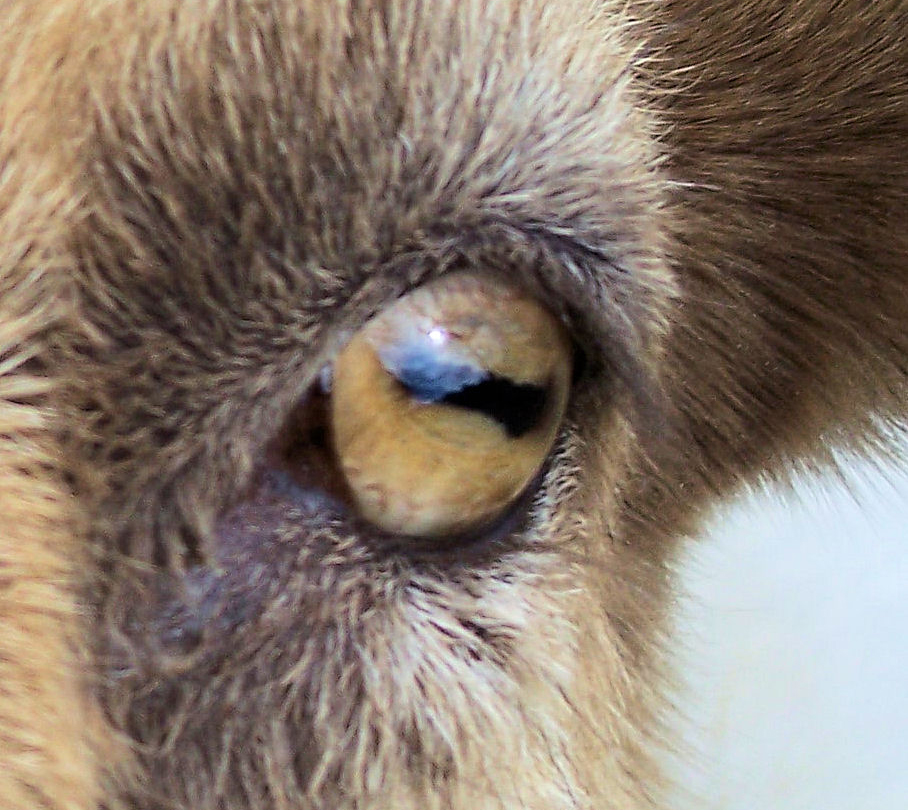
- The Science Behind Goats Rectangular Pupils
- How Rectangular Pupils Improve Depth Perception
- Goats Rectangular Pupils and Their Grazing Lifestyle
- Comparison with Other Prey Animals
- The Evolutionary Advantage of Goats Rectangular Pupils
- Behavioral Adaptations Linked to Vision
- Habitat and Diet: How Vision Supports Survival
- Real-World Examples: Goats in the Wild and on Farms
- Lifespan and Behavior: The Role of Vision in Daily Life
- Health Implications of Rectangular Pupils
- Misconceptions and Common Questions About Goat Eyes
- Conclusion: The Grazing Secret Revealed
- ❓ Frequently Asked Questions
Goats rectangular pupils are one of the most distinctive and fascinating features in the animal kingdom, offering a remarkable adaptation that directly supports their grazing lifestyle. Unlike the round pupils of humans or the vertical slits of cats, the horizontal, rectangular shape of a goat’s eye provides a wide panoramic view of the horizon, allowing them to detect predators while foraging for food. This unique trait is not just a quirk of evolution but a finely tuned survival mechanism that has helped goats thrive in diverse habitats worldwide.
The Science Behind Goats Rectangular Pupils
To understand why goats have rectangular pupils, it is essential to examine the anatomy of their eyes. Unlike the circular pupils of many mammals, goats possess pupils that are horizontally elongated, forming a shape that resembles a rectangle or a flattened oval. This structure is supported by specialized muscles in the iris that allow the pupil to contract and expand, but always maintaining a horizontal orientation. The key advantage lies in the way light enters the eye. When a goat grazes with its head down, its rectangular pupils rotate to stay parallel to the ground, ensuring that the animal maintains a wide field of vision without needing to lift its head constantly.
Research published in Science Advances in 2015 by Dr. Martin Banks and his team at the University of California, Berkeley, revealed that animals with horizontal pupils, including goats, are typically prey species that need to scan for threats across a broad landscape. The rectangular shape enhances peripheral vision, allowing goats to detect motion from the sides and even behind them, which is critical for avoiding predators like wolves, coyotes, and mountain lions. In fact, goats can see nearly 320 to 340 degrees around their body, with only a small blind spot directly behind their heads. This is a stark contrast to predators like cats, whose vertical slit pupils are optimized for judging distance and depth in low-light conditions during ambush hunting.
How Rectangular Pupils Improve Depth Perception
While horizontal pupils provide a wide field of view, they also enhance depth perception along the ground. By aligning the pupil horizontally, goats can better judge the distance and slope of uneven terrain, which is crucial when climbing rocky mountainsides or navigating steep pastures. This adaptation allows them to place their hooves accurately, reducing the risk of falls. The elongated shape creates a panoramic image that is sharp across the entire horizontal plane, helping goats spot subtle changes in elevation or obstacles in their path.
Goats Rectangular Pupils and Their Grazing Lifestyle
The connection between goats rectangular pupils and their grazing habits is direct and profound. Goats are herbivores that spend up to 8 to 10 hours a day eating, consuming a diet of grasses, leaves, shrubs, and even bark. When they lower their heads to graze, their pupils rotate in their sockets to maintain a horizontal alignment with the ground. This rotation is possible because the eyes are positioned on the sides of the head, and the muscles controlling the iris allow the pupil to tilt up to 50 degrees. As a result, goats can keep a constant watch on the horizon for predators while their heads are down, a crucial advantage for a prey animal.
This rotational ability is not just a passive feature; it is an active adaptation. For example, when a goat is grazing on a hillside in the Alps or the Rocky Mountains, its pupils remain parallel to the slope, providing a stable visual field. This allows the goat to detect approaching danger from any direction without interrupting its feeding. In contrast, animals with round pupils, such as humans, would need to lift their heads to see the horizon, wasting valuable time and energy. The rectangular pupil is essentially a built-in security system that enables efficient foraging while minimizing vulnerability.
Comparison with Other Prey Animals
Goats are not alone in having horizontal pupils. Other grazing animals like sheep, horses, and cows share this trait, but goats are particularly notable because of the extreme elongation of their pupils. Sheep, for instance, have similarly shaped pupils, but they are often less pronounced. This difference may be linked to the goat’s more varied diet and its preference for browsing on bushes and trees, which requires greater visual flexibility. Horses, on the other hand, have more rounded horizontal pupils, reflecting their different habitat and behavior. The rectangular shape in goats is optimized for a life spent balancing between open pastures and rugged, uneven terrain.
The Evolutionary Advantage of Goats Rectangular Pupils
From an evolutionary perspective, goats rectangular pupils are a classic example of natural selection shaping anatomy to suit a specific ecological niche. Goats are thought to have originated in mountainous regions of Asia and the Middle East, such as the Zagros Mountains and the Caucasus, where they faced constant predation from large carnivores. Over millions of years, individuals with wider, more horizontal pupils were better able to spot predators early and escape, passing on their genes. Fossil evidence suggests that early caprine ancestors, such as Goral and Tahr, already possessed elongated pupils, indicating that this trait is ancient and highly conserved.
Another evolutionary benefit is the ability to see in low-light conditions during dawn and dusk, when many predators are most active. While not as specialized as nocturnal animals, goats have adapted to use their rectangular pupils to gather more light from the horizon, improving their ability to detect movement in dim light. This is particularly important for goats living in foggy or overcast environments, such as the Scottish Highlands or the Himalayas, where visibility can be poor.
Behavioral Adaptations Linked to Vision
Goats also exhibit behaviors that complement their visual adaptations. For example, they often position themselves on high ground or ridges while grazing, using their wide field of view to scan for threats. When alarmed, they freeze and stare intently, using their horizontal pupils to pinpoint the source of danger. This behavior is common in feral goat populations in places like New Zealand and Australia, where they have become invasive species. Their ability to spot humans or dogs from hundreds of meters away makes them notoriously difficult to approach.
Habitat and Diet: How Vision Supports Survival
Goats are incredibly adaptable and can be found in a wide range of habitats, from arid deserts to alpine meadows. Their rectangular pupils are a key reason why they can thrive in such diverse environments. In the steep, rocky terrain of the Alps, for instance, Alpine ibex (a type of wild goat) use their vision to navigate cliff faces and locate sparse vegetation. Their pupils allow them to judge the distance between rocks and ledges with precision, reducing the risk of falls. Similarly, domestic goats raised on farms in flat pastures still rely on this visual system to monitor for threats like stray dogs or human intruders.
Diet also plays a role in shaping visual needs. Goats are browsers rather than strict grazers, meaning they prefer to eat leaves, twigs, and bark from bushes and trees. This requires them to look up frequently to select food items, but their rectangular pupils ensure that they never lose sight of the ground. This dual focus is possible because the horizontal pupil provides a continuous visual field from near to far, allowing goats to switch between close-up browsing and long-distance scanning without refocusing.
Real-World Examples: Goats in the Wild and on Farms
Consider the feral goats of the Scottish island of Rum. These goats have adapted to a harsh, windy environment where vegetation is scarce. Their rectangular pupils help them spot approaching eagles or foxes while they graze on heather and grass. In contrast, domestic goats on a small farm in Wisconsin might use the same visual system to keep an eye on a farmer approaching with feed. This flexibility highlights the universal utility of rectangular pupils across different contexts.
Lifespan and Behavior: The Role of Vision in Daily Life
The average lifespan of a domestic goat is 10 to 15 years, while wild goats often live 8 to 12 years due to predation and environmental stresses. Throughout their lives, goats rely on their vision for nearly every activity: feeding, social interaction, and predator avoidance. Their rectangular pupils are especially important during the first few months of life. Kid goats are born with functional eyes that already have horizontal pupils, allowing them to follow their mothers and avoid danger from birth. This early development is critical because goats are precocial, meaning they are mobile and alert shortly after birth.
Behaviorally, goats are curious and intelligent animals. They often stand on their hind legs to reach higher branches, and their pupils rotate to maintain a horizontal orientation even in this upright posture. This ability to keep the visual field stable is a testament to the sophistication of their eye muscles. In social groups, goats use eye contact and body language to communicate, and their wide field of view helps them monitor the herd for signs of distress or aggression.
Health Implications of Rectangular Pupils
Veterinarians and animal researchers note that the unique shape of goat pupils can sometimes make eye examinations challenging. However, the structure is generally robust and well-adapted to the goat’s lifestyle. Common eye problems in goats, such as conjunctivitis or corneal ulcers, can affect vision but rarely impair the function of the rectangular pupil itself. Owners should be aware that any change in pupil shape or responsiveness can be a sign of neurological issues or injury, requiring prompt veterinary attention.
Misconceptions and Common Questions About Goat Eyes
One common myth is that goats can see in 360 degrees, which is not entirely accurate. While their field of view is exceptionally wide, it is not complete. They have a small blind spot directly behind their heads, which is why goats sometimes turn their heads to look behind them. Another misconception is that rectangular pupils allow goats to see better at night. While they do have good low-light vision, they are not nocturnal and rely more on their wide field of view than on exceptional night vision.
People often ask if goats have better vision than humans. In terms of peripheral vision, yes, goats far surpass humans. A human’s field of view is about 180 degrees, while a goat’s is nearly double that. However, humans have better color vision and depth perception for close objects. Goats are dichromats, meaning they have two types of color receptors (green and blue), whereas humans have three, allowing us to see a broader spectrum of colors. This trade-off is typical for prey animals, where motion detection is more important than color discrimination.
Conclusion: The Grazing Secret Revealed
In summary, goats rectangular pupils are a masterful evolutionary adaptation that perfectly suits their role as grazing prey animals. From providing a panoramic view of the horizon to allowing precise depth perception on uneven terrain, this unique eye shape is the secret behind their ability to eat safely and efficiently in some of the world’s most challenging environments. Whether climbing a mountain in the Himalayas or browsing a backyard in the suburbs, goats rely on their rectangular pupils to stay alert and alive. Understanding this trait not only deepens our appreciation for these remarkable animals but also offers a window into the intricate ways that form follows function in the natural world. So the next time you see a goat staring at you with those curious, horizontal eyes, remember that you are looking at millions of years of evolution—a living example of how vision can shape survival.
❓ Frequently Asked Questions
💬 Why do goats have rectangular pupils?
Goats have rectangular pupils to give them a wide, panoramic field of vision—about 320 to 340 degrees—which helps them spot predators while grazing with their heads down.
💬 How do rectangular pupils help goats graze?
The horizontal shape allows goats to see nearly all around them without moving their heads, keeping watch for danger while they eat grass or browse on uneven terrain.
💬 Do all animals with rectangular pupils eat grass?
Not exactly, but most grazing prey animals like goats, sheep, and horses have horizontal pupils to scan for threats, whereas predators typically have vertical or round pupils for depth perception.
💬 Can goats see in color with their rectangular pupils?
Yes, goats can see some colors, especially blues and greens, but their rectangular pupils primarily enhance peripheral vision for survival, not color discrimination.