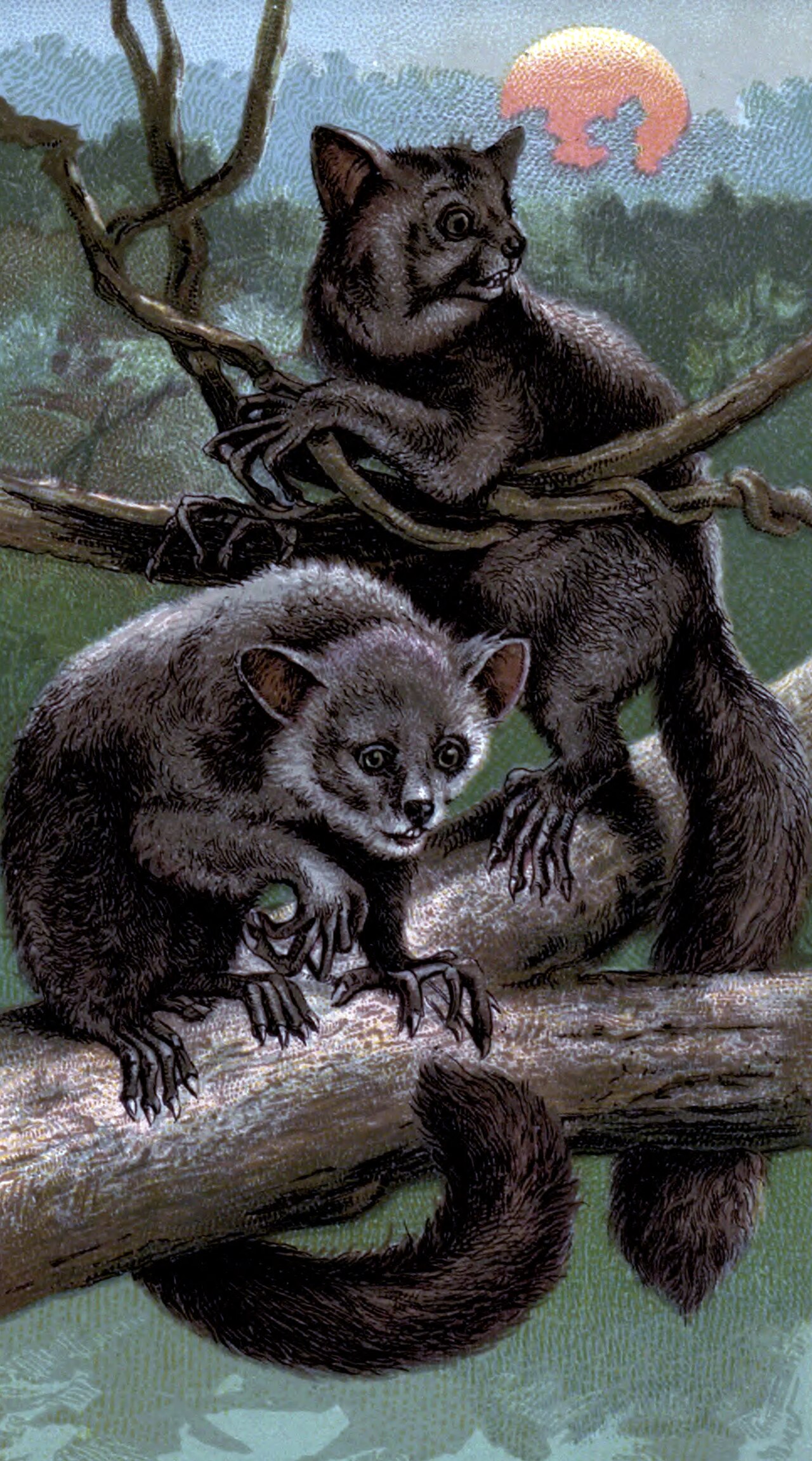
- The Aye-Aye Primate: A Living Fossil in the Lemur Family
- Anatomy of the Bizarre: The Middle Finger That Changed Everything
- Percussive Foraging: How the Aye-Aye Primate Hunts Like a Woodpecker
- What Does an Aye-Aye Eat? A Surprising Diet
- Habitat and Distribution: Where to Find the Aye-Aye Primate
- Life in the Canopy: Behavior and Social Structure
- Folklore, Fear, and Conservation: The Aye-Aye's Troubled Relationship with Humans
- Threats and Conservation Status
- Conclusion: Celebrating the Weirdness of the Aye-Aye Primate
- ❓ Frequently Asked Questions
Few creatures spark as much curiosity and misunderstanding as the aye-aye primate, a nocturnal lemur that defies nearly every expectation of what a primate should look like and how it should behave. Endemic to the island of Madagascar, this animal combines rodent-like teeth, bat-like ears, and a skeletal, elongated middle finger into a living paradox that has baffled scientists and captivated naturalists for centuries. While its bizarre appearance once led local folklore to brand it as an omen of death, modern research reveals the aye-aye as one of the most specialized and ecologically important primates on Earth. From its unique foraging technique called percussive foraging to its surprisingly complex social life, the aye-aye stands alone as nature's weirdest primate—and that weirdness is precisely what makes it so remarkable.
The Aye-Aye Primate: A Living Fossil in the Lemur Family
The aye-aye (Daubentonia madagascariensis) is the only surviving member of the family Daubentoniidae, a lineage that split from other lemurs roughly 60 million years ago. This makes the aye-aye primate a true living fossil, carrying genetic and anatomical traits that have persisted through immense evolutionary time. Unlike the more familiar ring-tailed lemurs or sifakas, the aye-aye shares no close resemblance to any other living primate. Its closest relatives are all extinct, which underscores its evolutionary uniqueness.
Adult aye-ayes typically measure 30 to 37 centimeters (12 to 14.5 inches) in body length, with a bushy tail that adds another 44 to 53 centimeters (17 to 21 inches). They weigh between 2 and 2.5 kilograms (4.4 to 5.5 pounds), roughly the size of a domestic cat. Their fur is coarse, shaggy, and dark brown or black, often with white-tipped guard hairs that give them a grizzled appearance. The face is pale, dominated by large, forward-facing orange or yellow eyes that provide excellent night vision. But it is the hands—especially the third finger—that truly set the aye-aye apart.
Anatomy of the Bizarre: The Middle Finger That Changed Everything
The aye-aye's most iconic feature is its third finger, which is extraordinarily thin, long, and flexible, with a hooked claw at the tip. This finger accounts for roughly 40% of the hand's total length and can bend backward nearly 90 degrees. It is not merely a curiosity; it is a highly specialized tool used for the aye-aye's unique feeding strategy. The same finger is also used for drinking, grooming, and extracting seeds from fruits. All other fingers have claws, except for the big toe, which has a flat nail—another oddity among primates.
Equally strange are the aye-aye's teeth. Like rodents, aye-ayes have incisors that grow continuously throughout their lives, requiring constant wear. These teeth are enameled only on the front surface, creating a chisel-like edge perfect for gnawing through wood. No other primate has this dental arrangement, which is why early European naturalists mistakenly classified the aye-aye as a rodent. It wasn't until later that anatomical studies of its brain and reproductive system confirmed its primate status.
Percussive Foraging: How the Aye-Aye Primate Hunts Like a Woodpecker
Perhaps the most astonishing behavior of the aye-aye primate is its method of finding food, known as percussive foraging or "tap-scanning." This technique is functionally equivalent to a woodpecker's drumming, but performed by a mammal using its fingers and ears. The aye-aye moves through the forest canopy at night, tapping rapidly on tree branches with its long, bony middle finger—up to eight taps per second. As it taps, it presses its enormous, highly mobile ears against the wood, listening for the faint echo that indicates a hollow cavity beneath the bark.
Once the aye-aye detects a chamber, it uses its rodent-like incisors to gnaw a hole in the wood, then inserts its third finger to hook out the grubs, larvae, or insects hiding inside. This combination of acoustic detection and precise extraction is unique among primates and extremely rare in the animal kingdom. Only a handful of species, such as the striped possum and some woodpecker finches, use similar percussive foraging. The aye-aye's brain has evolved enlarged auditory processing centers to handle this complex sensory task.
What Does an Aye-Aye Eat? A Surprising Diet
While insect larvae make up a significant portion of the aye-aye's diet, it is far from a specialist. In fact, the aye-aye is an opportunistic omnivore with a surprisingly varied menu. Studies of wild populations in Madagascar's eastern rainforests and northwestern dry forests have documented the following food items:
- Insect larvae (especially beetle and moth grubs) extracted from dead wood and branches
- Nectar from the flowers of the traveler's tree (Ravenala madagascariensis) and other plants
- Fruit pulp from species like mango, lychee, and the endemic Canarium trees
- Fungus and tree sap, which they scrape with their incisors
- Seeds and nuts, often cracked open with powerful jaws
- Bird eggs and occasionally small vertebrates, though this is rare
This dietary flexibility allows the aye-aye to survive in fragmented habitats where food availability fluctuates seasonally. During the dry season, when fruits are scarce, they rely more heavily on larvae and sap. Their ability to extract hidden food resources from wood gives them a competitive advantage over other lemurs that cannot access these same niches.
Habitat and Distribution: Where to Find the Aye-Aye Primate
The aye-aye primate is found only on the island of Madagascar, but its range is surprisingly broad. Historically, aye-ayes occurred throughout the island's forested regions, from the humid rainforests of the east to the dry deciduous forests of the west and the spiny thickets of the south. However, habitat destruction and persecution have dramatically reduced their distribution. Today, most populations are confined to protected areas and remote forest fragments.
Key strongholds include the Masoala Peninsula, Ranomafana National Park, and the Ankarana Reserve. A notable population also exists on the island of Nosy Mangabe, a special reserve established specifically for aye-aye conservation. Interestingly, aye-ayes have shown remarkable adaptability to disturbed habitats, sometimes venturing into plantations and agricultural areas. In some regions, they have learned to feed on coconut and lychee crops, which brings them into conflict with farmers.
Despite their wide historical range, aye-ayes are notoriously difficult to study in the wild because of their nocturnal habits, low population densities, and cryptic behavior. Home ranges can be enormous—up to 200 hectares for a single male—and individuals may travel several kilometers each night in search of food.
Life in the Canopy: Behavior and Social Structure
Aye-ayes are primarily solitary, but recent research has revealed a more nuanced social life than once believed. Males maintain large territories that overlap with several smaller female ranges. While they forage alone, individuals communicate through a variety of vocalizations, including grunts, squeaks, and a distinctive "hai-hai" call (which may be the origin of the species' common name). Scent marking is also important; aye-ayes have scent glands on their chest and genital region, which they use to mark branches and communicate reproductive status.
Mating is promiscuous, with males competing for access to receptive females. After a gestation period of about 160 to 170 days, a single infant is born. The mother carries the baby for the first few months, and the young aye-aye remains dependent for up to two years. In captivity, aye-ayes have lived as long as 23 years, but wild lifespans are likely shorter due to predation by fossas, raptors, and human activity.
Folklore, Fear, and Conservation: The Aye-Aye's Troubled Relationship with Humans
No discussion of the aye-aye primate would be complete without addressing the deep cultural beliefs that have shaped its fate. In many Malagasy communities, the aye-aye is considered a harbinger of death or misfortune. Local legends claim that if an aye-aye points its long finger at a person, that person will die. Others believe the animal can enter homes at night and use its finger to pierce the hearts of sleeping humans. These superstitions have led to widespread persecution: aye-ayes are often killed on sight, with some villages even destroying entire family groups.
However, not all Malagasy traditions view the aye-aye negatively. In some regions, it is considered a protector of forests, and certain clans regard it as a totem animal. The name "aye-aye" itself may derive from the Malagasy exclamation "hai hai," meaning "I don't know," reflecting the animal's mysterious nature. Conservation organizations now work with local communities to dispel myths and promote the aye-aye's ecological value. Ecotourism initiatives have shown that when people see live aye-ayes in reserves, attitudes often shift from fear to fascination.
Threats and Conservation Status
The International Union for Conservation of Nature (IUCN) lists the aye-aye as Endangered, with a decreasing population trend. Major threats include:
- Habitat loss from slash-and-burn agriculture, logging, and charcoal production
- Direct killing due to superstition and crop raiding
- Fragmentation of remaining forests, isolating populations
- Climate change, which alters food availability and forest structure
Conservation efforts include habitat protection, captive breeding programs at institutions like the Duke Lemur Center and the Bristol Zoo, and community education projects. The aye-aye's unique evolutionary history makes its preservation a global priority. Losing this species would mean losing an entire branch of the primate family tree.
Conclusion: Celebrating the Weirdness of the Aye-Aye Primate
The aye-aye primate is far more than a collection of bizarre traits; it is a testament to the power of evolution to produce solutions that seem alien to our eyes. Its tap-scanning foraging, continuously growing teeth, and skeletal finger are not freaks of nature but finely tuned adaptations to a specific ecological niche. Yet this same uniqueness has made the aye-aye vulnerable to human misunderstanding and environmental change. By learning to appreciate the aye-aye not as an omen but as a marvel of natural history, we can help ensure that Madagascar's strangest lemur continues to haunt the forests for generations to come. In a world that often values the familiar, the aye-aye reminds us that weirdness is worth protecting.
❓ Frequently Asked Questions
💬 What makes the aye-aye's middle finger so special?
The aye-aye has a thin, elongated middle finger that it uses for a hunting technique called percussive foraging: it taps on tree bark to locate hollow chambers where insect larvae hide, then gnaws a hole and scoops out the prey.
💬 Is the aye-aye really considered a bad omen in Madagascar?
Yes, in some Malagasy cultures, the aye-aye is seen as a harbinger of death or evil, leading to local superstitions that sometimes result in the animal being killed on sight, which contributes to its endangered status.
💬 How does the aye-aye get its food without opposable thumbs?
Unlike most primates, the aye-aye lacks opposable thumbs, but it compensates with a unique, highly mobile wrist joint and its specialized middle finger, allowing it to extract grubs, fruit, and nectar with precision.
💬 Why is the aye-aye considered the world's largest nocturnal primate?
The aye-aye holds this title because it is the largest primate that is fully active at night, weighing up to 6 pounds and measuring about 3 feet long including its bushy tail, with large eyes adapted for low-light vision.