- The Unconventional Appearance and Habitat of the Naked Mole Rat
- Why Hairlessness Is an Advantage
- The Naked Mole Rat’s Extreme Longevity and Cancer Resistance
- How They Avoid Age-Related Decline
- Social Structure: The Insect-Like Colony Life of the Naked Mole Rat
- Communication and Cooperation
- Diet, Digestion, and Coprophagy
- Water Conservation
- Pain Insensitivity and Metabolic Superpowers
- Reproduction and Parental Care
- Conclusion: Why the Naked Mole Rat Is the Weirdest Mammal
- ❓ Frequently Asked Questions
The naked mole rat is one of the most bizarre and fascinating creatures on Earth, defying nearly every rule we associate with mammals. With its wrinkled, hairless pink skin, oversized front teeth, and a social structure more akin to ants or bees than to rodents, this small subterranean animal has captivated scientists and nature enthusiasts alike. Living in the harsh, oxygen-poor tunnels of East Africa, the naked mole rat boasts an extraordinary set of adaptations—from a complete lack of pain sensitivity in its skin to an apparent resistance to cancer—that make it a true biological outlier. In this article, we will explore the many reasons why the naked mole rat is the weirdest mammal, diving deep into its unique biology, behavior, and evolutionary marvels.
The Unconventional Appearance and Habitat of the Naked Mole Rat
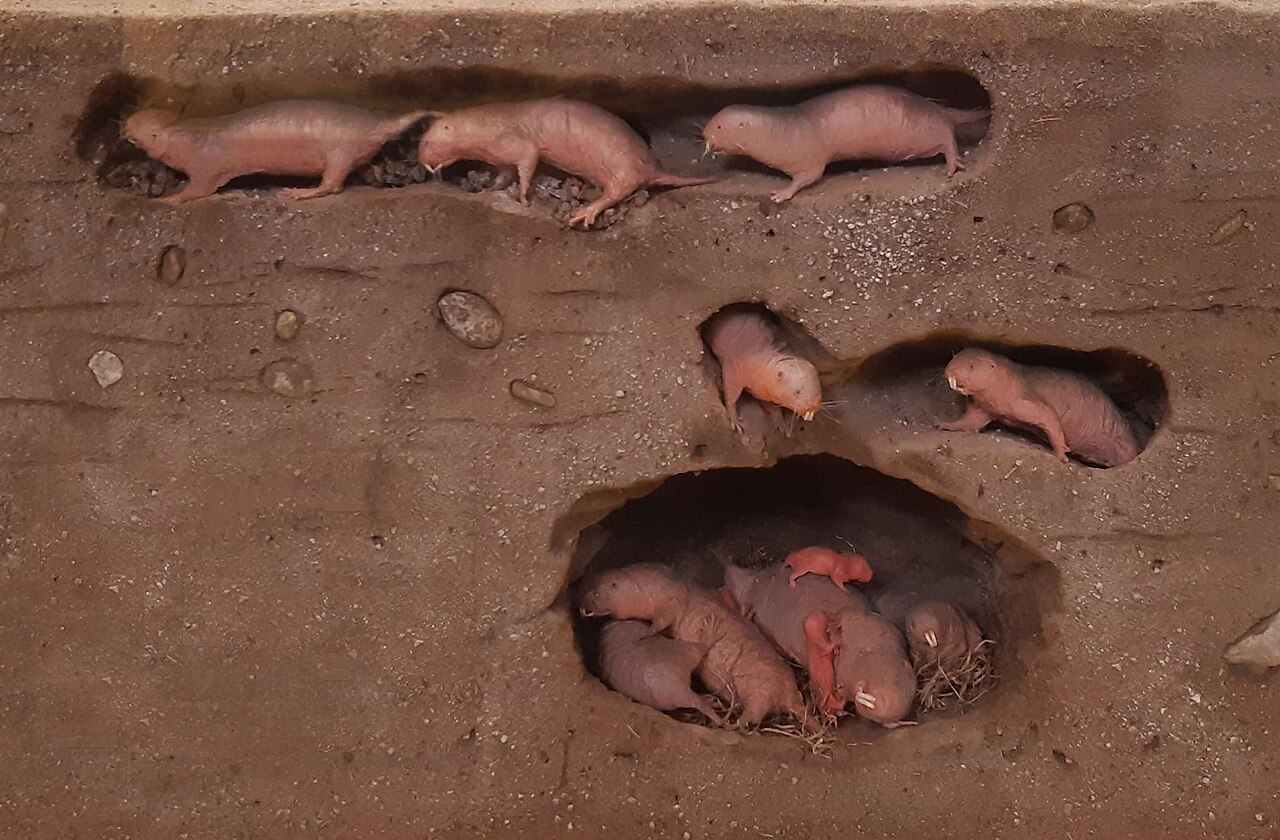
At first glance, the naked mole rat (Heterocephalus glaber) looks like nothing so much as a miniature, wrinkled sausage with teeth. Adults measure just 8 to 10 centimeters (3 to 4 inches) in length and weigh between 30 and 50 grams, roughly the size of a small mouse. Their skin is loose, pinkish-yellow, and nearly hairless, save for a few sparse sensory vibrissae (whiskers) and hairs between their toes that help them sweep dirt backward as they dig. Their most prominent feature is a pair of large, protruding incisor teeth, which are used for digging, gnawing roots, and defense. These teeth can move independently, and their lips close behind them, allowing the mole rat to excavate tunnels without swallowing soil.
These animals are native to the arid, hot regions of East Africa, including parts of Ethiopia, Kenya, and Somalia. They live exclusively underground in complex burrow systems that can extend for hundreds of meters, often beneath hard, compacted soil. The tunnels are organized into chambers for nesting, food storage, and waste disposal, and they maintain a stable microclimate—warm (around 30°C or 86°F), humid, and low in oxygen. In these pitch-black, stuffy tunnels, the naked mole rat has evolved sensory adaptations, including poor eyesight but a keen sense of smell and touch, to navigate and communicate.
Why Hairlessness Is an Advantage
The naked mole rat’s lack of fur is not a quirk but a direct adaptation to its underground life. In the warm, humid burrows, fur would trap heat and moisture, leading to overheating and fungal infections. Hairlessness allows for efficient heat dissipation, as the mole rat is essentially a cold-blooded mammal—it cannot regulate its own body temperature effectively and relies on the stable warmth of its environment. This poikilothermy (temperature variability) is highly unusual among mammals and is a key reason why the naked mole rat is considered so weird.
The Naked Mole Rat’s Extreme Longevity and Cancer Resistance
One of the most astonishing features of the naked mole rat is its incredible lifespan. While most rodents live for only a few years, naked mole rats can survive for over 30 years in captivity, with some individuals reaching 37 years. This is roughly ten times longer than expected for an animal of its size, and it challenges fundamental aging theories. For context, a mouse of similar size typically lives only 2 to 3 years. The secret to this longevity lies in a suite of biochemical defenses that protect the animal from cellular damage.
Perhaps even more remarkable is the naked mole rat’s near-total resistance to cancer. For decades, researchers observed that these animals never developed tumors, even in old age. Studies have since revealed several mechanisms: their cells produce a unique form of hyaluronic acid (a high-molecular-weight sugar) that prevents cells from overcrowding and forming malignancies. Additionally, their cells undergo a process called “contact inhibition” much more strongly than human or mouse cells, stopping division when they touch neighboring cells. This cancer resistance has made the naked mole rat a model organism for studying aging and tumor suppression, with potential implications for human medicine.
How They Avoid Age-Related Decline
Beyond cancer, naked mole rats maintain good health into old age. They show no signs of cardiovascular disease, cognitive decline, or muscle wasting typical of aging mammals. Their reproductive capacity remains high even in advanced years, and their bones remain dense and strong. This “negligible senescence” means that their risk of death does not increase with age, a trait shared by only a handful of animals, including certain tortoises and whales. Scientists are actively investigating the genetic and molecular pathways that allow this, hoping to unlock secrets of healthy aging.
Social Structure: The Insect-Like Colony Life of the Naked Mole Rat
Perhaps the weirdest aspect of the naked mole rat is its social organization, which is unique among mammals. They live in colonies of 20 to 300 individuals, with a strict caste system reminiscent of eusocial insects like bees or ants. This eusociality—characterized by cooperative brood care, overlapping generations, and reproductive division of labor—is extremely rare in the animal kingdom, found otherwise only in insects and a few other mammals like the Damaraland mole rat.
In each colony, there is a single breeding female, called the “queen,” and one to three breeding males. The queen is larger than other colony members, often due to elongated vertebrae that allow her to carry more pups. She is the only female that reproduces, and she suppresses reproduction in other females through aggressive behavior and pheromones. Non-breeding females and males are divided into workers and soldiers. Workers, which are smaller and more numerous, dig tunnels, forage for food, and care for the young. Soldiers are larger and defend the colony against predators and rival colonies, often blocking tunnels with their heads.
Communication and Cooperation
Naked mole rats communicate through a complex repertoire of chirps, grunts, and squeaks, as well as through touch and scent marking. They have distinct “dialects” that vary between colonies, and individuals can recognize each other by vocalizations. Cooperation is essential: when digging a new tunnel, they form a “bucket brigade,” with one mole rat gnawing at the soil and others passing the loosened dirt backward to the surface. This teamwork allows them to build extensive burrow systems that protect them from predators and extreme surface temperatures.
Diet, Digestion, and Coprophagy
The naked mole rat is a herbivore, feeding primarily on large underground tubers and roots that can weigh up to 1,000 times more than an individual mole rat. In the wild, these tubers are often found deep below the surface, and the mole rats gnaw through them to access the starchy interior. They are not wasteful: they eat only part of a tuber, leaving the rest to regrow, effectively farming their food source. This sustainable harvesting is a key adaptation to the sparse, unpredictable food supply of the arid savanna.
However, the most unusual aspect of their diet is coprophagy—the practice of eating their own feces. Naked mole rats produce two types of droppings: hard, dry pellets and soft, nutrient-rich ones. The young and non-breeding adults consume the soft feces of the queen and other colony members to obtain essential bacteria for digesting cellulose and to acquire vitamins and nutrients. This recycling of waste is critical in the nutrient-poor underground environment, where food is scarce and every resource must be conserved.
Water Conservation
Because they live in dry regions and rarely surface, naked mole rats obtain most of their water from the tubers they eat. Their kidneys are highly efficient at conserving water, producing concentrated urine. They also have a low metabolic rate and a reduced body temperature, which further reduces water loss. These adaptations allow them to thrive in environments where surface water is virtually absent.
Pain Insensitivity and Metabolic Superpowers
Another bizarre trait is the naked mole rat’s lack of pain sensitivity in its skin. Unlike most mammals, they do not feel the sting of acid or the burn of capsaicin (the compound that makes chili peppers hot). This is because their pain receptors have a mutation that prevents the release of a key neurotransmitter (substance P) in response to certain stimuli. This insensitivity is likely an adaptation to the high carbon dioxide levels in their burrows, which would cause pain and inflammation in other animals. It also means they can navigate tunnels filled with acidic waste without discomfort.
Metabolically, naked mole rats are equally strange. They can survive for up to 18 minutes without oxygen, far longer than any other mammal. In low-oxygen conditions, they switch to a fructose-based metabolism, using fructose to produce energy without needing oxygen. This is analogous to the way plants use fructose, and it allows them to survive in the hypoxic (low-oxygen) environment of their crowded, poorly ventilated burrows. When oxygen levels drop, they simply become inactive, entering a state of suspended animation until conditions improve.
Reproduction and Parental Care
Breeding in a naked mole rat colony is a tightly regulated affair. The queen gives birth to litters of 12 to 28 pups, which are born blind, hairless, and entirely dependent. Gestation lasts about 70 days, which is long for a rodent of this size. The queen nurses the pups for about a month, but all colony members participate in raising them. Workers bring food to the young, keep them warm, and protect them from intruders. This cooperative care is essential for the survival of the colony, as the queen cannot manage the large litters alone.
Remarkably, the queen can breed again just a few days after giving birth, producing up to five litters per year. This high reproductive output, combined with the long lifespan of workers, allows colonies to grow and persist for many decades. In the wild, colonies are often composed of multiple generations, with the queen being the mother of most colony members.
Conclusion: Why the Naked Mole Rat Is the Weirdest Mammal
From its hairless, wrinkled body and eusocial colony structure to its astonishing longevity, cancer resistance, and pain insensitivity, the naked mole rat stands alone as a true anomaly in the mammalian world. It challenges our understanding of aging, social behavior, and even what it means to be a mammal. While other animals may hold records for size, speed, or beauty, the naked mole rat wins the prize for sheer weirdness—a testament to the boundless creativity of evolution. As research continues, this humble subterranean rodent may yet reveal secrets that could transform human medicine and biology, proving that the strangest creatures often have the most to teach us.
❓ Frequently Asked Questions
💬 Why don't naked mole rats feel pain from acid?
Their skin lacks a neurotransmitter called Substance P, which normally sends pain signals to the brain. This makes them immune to the burning sensation from acid and capsaicin (the chemical in chili peppers).
💬 Can naked mole rats really survive without oxygen?
Yes, they can survive up to 18 minutes in zero oxygen by switching their metabolism to use fructose for energy, like plants do. This unique adaptation helps them thrive in the low-oxygen burrows underground.
💬 Why don't naked mole rats get cancer?
Their cells produce a high-molecular-weight sugar called hyaluronan, which makes tissues super-slippery and prevents cells from overcrowding and forming tumors. This natural cancer resistance has fascinated scientists studying human treatments.
💬 Are naked mole rats actually blind?
They have very poor eyesight and can only detect changes in light and dark, not clear images. They rely on their whiskers, sense of smell, and hearing to navigate their dark, tunneled colonies.