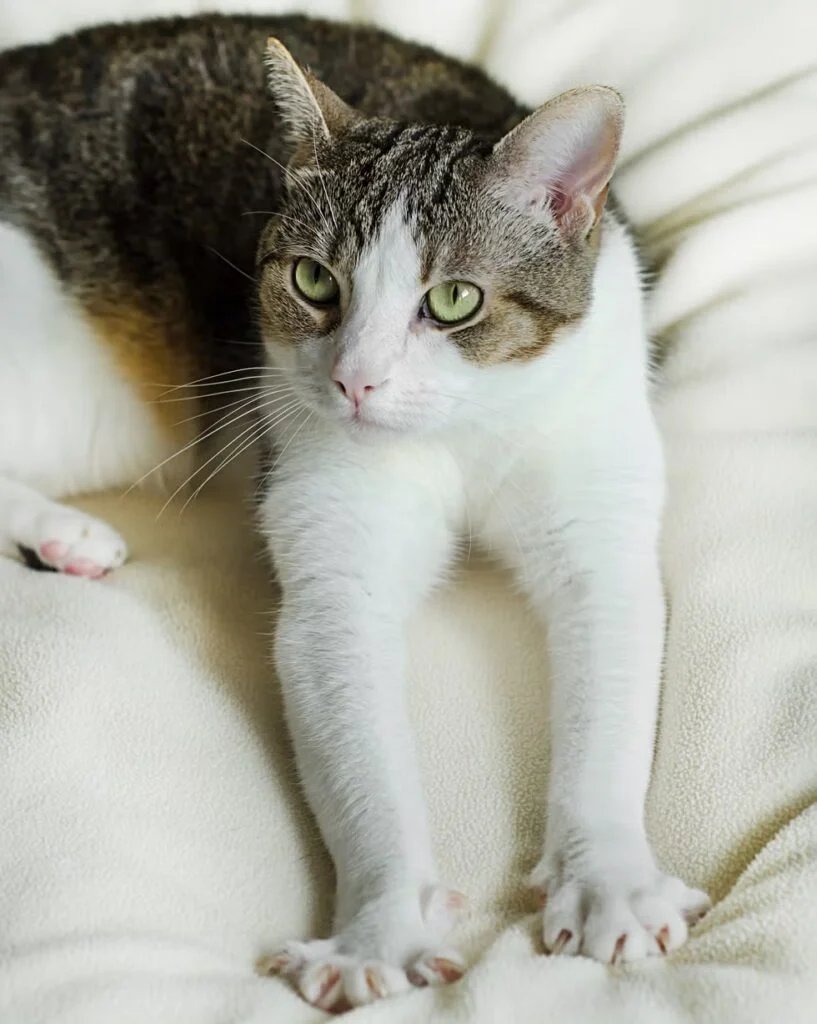
As a wildlife biologist who has spent decades studying feline behavior in both domestic and wild settings, I know that cats are masters of subtle communication. Unlike dogs, who wear their emotions on their sleeves, cats speak in whispers—a slow blink here, a gentle tail flick there. Many cat owners ask me, "How can I tell if my cat is happy?" The answer lies in observing a combination of body language cues, vocalizations, and daily habits. While no single sign guarantees bliss, a pattern of these seven behaviors strongly suggests your cat is living its best nine lives. Let’s decode the secret language of feline contentment.
1. The Slow Blink: The Cat Smile
If your cat stares at you with half-closed eyes and slowly blinks, you’re witnessing one of the most powerful signs of trust and happiness. Ethologists call this the "cat kiss" or slow blink. In the wild, a cat would never close its eyes near a threat. By doing so, your cat is signaling, "I feel safe with you." A 2020 study published in the journal Scientific Reports confirmed that cats are more likely to approach a human who slow-blinks at them, indicating this gesture reduces feline stress. Try returning the slow blink—you might just start a conversation.
2. The Elevated Tail: The Happy Flag
A cat’s tail is a mood barometer. When your cat walks toward you with its tail held straight up, often with a slight curve at the tip like a question mark, it’s displaying the "happy tail" posture. This behavior originates from kittenhood, when kittens raise their tails for their mothers during nursing. A 2019 study in Animal Cognition found that cats use tail height to signal positive social intent. If the tail is also vibrating or quivering slightly, your cat is expressing pure joy—perhaps because you just walked in the door or opened a can of food.
3. Kneading: The Comfort Ritual
When your cat presses its paws alternately into a soft surface—your lap, a blanket, or even your stomach—it’s called kneading. This instinctive behavior begins in kittenhood, when kittens knead their mother’s belly to stimulate milk flow. Adult cats continue this motion as a sign of contentment and security. Kneading releases endorphins and often accompanies purring. While some cats may knead with claws extended (ouch!), the behavior itself is a reliable indicator of a happy, relaxed cat. It’s a throwback to the safest moment of their lives.
4. Purring: More Than Just Contentment
Purring is the most famous feline happiness signal, but it’s not always straightforward. Cats purr when they’re content, but they also purr when they’re stressed, injured, or giving birth—as a self-soothing mechanism. However, a happy purr is usually accompanied by relaxed body language: soft eyes, a still or gently twitching tail, and ears facing forward. The frequency of a cat’s purr (25–150 Hz) has been scientifically shown to promote bone density and tissue healing, which is why cats may purr when in pain. Context is key: if your cat is purring while curled in your lap with a relaxed posture, that’s happiness. If it’s purring at the vet, it’s probably anxiety.
5. Bunting: Head-Butting and Cheek Rubbing
Does your cat rub its head, cheeks, or chin against you? This behavior, called bunting, is a powerful sign of affection and ownership. Cats have scent glands on their cheeks, chin, forehead, and tail. When they rub against you, they deposit pheromones that mark you as safe and familiar. This is the feline equivalent of saying, "You’re part of my family." A happy cat will often bunt against your hands, legs, or even your face, especially after a meal or a nap. It’s a bonding ritual that reinforces social harmony.
6. Playful Hunting Behavior
A happy cat is an active cat. In the wild, cats spend hours hunting, stalking, and pouncing. Domestic cats retain these instincts, and a content cat will engage in playful hunting behaviors like chasing toys, batting at feather wands, or pouncing on laser dots. Play mimics the hunt and releases dopamine, the feel-good neurotransmitter. According to a 2017 study in Behavioural Processes, cats who engage in regular interactive play with their owners show lower cortisol (stress hormone) levels. If your cat initiates play or responds enthusiastically to toys, it’s a sign of physical and emotional well-being. Conversely, a sudden loss of interest in play may indicate illness or depression.
7. The Loaf Position: Relaxed and Secure
One of the cutest signs of feline happiness is the cat loaf—when a cat tucks all four paws under its body, resembling a loaf of bread. This position indicates a state of deep relaxation. The cat’s muscles are loose, its eyes are often half-closed, and its tail is still. In this posture, the cat is not ready to flee or fight; it’s completely at ease. A loafing cat in a sunny spot or on your couch is a cat that feels safe in its environment. You might also see your cat lying on its back with its belly exposed—the ultimate sign of trust, though not always an invitation for belly rubs (many cats guard their bellies).
Bonus Sign: Healthy Appetite and Grooming
While not as obvious as body language, a happy cat maintains a consistent appetite and regular grooming habits. Cats are fastidious groomers; a content cat will spend 30–50% of its waking hours cleaning itself. Stress, illness, or dental pain often leads to a dull coat or decreased grooming. Similarly, a happy cat eats without hesitation and shows enthusiasm for mealtime. If your cat suddenly stops grooming or loses interest in food, consult your veterinarian—these can be early signs of physical or emotional distress.
What About a Cat That Hides?
Even the happiest cat needs alone time. Cats are solitary hunters by nature, and hiding is a normal behavior—especially in multi-pet households or after a stressful event like a move. However, if your cat hides constantly, avoids interaction, or shows signs like flattened ears, hissing, or a tucked tail, it may be unhappy or unwell. A happy cat typically balances hiding with seeking out social contact, whether that’s sitting near you, following you from room to room, or sleeping in your bed.
Creating a Happy Home for Your Cat
Understanding these signs is only half the equation. To ensure your cat stays happy, provide:
- Vertical space: Cat trees, shelves, or window perches for climbing and observing.
- Environmental enrichment: Puzzle feeders, scratching posts, and rotating toys to prevent boredom.
- Routine: Cats thrive on predictability—consistent feeding times, play sessions, and quiet spaces.
- Social interaction: Daily play, gentle petting, and respect for your cat’s boundaries.
- Health care: Regular vet checkups, dental care, and a balanced diet.
Remember, each cat is an individual. Some cats are naturally more vocal, while others express happiness through quiet companionship. The key is to learn your cat’s unique language. Over time, you’ll recognize the subtle shift in their ear position, the softness in their eyes, and the gentle rhythm of their purr. When you see these signs, you can be confident: your cat is happy.
As a final thought, I always tell my clients that a happy cat is not a cat that never meows or never scratches the furniture. A happy cat is one that feels safe, loved, and understood. By paying attention to these seven signs, you’re not just observing your cat—you’re building a deeper bond. And that, more than anything, is what makes a cat truly happy.