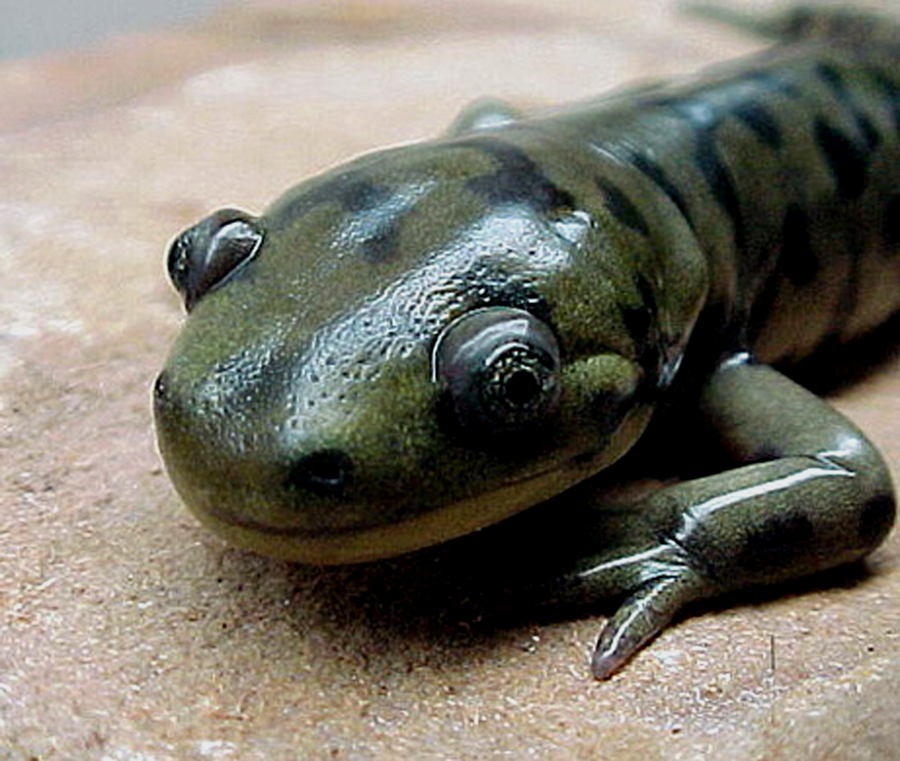
- Understanding Salamander Limb Regeneration: A Biological Marvel
- The Cellular Machinery Behind Salamander Limb Regeneration
- The Blastema: Nature's Stem Cell Factory
- The Immune System and Cellular Signaling
- Step by Step: How a Salamander Regrows a Limb
- Why Can't Humans Regrow Limbs Like Salamanders?
- Beyond Limbs: Salamanders Regenerate Hearts, Eyes, and Spinal Cords
- The Heart
- The Eye
- The Spinal Cord
- What Salamander Regeneration Could Mean for Human Medicine
- Conclusion: The Secret of the Salamander
- ❓ Frequently Asked Questions
Salamander limb regeneration is one of the most astonishing feats in the natural world, allowing these unassuming amphibians to regrow an entire functioning leg—complete with bones, muscles, nerves, and blood vessels—over the course of just a few weeks. While most vertebrates, including humans, respond to severe injury by forming scar tissue, salamanders orchestrate an elegant, perfectly organized rebuilding process that may hold the key to transformative medicine. These secretive creatures have fascinated biologists for over two centuries, and today they stand at the center of some of the most exciting research in regenerative biology.
Understanding Salamander Limb Regeneration: A Biological Marvel
Salamanders belong to the order Caudata (also called Urodela), a group of around 760 recognized species distributed across North America, Europe, Asia, and northern Africa. Their appearance and habits vary dramatically: the tiny Thorius species of Mexico measure less than 2 centimeters as adults, while the Chinese giant salamander (Andrias davidianus) can stretch beyond 1.8 meters and weigh over 50 kilograms, making it the largest amphibian on Earth.
Despite these differences, all salamanders share a signature talent that has made them legendary among animal lovers and scientists alike: unmatched regenerative power. A red-spotted newt (Notophthalmus viridescens) can regrow its tail, legs, jaws, even parts of its eye lens and heart tissue. The Mexican axolotl (Ambystoma mexicanum), a critically endangered species that now survives almost exclusively in the remaining canals of Lake Xochimilco near Mexico City, regrows limbs up to five times in succession with no loss of quality. The regenerated limb is a perfect replica, not a crude scarred approximation, and this capability persists throughout the salamander's entire life.
In the wild, these mostly nocturnal, secretive animals live in moist forests, mountain streams, ponds, and caves, where they hunt insects, earthworms, slugs, snails, and small crustaceans. Depending on the species, lifespan ranges from around 5 years in some terrestrial species to more than 70 years in the cave-dwelling olm (Proteus anguinus). A long life spent hiding beneath rocks and logs means limbs are routinely at risk: predators, territorial rivals, and simple accidents all take their toll. Regeneration is not a novelty; it is an evolutionary lifesaver that has been refined over hundreds of millions of years.
The Cellular Machinery Behind Salamander Limb Regeneration
To understand how a salamander regrows a lost limb, you first have to appreciate the biology of healing. When a human is injured, our bodies rush to seal the wound with fibrous scar tissue, a process that stops bleeding but permanently replaces normal skin and muscle with inflexible collagen. Salamanders take an entirely different route: they deliberately avoid fibrosis and instead build a population of flexible, undifferentiated cells that can rebuild the missing structures from scratch.
The Blastema: Nature's Stem Cell Factory
The cornerstone of salamander limb regeneration is the blastema, a small conelike mound of proliferating cells that forms at the stump of the amputated limb just a few days after injury. Scientists have compared the blastema to a tiny embryonic bud because it contains cells that are highly plastic—able to divide rapidly and later differentiate into specific tissues like bone, muscle, cartilage, and skin.
For decades, researchers debated where these blastema cells came from. We now know that the answer is delightfully complex. Instead of relying on a single population of adult stem cells, the salamander recruits cells from the local remaining tissues and then "dedifferentiates" them. Muscle cells near the amputation site lose their contractile machinery and revert to a more primitive, proliferative state. Skin cells, connective tissue cells, and even Schwann cells from damaged nerves contribute to the growing pool. This remarkable process, called dedifferentiation, is the heart of the salamander's regenerative secret—and one of the most tantalizing goals for human medicine.
The Immune System and Cellular Signaling
The salamander's immune system is just as important as its stem cells. In a landmark 2013 study, researchers revealed that if macrophages—specialized white blood cells that clear debris and orchestrate inflammation—are depleted from the wound site, regeneration completely fails. Without these immune cells, the salamander form a nonfunctional scar, much like a human would. In other words, the immune system is not merely cleaning up the wound; it is actively sending chemical signals that keep the regenerative program running.
Several signaling pathways work together in this symphony of regrowth. Proteins in the FGF (fibroblast growth factor) and BMP (bone morphogenetic protein) families guide cell division and shape the new limb. Wnt signaling, a pathway heavily involved in embryonic development, is reactivated in the blastema, and Notch signaling helps maintain the balance between proliferating and differentiating cells. Even the peripheral nerves play a role—severed nerve endings release factors such as neuregulin-1 that are required for blastema growth, which is why denervated salamander limbs fail to regenerate.
Step by Step: How a Salamander Regrows a Limb
Salamander limb regeneration is not a haphazard blob-forming process; it is a tightly choreographed sequence of events divided into four distinct stages. Watching it unfold under a microscope is like seeing time-lapse embryology in real time.
- Wound healing (hours 0–24): Within hours of amputation, specialised epidermal cells migrate rapidly across the wound surface, forming a thick, transparent layer called the wound epidermis. Unlike in humans, this covering involves no scarring and remains thin enough for signals to pass through.
- Blastema formation (days 1–5): Beneath the protective wound epidermis, cells from the injured muscle, bone, and connective tissue begin to dedifferentiate. They accumulate at the tip of the stump, creating the blastema. Nerve fibers grow into this region, releasing the growth factors essential for continued division.
- Outgrowth and patterning (weeks 1–3): The blastema elongates, and positional information kicks in. Cells at the distal tip remember their original location, coordinating the growth of the correct structures in sequence—upper arm first, then forearm, wrist, and finally digits. Genes responsible for this spatial mapping are the same ones that patterned the limb during the salamander's embryonic development.
- Maturation and differentiation (weeks 3–8): The new limb gradually takes shape, and cells begin to specialise. Cartilage matures into bone, muscle fibres reconnect, blood vessels extend, and the skin covers the entire structure. Remarkably, the regenerated limb is nearly indistinguishable from the original, down to the correct number of toes.
In species like the Japanese fire-bellied newt (Cynops pyrrhogaster), young individuals can complete the whole process in two weeks, while adult axolotls generally take six to eight weeks at standard laboratory temperatures. Even more impressive, newts have been shown to regenerate the same limb repeatedly—one study documented an axolotl successfully regrowing a limb after five separate amputations without diminished quality.
Why Can't Humans Regrow Limbs Like Salamanders?
It is a question every regenerative biologist hears at conferences, lectures, and dinner parties: if salamanders can do it, why can't we? The honest answer is that humans actually possess the blueprint for limb building—we all grew arms and legs in the womb using essentially the same signaling pathways. The problem is that, after development, our tissues shut down these programs and replace them with a wound-healing response that favors speed and protection over rebuilding.
When a human loses a limb, the wound quickly fills with a blood clot followed by inflammatory cells and, within days, dense collagen scar tissue. This scar physically blocks any attempt at regeneration. Our adult stem cells exist in limited niches, but they lack the easy access and plasticity that the salamander's cells enjoy. Crucially, our immune system is fundamentally different: the chronic inflammatory response in human wounds pushes cells toward fibrosis, while the salamander's immune response remains carefully regulated, with macrophages that promote proliferation rather than scarring.
There is also a size-related consideration. Salamanders have some of the largest genomes in the animal kingdom—the axolotl's genome is roughly ten times larger than the human genome, packed with repetitive DNA. Some researchers suspect this genomic complexity contributes to their regenerative ability by providing a reservoir of regulatory elements that can reactivate embryonic gene programs. Whether that link will prove causal remains an open question, but it highlights just how different the salamander's biology is from our own.
Beyond Limbs: Salamanders Regenerate Hearts, Eyes, and Spinal Cords
Limb regrowth is only a fraction of the salamander's regenerative repertoire. These animals push the boundaries of what "regeneration" actually means, rebuilding some of the most delicate and complex tissues in their bodies.
The Heart
If you surgically remove up to one-third of an axolotl's ventricular heart muscle, the animal will fully regenerate it within about 60 days. New cardiac muscle cells appear, blood vessels re-form, and the heart returns to normal function without scarring—a feat that remains unachievably difficult for human patients after a heart attack.
The Eye
Newts are famous among biologists for their ability to regenerate the lens of the eye by transdifferentiating pigmented epithelial cells from the dorsal iris. This means a fully differentiated cell in the eye essentially "changes professions" to become a transparent lens cell. Some species can also regenerate their retina and even restore vision after optic nerve injury, a capability that has yet to be replicated in any mammal.
The Spinal Cord
Salamanders regenerate their tails, and along with the tail comes the entire neural tube—the spinal cord. Even if the spinal cord is severed outright, the salamander's central nervous system can rebuild the communication pathways, restoring full motor function. This stands in stark contrast to humans, where spinal cord injury generally leads to permanent paralysis. Understanding how salamanders achieve this feat is a major frontier in neuroscience.
What Salamander Regeneration Could Mean for Human Medicine
The practical implications of salamander research extend far beyond satisfying scientific curiosity. In laboratories around the world, biologists are mining the axolotl and other salamander species for clues that could one day transform medicine. Scientists have sequenced the enormous axolotl genome and used tools like CRISPR to selectively edit it, allowing us to pinpoint which genes make regeneration possible.
An emerging idea is that, rather than trying to achieve full limb regrowth in humans, therapies might aim to nudge our immune system closer to a sala-mander-like state. Delivery of growth factors, modulation of macrophages, and the inhibition of scarring have already shown promising early results in mice, where scientists have successfully stimulated partial toe-tip regeneration and improved cardiac repair.
Another approach involves studying "positional memory" and the injury signals that help blastema cells determine what to build. If researchers can decode the map that tells a salamander to make a hand instead of an elbow, they could apply similar instructions to human stem cell therapies, directing cells to build exact structures rather than generic tissue. Clinical applications are still years away, but the pace of discovery is accelerating dramatically because the core principles of regeneration are shared across all vertebrates.
Conclusion: The Secret of the Salamander
For all their astonishing complexity, salamanders treat regeneration as the most natural thing in the world. A lost limb is not a tragedy; it is simply a temporary inconvenience, a biological challenge to be met with quiet competence. By studying these damp, retiring creatures, scientists are learning to ask better questions about how our own bodies heal—and what we might do when healing falls short.
From the miniature lungless salamanders of the Appalachian forests to the giant, gliding predators of China's mountain rivers, every salamander carries within its tissues a master blueprint for rebuilding life. Protecting these animals is not merely a matter of conservation ethics; it is a matter of medical self-interest. The next generation of regenerative medicine may well be swimming, crawling, and hiding among the leaf litter of some faraway wetland—waiting patiently for us to learn its language.
❓ Frequently Asked Questions
💬 Can salamanders regrow lost limbs multiple times?
Yes, salamanders can regenerate a lost limb repeatedly, though the process may slow or produce slightly smaller limbs with age or repeated amputations. They retain this ability throughout their lives.
💬 How long does it take for a salamander to regrow a limb?
Regeneration typically takes anywhere from a few weeks to several months, depending on the species, water temperature, and the salamander's age. Younger individuals often regenerate faster.
💬 Do salamanders grow back their limbs exactly the same as before?
They regrow a fully functional limb with bones, muscles, nerves, and blood vessels, but it may not be a perfect copy. Repeated regeneration can result in subtle differences like reduced limb length or branching defects.
💬 Can axolotls regrow other body parts besides legs?
Yes, axolotls can also regenerate their tail, spinal cord, heart, and parts of their brain and eyes without scarring. This makes them key models in regenerative medicine research.