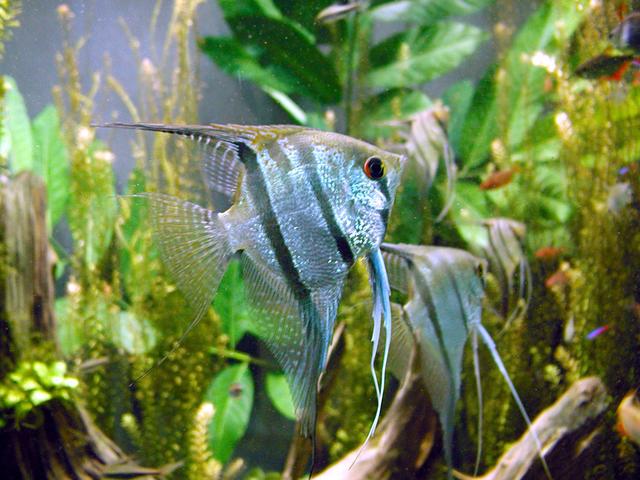
- What People Mean When They Say "Angelfish Change Gender"
- Sexual vs. Behavioral Change
- Why Angelfish Change Gender Is Really About Misidentification
- The Subtle Signs of Sex in Angelfish
- Juvenile Fish Are Especially Hard to Read
- Real Sex Change in the Animal Kingdom: Why Angelfish Are Different
- What the Science Says
- Social Dominance and the Illusion of Change
- Pair Bonding and Role Switching
- Stress and Hormones
- How to Tell If Your Angelfish Really Changed Sex
- Angelfish Biology: Habitat, Diet, and Lifespan
- Size and Appearance
- Diet
- Lifespan
- Behavior and Breeding
- Common Myths About Angelfish and Gender
- Why This Matters for Aquarium Keepers
- Tips for Keeping a Happy Group
- The Bottom Line on Angelfish Gender
- ❓ Frequently Asked Questions
If you have ever kept freshwater angelfish in a community tank, you may have noticed something strange: a pair forms, spawns, and then one of the fish seems to change sex, or a lone female suddenly behaves like a male. The idea that angelfish change gender is one of the most persistent myths in the aquarium hobby, and the truth behind it is far more interesting than a simple yes or no. Freshwater angelfish (Pterophyllum scalare) are cichlids native to the slow-moving rivers of the Amazon basin, and like many cichlids they have evolved flexible reproductive strategies. Understanding what is really happening requires a close look at their biology, their social structure, and the way hobbyists interpret the behavior they see through the glass.
What People Mean When They Say "Angelfish Change Gender"
The phrase angelfish change gender usually describes one of three observations. First, a fish that was assumed to be female begins courting and spawning with another female, or a fish that was assumed to be male suddenly produces eggs. Second, a mated pair loses one partner, and the survivor pairs up with a new fish and appears to take on the opposite role. Third, a juvenile that looked female develops male characteristics as it matures.
In most of these cases, the fish is not actually changing sex. Instead, the observer has misidentified the sex, or the fish is displaying behavior that does not match the simple male-female script people expect. Freshwater angelfish are not known to be sequential hermaphrodites in the way clownfish are, but they do show remarkable behavioral flexibility, and that flexibility is what fuels the myth.
Sexual vs. Behavioral Change
It helps to separate two ideas. A true sex change, called sequential hermaphroditism, means an animal's gonads physically transform from producing sperm to producing eggs, or the reverse. Clownfish, wrasses, and some groupers do this. Freshwater angelfish do not have a confirmed, reliable sex-change mechanism of that kind. What they do have is a social system in which males and females can behave in ways that overlap, and in which dominance and pairing status can shift quickly.
So when a hobbyist says their angelfish changed gender, they are almost always describing a change in behavior, appearance, or social role, not a change in the actual reproductive organs.
Why Angelfish Change Gender Is Really About Misidentification
The single biggest reason people believe angelfish change gender is that angelfish are genuinely difficult to sex. Unlike guppies or bettas, where males and females look obviously different, angelfish are sexually monomorphic for much of their lives. Males and females share the same silver body, the same black vertical bars, and the same long, trailing dorsal and anal fins.
The Subtle Signs of Sex in Angelfish
Experienced breeders look for a few clues, and even these are not foolproof:
- Body shape: Mature males often have a slightly larger, thicker body and a more pronounced forehead, sometimes called a nuchal hump.
- Vent shape: The papilla, or vent, is broader and blunter in females and narrower and more pointed in males. This is the most reliable external cue, but it is only visible when the fish is close to spawning.
- Fin length: Males frequently have longer, more sharply angled dorsal and anal fins, though tank conditions and genetics blur this.
- Behavior: Females tend to be the ones that lay eggs, while males fertilize them, but both sexes guard the spawn aggressively.
Because these signs are subtle, a hobbyist may keep a fish for a year believing it is male, only to watch it lay eggs. The fish did not change sex; the hobbyist simply guessed wrong. This single misunderstanding accounts for a huge share of "angelfish change gender" stories.
Juvenile Fish Are Especially Hard to Read
Young angelfish sold in pet stores are often only two to three inches tall, well below their adult size of six to ten inches in body height and up to six inches in length. At that age, the vent is not developed, the body shape is not yet mature, and the fish has not spawned. Anyone who buys a group of juveniles and later sees a "male" produce eggs is not witnessing a transformation. They are witnessing a fish that was always female finally revealing itself.
Real Sex Change in the Animal Kingdom: Why Angelfish Are Different
To understand why freshwater angelfish do not truly change sex, it helps to know how real sex-changing fish work. In clownfish, all individuals start as males, and the largest, most dominant fish becomes female. If that female dies, the largest male transforms into a female. In many wrasses, the reverse happens: a dominant female becomes male when the resident male disappears.
These species live in small, stable social groups where a single breeding pair monopolizes reproduction. Sex change is an efficient way to replace a lost breeder without waiting for a new one to arrive. Freshwater angelfish have a different social system. They form monogamous pairs during the breeding season, but they live in larger groups in the wild, and pair bonds can dissolve. Their strategy relies on choosing a good partner and defending a territory, not on transforming their bodies.
What the Science Says
There is no widely accepted scientific evidence that Pterophyllum scalare can change sex after maturity. Some cichlids, including certain mouthbrooders, show environmental sex determination, where temperature or social cues influence the sex of developing fry. Angelfish may have some flexibility during early development, but once the gonads are set, they do not flip. Reports of adult sex change in home aquariums have not been verified under controlled conditions.
Social Dominance and the Illusion of Change
Even when no sex change occurs, angelfish behavior can look confusing. Angelfish are cichlids, and cichlids are famous for their complex social lives. In a tank, a dominant fish may chase others, claim the best territory, and perform courtship displays. A subordinate fish may hide, lose color, or behave in ways that seem inconsistent with its sex.
Pair Bonding and Role Switching
Angelfish form pair bonds, and bonded pairs are intensely territorial. If one member of a pair dies, the survivor may pair with a new fish. During this process, the survivor might court a fish of the same sex, especially if the new fish is not yet mature. Two females can even go through the motions of spawning, with one laying eggs and the other hovering over them as if fertilizing. Because the eggs are unfertilized, they turn white and are eaten or abandoned within a day or two.
To a hobbyist, this looks exactly like a sex change. In reality, it is a pair-bonding mistake or a case of two females responding to hormonal cues. It is common in tanks where the sex ratio is skewed and suitable males are scarce.
Stress and Hormones
Stress can also alter behavior and appearance. Poor water quality, overcrowding, or aggression from tankmates can suppress spawning behavior in one fish and trigger it in another. A fish that seemed male may become more submissive and rounded, while a female may become more aggressive and territorial. These shifts are behavioral and physiological responses to environment, not changes in the gonads.
How to Tell If Your Angelfish Really Changed Sex
If you suspect your angelfish changed sex, the best approach is careful observation over time. Here is a practical checklist:
- Watch a spawning event. If the fish lays eggs, it is female. If it fertilizes eggs, it is male. There is no ambiguity in the act itself.
- Check the vent. A broad, blunt papilla indicates a female ready to spawn; a narrow, pointed one indicates a male.
- Record the timeline. Note when you bought the fish, how large it was, and when the behavior changed. Most "changes" happen as juveniles mature.
- Consider the tank. A skewed sex ratio, a lost partner, or a new tankmate can trigger same-sex pairing behavior.
- Do not rely on fin length or color alone. These vary with genetics, diet, and water conditions.
In nearly every case, the evidence points to misidentification or behavioral flexibility rather than a true sex change.
Angelfish Biology: Habitat, Diet, and Lifespan
Understanding angelfish in the wild helps explain their behavior. Pterophyllum scalare comes from the Amazon River basin in Peru, Colombia, and Brazil, where it lives in slow-moving tributaries, flooded forests, and oxbow lakes. The water is warm, typically 75 to 82 degrees Fahrenheit, acidic, and soft, with plenty of submerged roots and plants.
Size and Appearance
Wild angelfish are laterally compressed, with a tall, disc-shaped body that lets them slip between roots and stems. Adults reach about six inches in length and up to ten inches in height, including the long dorsal and anal fins. Captive-bred varieties come in silver, black, gold, marble, koi, and veil-tail forms.
Diet
Angelfish are omnivores with a carnivorous lean. In the wild they eat small fish, insect larvae, crustaceans, and plant matter. In aquariums they thrive on a mix of high-quality flakes, pellets, frozen bloodworms, brine shrimp, and the occasional live food. A varied diet supports good color and healthy spawning.
Lifespan
With proper care, freshwater angelfish live eight to ten years, and some reach twelve years or more. Their lifespan depends heavily on water quality, tank size, and diet. A 55-gallon tank or larger is ideal for a small group, since angelfish grow tall and need vertical swimming space.
Behavior and Breeding
Angelfish are peaceful for cichlids but become territorial when breeding. A pair will choose a flat surface, such as a broad leaf, a piece of slate, or the glass of the tank, and clean it before spawning. The female lays a line of eggs, and the male fertilizes them as he passes over. Both parents fan the eggs and guard the fry, which hatch in about two to three days and become free-swimming a few days later. This parental care is one reason angelfish are so popular with hobbyists.
Common Myths About Angelfish and Gender
Several myths circulate alongside the idea that angelfish change gender. Here are the most common, along with the facts:
- Myth: All angelfish are born female and become male. Fact: Angelfish have separate sexes from birth, though the sexes are hard to tell apart.
- Myth: A lone angelfish will change sex to form a pair. Fact: A lone angelfish cannot reproduce alone, and it does not change sex. It may pair with a fish of the same sex, but no eggs will hatch.
- Myth: Angelfish change color when they change sex. Fact: Color changes are usually related to mood, dominance, health, or genetics, not sex.
- Myth: You can force a sex change by adjusting temperature. Fact: Temperature can influence the sex ratio of some fish during early development, but it will not change an adult angelfish.
These myths persist because angelfish are subtle, and because a same-sex pair going through the motions of spawning is genuinely convincing. The best cure for confusion is patience and close observation.
Why This Matters for Aquarium Keepers
Believing that angelfish change gender can lead to poor decisions. A hobbyist might buy two fish expecting a pair, only to end up with two females or two males. They might separate a "changing" fish unnecessarily, or cull a fish they think is defective. Understanding the truth helps keepers plan better, choose the right number of fish, and provide the conditions that encourage natural pairing.
If you want to breed angelfish, the reliable approach is to start with a group of six or more juveniles, raise them together, and let pairs form naturally. Watch for two fish that stay close, chase others away, and clean a spawning site. That is a true pair, regardless of what you assumed about their sex earlier. Once a pair spawns, you will know exactly which fish is which, and the mystery disappears.
Tips for Keeping a Happy Group
- Provide a tall tank with vertical space and gentle filtration.
- Keep the water warm, soft, and slightly acidic.
- Feed a varied diet rich in protein for healthy spawning.
- Avoid overcrowding, which increases stress and aggression.
- Give pairs a flat spawning surface, such as a slate tile or broad-leafed plant.
- Be patient. Angelfish may take a year or more to reach sexual maturity.
The Bottom Line on Angelfish Gender
Freshwater angelfish do not truly change sex. The stories that suggest otherwise almost always trace back to misidentified fish, same-sex pair bonding, or normal shifts in behavior and dominance. Real sex change exists in the animal kingdom, but it belongs to species like clownfish and wrasses, not to Pterophyllum scalare. What angelfish do have is a flexible social life, subtle sexual differences, and a talent for keeping their keepers guessing. The next time you see a "female" angelfish courting another fish, look closely, check the vent, and wait for a spawning event. The truth is usually written in the eggs, and it is far more fascinating than the myth.
❓ Frequently Asked Questions
💬 Do all angelfish change gender?
No. Freshwater angelfish (Pterophyllum) do not change sex at all, and only some marine angelfish species are known to change from female to male. Many popular aquarium angelfish are simply male or female for life.
💬 Can a female angelfish turn into a male?
In certain marine angelfish, yes—a dominant female can become a functional male, usually when the breeding male is lost. This change is one-way, from female to male, and is driven by social cues rather than a simple switch.
💬 How can you tell if an angelfish has changed gender?
You generally can't tell from appearance, since the change is internal and behavioral. Signs in marine species include a former female taking on male courtship and spawning behavior after the resident male disappears.
💬 Why do angelfish change gender?
It's a reproductive strategy: changing sex lets a breeding pair or group keep producing offspring even if the male dies. This helps maintain reproduction in species where mates are limited or territories are stable.